
Preparation week for the next ITER Council
5 Nov 2010
-
Osamu Motojima, ITER Director-General
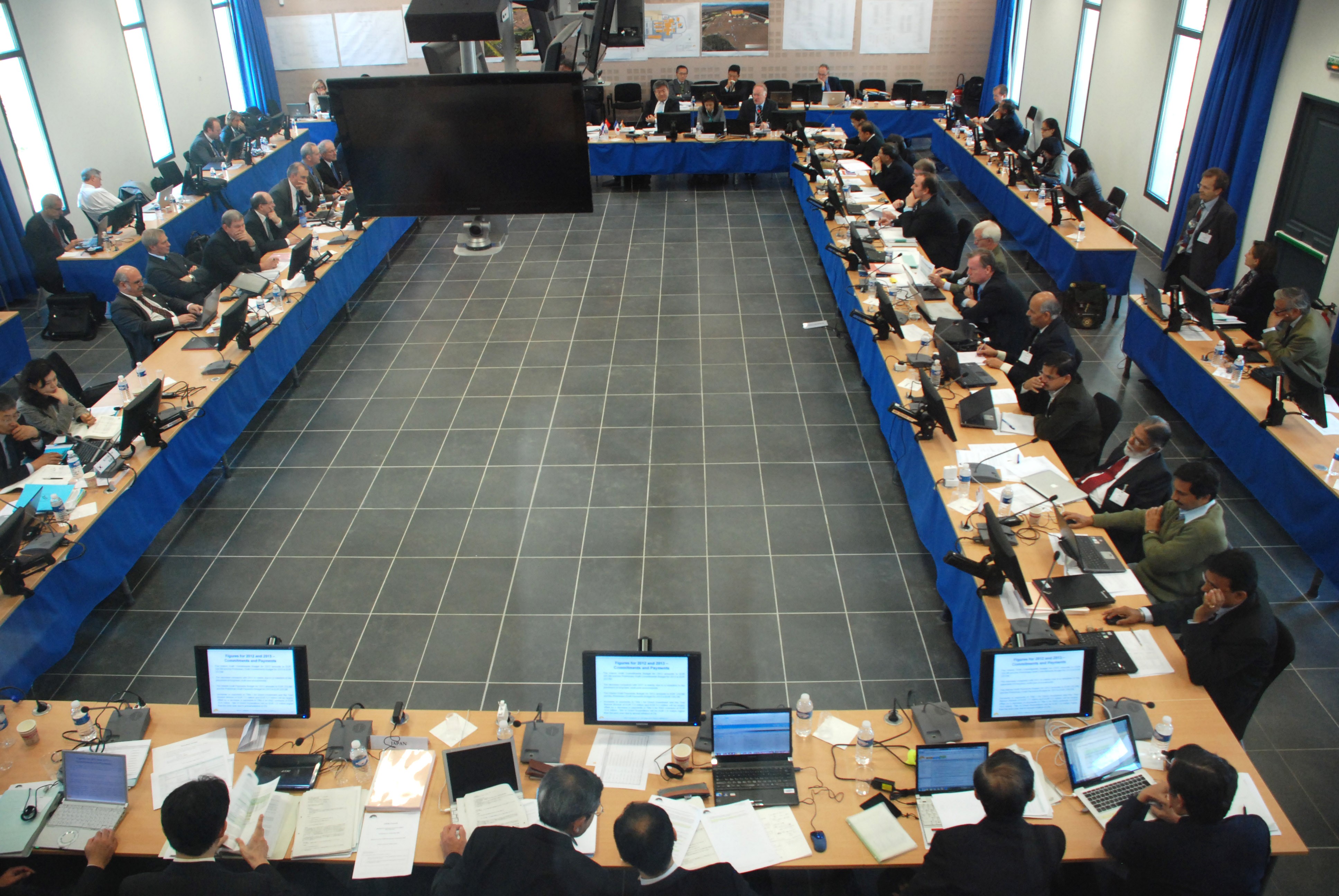
Turning over every stone: the Management Advisory Committee during its 9th meeting last week.
Last week was a tough and meaningful week for us with a series of very intense meetings with the ITER Council's advisory bodies: the Science and Technology Advisory Committee (STAC) and the Management Advisory Committee (MAC). Together, we prepared for the next ITER Council meeting which will take place here in Cadarache on 17-18 November. Before continuing, I would like to express my gratitude to all the people involved in this "tour de force" for their commitment and endurance, whether working for the ITER Organization itself, the Domestic Agencies or as a delegate of a Member. And of course I would also like to thank the Chairman of the STAC, Professor Wan Yuanxi, and the Chairman of the MAC, Professor Gyung-Su Lee, for their much appreciated leadership.
This was a very important week for both the ITER community and for myself, as this was the first time that I had participated in these high-level advisory boards as Director-General of the ITER Organization. I am more than ever conscious of the fact that the stakes are high for the project. While the Council has adopted the Baseline and the good news of the start of construction is spreading, we have been charged by the governing body representing the governments of our Members to bring down the overall cost of the project and to rebuild contingency. At the same time, we have to draw a line and finalize the design.
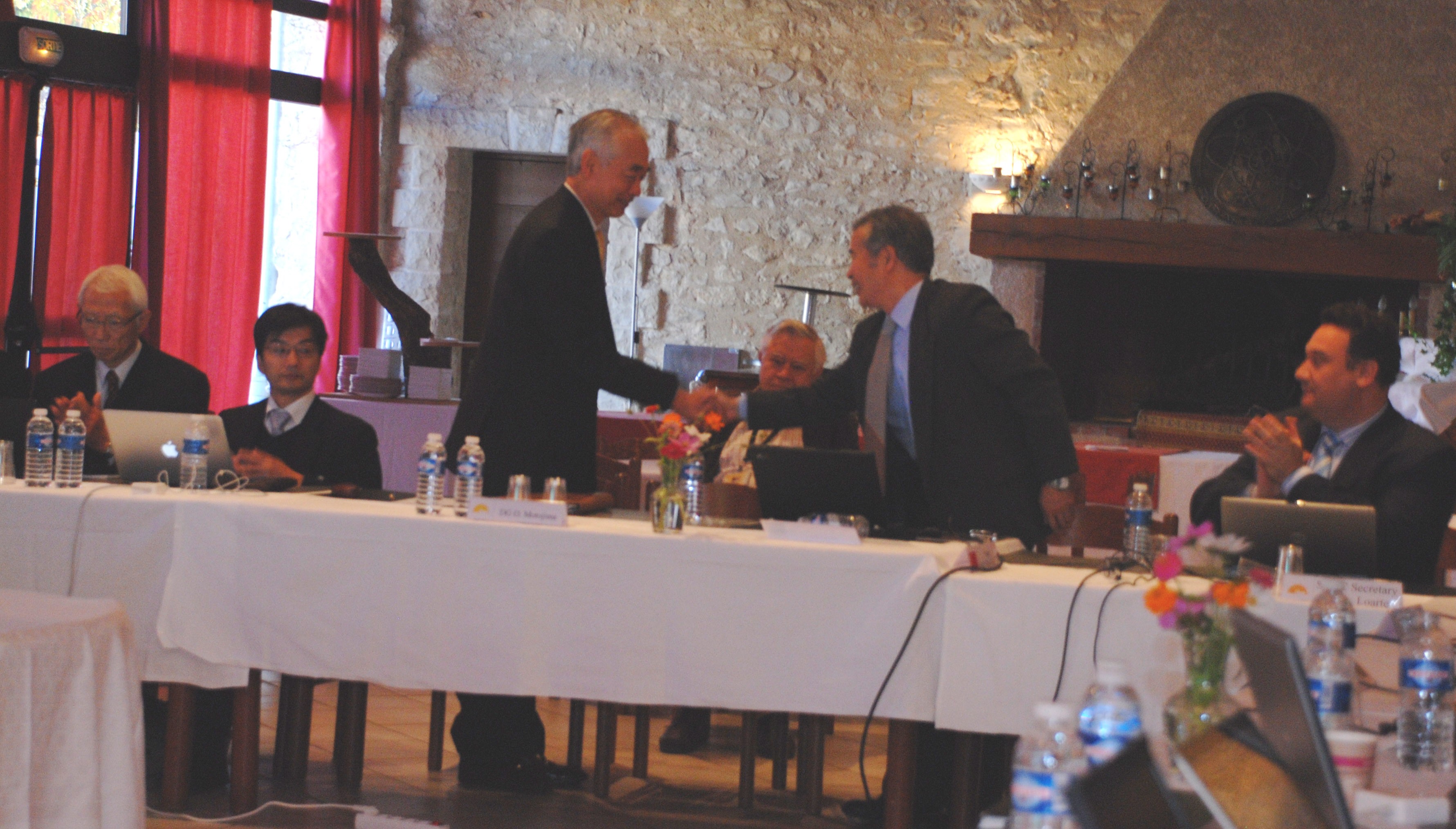
ITER Director-General Osamu Motojima thanking the STAC Chairman Professor Wan Yuanxi for his much appreciated leadership.
These are certainly not easy tasks, but we have obliged ourselves to look into every possibility. We are turning over every stone to find viable solutions to reduce the cost of ITER without jeopardizing the scientific goal of this endeavour. As I reported before, over the past months we have put in place several initiatives to identify and pursue ways and methods to contain and reduce the costs of the project. The task force and the dedicated working group have proposed a list of possible means of how to achieve that goal—both in the short- and in the long-term perspectives.
The technical and scientific implications of these possible measures were discussed by the STAC. Among the 22 measures we asked the experts to look into are: a different approach to the cold testing of ITER's magnets; alternative methods for controlling edge localized modes (ELMs); and a new evaluation of the required diagnostics for ITER. All these measures have substantial cost saving potential. As for the ELM coils, we have to be aware that they are not part of the Baseline and only a successful cost containment exercise will make them possible to realize. The centralization of the global cable procurement and CODAC would further decrease the costs, an issue that we will surely investigate. The detailed recommendations given by STAC are now to be approved by the Council, together with the recommendations given by MAC.
The discussion with the MAC, by nature, focused more on the managerial implications that the proposed cost reduction efforts will have on the project. The reorganization of the structure of the ITER Organization will not only reshape its focus, but it will also require some re-planning work to align the new structure with the Baseline.
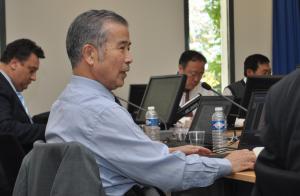
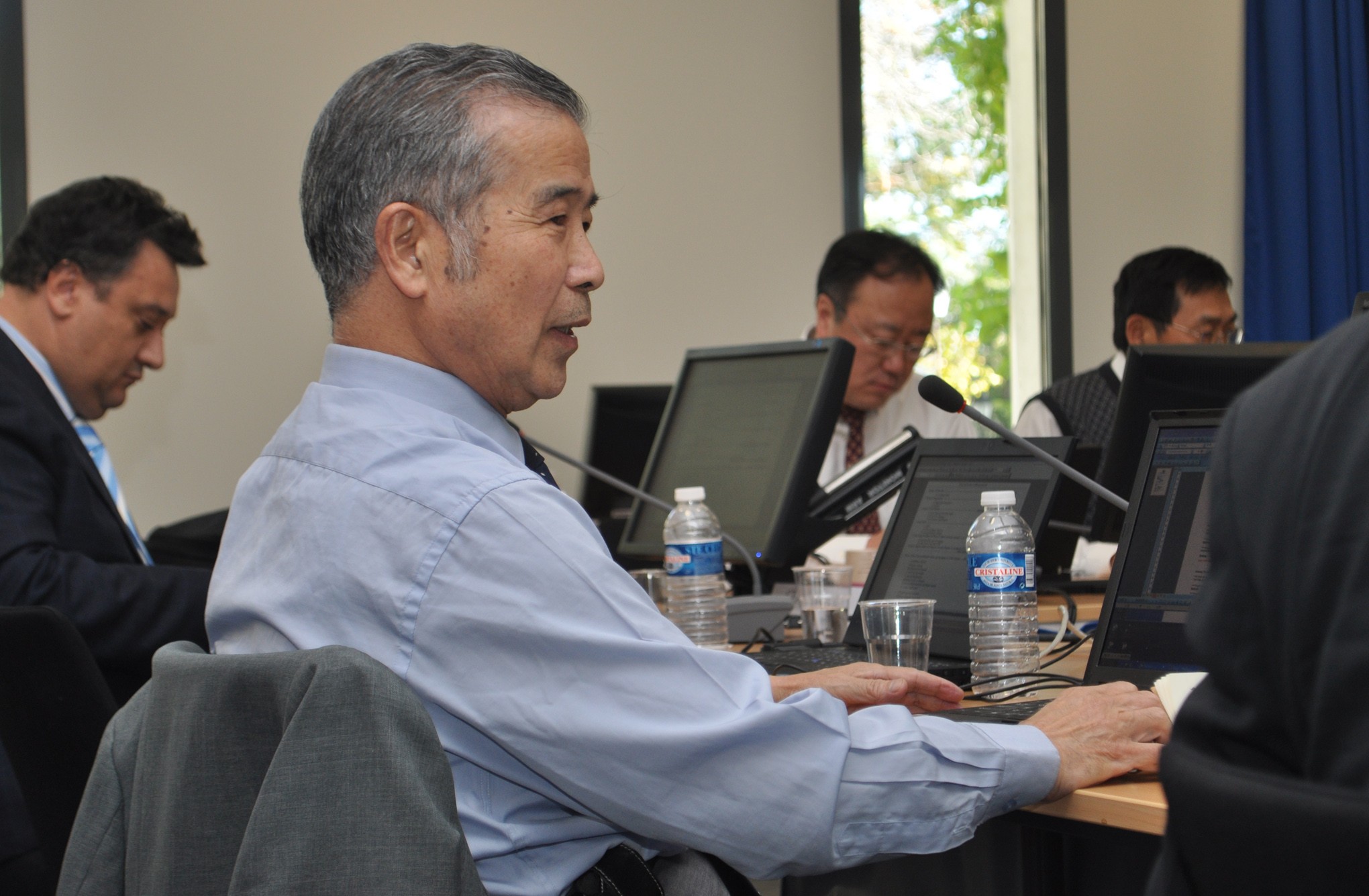
The Chairman of the Science and Technology Advisory Committee, Professor Wan Yuanxi with Alberto Loarte, Senior Scientific Officer, Transport and Confinement Physics (left).
As requested by the Council, we also presented our proposal for a new staffing policy that aims to find an improved balance between subcontracting and the direct hiring of staff. The international set-up of our project implies a lot of travelling; we aim to reduce the number of missions by increasing the use of visual conference tools. We also propose to implement a tighter control and policy for the use of mobile phones and a revised layout of the office buildings on site that will help us to be more efficient.
The past week with its intense but important discussions showed that we are on the right track. And despite all the unease about the correct path forward we were assured of the continuous support and encouragement from the global fusion community. However, the message we received was clear: we cannot stop here. A lot more work lies ahead if we want to maintain the confidence of the Governments and the people that support us.
Nevertheless, I am confident that together we can make it. ITER must succeed.