Logo
You're currently reading the news digest published from 20 July 2026 to 29 July 2026.
Featured (5)
Of interest (1)
Publications (1)
Press (14)
Featured
Sector module lift

Millions of data points, one successful lift

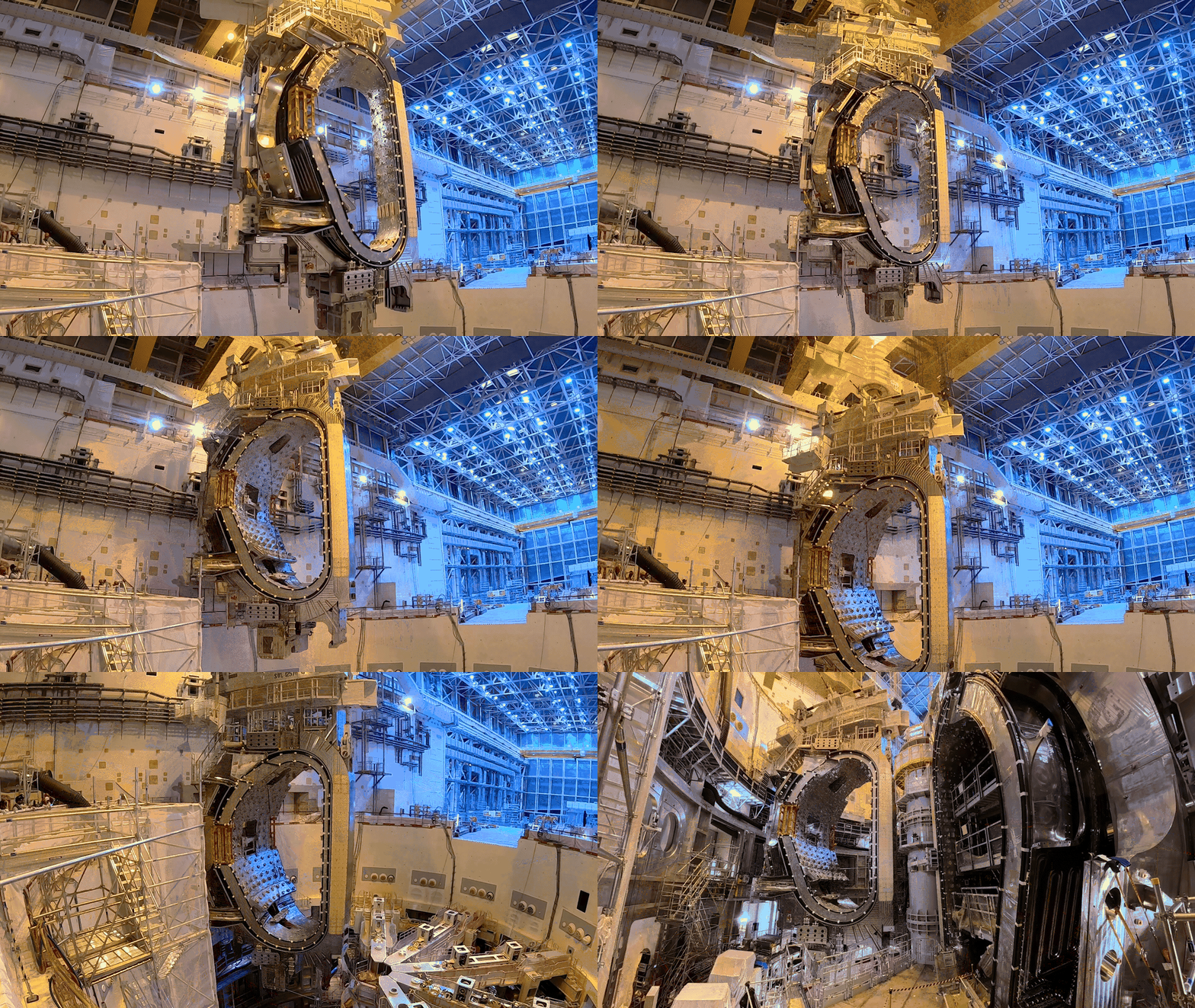
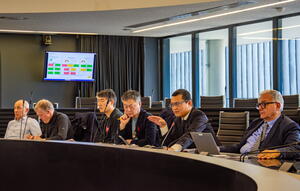
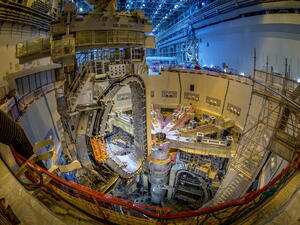
With the landing of the sixth tokamak sector module, two-thirds of the ITER plasma chamber is now positioned in the pit. Seeing the 1,400-tonne load rise from its sector sub-assembly tool and reach its final position with millimetre precision is breathtaking, but there is equal beauty in the stream of data that guides these crucial movements. Following the latest major lift operation that lasted nearly 30 hours and mobilized more than 100 people, tokamak sector module #1—the sixth of the nine modules to enter the tokamak pit—landed safely on the afternoon of Tuesday 28 July. The lift marked a double assembly milestone for ITER: two-thirds of the plasma chamber is now in place and the last of the Korean-manufactured vacuum vessel sectors has been installed.“From the initial preparation of the sector module to the successful transfer to the tokamak pit, everything was carefully planned and executed,” says Mathieu Demeyere, the principal construction manager who supervised the operation for ITER. “Thanks to the efforts of the many different teams involved in the process, we’ve achieved a notable milestone.”Sector module lifts at ITER are remarkable exercises in coordination as four shifts of crane operators, spotters, metrology experts, safety experts, supervisors, and engineers seamlessly perform their roles to ensure the operation goes smoothly. One of the key teams in this process works at the control desk to monitor the structural behaviour of the sector module during the critical periods when it is first lifted from the sector sub-assembly tool and when it descends the last 500 millimetres to its final position. During the first phase of the lift, the control desk is situated at the base of the sector sub-assembly tool that holds the sector module. The dashboards on the screens provide easy-to-interpret readings from the data being collected by the sensors. Each sector module is composed of a vacuum vessel sector, two toroidal field coils, thermal shields, and auxiliary components, with lifting equipment and stabilizing beams attached for the lift operation. Because the main components have different centres of gravity and are lifted progressively, there is a transition when the suspended mass is not aligned with the crane’s lifting point and the load distribution changes. This creates a risk of undesired movements and components coming into contact.To monitor this, the control desk uses dozens of specialized sensors and compares live readings with data from previous lifts and predicted values derived using finite element calculations. If there is unexpected behaviour, the lift is stopped, the issue is analyzed, and necessary corrections are applied.“Many of the most important things happening during a sector module lift cannot be seen with the eye,” explains Jordi Utges, a mechanical engineer for ITER contractor Arial Industries who has worked the control desk for the lifts of all six sector modules now in the tokamak pit. “This is why we must concentrate on the most critical values for each moment of the lift. Someone must always be watching the numbers.” Left: One of the rods that supports the pair of toroidal field coils. Eight strain gauges are glued around each rod and then covered with black resin. Right: the corresponding live data feed from the strain gauges is displayed on the control desk dashboard. These numbers are generated by strain gauges that are used to calculate the forces acting on the components, load cells on the lashing or bracing elements, laser sensors that measure clearances between elements, inclination sensors that measure tilting, and load pins that measure the forces on connected loads. The devices are so precise that even small details, such as the flexibility of the glue used to attach a strain gauge, are considered in advance to ensure the data is accurate.The sensors record data ten times a second, which results in millions of data points for the control desk team to decipher during the operation. In charge of wrangling this information with proprietary software and customized dashboards is Alessandro Vaccaro, an ITER assembly engineer who brings a background in graphic design and information technology to his work at the control desk.“We’ve made the data friendly,” says Vaccaro. “A dashboard isn't just about displaying information; it has to present the right information in a way the operator can understand instantly. We’ve learned that improving data quality is more useful than increasing data quantity.”  The control desk is to a sector module lift what Houston was to the Apollo launches. Here, Alessandro Vaccaro (left, front) and Jordi Utges (centre) monitor the stream of sensor data from the control desk in a port cell as the sector module nears landing. For the most recent lift, the control desk began work in May by overseeing the installation of the sensors on the components and establishing baseline readings. After preparing data predictions and checklists, they installed their first control table at the base of the sector sub-assembly tool the week before the lift. From there, they monitored the sector module during the pre-lift operations and the crucial first movements on the morning of Monday 27 July.After this first phase, spotters and metrologists surveyed the sector module as it moved through the Assembly Hall to the tokamak pit. Meanwhile, the control desk was relocated to the tokamak pit to oversee the load distribution and watch for potential clashes as the sector module landed.  With the transfer of sector module #1 now complete, it joins the five others— #4, #5, #6, #7 and #8 —that are already in the tokamak pit. A seventh sector module is expected to be transferred before the end of the year.

Managing ITER’s progress

Key performance indicators, estimate-to-complete updates, and milestone trend analysis are part of a basket of schedule and cost control measures that the ITER Organization tracks monthly and reports to the ITER Council. Managing a project as large and complex as ITER requires more than tracking deadlines and budgets. Every month, the ITER Organization must determine whether thousands of activities—from design and manufacturing to component installation, commissioning, and operation—are progressing fast enough to keep the project on track.A delay of just a few weeks on critical-path activities can ripple through multiple construction programs. To spot such issues early, ITER managers monitor 21 performance indicators through a Construction Project Steering Board dashboard (launched in 2026), tracking everything from potential schedule slippage and cost efficiency to safety performance and risk mitigation.The new project performance management system was introduced alongside ITER's 2024 baseline, giving managers a more detailed and consistent view of progress than was previously available.Taka Omae, the Deputy Head of the ITER Construction Project and Head of Construction Project Office, oversees the construction project performance tracking system at ITER. “With the introduction of the new baseline, we have improved our ability to measure progress. We have more in-depth capability to monitor activities at a detailed level per construction project, and we do it in a more frequent manner. We measure once per month and report transparently to our stakeholders.”ITER uses earned value management, a project management methodology that assigns a planned value to construction activities like installing components or lifting a sector, then tracks how much of that work is actually completed (“earned value”) at the actual cost. By comparing these numbers and tracking performance indices, managers can quickly see if the project is ahead or behind schedule, or under or over budget.Think of it as a progress “health check” for the project.A schedule performance index (SPI) of 1.00 or higher means the project is realizing the value on time—or ahead of schedule—compared to baseline plans. A cost performance index (CPI) of 1.00 or higher shows that spending is in line with—or below—the projected budget for planned work in the baseline.Since the start of tracking against the ITER baseline in January 2024, the Construction Project’s schedule and cost performance indices have remained well above 1.0. By the end of June 2026, metrics show that 192 Level 1 schedule milestones have been achieved against 188 milestones planned for the same period.“The numbers are good and this is important, but the even bigger achievement is the reinforced capability at ITER to measure our progress,” says Taka Omae. “These are genuinely data-driven metrics, providing a clear picture of where we are. The numbers themselves aren’t the goal, they just help project managers at ITER know how they are doing in terms of meeting their objectives per area.”Like any health check, the indicators are most valuable not when everything is going well, but when they reveal problems early enough to be addressed. As ITER advances through increasingly complex phases of assembly and installation, the ability to measure progress accurately may prove just as important as the progress itself.

15th ITER International School concludes in China

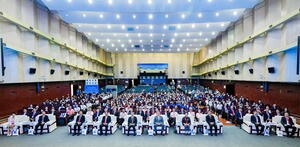
The 15th ITER International School on the physics and engineering of heating and current drive systems for magnetic fusion plasmas concluded successfully in Leshan, Sichuan Province, China, on 24 July after five days of lectures and discussions. More than 180 students and lecturers from 22 countries participated. The latest ITER International School was the 15th in the series, which alternates between sites within the ITER Member countries and Aix-en-Provence, France. This time the school took place in Leshan, Sichuan Province, China and was hosted by Southwestern Institute of Physics (SWIP) and the Engineering & Technical College of Chengdu University of Technology. Leshan is the cradle of China's fusion program, making it a particularly appropriate venue for an ITER school focused on the next generation of fusion scientists and engineers.This year’s school focused on heating and current drive systems which are essential for the achievement of ITER’s fusion power demonstration goals—not only for heating the plasma to the high temperatures required for thermonuclear deuterium-tritium fusion to occur, but also for driving electric currents in the plasma and controlling its behaviour. Lectures delivered by 17 prominent specialists from the ITER Members addressed the engineering of heating and current drive systems as well as the physics processes associated with their use for plasma heating, current drive, and the control of plasma scenarios in magnetic fusion devices. Together, the lectures covered the use of heating and current drive systems in current-day devices, their place in the ITER Research Plan, as well as the status of their manufacturing for ITER. More targeted topics such as countering plasma instabilities or the simulation of heating and current drive models within integrated modelling approaches were also addressed.  The diversity of perspectives offered during the 15th ITER International School converged toward a common goal: equipping the students—the next generation that will conceive and build the fusion reactors of the future—with the expertise and knowledge to make it happen. (Pictured, K. Nagasaki from Kyoto University gives a lecture on the physics principles of electron cyclotron resonance heating.) Students were welcomed on the first day by Zhang Guangjun, Vice Minister of the Ministry of Science and Technology of China, who highlighted the advantages of nuclear fusion energy and encouraged the young participants to broaden their academic horizons, stimulate scientific thinking, and foster international friendships through exchanges, thereby contributing “youthful wisdom and strength” to the global development of nuclear fusion. Other prominent officials took part in the ceremony; see this link for a full report.One of this year’s co-hosts, SWIP, was designated in 2025 by the International Atomic Energy Agency (IAEA) as its first-ever "Collaborating Centre for Research and Training in Fusion Energy." Hosting the 15th ITER International School is a concrete step that aligns with its responsibilities as a collaborating centre, allowing the institute to execute its training mandate and deepen cooperation with the ITER Organization and the IAEA. One of the highlights of the school was the visit to the Nuclear Fusion Technology R&D Center and Application Technology Development Center in Chengdu that allowed students to gain an in-depth understanding of China's progress in fusion R&D, its fusion program, and its expanding contribution to the global fusion community. A youth forum themed "China Dialogues with the World: Exploring Future Energy Together" was also held during the school. The quality of the work presented during this year’s two poster sessions was very high. The school lecturers along with the scientific committee selected three participants per poster session and awarded their outstanding research work with prizes (ITER “goodies,” including—for first-prize winners—a slice of poloidal field coil superconducting cable).Overall, the 15th ITER International School was a resounding success, bringing together a diverse group of participants from around the world to exchange knowledge, share experiences, and foster collaboration on a topic of great relevance to ITER and magnetic confinement devices. The support from SWIP, the Engineering & Technical College of Chengdu University of Technology, the Ministry of Science and Technology of China, the China International Nuclear Fusion Energy Program Execution Center, the ITER Organization, the International Atomic Energy Agency, Aix-Marseille University and the National Institute for Fusion Science (Japan) greatly contributed to the success of this event.The slides of the lectures are available on this ITER webpage together with information on past ITER International Schools.

Applications invited for joint ITER/ASIPP postdoc projects

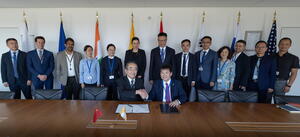
ITER and ASIPP have launched a joint postdoctoral training program that will give early-career researchers the opportunity to conduct fusion research at both institutions under the supervision of experts from China and ITER. On 10 June 2026, the ITER Organization and the Chinese Academy of Sciences, Institute of Plasma Physics (ASIPP) signed an agreement to cooperate in a joint postdoctoral training program.Under this agreement ASIPP will create a series of postdoctoral positions focused on research topics of mutual interest to the ITER Organization and ASIPP. The selected researchers will be employed by ASIPP and jointly supervised by experts from both organizations. The positions are offered for a two-year term, with research carried out both at ITER and at ASIPP headquarters. These postdoctoral positions are now open to application by Chinese nationals and nationals of other ITER Members. Further information, including application details, is available here.

A defining Korean contribution

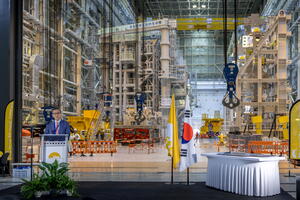
Four of the nine vacuum vessel sectors that make up ITER’s plasma chamber were manufactured in Korea. With the last of those sectors now assembled into a full sector module and about to be installed in the tokamak, representatives from Korea and ITER gathered to mark this key achievement. Senior Korean government officials, diplomats, industrial leaders, and ITER staff gathered this week to celebrate the culmination of Korea’s vacuum vessel sector program and the country’s broader contributions to the project over two decades of international collaboration.“The successful completion of the Korean vacuum vessel sectors is the result of the extraordinary dedication of many people who transformed funding into an exceptional piece of hardware through their skill, commitment and determination,” said ITER Director-General Pietro Barabaschi. “This is truly a first-of-a-kind achievement.”The ITER Korean Fusion Day ceremony was held on Wednesday 22 July at the entrance of the Assembly Hall. Among the guests was the Ambassador of the Republic of Korea to France, Hyuk-Woon Kwon, who hailed the international collaboration that is at the heart of ITER.“Around the world, countries are searching for energy that is reliable, sustainable and low in carbon emissions,” he said. “Nuclear fusion offers tremendous promise for meeting that need. But promise alone is not enough. Turning that promise into reality requires advanced science. It requires sophisticated engineering. It requires sustained investment. And, above all, it requires international cooperation. No single country can accomplish this challenge alone. That is why ITER matters.” The ceremony was attended by Korean ITER staff as well as Korean government, industrial, and institutional leaders. Sung Soo Kim, Deputy Minister of Korea's Ministry of Science and ICT, also spoke at the event and noted that as a result of its contributions to ITER, Korea had strengthened its industrial and research ecosystem.“Through participation in ITER, Korea has accumulated advanced manufacturing technologies and valuable experience in large-scale international collaboration, laying the foundation for future fusion industries,” he said.The ITER Korean Fusion Day ceremony was also attended by representatives of the Korean companies that manufactured ITER's vacuum vessel sectors.The vacuum vessel is one of the most technically demanding components of the ITER tokamak. Formed from nine double-walled stainless-steel sectors, it will provide the ultra-high-vacuum environment in which fusion reactions take place while supporting many of the systems required to operate the tokamak. Korea manufactured four of the nine sectors, with Europe supplying the remaining five.On Monday 27 July, the final Korean sector module is scheduled to begin its transfer from the Assembly Hall into the tokamak pit, where it will become the sixth of nine sector modules to be installed. After the ceremony, officials were given a tour of the Tokamak Complex. Here, from left to right: Kijung Jung (Senior Advisor at the Korea Institute of Fusion Energy), Pietro Barabaschi (ITER Director-General), Sung Soo Kim (Deputy Minister of Korea’s Ministry of Science and ICT), and Hyuk-Woon Kwon (Ambassador of the Republic of Korea to France). They saidPietro Barabaschi, ITER Director-General“We are not developing fusion technology together to simply build one machine. We are doing this so that future fusion plants can be built more efficiently, more quickly and at lower cost.”Hyuk-Woon Kwon, Ambassador of the Republic of Korea to France“The road toward fusion energy is long. It is difficult. It demands patience, consistency and cooperation across generations. But today's achievement demonstrates one very important fact: steady progress is being made.”Sung Soo Kim, Deputy Minister, Korea's Ministry of Science and ICT“By combining knowledge, technology and experience toward a common objective that transcends national boundaries, ITER stands as one of the finest examples of international collaboration.”Kwangshik Won, Senior Executive Vice President and COO, HD Hyundai Heavy Industries“Today’s achievement has only been possible because of years of trust, collaboration and shared commitment among the ITER Organization, ITER Korea, the Korea Institute of Fusion Energy, our industrial partners, and the many researchers, engineers and technicians who contributed to this program.”Sergio Orlandi, Head of ITER Construction Project“What we celebrate today is the sectors, but Korea’s contribution to ITER goes far beyond this… What Korea has done for this project is very impressive and we are all very proud of the contributions that you make every day.”Kijung Jung, Senior Advisor at the Korea Institute of Fusion Energy"Today's achievement is far more than the completion of a major component. It is the tangible result of years of dedicated effort, countless hours of work, and the unwavering commitment of everyone working together as one team."Jens Reich, ITER Machine Assembly Program Manager“This has been an extraordinary effort, not only by those responsible for manufacturing the vacuum vessel sectors, but everyone contributing to the assembly of the tokamak. Together we are transforming individual components into one integrated fusion machine.” Guests stand in front of the open doors of the Assembly Hall where the final Korean vacuum vessel sector has now been combined with thermal shields and two toroidal field coils to form a sector module. It is scheduled to be lifted into the tokamak pit on Monday 27 July.

Of interest

Sign up through 23 August

https://www.iter.org/of-interest?id=35144
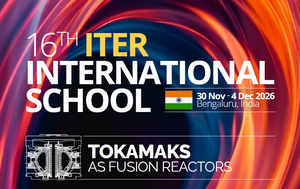
The 16th ITER International School on the topic of "Tokamaks as Fusion Reactors" will be held from 30 November 2026 to 4 December 2026. The school is jointly organized by Institute for Plasma Research (IPR), Bhat, Gandhinagar, Gujarat, and The International Center for Theoretical Sciences – Tata Institute of Fundamental Research (ICTS-TIFR), Bengaluru, in collaboration with ITER Organization and Aix Marseille University, France. The school will be hosted at ICTS-TIFR, Bengaluru. The ITER International School aims to prepare young scientists and engineers for working in the field of nuclear fusion and in research applications associated with the ITER project. The 16th edition will cover a broad range of topics related to tokamak fusion reactors’ physics and technologies, such as plasma confinement, heat and particle exhaust, integrated control and operation, integrated modelling and digital twins, plasma-materials interaction, superconducting magnets technology, neutron shielding, and tritium breeding. Registration is open from 25 July to 23 August. For all information see this website. 
Publications

Two-thirds of ITER tokamak core now in place

https://www.iter.org//sites/default/files/media/2026-07/2026-07_pr_two-thirds-of-tokamak-core-in-place_0.pdf
ST PAUL-LEZ-DURANCE, France — 29 July 2026 — Almost six months ahead of schedule, the ITER Organization has successfully installed the sixth of nine tokamak sector modules in the tokamak pit, bringing two-thirds of the machine’s torus-shaped core into place. The approximately 1,100-tonne sector module was transferred from the Assembly Hall and lowered into the pit in a carefully coordinated lifting operation, which took 30 hours and concluded on 28 July. Together with its lifting rig, the suspended load weighed nearly 1,400 tonnes. The ITER assembly teams have been installing progressively the sector modules that form the machine’s core since April 2025 and are on track to position the final module in 2027. Experience gained from each successive module assembly and lifting operation has increased the pace, efficiency and predictability of the work. “This latest achievement is a visible marker of the progress being made through our accelerated approach to machine assembly,” said ITER Director-General Pietro Barabaschi. “The teams have translated lessons learned from each operation into greater efficiency, stronger coordination and a more predictable assembly sequence. With six modules now in place, we are demonstrating that this technical approach is delivering tangible results on the project’s critical path.”The sixth module is built around vacuum vessel sector “#1,” which is the fourth and final sector manufactured in the Republic of Korea. Its installation follows ITER Korean Fusion Day on 22 July, when Korean senior government officials, diplomats, industrial leaders and ITER representatives gathered to celebrate the successful completion of Korea’s vacuum vessel sector program and its broader contribution to ITER. Four of the nine sectors that form the ITER vacuum vessel were produced in Korea, with Europe responsible for the other five. Deputy Minister of Korea’s Ministry of Science and ICT, Sung Soo Kim, provided special remarks at the ceremony, stating, “Through participation in ITER, Korea has accumulated advanced manufacturing technologies and valuable experience in large-scale international collaboration, laying the foundation for future fusion industries.” Ambassador of the Republic of Korea to France, Hyuk-Woon Kwon, further reflected: “The road toward fusion energy is long. It is difficult. It demands patience, consistency and cooperation across generations. But today’s achievement demonstrates one very important fact: steady progress is being made.”The ITER vacuum vessel is one of the most technically demanding components of the tokamak. Its nine double-walled stainless-steel sectors will form the ultra-high-vacuum chamber in which fusion reactions take place and will support many of the systems needed to operate the machine. Before the final lifting and installation operation, each 440-tonne vacuum vessel sector is carefully integrated with thermal shield panels and two approximately 310-tonne toroidal field coils to form a complete sector module. Module components must be aligned and positioned to millimetre-level tolerances.Sector module assembly activities are on the ITER project’s schedule critical path. Once all nine sector modules are positioned in the pit, teams will proceed with the complex work of joining the sectors to complete the torus. Improvements in assembly sequencing and execution have advanced the anticipated installation of the final sector module from December 2027 to mid-2027, with teams continuing to identify opportunities for further schedule optimization.“Installing six sector modules is not simply a question of repeating the same operation six times,” said Sergio Orlandi, Head of the ITER Construction Project. “Each module requires the precise integration and positioning of some of the largest and most complex components ever manufactured for a fusion machine. The increasing efficiency of the assembly sequence reflects the experience, discipline, organization and close cooperation of the ITER Organization, the Domestic Agencies and our industrial partners. We are now focused on maintaining this momentum and positioning the final sector module by mid-2027, or sooner if conditions allow.”BackgroundThe ITER vacuum vessel will provide the primary confinement boundary for the fusion plasma. The completed vessel will measure approximately 19 metres across and 11 metres high and will weigh about 5,200 tonnes before the addition of in-vessel components. Its double-wall structure will accommodate shielding and cooling water and provide support for equipment used to heat, diagnose and control the plasma.About ITER ITER is designed to demonstrate the scientific and technological feasibility of fusion power. Fusion research is aimed at developing a safe, abundant, and environmentally responsible energy source. ITER is also a first-of-a-kind international collaboration that serves as a scientific and technological foundation for the growth of a global fusion industry. As host, Europe contributes almost half of the cost of construction, while China, India, Japan, the Republic of Korea, the Russian Federation, and the United States contribute equally to the remaining costs. The ITER project is under construction in Saint-Paul-lez-Durance, in the south of France. For more information, visit: www.iter.org. MORE INFORMATIONMULTIMEDIA RESOURCES Related articles:ITER Korean Fusion DayMillions of data points, one successful lift
Press

PPPL to lead Genesis Mission project to create an AI operator for crucial fusion energy heating system

https://www.pppl.gov/news/2026/pppl-lead-genesis-mission-project-create-ai-operator-crucial-fusion-energy-heating-system

Wendelstein 7-X: Projekt zum Bau der weltweit stärksten Mikrowellenheizung gestartet

https://www.ipp.mpg.de/hipmib26

Wendelstein 7-X: Project launched to build the world’s most powerful microwave heating system

https://www.ipp.mpg.de/hipmib26en?c=5594164

F4E Report Highlights Race For Nuclear Fusion Between Five Major Actors (paywall)

https://www.nucnet.org/news/f4e-report-highlights-race-for-nuclear-fusion-between-five-major-actors-7-1-2026

In transition: Commercializing fusion power

https://www.ans.org/news/2026-07-24/article-8162/in-transition-commercializing-fusion-power/

Europe gets ready to manufacture ITER’s upper launchers

https://fusionforenergy.europa.eu/news/iter-upper-launcher-design-ready-for-manufacturing/

New US fusion regulations set to spur deployment (paywall)

https://www.reuters.com/business/energy/new-us-fusion-regulations-set-spur-deployment--reeii-2026-07-22/

HD현대重, 핵융합실험로 핵심 장치 진공용기 4개 완성

https://www.chosun.com/economy/industry-company/2026/07/23/G4YDOZJRGU2WIMLGGY4DMNZZGM/

HD Hyundai Heavy Industries Completes ITER Vacuum Vessel Sectors

https://www.chosun.com/english/industry-en/2026/07/23/756ZQLO3XBDTFG3IORB7GSF3WU/

HD현대중공업, '핵융합 심장' 진공용기 섹터 모듈 조립 완료

https://n.news.naver.com/mnews/article/629/0000518299

HD Hyundai Heavy Industries Completes ITER Module

https://www.businesskorea.co.kr/news/articleView.html?idxno=273473

HD현대중공업 제작 ITER 진공용기 섹터, 최종 조립 완료

https://transition.meltwater.com/customer/redirect/follow/20260723.ntqVoYM3AR.0

HD Hyundai Heavy Industries Reaches Major Milestone in ITER Nuclear Fusion Project

https://www.prnewswire.com/news-releases/hd-hyundai-heavy-industries-reaches-major-milestone-in-iter-nuclear-fusion-project-302832742.html

我国第一壁技术再突破:在ITER计划中率先完成第一壁钨铜连接认证

https://www.iterchina.cn/picnews/info/2026/24385.html