Logo
You're currently reading the news digest published from 14 September 2026 to 21 September 2026.
Featured (6)
Of interest (1)
Press (15)
Featured

"Fusion is gathering momentum"

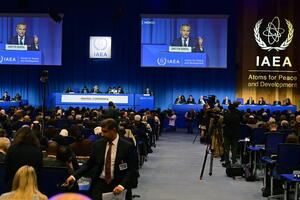
“Fusion energy has been a part of the IAEA’s portfolio since the very beginning,” International Atomic Energy Agency (IAEA) Director General Rafael Mariano Grossi told delegates gathered in Vienna last week. “Fusion has made strides [and] is gathering momentum,” he added. The growing prominence of fusion—and the importance of international cooperation as the field advances—was a recurring theme at the 70th IAEA General Conference, held from 14 to 18 September. ITER was present throughout the week, reporting on recent project progress, sharing lessons from the construction of one of the world’s most complex scientific facilities, and strengthening ties across the expanding fusion energy ecosystem.The General Conference is the IAEA’s principal annual policymaking forum. Held every year since 1957, it brings together representatives of the Agency’s 181* Member States as well as international organizations and non-governmental organizations. More than 3,000 participants attended this year’s meeting in person.For ITER, participation also reflected a relationship that stretches back to the origins of the project.“The early phases of ITER cooperation were conducted under the auspices of the Agency, and the IAEA Director General serves as the Depositary of the ITER Agreement,” ITER Head of Communication Deepti Choubey reminded delegates in a statement to the General Conference. “This Conference also brings together the countries whose sustained commitment makes ITER possible.”Choubey updated delegates on progress at ITER and emphasized another increasingly important dimension of the project’s mission: ensuring that knowledge accumulated through ITER can benefit fusion programs around the world.“We welcome the rapid growth of the fusion sector and are actively engaging with it,” she said. Through collaboration with private companies and other public fusion programs, ITER is sharing technical documentation, lessons learned and operational experience, while expanding access to modelling tools and scientific activities and creating opportunities for expert exchange and technical cooperation.“Our objective is straightforward: knowledge generated through ITER should help accelerate progress across the broader fusion ecosystem.” In a statement on behalf of the ITER Organization on Wednesday 16 September, ITER Head of Communication Deepti Choubey emphasizes how lessons learned during the buildup to ITER operation are already benefitting the fusion community. That message was reinforced in a General Conference side event on 14 September featuring ITER Director-General Pietro Barabaschi and focusing on lessons emerging from ITER’s design, construction and integration.As fusion programs around the world move from scientific research towards increasingly ambitious demonstration projects, the questions facing the field are expanding. Establishing the scientific feasibility of fusion remains fundamental, but future projects must also master the practical challenges of engineering, construction, systems integration, industrial production and project execution.The discussion looked at what ITER’s experience can offer in these areas—from managing the interfaces between highly complex systems to developing industrial capabilities and international supply chains. It also highlighted the IAEA’s role in capturing and disseminating experience among its Member States as fusion advances from science towards technology development and eventual deployment.The theme echoed Grossi’s opening remarks. For nearly seven decades, the IAEA has provided conferences and publications through which fusion scientists have shared advances. With the field entering a new phase, he said, a new group of stakeholders will also be important to accelerating “research, development, demonstration, and deployment.” At a side event on "Technical Lessons Emerging from International Fusion Research Projects," ITER Director-General Pietro Barabaschi shares practical experience and insights from designing and building ITER, and describes the implementation challenges that other projects can learn from. To that aim, Grossi is convening the third high-level meeting of the World Fusion Energy Group in Vienna on 12 November. The meeting will bring together stakeholders from across the fusion community to consider how to accelerate research, development, demonstration and deployment.The continuing importance of ITER was also highlighted in the statement delivered on behalf of Euratom, which described fusion as “the next frontier” and ITER as the “cornerstone” of Euratom’s fusion research efforts.“The knowledge and industrial base built through ITER will be essential for the future development of the EU’s power plants,” the statement said.The Euratom intervention also pointed to some of the wider questions that are coming into sharper focus as fusion programs advance. The European Commission is preparing its first EU Fusion Strategy, designed to support private-sector participation and research and technology development while exploring options for a fusion-specific regulatory framework. Work is also underway on regulatory recommendations, engineering codes and standards, skills, and knowledge management.Stronger cooperation between publicly funded science and the private sector, Euratom told the conference, will be key to further progress. Cooperation with the IAEA will likewise remain important in addressing technological challenges, developing safety standards and building the next generation of fusion scientists and engineers.ITER’s activities throughout the week reflected this increasingly interconnected fusion landscape. In addition to his participation in the lessons-learned session, Director-General Barabaschi met with IAEA Director General Grossi and held bilateral discussions with representatives of ITER Members. The meetings provided opportunities to discuss the project’s progress and the wider evolution of the fusion sector.The ITER Organization also signed a Memorandum of Understanding with the China Fusion Energy Co., Ltd. aimed at enhancing cooperation in fusion research.Other side events during the week also explored the need for international cooperation in fusion engineering, specific regulatory requirements for fusion, and the challenge of developing the workforce that a growing fusion sector will require.Taken together, these activities reflected a fusion landscape that is becoming broader and more diverse, encompassing major public research programs, emerging private ventures, industry, regulators and international organizations. * Timor-Leste was admitted as the 182nd Member State of the International Atomic Energy Agency (IAEA) on 14 September 2026.

Harnessing energy, managing risk

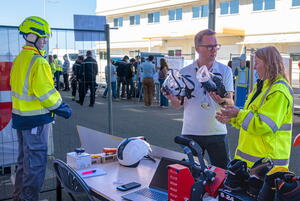
ITER is not only one of the most complex science and engineering projects on the planet; it is also an active construction site with an array of risks. The annual Safety Day promotes best practices to help preserve ITER’s robust safety record. Building on last year’s introduction of the 9 Life-Saving Rules program, the 2026 edition of Safety Day emphasized effective safety measures while exploring the different forms of energy that can create workplace hazards. â€œOur work involves many forms of energy: electrical, mechanical, thermal, nuclear, gravitational, and human,” said ITER Deputy Director-General Yutaka Kamada at the opening of the event. “When controlled, energy enables progress. When uncontrolled, it can cause serious harm. Understanding these hazards and managing them effectively is essential to working safely.”Held for the sixth consecutive year, Safety Day welcomed more than 1,500 staff members and contractors from across the ITER project on Thursday 17 September. The event featured 36 booths supported by more than 150 volunteers, covering topics ranging from how drugs can impair coordination to the energy risks associated with non-destructive testing. ITER contractor NOVA demonstrates how potentially hazardous forms of energy, including the ionizing radiation used in industrial radiography, are carefully controlled during non-destructive testing. “We were delighted with the turnout and the wide variety of people who took part,” said safety culture officer Jeremy Guigon-Boyd, who organized the event. “By offering these engaging Safety Day experiences, we are better able to share the fundamentals of assessing and mitigating risk.”Over the past five years, the number of accidents at ITER has fallen by more than a factor of three and the number of working days lost due to accidents has decreased by almost a factor of seven. According to Gilles Perrier, ITER’s Head of Safety and Quality, there were also more than 600 positive safety observations reported over the past year, an indication that awareness programs such as Safety Day are having an impact.“The measure of safety is not simply the absence of accidents,” he said. “Safety is the presence of care, learning, vigilance, leadership, and strong barriers. Let us continue building not only the most ambitious scientific project in the world, but also one of the safest industrial projects in the world.”See a few more scenes from the day in the gallery below.

Teams from around the world meet as tritium plant contracts advance

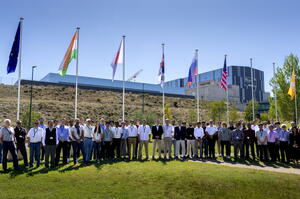
The third Tritium Plant Summit brought together more than 70 participants from the ITER Organization, Domestic Agencies, industry partners, and contractors as work progresses on this essential ITER facility. Held at ITER from 15 to 18 September, the strong international participation at the Tritium Plant Summit reflected the importance of the facility to ITER's mission. Representatives from the European, Japanese, Korean, and United States Domestic Agencies participated alongside colleagues from Agence ITER France and experts from ITER’s construction, central integration, and licensing teams. Industry partners and suppliers also attended the summit, including Amentum International, Atkins France, CES Co. Ltd, and JGC Corporation.“Tritium handling, processing, recovery and recycling are some of the big technical issues for fusion development and this summit is an opportunity to bring everyone across the project together to make progress on these topics,” said Tritium Plant Project Leader Ian Bonnett. “This year’s event was particularly important because we have reached a level of maturity at which contracts are being placed. Suppliers attended the summit to share experiences and discuss common challenges, allowing us to break new ground and solve problems together.”A mixture of deuterium and tritium is considered the most promising fuel for first-generation fusion power plants and ITER will use this fuel in experiments following the initial Start of Research Operation phase. Because tritium is scarce in nature, its safe handling, recovery and reuse—and ultimately its breeding within future fusion power plants—are central challenges for fusion energy. ITER’s tritium plant will receive, store and process tritium, separate it from other gases, and recycle it through the fuel cycle, while ITER’s test blanket module program will test technologies designed to breed tritium from lithium. The seven-floor ITER Tritium Building will house systems such as the tokamak exhaust processing system and the water detritiation system. The plant will manage tritium throughput, ensure safe confinement, and support the ITER research plan by processing exhaust mixtures and recovering tritium from various sources. Tritium plant summits were previously held in 2023 and 2024. Since the last summit, significant progress has been achieved across ITER, providing important context for the tritium plant’s development. The vacuum vessel and thermal shields have been fully repaired, and six sector modules have now been successfully installed in the tokamak pit. Major plant systems have also entered commissioning, with key facilities including the cryoplant, cooling water system, magnet power conversion system, and neutral beam power supplies handed over for commissioning activities.For the tritium plant project, all systems have now reached final design status, marking a major project milestone. Fabrication and installation of the first components is continuing, notably captive components such as water tanks and piping networks, which represents an important transition from design into delivery and execution. During the summit, participants presented updates on their respective scopes and discussed plans for the next phase of delivery, with equipment arrivals for this phase currently scheduled for 2028.Among the project updates:* The European Domestic Agency Fusion for Energy (F4E) presented its new engineering framework for the isotope separation system that receives the purified hydrogen isotope steam and separates deuterium from tritium; and the water detritiation system that recovers tritium from tritiated water and returns it to the fuelling stream.* The Korean Domestic Agency reported that major storage and delivery system contracts have been awarded.* The US Domestic Agency highlighted progress with the tokamak exhaust processing system glovebox that receives reactor exhaust and separates out impurities from the hydrogen isotopes, and it also outlined the procurement of long-lead items.* The Japanese Domestic Agency presented its contract for the detailed design of the tokamak complex detritiation system central processing plant. As part of the Tritium Plant Summit, teams were able to tour the Assembly Hall and see the progress being made on the tokamak. In the background, the seventh sector module (scheduled for insertion into the pit later this year) can be seen in tooling on the left, while the eighth sector module (scheduled for insertion in early 2027) can be seen on the right. A recurring theme throughout the summit was the value of standardization and coordinated equipment qualification. Participants shared experience gained from qualification programs covering valves, instrumentation and other components, highlighting opportunities to improve consistency, reduce duplication and make better use of specialist expertise across the international project.The presentations also highlighted the increasing focus on industrial execution and risk reduction. Domestic Agencies reported progress on major procurement activities, while engineering partners presented work on design maturation, prototyping and qualification of key technologies. These activities are intended to reduce technical, manufacturing and schedule risks as systems move towards fabrication and installation.Bonnett said he was encouraged by the progress made at the summit. “I am confident that, by continuing to work together as one team, we can successfully meet these challenges and deliver the tritium plant safely and efficiently."To learn more about the ITER tritium plant, you can watch this ITER Talks video with Ian Bonnett.

Last ITER vacuum vessel sector travelling

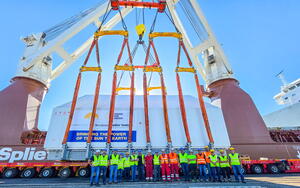
The ninth—and final—sector of the vacuum vessel arrived by boat in Marseille today and will soon be on its way to the ITER site. Six years. From the delivery of the first vacuum vessel sector to ITER to the arrival of the ninth and final sector, six years will have gone by.The ITER vacuum vessel certainly ranks among the most technically challenging procurements of the ITER machine. Consider its sheer scale—the largest fusion vessel ever designed—its extraordinary complexity, the exacting levels of precision and quality required, and a procurement strategy that divided responsibility for manufacturing its nine sectors between two ITER Members: Europe, with five sectors, and Korea, with four.For the European Domestic Agency Fusion for Energy and its supplier, the AMW consortium (Ansaldo Nucleare, Westinghouse, and Walter Tosto), the effort has spanned 15 years and mobilized a supply chain of 15 European companies.With the departure of vacuum vessel sector #2 from Westinghouse Electric’s Monfalcone factory in Italy on 15 September, this extraordinary industrial adventure is drawing to a close. When the sector arrives at ITER in early October, all nine sectors needed to form the heart of the ITER machine will have completed their journey to the ITER site—a major milestone for one of the project’s most complex and demanding industrial procurements.See Fusion for Energy's report here.

ITER and China strengthen cooperation on fusion

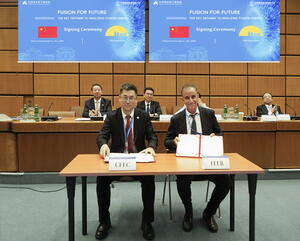
The ITER Organization and the China Fusion Energy Co., Ltd. (CFEC) have signed a Memorandum of Understanding to further cooperation on fusion engineering and scientific research. The Memorandum of Understanding was signed during a side event at the 70th General Conference of the International Atomic Energy Agency (IAEA) on 15 September. The event, hosted by the China National Nuclear Corporation and titled "Fusion for Future: Engineering the Key Pathway to Realizing Fusion Energy," brought together international organizations, government authorities, research institutes and representatives from industry to discuss how greater international cooperation could help to accelerate the transition from fusion research to practical energy applications.The discussions reflected a shared understanding that fusion is a global endeavour and that its engineering challenges cannot be addressed by any one organization or country alone.The Memorandum of Understanding signed by the ITER Organization and the China Fusion Energy Co., Ltd. (CFEC) will provide a framework for deeper engagement in areas of mutual interest, including fusion engineering technologies, collaborative research, and international scientific exchange.See further information about the discussions during the "Fusion for Future" side event in this press report.

Gaining first-hand insight into progress

On Saturday 12 September, Onoda Kimi, Minister of State for Science and Technology Policy of Japan*, visited ITER to gain first-hand insight into progress in the construction of the world's largest fusion energy project.  The visit began at ITER Headquarters with an overview of the ITER project presented by Kamada Yutaka, ITER Deputy Director-General for Science and Technology, and Omae Takayoshi, Deputy Head of the ITER Construction Project. Discussions focused on ITER's role in advancing fusion energy, recent construction achievements, and the importance of sustained international cooperation in delivering this unique scientific and technological endeavour. Minister Onoda then participated in an extensive tour of the ITER site, including key facilities such as the Radiofrequency Heading Building, the cryoplant, the magnet cold test facility, the Assembly Hall, and viewpoints overlooking the tokamak assembly pit. The visit provided an opportunity to observe the scale of the installation works currently underway and the tangible progress made toward assembly of the fusion machine. A concluding discussion with ITER representatives allowed for an exchange on future milestones and the broader significance of fusion energy for addressing long-term global energy and climate challenges. As one of the seven ITER Members, Japan continues to play a major role in the project's success through its scientific, industrial, and technical contributions. The Minister's visit to ITER and subsequent discussions with ITER Director-General Pietro Barabaschi at the IAEA General Conference in Vienna underscored Japan's longstanding commitment to the ITER project and its confidence in fusion energy as a strategic technology for the future global energy mix.*From 17 September 2026 forward, Minister Onoda became Japan's Minister of State for Economic Security. Minister Onoda saw ITER assembly progress first hand by visiting the tokamak in construction (photo) and the Assembly Hall.
Of interest

SOFT conference opens today

https://www.iter.org/of-interest?id=35585
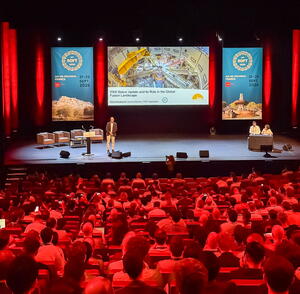
The 34th Symposium on Fusion Technology (SOFT 2026) opened today in Aix-en-Provence, France, just one hour from the ITER site.Organized by the Institute for Magnetic Fusion Research (IRFM), home to the WEST tokamak and part of the French Alternative Energies and Atomic Energy Commission (CEA), the five-day conference brings together scientists, engineers, industry representatives, and exhibitors every two years to share the latest results and breakthroughs across all areas of fusion technology.ITER Director-General Pietro Barabaschi delivered one of two opening plenaries, sharing an update on ITER’s progress. The ITER Newsline will have a full report next week.
Press

A step up in fusion: Europe and Japan train the next generation at JT-60SA

https://fusionforenergy.europa.eu/news/jt60sa-school-laboratory-training/

ITER组织副总干事罗德隆出席2026浦江创新论坛并调研核聚变科研单位

https://www.iterchina.cn/picnews/info/2026/24421.html

China sets out fusion progress, collaboration opportunities

https://world-nuclear-news.org/articles/china-sets-out-fusion-progress-collaboration-opportunities

Fusion Leaders Convene in London for Global Policy Summit and FIA UK Fusion Forum

https://www.fusionindustryassociation.org/fusion-leaders-convene-in-london-for-global-policy-summit-and-fia-uk-fusion-forum/

Three U.S.-U.K. partnerships accelerating fusion commercialization

https://www.ans.org/news/2026-09-16/article-8394/three-usuk-partnerships-accelerating-fusion-commercialization/

Fusion breakthroughs spark optimism but scaling challenges ahead

https://www.reutersevents.com/nuclear/fusion-breakthroughs-spark-optimism-scaling-challenges-ahead

China unveils HL-4 fusion tokamak

https://www.neimagazine.com/news/china-unveils-hl-4-fusion-tokamak/?cf-view

China invites global partners to deepen fusion engineering cooperation toward practical applications

https://www.globaltimes.cn/page/202609/1370691.shtml

A radiant ring to protect the tokamak divertor

https://irfm.cea.fr/en/2026/08/a-radiant-ring-to-protect-the-tokamak-divertor/

Europe completes the last ITER Vacuum Vessel sector

https://fusionforenergy.europa.eu/news/europe-completes-the-last-iter-vacuum-vessel-sector/

Nuclear fusion’s moment of truth (paywall)

https://www.ft.com/content/ef511d46-a689-4868-9654-15b96a71586d?sharetype=blocked

韓, 영국·미국 등 9개국과 핵융합 상용화 협력

https://n.news.naver.com/mnews/article/119/0003132597

Enabling the safe and sustainable growth of the fusion industry

https://environmentagency.blog.gov.uk/2026/09/14/enabling-the-safe-and-sustainable-growth-of-the-fusion-industry/

30년대 전력 생산 위한 핵융합 기술, 세계 선도국과 협력 강화 나서

https://www.mimint.co.kr/bbs/view/news/S1N11/5582281

UK and US fusion supercomputers to be linked across Atlantic

https://www.gov.uk/government/news/uk-and-us-fusion-supercomputers-to-be-linked-across-atlantic