Logo
You're currently reading the news digest published from 19 October 2026 to 2 November 2026.
Featured (3)
Of interest (1)
Press (21)
Featured

“The repair campaign obliged us to rethink the way we work”

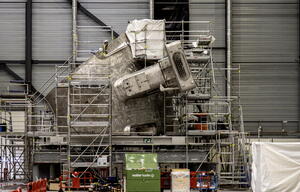
With the completion this autumn of a multiyear campaign to repair key tokamak components, ITER is closing a difficult chapter in its construction history. But the experience has also prompted important changes in the way the project approaches engineering, industrial partnerships and machine assembly. Construction Project head Sergio Orlandi reflects on a turning point for ITER—and the lessons that will guide the next phase of construction. When the first “piece” of the vacuum vessel—sector module #6—was lowered into the tokamak pit in May 2022, ITER was already becoming aware of problems affecting key components. Looking back, how significant was that moment?I see May 2022 as a dividing line between two periods in ITER's construction history. Lowering the first sector module into the pit was an important demonstration of our technical capabilities, but at the same time some fundamental problems were coming into focus. We were facing two distinct challenges. We had found corrosion in some thermal shield cooling pipes, which raised concerns about the condition of other panels. And the vacuum vessel sectors were affected by dimensional deviations in the bevel regions, where adjacent sectors would eventually be welded together. I saw an even more fundamental issue related to the overall integration of the nine sectors: even if a sector is manufactured within its specified tolerances, it requires adjustment to fit precisely with its neighbours. It was urgent to move beyond a focus on the individual components and consider the entire assembly process and every interfacing part. We also had to bring the assembly sequences under control in terms of duration and cost.  Sergio Orlandi It was clear we needed a different approach—not only to repairing the components, but also to organizing and managing the work that lay ahead. That is why, when I think of this critical juncture, I think of a “before” and an “after.”How did ITER move from identifying the problems with key tokamak components to developing and qualifying the repair solutions?Our first priority was to establish whether the components could be repaired. In July 2023, we removed sector #6 from the tokamak pit—an operation that was considerably more than an “installation operation in reverse,” requiring additional engineering and modifications to tooling. Once the sector was accessible to metrology, we understood how much its bevel joints deviated from an acceptable configuration for integration with other sectors.In parallel, we sought advice from specialist organizations including welding institutes in France and Italy, research institutes such as the French Alternative Energies and Atomic Energy Commission (CEA), and CERN for the thermal shield. Over a period of one year, we worked with industrial companies to develop mockups, test different approaches for the repair of both types of defects, and qualify welding, material build-up and machining procedures for bevel repair.The overall conclusion was that we could repair the components, but there were uncertainties and differing technical opinions along the way. The breakthrough came when we stopped considering each sector in isolation and focused instead on how it could be adjusted to fit with its neighbours. This guided the bevel repair strategy: depending on the location, material had to be added, removed through machining, or both. Working with ITER specialists, external experts and industrial partners, we established qualified procedures for the repair (or refabrication) of all thermal shield sets and for the repair of the sector bevel joints, with appropriate nuclear safety oversight. By autumn 2023, we had selected the companies and contracts were in place.How did the experience of the repair campaign influence the way ITER organizes construction activities and works with industrial contractors?Repairs obliged us to rethink the way we work. Beyond the immediate work of recovery, we had to ask: what could be improved going forward? One of the most important lessons was that ITER needed to take greater ownership of the engineering and planning of construction activities. In the past, some contracts had been awarded with a relatively broad description of the work, leaving much of the detailed engineering and organization to be developed during execution. Today, we develop detailed engineering work packages before launching the competitive bid to select an industrial partner. This allows companies to prepare realistic proposals and gives ITER a stronger basis for evaluating performance. Also, where the original approach had been to rely on a single large contract to cover many different activities, now we divide the work into more clearly defined packages, each with its own engineering preparation and execution strategy.The objective is not to tell contractors how to do everything, nor is it to hope they know as much as you. It is to establish a genuine industrial partnership in which ITER brings its knowledge of the machine and its requirements, while the contractor contributes its expertise in execution. ITER remains closely involved throughout the process.Beyond contracting, what changed in the day-to-day organization of work on the ITER site?During the first assembly of sector module #6 in 2021/2022, many activities had been carried out sequentially. Metrology was followed by engineering analysis, followed by further measurements and adjustments. In our new approach, we began integrating metrology more closely with engineering and execution, identifying activities that could proceed in parallel and making better use of facilities and tooling. We believed we could significantly reduce the time required for each sector module, initially targeting eight or nine months for assembly and installation. With experience gained from each successive operation, our contractor CNPE is now completing the sub-assembly phase in just 5.5 months. We have also strengthened the way we monitor progress and costs, with regular reviews of each contract and closer attention to the relationship between completed work and expenditure.What are the most important lessons that ITER can carry forward into the next stages of machine assembly?One of the most important lessons is that even the most complicated construction problems become more manageable when we break them down into clearly defined activities, understand the interfaces and bring together the right expertise. Construction is different from design. We must constantly adapt to the reality of the site, to the as-built configuration of components and to the constraints created by work already completed.Experience being gained by our teams, including a new generation of younger program managers, is also an important legacy. Technical knowledge is essential, but managing interfaces between systems and components, coordinating contractors and maintaining control of schedules and costs are equally important skills. Much of that knowledge can only be acquired through practical experience.We know that further challenges will emerge. What this experience has taught us is to approach them systematically, break them into manageable parts, and develop solutions that take account of the realities of construction. That is the approach we need to carry forward. .custom-media-size img { height: auto; width:450px;} .custom-media-size{padding-left:20px;}

Halfway to full current

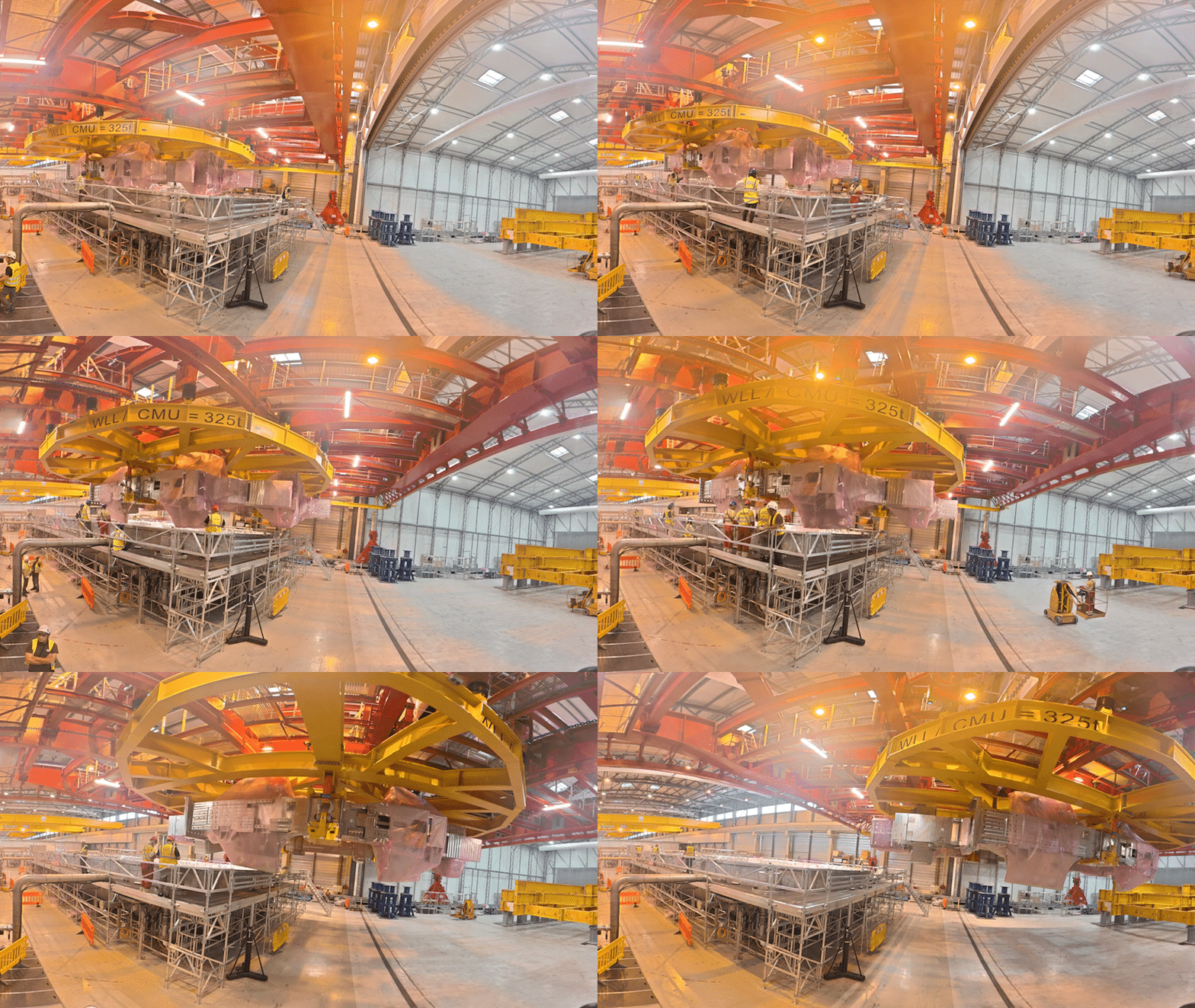
Toroidal field coil #17 has been removed from ITER’s magnet cold test facility after being successfully energized to 34 kA. The path is now clear for testing the next magnet at 68 kA with insulation methods replicating those used in the tokamak. The second testing campaign has been completed at the magnet cold test facility with one of ITER’s 330-tonne, D-shaped toroidal field coils demonstrating robust performance after being cooled to 4 K (minus 269 °C) and energized to 34 kA—half its nominal operating current of 68 kA.“It is an important step to reach 34 kA and to confirm the coil is behaving as predicted by the models,” says Adrien Deydier, the ITER Lead Mechanical Engineer participating in the testing. “The campaign has provided valuable operational experience for the teams ahead of integrated commissioning.”The magnet cold test facility was built to test several of ITER’s superconducting magnets and the supporting infrastructure (cryogenics, vacuum, power supply, power feeders, and control-command functions) ahead of the commissioning of the magnet systems in the tokamak. The facility began operations with the first coil in May 2026 with the successful cooldown to 4 K and energization to 10 kA of toroidal field coil #7. During this first campaign, steady-state current tests were used to measure the electrical resistance of the coil’s joints, while current discharge tests helped assess the quench detection system, which monitors for any loss of superconductivity.The testing of the second coil, toroidal field coil #17, began in August 2026. The successful energization up to 34 kA allowed a better evaluation of the coil deformation under electromagnetic loads as compared to the structural model. Now that the campaign is complete, the magnet will begin its journey into the machine. After a brief sojourn in temporary storage, it will be moved into the Assembly Hall and integrated into the plasma chamber’s final sector module. This work is licensed under a Creative Commons Attribution-NonCommercial-NoDerivatives 3.0 Unported License (CC BY-NC-ND 3.0). Download ITER Lead Mechanical Engineer Adrien Deydier, seen during the preparation of the coil transfer, says extensive testing at the magnet cold test facility will make magnet commissioning and operation more efficient. As for the magnet cold test facility, it will now welcome toroidal field coil #19, built as a spare, for an intensive test program. Cooldown to 4 K is scheduled to begin in April 2027, followed by testing at 34 kA. This time, Paschen-tight connections will be made between the in-cryostat feeder and the coil; these connections, which replicate those used in the tokamak, will allow engineers to assess the high-voltage ground insulation of the coil. (Paschen’s law describes how electrical insulation can break down at certain gas pressures.)The facility will then be opened so that a reinforcement structure can be installed to prevent deformation when the coil is energized to its full operating current of 68 kA. This stage of the campaign will also include temperature margin tests, with parts of the coil deliberately heated to trigger a loss of superconductivity to verify the operational margins.Following the testing of toroidal field coil #19, the facility will be reconfigured to test the ring-shaped poloidal field coil #1.

Scientist Aparajita Mukherjee

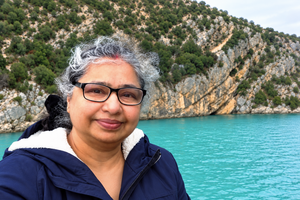
It is with profound sadness that we have learned of the passing of Aparajita Mukherjee, following an illness. The ITER community mourns the loss of an exceptional person who played a vital role in the development of the ion cyclotron radio frequency heating system for ITER and made a long-lasting contribution to the radiofrequency community.Aparajita Mukherjee joined the Institute for Plasma Research, Gandhinagar, in 1991 as a research scholar after obtaining her master’s degree in physics from Jadavpur University. Her initial research focused on plasma production using radiofrequency (RF) waves.In 1995, following the launch of India’s Steady State Superconducting Tokamak (SST-1) program at the Institute for Plasma Research, she devoted her time to the development of the device’s ion cyclotron radiofrequency heating (ICRH) system. She was primarily involved in physics and RF technology developmental activities for SST-1’s 20–92 MHz, 1.5 MW continuous wave ICRH system, and also contributed to the design and commissioning of the 200 kW ICRH system for the ADITYA tokamak.In 2006, after India joined the ITER project as a member, she took on the responsibility of fulfilling India’s in-kind commitments in delivering ICRH-related systems and served in this role through 2021. During these formative and demanding years, she provided strong technical direction and managed the development of the ICRH system with dedication, determination, and foresight. In 2021, she joined the ITER Organization in France as the ICRH project leader, where she continued to contribute her extensive knowledge and experience to ITER until her retirement in October 2024.Throughout her career, Aparajita placed great emphasis on deep study and the development of in-depth technical knowledge. She encouraged her colleagues not merely to complete assigned tasks, but to understand the underlying science and engineering thoroughly. She strongly believed in building indigenous capabilities and, under her guidance, several important radio-frequency components were developed by the RF Group at ITER-India that demonstrated functionality successfully. These achievements stand as a testament to her vision, technical leadership, and confidence building within the technical team. Not just a project manager and technical leader, Aparajita was also an outstanding mentor who generously shared her knowledge and experience with others. Her support to the technical community was not limited to professional matters only but it was always exceptional and beyond. Her ability to combine technical excellence with humbleness and humanity attracted the deep respect and affection of colleagues at ITER-India, the ITER Organization, and across the wider scientific and engineering community.Aparajita’s absence leaves a profound void, but her values, teachings, and contributions will continue to guide and inspire us. She will be deeply missed, but she will always remain in our hearts and memories.
Of interest

JT-60SA: Results from first operating campaign shared at ITER

https://www.iter.org/of-interest?id=35882
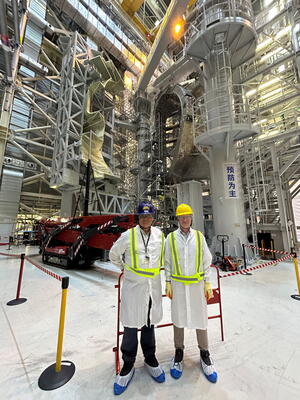
During a visit to ITER in October, Jeronimo Garcia, project leader of the JT-60SA tokamak, presented results from the Japanese-European machine's first operating campaign in 2023 and 2024. His presentation covered plasma performance, lessons from early operation, and modelling efforts for future experiments, as well as preparations underway for its next restart.The discussion emphasized how operational experience gained on JT-60SA contributes to reducing risks and advancing knowledge for future fusion devices, while also supporting the broader international fusion roadmap toward fusion energy. Under a collaboration agreement signed in 2019, ITER is directly benefitting from the experience gained in fusion activities under the Broader Approach Agreement—and in particular the assembly, installation, integrated commissioning and operation of JT-60SA.Productive exchanges were held with ITER experts on plasma scenarios, machine operation, diagnostics, and strategies for maximizing scientific output in upcoming experimental campaigns.Read more on the JT-60SA website.--Jeronimo Garcia (right) tours the ITER Assembly Hall with Alberto Loarte, ITER Science Division head.
Press

Hotter than the Sun: Why fusion reactors need such high temperatures

https://interestingengineering.com/energy/hotter-than-the-sun-fusion-reactors

F4E announces the winners of the Supply Chain Excellence Awards

https://fusionforenergy.europa.eu/news/f4e-supply-chain-excellence-awards-winners/

세계 최대 R&D 협력 사업 'ITER', 역대 네 번째 한국인 사무차장 임명

https://n.news.naver.com/article/008/0005435223

F4E presents Llevant, a breakthrough in nuclear analysis

https://fusionforenergy.europa.eu/news/f4e-presents-llevant-a-breakthrough-in-nuclear-analysis/

Fusion energy needs a clearer account of what each breakthrough measures

https://www.innovationnewsnetwork.com/fusion-energy-needs-a-clearer-account-of-what-each-breakthrough-measures/75179/

From 3D Printer to Fusion Reactor

https://camal.ncsu.edu/2026/10/27/from-3d-printer-to-fusion-reactor/

Nucleare: fusione, a ENEA Brasimone la più grande piattaforma sperimentale in Europa per studi e test sul mantello dei reattori

https://www.media.enea.it/comunicati-e-news/archivio-anni/anno-2026/nucleare-fusione-a-enea-brasimone-la-piu-grande-piattaforma-sperimentale-in-europa-per-studi-e-test-sul-mantello-dei-reattori.html

Where Fusion Fuel Comes From: Deuterium, Tritium and Lithium

https://discoveryalert.com/education/nuclear-fusion-fuel-deuterium-tritium-lithium/

Digitale Zwillinge in der Fusion: Was heutige Vorhersagemodelle können

https://www.ipp.mpg.de/digitwins

Digital Twins in Fusion: What Today’s Predictive Models Can Do

https://www.ipp.mpg.de/digitwinsen?c=5594164

JT-60SA Project Leader Shares First Operation Results at ITER

https://www.jt60sa.org/wp/jt-60sa-project-leader-shares-first-operation-results-at-iter/

General Atomics Scientists Win Dawson Award, Help Prove a New Path Toward Fusion Energy

https://www.ga.com/ga-scientists-win-dawson-award-help-prove-a-new-path-toward-fusion-energy

How did F4E build the European fusion supply chain?

https://fusionforenergy.europa.eu/news/how-did-f4e-build-the-european-fusion-supply-chain/

「地上の太陽」ITER、炉の心臓部を形づくる主要機器が集結! 最後の真空容器セクターが到着

https://mainichi.jp/articles/20261026/pr2/00m/020/524000c

Energy Ministry says Israel must act now to ensure place in global nuclear fusion race

https://www.timesofisrael.com/energy-ministry-says-israel-must-act-now-to-ensure-place-in-global-nuclear-fusion-race/

Fusion for Energy reinforces its commitment to IFMIF-DONES through the signing of the first two supply agreements for the Programme

https://ifmif-dones.es/dones-updates/fusion-for-energy-reinforces-its-commitment-to-ifmif-dones-through-the-signing-of-the-first-two-supply-agreements-for-the-programme/

Na Zemi vzniká umělé Slunce. Obří reaktor může změnit energetiku

https://www.prvnizpravy.cz/zpravy/na-zemi-vznika-umele-slunce-obri-reaktor-muze-zmenit-energetiku/

We're helping to build A NEW SUN (video 11:41)

https://www.youtube.com/watch?v=SUtTDW1d53M

追加受注したITER向け実機ジャイロトロン1号機が那珂研に納入 ~追加受注した20機の製作が進展、ITER機構への納入に向けて検査へ~

https://www.fusion.qst.go.jp/ITER/iter/ITER_Japan_News_178.html

Columbia University und Max-Planck-Gesellschaft treiben gemeinsam die Fusionsforschung voran

https://www.ipp.mpg.de/cu-mpg

Columbia University and Max Planck Society team up to advance fusion energy science

https://www.ipp.mpg.de/cu-mpg-en?c=5594164