
Wrapping up conductor fabrication
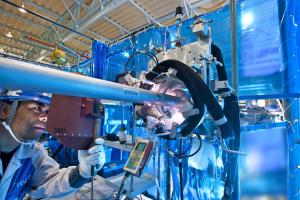

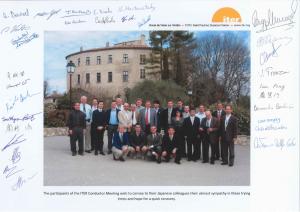

In order to assess and solve the problem, experts assembled at the Château de Cadarache this week agreed on a multiple-step approach: a series of tests will be performed over the next weeks and months aiming to find out whether the unsatisfactory performance is a result of the sample configuration, the sample preparation, or the conductor design itself. "These tests will be performed in parallel in order to save time and to enable the start of procurement," says Devred. "The SULTAN test serves as a risk mitigation strategy for launching production, but the true validation of the performance in conditions similar to the operating environment will be made by a long length of conductor." This so-called central solenoid insert test will occur during the second half of 2013, when 50 metres of central solenoid conductor will be tested in the central solenoid model coil based in Naka, Japan that provides test conditions very similar to those in ITER.