Logo
You're currently reading the news digest published from 19 January 2026 to 26 January 2026.
Featured (3)
Of interest (1)
Press (14)
Featured

Old dogs, new tricks

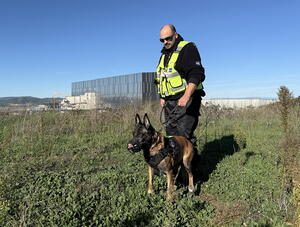
ITER’s security needs are evolving as the project’s needs evolve, but traditional guard dogs remain as valuable as ever Standing on a hill overlooking ITER’s Tokamak Building and the bustle of one of the planet’s most advanced science and engineering projects, Gwennael Wartelle gives his old-fashioned piece of technology a scratch behind the ears.“Dogs are great for security at ITER,” says Wartelle. “They can be dissuasive and help in an active situation if I take the muzzle off, but they’re also friendly animals that can make people feel at ease.”Over the years, security procedures at ITER have changed in parallel with the progress of the project, evolving from the temporary fence that was erected around the perimeter of the site in 2007 as clearing and levelling activities were underway to the 24-hour security presence, controlled access, and vehicle checks implemented when ITER was decreed an official nuclear facility in November 2012. Recently, security protocols tightened again with new monitoring requirements implemented in 2025 when ITER was granted official authorization for the import, transport, possession, and use of Category IV nuclear materials (see inset). And, in the future, there will be even stricter security requirements when tritium arrives on site for deuterium-tritium plasma operations in the 2030s. But from ITER’s first day to its last, there will be one constant: the faithful patrol dog. Between 1 September 2024 and 31 August 2025, 1,370,000 vehicles were visually checked upon entry to the ITER site (some multiple times). “We approach security with the acronym THO: technical, human, organizational,” said Xavier Peaucelle, the leader of the Security and Safety Section at ITER. He explained that security relies on three key elements: technical measures such as cameras, an organization responsible for designing and implementing the security strategy, and the human factor—especially the dogs and their handlers—which will always play a vital role in alerting, detecting, deterring, and informing.As with any big organization, ITER needs a security team to protect its site, equipment, and people, and its missions include everything from making sure visitors are safe during an Open Doors Day to coordinating security for high-profile events such as the visit by Prime Minister Modi and President Macron. Beyond this, due to Article 14 of the ITER Agreement that specifies* areas where the national laws and regulations of the Host state (France) apply, there are two key sets of French national regulations for nuclear activities that must be respected. First, as an official “installation nucléaire de base” or INB, ITER is subject to regulations laid out by the French ASNR (Authority for Nuclear Safety and Radiation Protection) to ensure the site’s buildings and components meet the operating standards for a nuclear facilityThe second set of regulations comes from the French Ministry of Energy’s HFDS agency (Haut fonctionnaire de défense et de sécurité), which is responsible for energy sector defence plans for natural disasters, terrorism, and other crises. While the ASNR sets the rules to make sure construction, science, and engineering norms are respected so there are no problems during nuclear operation, the HFDS sets the rules for transportation and protection of nuclear materials to ensure against theft or leaks due to malicious acts or targeted attacks. ITER needs to successfully fulfill both sets of requirements to operate as a nuclear facility in France. A team of nine ITER Organization staff ensures security at ITER with the support of more than 60 security officers from the Seris security firm. Pictured here from left to right are Ingrid Chiaramonte, Xavier Peaucelle, Michael Bouvant, Sylvain Duparchy, Laure Zingraff, Stephane Marco, Nicolas Tourniaire, and Sebastien Mineo. The HFDS requirements are folded into the responsibilities of ITER’s team of nine ITER personnel and supported by 11 receptionists from ONET Accueil and more than 60 security guards from the SERIS Group. The canine patrols are at the forefront of the new enhanced monitoring efforts.“When we have an intrusion alarm, we perform what we call a ‘removal of doubt’ and the operational response is the dogs,” explains Sylvain Duparchy, the ITER Security Officer in charge of on-the-ground operations. “This supports the way we protect our people and the site if we ever have to deal with an intrusion or a malicious act.”Up until now, the canine patrols have mainly played a dissuasive role as there have been no major security incidents at ITER. To provide a visible security presence, Gwennael Wartelle can walk more than 10 kilometres a shift as he patrols the 180-hectare site. He is always accompanied by one of his two official guard dogs, Belgian Malinois named Maïna and Balou. â€œI’ve been around dogs since I was a baby when my family had a German Shepherd named Choupette,” says Wartelle, who is 42 and started his security job at ITER four years ago. “This is a profession of passion and it’s special here because we are protecting something so important. I hope my dogs and I can be part of it for a while.”Considering that security will be enhanced again in the 2030s and maintained until the 2050s, dogs like Maïna and Balou­—and generations after them—are sure to have a place at ITER for a long time to come. *Article 14 of the ITER Agreement states: "The ITER Organization shall observe applicable national laws and regulations of the Host State in the fields of public and occupational health and safety, nuclear safety, radiation protection, licensing, nuclear substances, environmental protection and protection from acts of malevolence." Nuclear Materials Authorization OrderITER reached a major security milestone in the summer of 2025 when the project received official French authorization for the possession, use, transfer, and import of Category IV or below nuclear materials.The Category IV rating applies to nuclear materials that have a low proliferation risk but nonetheless require strict oversight. â€œWe needed this authorization to run ITER. It’s a major regulatory requirement with direct implications for operations, security management, and compliance,” says Laure Zingraff, the ITER Nuclear Security Engineer who spent three years preparing the dossier for validation. â€œIt’s an interesting challenge to determine how we adapt to the evolving security obligations.”On a practical level, since the new authorization was granted in July, ITER has had to increase its reporting, such as notifying the French government three months in advance about a security post changing location or new storage facilities for the gammagraphy equipment used for non-destructive testing. There will also be periodic inspections by the Ministry of Energy, which oversees the authorization. Since receiving its nuclear materials authorization order in July 2025, ITER has been running an awareness campaign about the new compliance and monitoring requirements.

Vladimir Mukhovatov, a fusion pioneer

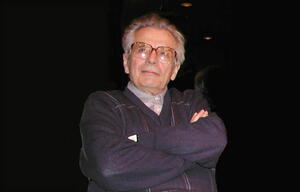
The ITER Organization is saddened to learn of the death of Vladimir Mukhovatov, a Russian physicist who played a key role in establishing the scientific basis for ITER.  Vladimir Mukhovatov was a leading Russian plasma physicist from the Kurchatov Institute and a pioneer of fusion research whose work shaped tokamak physics and the ITER project from its earliest stages. He began his career at the Kurchatov Institute in 1958, working on the T-1 tokamak and playing a major role in the foundational development of tokamak research, with work that spanned from theoretical plasma physics to tokamak design. Together with Vitaly Shafranov, he authored the famous formula describing plasma equilibrium in a tokamak, published in 1971 in the journal Nuclear Fusion. He also designed the T6 tokamak which was put into operation in 1965. In recognition of their groundbreaking tokamak research work, he was part of the team that was awarded the USSR State Prize in 1971.During the ITER’s Conceptual Design Activity phase (CDA, 1988–1990), as part of the ITER Central Team, he was a key scientific figure in establishing the physics basis of the ITER design. His contributions were fundamental in shifting tokamak research from small-scale experiments to the massive engineering requirements of a "burning plasma" machine like ITER. He played a central role in developing energy confinement scaling laws, characterizing transport coefficients, and leading the ITER Physics Expert Groups (which were the predecessors of the International Tokamak Physics and Engineering Activity (ITPEA) groups), specifically focusing on transport and confinement. Vladimir Mukhovatov at the Kurchatov Institute (1971). From left to right: V. Mukhovatov, S. Mirnov, L. Artsimovitch and V. Strelkov (courtesy of the Kurchatov Institute). During the ITER Engineering Design Activity that followed (1992-2001), Vladimir Mukhovatov worked in San Diego (USA) and Naka (Japan) as part of the Physics Division of the Central Team. His most influential contribution in this phase was the IPB98(y,2) confinement scaling law, which laid the groundwork to predict ITER’s performance and which remains a reference for tokamak experiments and design today. In the late 1990s, the ITER design underwent a major revision (called “ITER-FEAT”), which is the machine with a plasma current of 15 MA being built today. Mukhovatov provided the physics validation for the "right size" by conducting the analysis that showed that the ITER machine could achieve its primary goal of Q≥10 at this plasma current and allow for the study of burning plasma physics and fusion technologies. Within the ITPEA framework, he coordinated international experimental efforts across many tokamaks to verify that the confinement scaling laws developed during CDA held true for the evolving EDA design. He also served as the editor of two key Nuclear Fusion papers for ITER, ITER Physics Basis and Progress in the ITER Physics Basis, and made key contributions to the chapter on Plasma Confinement and Transport.  From left to right: S. Mirnov, E. Gorbunov, A. Us, V. Strelkov, L. Artsimovitch, K. Razumova, A. Spiridonov, V. Mukhovatov, V. Shafranov and D. Ivanov in front of the T-4 tokamak (courtesy of the Kurchatov Institute). From January 2007 to June 2010, he worked on site at ITER as a Senior Scientific Officer within the Fusion Science and Technology Department. His role was to ensure that the evolving engineering and civil design remained consistent with the scientific “blueprints” that had been established. He continued refining confinement scaling laws, co-authored research papers that defined how ITER's operation would bridge the gap to fusion reactors, and focused on "burning plasma" issues such as energetic particle behaviour and self-heating effects. He also contributed to early versions of the ITER Research Plan and in particular to the analysis of hybrid and steady-state operating scenarios.After retiring from ITER, Vladimir Mukhovatov returned to the Kurchatov Institute and remained active in fusion research for many years. The ITER Organization owes him a profound debt for laying the physics foundations of the project. Colleagues who had the privilege to work with him will always remember him for his wisdom and kindness.

Second gyrotron installed on site

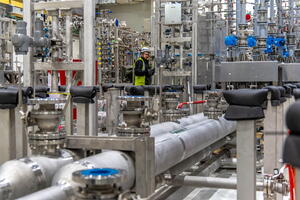
The third level of the Radiofrequency Building is now occupied by a forest of dull grey piping, shining steel manifolds and brightly coloured cables. At the far end of the space, a constant humming is an indication that compressors and chillers are at work, progressively bringing the “super conductive magnet”—an auxiliary system located at the base of the first gyrotron—to cryogenic temperature.  Installed last week, a second gyrotron, also provided by Japan, is now in the early stages of equipment a few metres away. In total, 24 similar devices (8 from Japan, 8 from Russia, 6 from Europe and 2 from India) will be installed on the building’s “gyrotron floor.”In a gyrotron, electrical power is converted into electromagnetic radiation that “resonates” with the electrons inside the plasma. The resonance effect energizes the particles and contributes to bringing the plasma to the temperatures required for fusion.Gyrotrons are at the core of the electron cyclotron resonance heating (ECRH) system, one of three external heating systems planned on ITER*. A second gyrotron, also delivered by Japan, was installed last week. When all work is completed, it will look exactly like its sibling (far left) that is now in commissioning. In the initial ITER research plan (Baseline 2016), the “firing power” delivered by 24 gyrotrons was considered sufficient. In the current baseline (Baseline 2024), more radiowave plasma heating is required and, as a consequence, 48 gyrotrons will be needed at the start of operation, and another 24 for the first phase of deuterium-tritium experiments. An annex to the Radio Frequency Building and a separate building will accommodate this additional equipment. *Two radiowave-based heating systems (ECRH and ion cyclotron resonance heating, ICRH) as well as the injection of high-energy particles (neutral beam injection) will contribute to bringing the plasma to the temperature at which fusion reactions can occur.
Of interest

ITER by drone - December 2025 update

https://www.iter.org/of-interest?id=33737
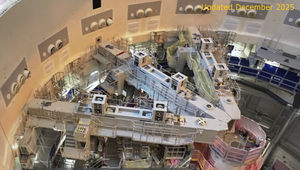
Originally filmed on site at ITER in May 2025, this video has been updated with new footage of the tokamak pit from December (1:14–2:12). A third of the ITER plasma chamber is now in place, and the installation of a fourth sector is imminent. Fly above, and into, the modules of the ITER vacuum vessel, or—if you haven't already seen it—watch the rest of the video to see how the ITER machine and plant are coming together on a 180-hectare site in southern France.See the updated video on the ITER YouTube channel.
Press

PPPL’s STELLAR-AI project fast-tracks fusion energy research with AI supercomputing

https://www.innovationnewsnetwork.com/stellar-ai-project-fast-tracks-fusion-energy-research-with-ai/65855/?utm_source=rss&utm_medium=rss&utm_campaign=stellar-ai-project-fast-tracks-fusion-energy-research-with-ai

Next-gen high-temperature superconductor (HTSC) tested for TRT

https://www.neimagazine.com/news/next-gen-htsc-tested-for-trt-tokamak/?cf-view

Korea Launches Nuclear Fusion Demonstration Reactor Development

https://www.businesskorea.co.kr/news/articleView.html?idxno=261403

PPPL launches STELLAR-AI platform to accelerate fusion energy research

https://www.pppl.gov/news/2026/pppl-launches-stellar-ai-platform-accelerate-fusion-energy-research

New Tennessee facility accelerates fusion materials development

https://www.innovationnewsnetwork.com/new-tennessee-facility-accelerates-fusion-materials-development/65735/

La Universidad de Sevilla presenta su nuevo equipo de gobierno y lanza una innovadora iniciativa en fusión nuclear

https://iymagazine.es/noticia/24508/universidad/la-universidad-de-sevilla-presenta-su-nuevo-equipo-de-gobierno-y-lanza-una-innovadora-iniciativa-en-fusion-nuclear.html

Europe signs contract to manufacture ITER Neutral Beam Drift Ducts

https://fusionforenergy.europa.eu/news/iter-neutral-beam-drift-ducts-contract/

China implements Atomic Energy Law

https://www.neimagazine.com/news/china-implements-atomic-energy-law/?cf-view

ITER skärper testprogrammet inför första forskningsdriften

https://www.dagensnaringsliv.se/20260121/286715/iter-skarper-testprogrammet-infor-forsta-forskningsdriften

Germany’s fusion alliance expands

https://www.neimagazine.com/news/germanys-fusion-alliance-expands/

Switzerland regains its place in European fusion research

https://actu.epfl.ch/news/switzerland-regains-its-place-in-european-fusion-r/

Drones in fusion: A first-of-its-kind aerial inspection at JET

https://www.ukaea.org/news/drones-in-fusion-a-first-of-its-kind-aerial-inspection-at-jet/

Fusion power plant plan is a 'calculated risk'

https://www.bbc.com/news/articles/cx20qdkewlno

Europe moves ahead with the manufacturing of its gyrotrons for ITER

https://fusionforenergy.europa.eu/news/iter-gyrotrons-final-design-review/