Logo
You're currently reading the news digest published from 7 September 2026 to 14 September 2026.
Featured (4)
Press (8)
Featured

Putting welding tools to the test

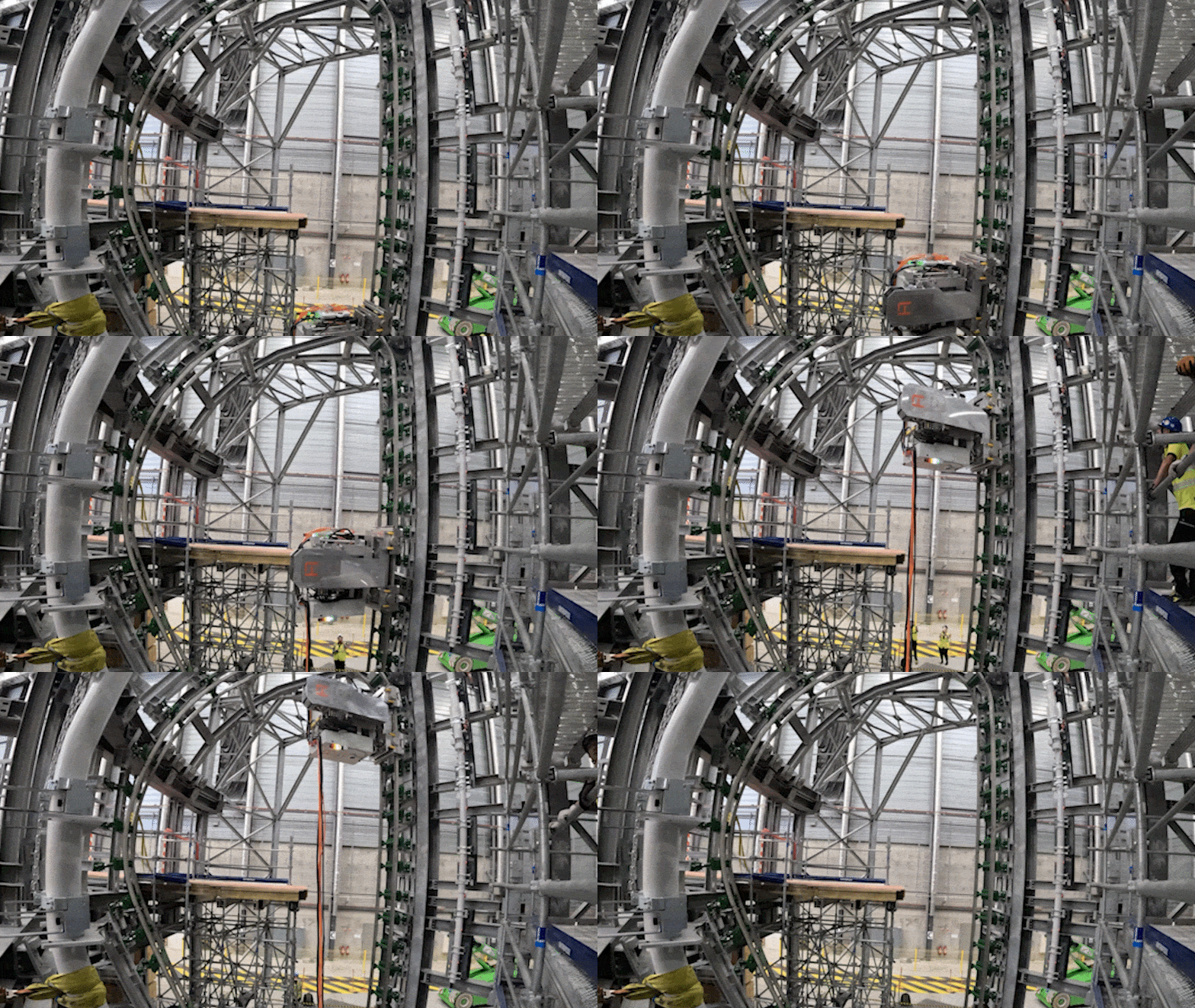
Three machines that are essential for vacuum vessel welding activities are being put through their paces as ITER’s Trial, Test and Training Facility begins official operations. When work begins to weld ITER’s nine vacuum vessel sectors into a single plasma chamber, different machines will be deployed to perform tasks such as verifying the welds are structurally sound or scraping away excess weld material. To ensure these machines are ready to perform when called upon, they are now being tested in one of the replica vacuum vessel sectors at a test facility on the ITER site.“This testing allows us to de-risk first-of-kind operations,” explains Daniel Coelho, the project coordinator who is overseeing part of the vacuum vessel welding program. “You can learn a lot from 3D models, but if you don’t do a physical test, you are going to miss things. Thanks to our first trials, we’ve learned what is working perfectly and where there are weaknesses. This allows us to improve the machines and the different processes before the welding begins.”The Trial, Test, and Training Facility is a 500-metre-square facility located in a building across from ITER’s Tokamak Complex. It features replicas of three vacuum vessel sectors that have been individually customized to meet different training needs: one for in-vessel diagnostics and instrumentation, one for in-vessel coils and blanket modules, and one for welding activities. The training facility features three replica vacuum vessel sectors that can be configured differently. It is currently set up for instrumentation training (left), blanket module training (middle), and welding activities training (right). Official activities were launched at the facility in July and the first testing campaign involves three machines that are scheduled to be used in early 2028 after the vacuum vessel welding campaign begins:* The LINAC (for LINear ACcelerator) will travel along rails inside the vacuum vessel to perform non-destructive testing of welds using high-energy x-rays. Trials are underway on the trolley that will carry the beam head, with initial results identifying improvements to the interface that will allow it to navigate the rails more easily.* The milling machine CRENO creates holes for “biscuits”—round splice plates that provide structural continuity and leak tightness along the joints where the sectors are welded together. It also can remove material from a splice plate or biscuit if a weld defect needs repairing. The first tests showed that the machine’s narrow wheelbase is well suited for manoeuvring the tighter bends in the D-shaped rails.* The splice plate positioning system is a specialized machine used to accurately position the splice plates that will be welded across the joints between two sectors to provide mechanical strength. Initial testing revealed the machine had a shortage of clearance with the rail at certain points, so design modifications will be implemented. ITER project coordinator Daniel Coelho (left) and welding engineer Remi Carrat install the LINAC trolley ahead of the first official testing in July. “We are really happy with the results and the fact that we found imperfections during testing, because should we discover them in the tokamak pit there would be a schedule impact, a cost impact, and an organizational impact,” says Coelho, who coordinated the testing of all three machines. “The more of these problems we can catch in 2026, the easier our life will be in 2028.”Activity at the Trial, Test and Training Facility will continue in the coming months. Testing of the welding machines will run until November while preparations are being finalized on another replica sector so that training can begin for the installation of instrumentation and diagnostics.“It has been a big project to get the facility ready for operations,” says Claudio Fichera, the ITER mechanical engineer overseeing the facility. “We have the capacity to adapt each replica sector for specific training and testing functions that are needed at ITER, so we hope to welcome even more activities in the years ahead.” The start of testing included the milling machine CRENO that will create holes for welding supports (left) and the splice plate positioning system (right).

A long-standing supporter sees ITER taking shape

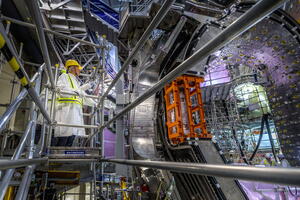
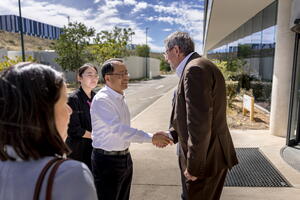
The Speaker of Japan’s House of Representatives, Mori Eisuke, has a decades-long commitment to fusion that ranges from research contributions to political advocacy. When Mori Eisuke first visited ITER in 2013 as a member of Japan’s House of Representatives and Chair of its Special Committee on Nuclear Power Issues, the tokamak site was a dusty stretch of land with some concrete slabs. Returning last week as Speaker of Japan’s House of Representatives, he encountered a dramatically different scene: standing in the tokamak pit, he could see the vacuum vessel chamber, now two-thirds complete.“I have supported fusion for more than three decades and it is very meaningful and moving to see how far ITER has progressed,” said Mori. “I have always believed in the project and to watch it become a reality is truly impressive.”Mori’s connection to fusion predates his political career. While earning a doctorate in engineering from Nagoya University, he worked at Kawasaki Heavy Industries, where he conducted research on advanced hot isostatic pressing techniques. The technology, which uses high temperatures and uniform gas pressure to bond materials, remains relevant to the manufacture of demanding components for fusion systems today, including those used for the ITER machine. ITER Director-General Pietro Barabaschi welcomes Mori Eisuke, Speaker of Japan’s House of Representatives, to ITER. Since entering the House of Representatives in 1990, he has become one of Japan’s most consistent supporters of fusion research and international scientific cooperation. Over the years, he has helped sustain political backing for Japan’s participation in ITER, leading the Parliamentary Federation for the Promotion of Nuclear Fusion Energy and working with colleagues around the world to advance the long-term development of fusion energy. His visit to ITER was an opportunity to witness how political support translates into tangible progress.“The visit served as a reminder that major scientific endeavours are measured not only in technological milestones, but also in the sustained dedication of individuals like Dr. Mori who support them across generations,” said Taka Omae, Deputy Head of the ITER Construction Project, who guided Mori during his visit to the site. “Few people can claim to have supported fusion from so many perspectives, first as an engineer, then as a parliamentarian, and now as Speaker of Japan’s House of Representatives. His long-standing commitment reflects the enduring support that Japan has provided to ITER throughout its history.”Mori toured the Tokamak Complex, the magnet cold test facility, the cryoplant, and the Assembly Hall. He also met with Director-General Pietro Barabaschi and spoke with the Japanese team at ITER. After visiting the project, he attended the G7 Speakers’ Summit in Paris. Mori Eisuke visits ITER’s magnet cold test facility, the world’s largest superconducting magnet test facility.

Turning tritium breeding into reality

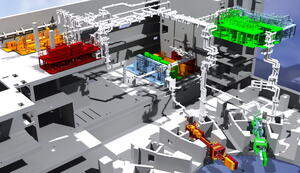
While ITER will benefit from the tritium available worldwide, fusion energy fuelled by deuterium-tritium reactions will require efficient and reliable tritium breeding technologies. Testing them and validating the design basis for industrial manufacturing are essential steps that ITER is completing through its Test Blanket Module (TBM) Program. ITER will be testing four concepts during its first deuterium-tritium (DT-1) operation phase; this summer, all four passed preliminary design reviews.  Testing tritium breeding has been a major ITER mission since the start, as captured in the “Final Report of the ITER Engineering Design Activities” (IAEA/ITEREDA/DS/21), the technical foundation of the ITER Agreement. After the signature of the ITER Agreement, the TBM Program was established by the ITER Council in 2008 (IC-3) with specific governance and resources.Each of the design review events at ITER gathered more than fifty scientists and engineers, in-person or remote, to present or review the different test blanket system configurations and the extensive engineering assessments that have been performed to demonstrate the preliminary readiness for integration, safety and operation on ITER and—beyond ITER—the suitability of the solutions for tritium breeding in the next-phase DEMO devices.“The awesome challenge of the ITER Members is to develop the test blanket system technologies that can be tested in ITER then incorporated as breeding blanket solution for the DEMO reactor, or other future fusion reactors after ITER,” says Rossella Rotella, Project Leader of the Tritium Blanket Breeding Section.To prepare the ground for use in DEMO reactors, each test blanket system is designed to be independently integrated and operated on ITER, equipped with dedicated coolant, tritium extraction, purification, and instrumentation and control systems. During the first deuterium-tritium operation phase (DT-1), ITER will be testing four tritium breeding concepts:Water-Cooled Lead-Lithium (WCLL) technology, developed by EuropeWater Cooled Ceramic Breeder (WCCB) technology, developed by JapanHelium Cooled Ceramic Breeder (HCCB) technology, developed by ChinaHelium-Cooled Ceramic Pebble (HCCP) technology, developed jointly by Korea and EuropeEach test blanket system is made up of a test blanket module (TBM) placed near the plasma containing the tritium breeder and the neutron multiplier together with its primary coolant for power-production-facility-grade heat removal; a shield placed behind the TBM to limit nuclear heating on the superconducting magnets and radiological exposure on personnel; a frame hosting two TBM and their shields; a neutron activation system for characterization of the TBM neutron behaviour and modelling; and ancillary systems to maintain each test blanket system in operation and to monitor its performance.  Following the success of preliminary design reviews this summer, the four tritium breeding concepts that will be tested on ITER are progressing to the final engineering phase. Decades of technological and engineering development through the ITER Test Blanket Module (TBM) Program have led to the important milestones reached this summer. The ITER Members and the ITER Organization worked together to prepare the detailed engineering analyses and technical documents that underpin each of the test blanket system technologies. That included about 1,000 deliverables—models, electromagnetic analyses, thermal-hydraulic and mechanical verifications, nuclear and safety assessments, diagrams, drawings, equipment lists and classifications, manufacturing feasibility plans, and finally plans for installation, commissioning, operations, maintenance and decommissioning. This demonstrates the maturity of the four test blanket system technologies and marks their readiness for the final engineering phase. The documentation also importantly provides the evidence of solution compliance with the TBM Program Research Plan, which establishes the detailed testing objectives of the test blanket program at ITER.  They said:The DEMO-relevance of ITER's test blanket systems was highlighted by the leaders of each program in the ITER Members. For Q. Sheng, leader of China’s HCCB test blanket system: “The successful completion of the preliminary design review marks a significant milestone. The measured data and operational experience accumulated during the implementation of TBM Program activities at ITER will provide critical support for the research and development of future fusion reactors.”For F. Fantini, leader of Europe’s WCLL test blanket system and breeding blanket technologies at Fusion for Energy, the European Domestic Agency: “The ITER TBM Program offers a unique opportunity to advance breeding blanket technologies in an integrated fusion environment. It will build essential capability in nuclear licensing, manufacturing qualification, and industrial supply chains. It will also provide practical experience in installation, commissioning, operation, and maintenance. These capabilities remain valuable despite schedule changes and the lower neutron fluence expected during the initial deuterium-tritium phase at ITER. The program will therefore strengthen industrial, regulatory and operational readiness for DEMO or any future machine after ITER.” For T. Hirose, leading the development of WCCB technology in Japan: “Beyond technology validation, the ITER TBM Program is an essential step toward establishing the engineering, manufacturing, and operational capabilities required for DEMO and future fusion power plants. Through the fabrication of representative TBM sub-modules using reduced activation ferritic/martensitic steel, F82H, and extensive high heat flux testing of full-scale mockups, the Japanese WCCB program has demonstrated key design, qualification, and manufacturing approaches for water-cooled breeding blankets. The experience and data generated through these activities help reduce technical risks, strengthen confidence in DEMO-relevant blanket designs, and contribute to the realization of DEMO and future fusion energy systems.”For M. Ahn, who heads the development of TBM and breeding blanket technologies at the Korea Institute of Fusion Energy: “The HCCP test blanket system we are developing together with Europe is closely linked to the development of the breeding blankets for Korea’s Compact Pilot Device (CPD), the country’s next-step fusion device. The experience accumulated through the design, fabrication, safety and licensing, and system integration of the HCCP test blanket system will provide an important foundation for developing the breeding blanket of the Compact Pilot Device. This return on experience from ITER will serve as a practical bridge to our new device, while helping us address the remaining challenges in tritium management, materials, and integrated blanket engineering.”For ITER’s R. Rotella, leader of the TBM Project Team: “Passing the preliminary design reviews represents a breakthrough landmark for the TBM Program and for fusion technology development. It also testifies to the outstanding multi-disciplinary and international cooperation among the ITER Members and the ITER Organization. We are committed to succeeding with one of the most critical challenges of fusion power plants: producing tritium to turn fusion energy into a sustainable source of power for the future generations.”

ITER: “A contribution to world peace”

During a visit to ITER, Shan Zhongde, Chairman of the China Atomic Energy Authority, emphasized the role of international cooperation in advancing fusion energy and contributing to world peace. Shan Zhongde, one of China’s most senior officials responsible for nuclear energy, space and defence-related industries, visited ITER on Friday 11 September and praised the project’s scientific and diplomatic significance. â€œBy sharing its experience and lessons learned, ITER can help advance fusion development around the world and bring us closer to realizing fusion energy,” said Shan. “ITER is making significant progress and, through the cooperation it brings together, is making an important contribution to world peace.”The China Atomic Energy Authority is the government agency responsible for overseeing nuclear energy in China. Shan also serves as Vice Minister of Industry and Information Technology and Administrator of the China National Space Administration.As part of his visit, Shan toured the Tokamak Complex, spoke with members of the CNPE Consortium, and met with senior leaders, including ITER Chief Scientist Alain Bécoulet.“Having worked in fusion research for nearly four decades, I am convinced that ITER's greatest strength lies in its international nature,” said Bécoulet after the visit. “Scientific breakthroughs emerge when diverse expertise and perspectives come together. ITER is not only advancing fusion energy; it is building a unique framework of trust and cooperation that can accelerate the journey from scientific discovery to societal benefit.” Shan Zhongde tours the Assembly Hall. He says that ITER enables all seven Members to advance their fusion development programs.
Press

LIPAc gets ready to operate

https://fusionforenergy.europa.eu/news/lipac-accelerator-commissioning-operation/

Japan–EU Strengthen talent through the JT-60SA On-site Laboratory

https://euro-fusion.org/eurofusion-news/japan-eu-strengthen-talent-through-the-jt-60sa-on-site-laboratory/

What Is The 82.6 GHz Gyrotron And How It Will Help India Master Fusion Energy

https://indianmasterminds.com/news/82-6-ghz-gyrotron-commissioned-at-sst-1-tokamak-gujarat-232095/

ITER reports “substantial progress” in assembly and installation work

https://www.ans.org/news/2026-09-09/article-8375/iter-reports-substantial-progress-in-assembly-and-installation-work/

The race to unlock near-limitless fusion energy

https://www.newindianexpress.com/lifestyle/science/2026/Sep/08/the-race-to-unlock-near-limitless-fusion-energy

KSTAR, 한-EU 협력으로 미래 핵융합로 운전기술 검증 나선다

https://blog.naver.com/nfripr/224392633570

Japan backs four domestic fusion projects

https://www.neimagazine.com/news/japan-backs-four-domestic-fusion-projects/

European Commissioner for Energy and Housing Dan Jørgensen visits ITER

https://fusionforenergy.europa.eu/news/european-commissioner-for-energy-and-housing-dan-jorgensen-visits-iter/