Logo
You're currently reading the news digest published from 27 April 2026 to 4 May 2026.
Featured (3)
Of interest (1)
Press (10)
Featured

The conversation deepens

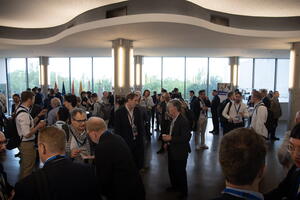
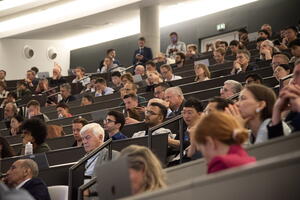
Since 2024, the ITER Organization has convened three public-private fusion workshops—each shaped in different ways by the fast-evolving dynamics of the global fusion ecosystem. The latest edition zeroed in on technological barriers and breakthroughs, and underscored how the consensus is growing that strong public-private partnerships are essential to accelerating the path toward commercial fusion. From 27 to 30 April 2026, nearly 300 participants representing private fusion companies, research institutes, suppliers, industry associations, investors, and NGOs travelled to the ITER site in southern France for the third Public-Private Fusion Workshop.This year’s program centred on technology—how innovation is being applied to persistent challenges, how it is unfolding at different scales across the ecosystem, and what lessons can be drawn from ITER’s experience.Under the banner “Fusion: A Joint Quest,” the workshop featured two days of panel discussions, thematic breakout sessions, networking opportunities, and direct access to ITER experts. Two additional days were dedicated to tailored site visits, offering participants rare access to the project in action—whether watching ITER’s massive Godzilla component-handling robot in operation, or observing a key milestone (cryostat closure) at the ITER magnet cold test facility.“I am very glad that we have been able to sustain this interaction,” said the ITER Director-General Pietro Barabaschi as he welcomed participants. “We are not only here to execute the ITER project, we are also here to support the private sector and help accelerate fusion. I am convinced that ITER’s technical experience can be of value to you.” (Read an interview with the ITER Director-General here.) The auditorium was full for the session on project management insights from ITER construction and machine assembly. Olga Bakardzhieva, EU Affairs Director for the Fusion Industry Association, set the tone during the opening panel. She described a rapidly evolving fusion ecosystem, citing at least 5,000 jobs in the fusion energy sector, another 10,000 across the fusion supply chain, and private-sector investment surpassing $10 billion. “This is not a short-lived surge but sustained momentum,” she said. “Fusion is entering the discussion on energy resilience and strategic autonomy, with governments increasingly asking, ‘How fast can we build?’”Panel participant Bernard Blanc stressed the need for long-term policy clarity. Representing the European Fusion Association—whose 60 members from industry aim to speak with one voice in Europe—he emphasized that consistent, long-term signals from governments are key to unlocking sustained industrial investment. “We now have the industrial capacity in Europe. The question is: can we mobilize it?” In a second-day session on best practices in public-private partnerships and roadmaps to commercial fusion, the consensus was clear—fusion’s potential is gaining broad traction across society, and governments are actively leveraging national laboratories, private enterprises, universities, and research institutions in their strategies. In Japan, the government is seeking even broader participation by engaging insurance, finance, energy, and logistics companies to “prepare deployment of fusion energy in society,” according to Masatsugu Sakaguchi from the Japanese fusion association J-Fusion. An X-prize for fusion?Phil LaRochelle, a partner at Breakthrough Energy Ventures, presented plans during the 3rd ITER Public-Private Fusion Workshop for a fusion XPRIZE, saying it could catalyze large-scale investment and public attention just as previous prizes have done for private spaceflight and climate technologies. The initiative is still in the design phase, and LaRochelle issued a call to the fusion community to help define the critical engineering challenges that should become its objectives. “XPRIZE’s superpower is convincing the world that breakthrough technologies are possible sooner than people think,” he said. “Fusion is a global race, but unlike the space race, whoever wins, everyone benefits.” With its decades of experience in designing and building a fusion reactor, the ITER Organization sees itself as a “facilitator,” according to Chief Strategic Advisor Laban Coblentz, who has led the ITER workshop initiative from the beginning. “Here at ITER, we understand how the public and private fusion sectors complement one another and we want to be used to facilitate solutions for the remaining challenges.”Consultation with interested parties—including through the 2024 and 2025 workshops, has helped formalize pathways for ITER knowledge-sharing. Today, a single-entry point centralizes all requests—the Private Sector Fusion Engagement Project. See the new resource page here. As Bakardzhieva concluded, “Fusion is no longer only about proving what is possible, it’s about delivering what is needed.” Scroll through the gallery below for images of the workshop.

Pietro Barabaschi has a message: “Constructive competition is good for our field”

In welcoming several hundred members of the global fusion ecosystem to ITER last week for the 3rd ITER Public-Private Fusion Workshop, ITER Director-General Pietro Barabaschi shared his view that the multiplication of ideas and resources circulating across the fusion landscape is strengthening the field. ITER just welcomed representatives from all parts of the new fusion ecosystem—startups, companies, and investors—on site for the third time in three years. Why is it important, in your opinion, to create these bridges?For me, this project belongs to the fusion community. We are publicly funded, and individuals from all ITER Members have been investing in this project for decades—transforming what was once a concept on paper into a major research infrastructure.We have accumulated a great deal of knowledge along the way, which puts us in a position to share valuable information with the community already, without having to wait for the start of scientific operation. We were already sharing with the publicly funded laboratories of the ITER Members, and now we are creating pathways to share with private and public-private ventures.For a long time, ITER was the major player in the field. Do you view private sector initiatives as competition?Historically, the ITER Members were each pursuing their own paths. But by the early 1980s, it had become evident that the challenges were so great that researchers needed to move toward a stronger collective effort. The ITER project emerged in this spirit—launched as part of the broader idea that international scientific collaboration could serve as a harbinger of world peace.I joined ITER in the 1990s during this collaborative phase, and I am very proud—like all those who participated—of what was achieved together, especially in what was then a complex geopolitical context. I later left to pursue other projects before returning as Director-General of the ITER Organization in 2022. I don’t mind sharing that, at that point, my perspective on collaboration had evolved. As component delivery began accelerating, we had a construction project to deliver, and at times, too much deference to collaboration slowed execution.My view is that you need a healthy balance between collaboration and competition. It is not good to be the only game in town. While compromises are inevitable in any partnership—especially at this scale—they must be carefully weighed against the project’s objectives and made with a clear understanding of their consequences.The fact that so many good ideas are circulating, and that additional resources are materializing, will make this line of research healthier. The balance between cooperation and competition in this fusion endeavour will help to create value for all.What can the ITER project offer private fusion initiatives?ITER has a distinct and essential role. It is the place where the physics, the engineering, and the industrial reality of fusion are being brought together and tested at scale. We are generating the knowledge, knowhow, data and commissioning experience that should be of support to all fusion efforts—public and private alike.I would also like ITER to serve as an example in the domain of project execution. We have undergone a real turnaround in the past three years and are now carrying out the most critical phases of machine assembly within cost and schedule. I think we have collectively shown that international cooperation can be implemented in a very effective way. Our course correction contains valuable lessons for others, which we are ready to share.It is perhaps no coincidence that this progress at ITER has occurred alongside a healthier level of competition in the private sector. Investment is flowing into fusion technologies, and numerous startups are emerging worldwide—an encouraging development and one that can feed back to ITER in many positive ways.Our task is to support the fusion community. If you are part of this community in one of the ITER Members, you are welcome to come here—even outside our annual workshop—to see what you need to advance your own project. There are many technical challenges ahead that will test us all, and I see ITER as a place of collaboration within this new, healthy context of competition.Editor's note: See the new Private Sector Fusion Engagement project resource page here.

Shouldering the load

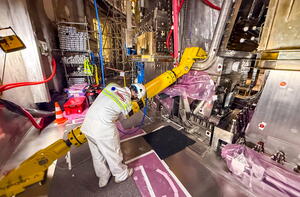
The machine assembly team is preparing for a first-of-its-kind operation: transferring the weight of an installed vacuum vessel sector from its overhead suspension beam to a gravity support below. The key to the move? Stability clamps. For the moment, the four vacuum vessel sector modules in the ITER tokamak pit are each supported under a radial beam that distributes their significant weight (~1,200 tonnes) between the concrete wall of the pit and the central column tool.This support from above was always intended to be temporary; in its final configuration once the vacuum vessel chamber is welded together, the combined mass of the machine (23,000 tonnes) will rest on the concrete “crown” that has been built under tokamak pit.Originally, the plan called for the vacuum vessel sectors to be welded in “triplets” while still supported by their overhead radial beams. In the new strategy, developed to minimize deformation due to welding shrinkage, all nine sectors will be simultaneously welded into a single, circular torus after they have landed on gravity supports.“As part of the new vacuum vessel welding strategy, we had to find a solution to land the sectors on their gravity supports as early as possible,” says Sébastien Koczorowski, ITER’s Deputy Program Manager for the Machine Assembly Program. “However, this required a temporary system to keep the sectors steady and protect against seismic activity until enough welding has been done to hold the torus together.” The stability clamps are designed to be strong enough for seismic loads but flexible enough to allow welding shrinkage. The sector is supported by upper rods anchored in the concrete bioshield, a top stopper, and a lower strut braced against the cryostat base. This temporary system consists of sets of stability clamps that connect the vacuum vessel sectors to the both the tokamak pit walls and the cryostat base. â€œOne of the challenges was developing a system for the existing building,” says Pablo Garcia Sanchez, the ITER assembly and installation engineer who designed the stability clamps. “We could not modify the existing structure or make additional attachments to the walls, so we had to work entirely with the elements in place.” ITER assembly and installation engineer Pablo Garcia Sanchez examines the temporary beam that allows the upper rods to connect to the bioshield wall. The first set of stability clamps has now been installed for sector #6 and the teams are preparing for the transfer of the load from the radial beam to the gravity support. The installation of the stability clamps for the other sectors in the pit will now move forward. Once all nine vacuum vessel sectors are landed in the tokamak pit and partially welded, the vacuum vessel chamber will be robust enough that the stability clamps can be removed.
Of interest

ITER knowledge-sharing: new resource page

https://www.iter.org/of-interest?id=34563
Since 2024, under the ITER Private Sector Fusion Engagement (PSFE) Project, private sector fusion startups from ITER Members can directly engage with the ITER Organization and access dedicated support on knowledge-sharing mechanisms through the PSFE Help Desk.A new page on the ITER website now centralizes all available knowledge-sharing mechanisms in one place—offering clear guidance, key resources, and direct pathways to information for private sector initiatives in the ITER Members.Explore the Private Sector Fusion Engagement Project resource page to discover current opportunities. The page will be regularly updated as new initiatives and engagement possibilities emerge.
Press

Additive manufacturing for higher-performance plasma components

https://irfm.cea.fr/en/2026/04/la-fabrication-additive-pour-des-composants-face-au-plasma-plus-performants-2/

US delivers 135-ton ‘beating heart’ magnet for world’s largest nuclear fusion reactor

https://interestingengineering.com/energy/us-beating-heart-magnet-iter-fusion-reactor

Europe and Japan reach full accelerator configuration at LIPAc

https://fusionforenergy.europa.eu/news/europe-and-japan-reach-full-accelerator-configuration-at-lipac/

US Iter Completes Final Deliveries For Nuclear Fusion Project’s Central Solenoid Magnet

https://www.nucnet.org/news/us-iter-completes-final-deliveries-for-nuclear-fusion-project-s-central-solenoid-magnet-4-3-2026

Transatlantic fusion energy research just got easier

https://www.pppl.gov/news/2026/transatlantic-fusion-energy-research-just-got-easier

USA completes final deliveries for ITER's central solenoid

https://www.world-nuclear-news.org/articles/usa-completes-final-deliveries-for-iters-central-solenoid

New JT-60SA Experiment Leader for Europe

https://euro-fusion.org/eurofusion-news/shaping-the-future-of-fusion-science-yevgen-kazakov-nominated-as-new-jt-60sa-experiment-leader-for-europe/

Fusion research tackles fuel and instrumentation challenges

https://www.ans.org/news/article-7985/fusion-research-tackles-fuel-and-instrumentation-challenges/

Europe’s fourth Vacuum Vessel sector is ready for ITER

https://stainless-steel-world.net/europes-fourth-vacuum-vessel-sector-is-ready-for-iter/

Регуляторы Франции не станут рассматривать вакуумную камеру ITER как ядерное оборудование, работающее под давлением

http://www.atominfo.ru/newsz09/a0501.htm