
Shouldering the load
The machine assembly team is preparing for a first-of-its-kind operation: transferring the weight of an installed vacuum vessel sector from its overhead suspension beam to a gravity support below. The key to the move? Stability clamps.
For the moment, the four vacuum vessel sector modules in the ITER tokamak pit are each supported under a radial beam that distributes their significant weight between the concrete wall of the pit and the central column tool.
This support from above was always intended to be temporary; in its final configuration once the vacuum vessel chamber is welded together, the combined mass of the machine (23,000 tonnes) will rest on the concrete “crown” that has been built under tokamak pit.
Originally, the plan called for the vacuum vessel sectors to be welded in “triplets” while still supported by their overhead radial beams. In the new strategy, developed to minimize deformation due to welding shrinkage, all nine sectors will be simultaneously welded into a single, circular torus after they have landed on gravity supports.
“As part of the new vacuum vessel welding strategy, we had to find a solution to land the sectors on their gravity supports as early as possible,” says Sébastien Koczorowski, ITER’s Deputy Program Manager for the Machine Assembly Program. “However, this required a temporary system to keep the sectors steady and protect against seismic activity until enough welding has been done to hold the torus together. We designed and developed stability clamps to support the vacuum vessel sectors during the early phase of the welding.”
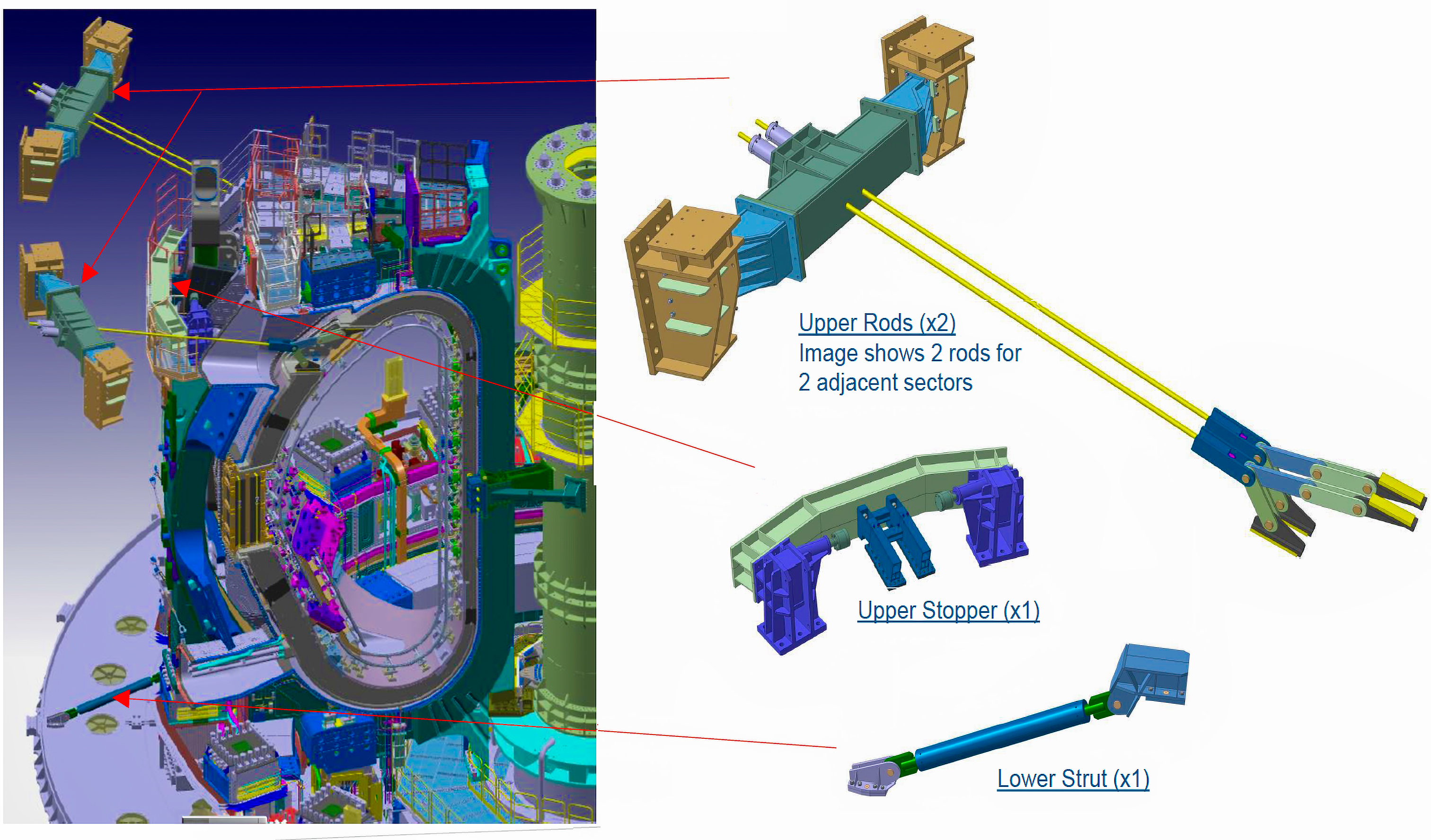
This new welding strategy made possible by the stability clamps will also free access for ex-vessel assembly at the early stage of the vacuum vessel welding, which is crucial for meeting the assembly target for the cryostat closure under the new baseline.
In a combined effort by ITER, the European Domestic Agency F4E, and the assembly contractor SIMIC, it took two years for the project team to develop the new landing strategy and to design and manufacture the tools. Several concepts were assessed and the gravity tool system was the only option that met the technical requirements without compromising the global assembly strategy.
“One of the challenges was developing a system for the existing building,” says Pablo Garcia Sanchez, the ITER assembly and installation engineer who designed the stability clamps. “We could not modify the existing structure or make additional attachments to the walls, so we had to work entirely with the elements in place.”
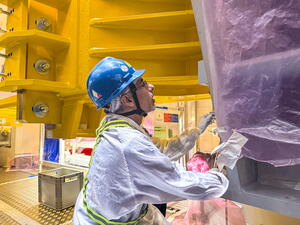
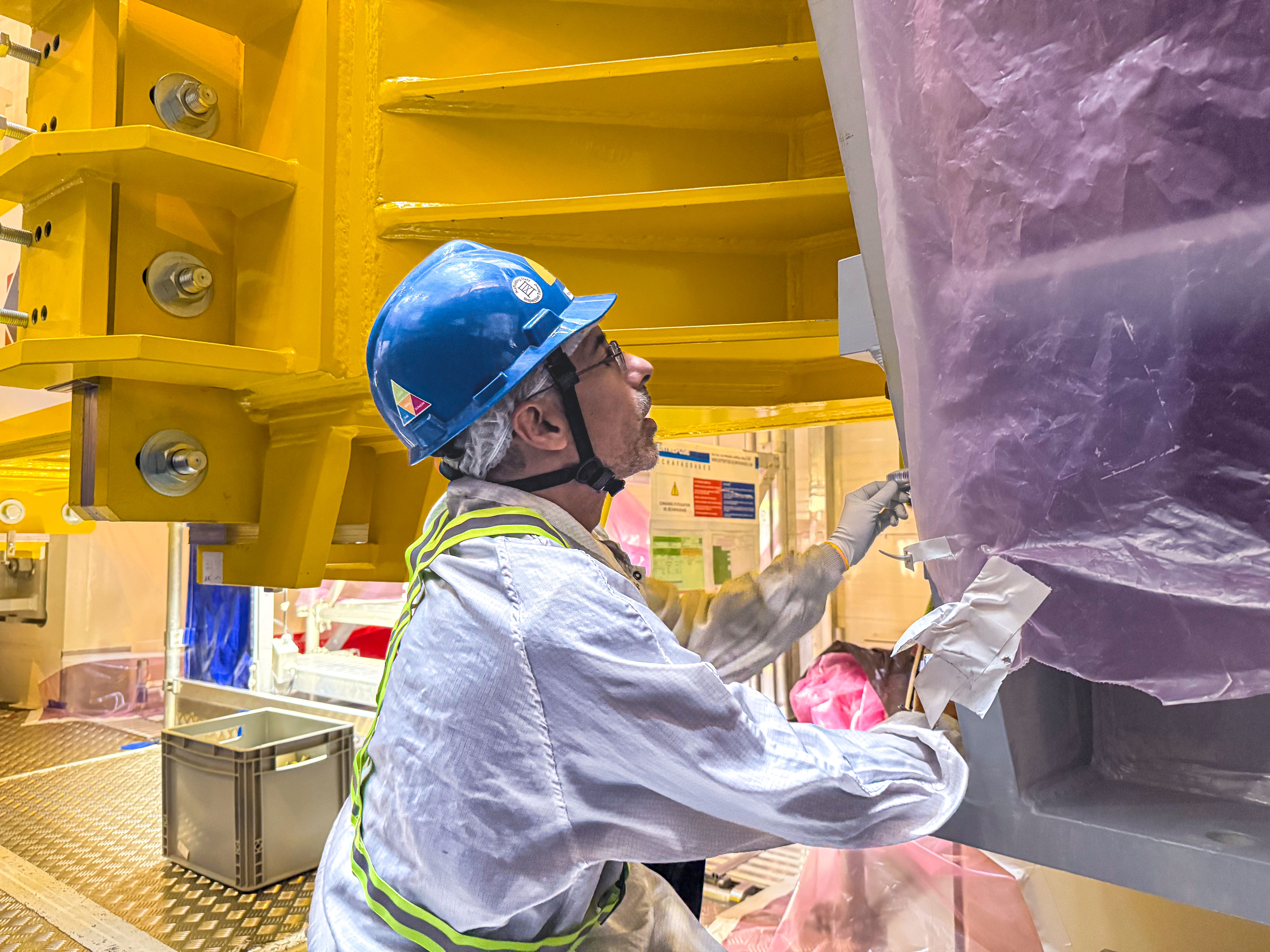
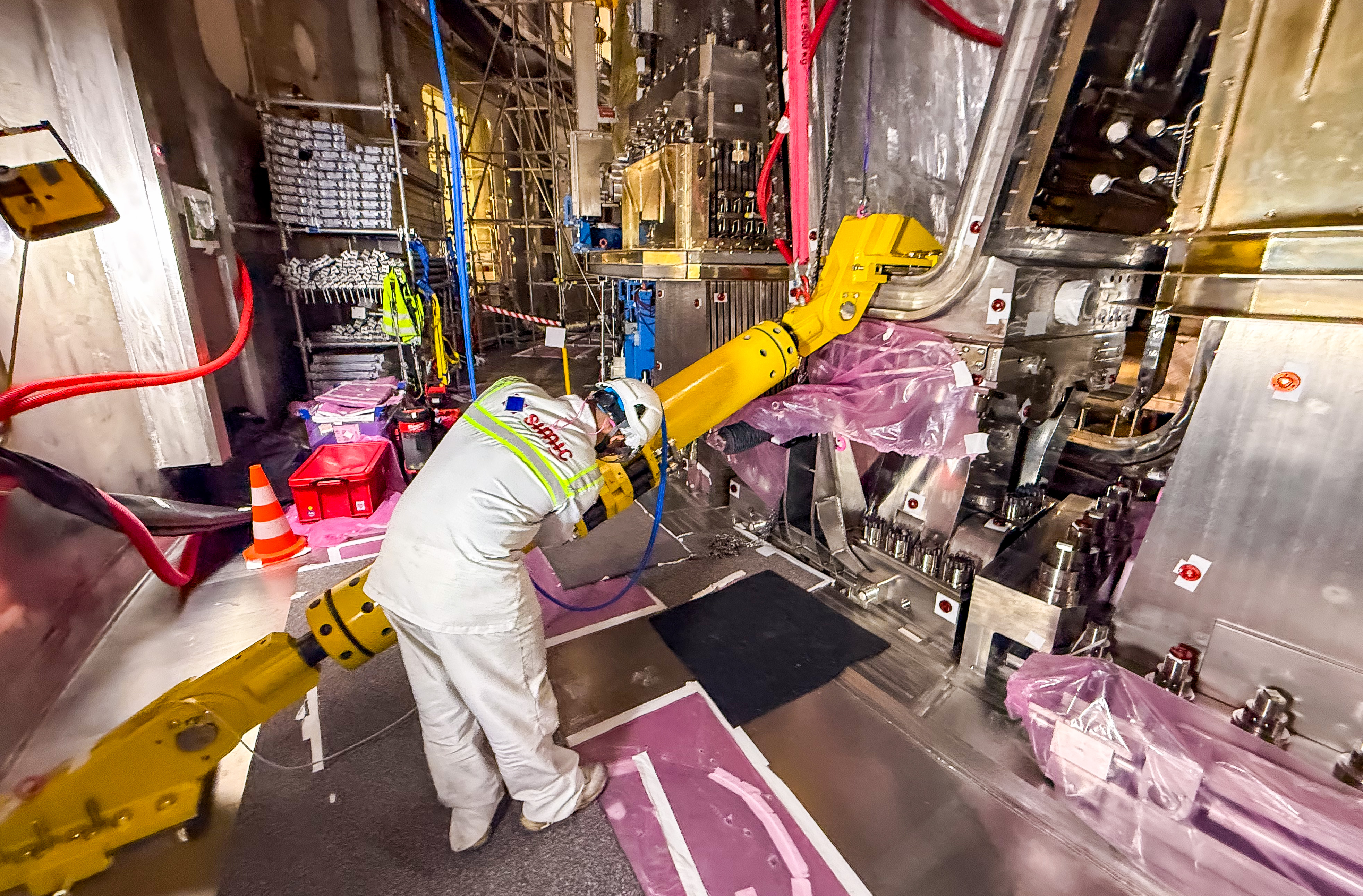
The first set of stability clamps has now been installed for sector #6 and the teams are preparing for the transfer of the load from the radial beam to the gravity support. The installation of the stability clamps for the other sectors in the pit will now move forward.
Once all nine vacuum vessel sectors are landed in the tokamak pit and partially welded, the vacuum vessel chamber will be robust enough that the stability clamps can be removed.