
Correction coils: from qualification to production
A group of 18 superconducting correction coils will be distributed around the ITER tokamak at three levels. Much thinner and lighter than ITER's massive toroidal field and poloidal field magnets, their role is to reduce magnetic error fields caused by imperfections in the position and geometry of the main coils. Series production started last year at an ASIPP laboratory in Hefei, China, where a multiyear qualification program has been carried out to ensure that the correction coils can be produced to specification despite unusual shapes and very demanding precision requirements.

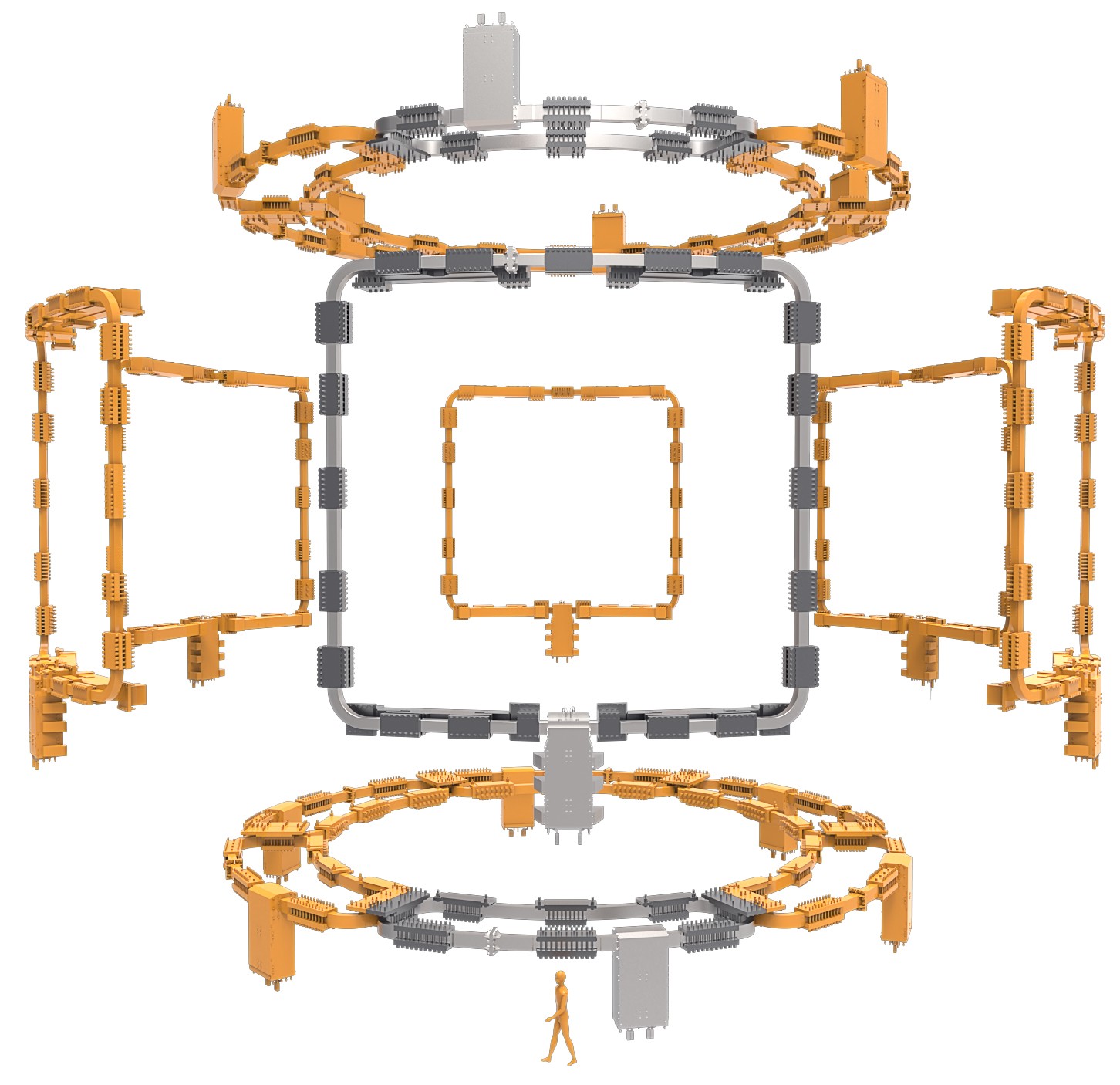
Compared to ITER's huge toroidal field and poloidal field magnet systems, the correction coils appear nearly pencil-thin in the machine schematics. Weighing a maximum of 4.5 tonnes and measuring up to 8.3 metres, the correction coils are the very smallest of the superconducting magnets.

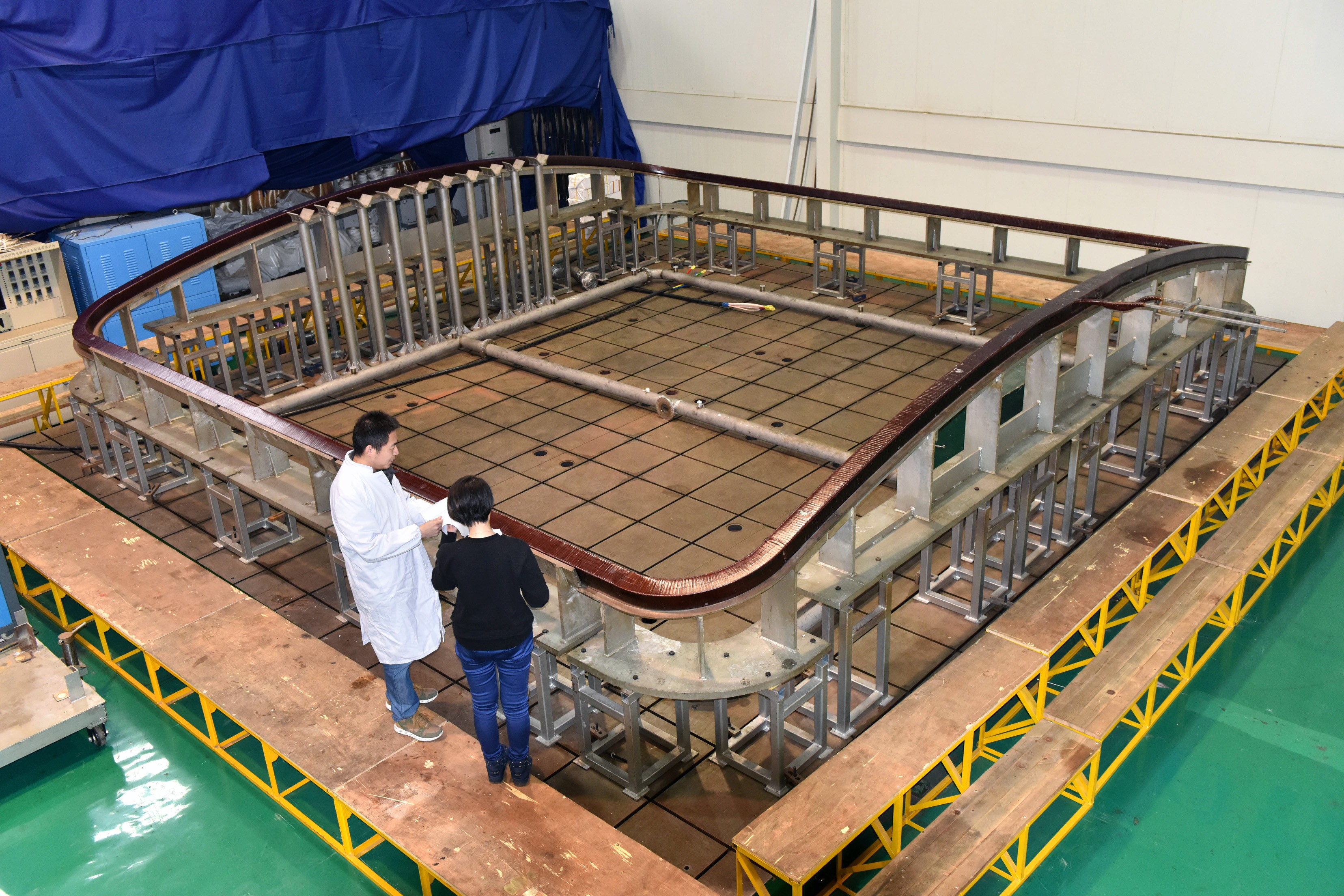
To prepare for series production, the winding line and tooling at ASIPP was first qualified according to ITER Organization procedures in 2013. ASIPP technicians then began winding a full-size mockup of the bottom correction coil and completed its impregnation in 2014; since that date they have completed the first production bottom correction coil winding pack (eight layers of niobium-titanium superconductor) and are nearly through the impregnation stage. The seven helium inlets of the winding pack have also passed inspections successfully.
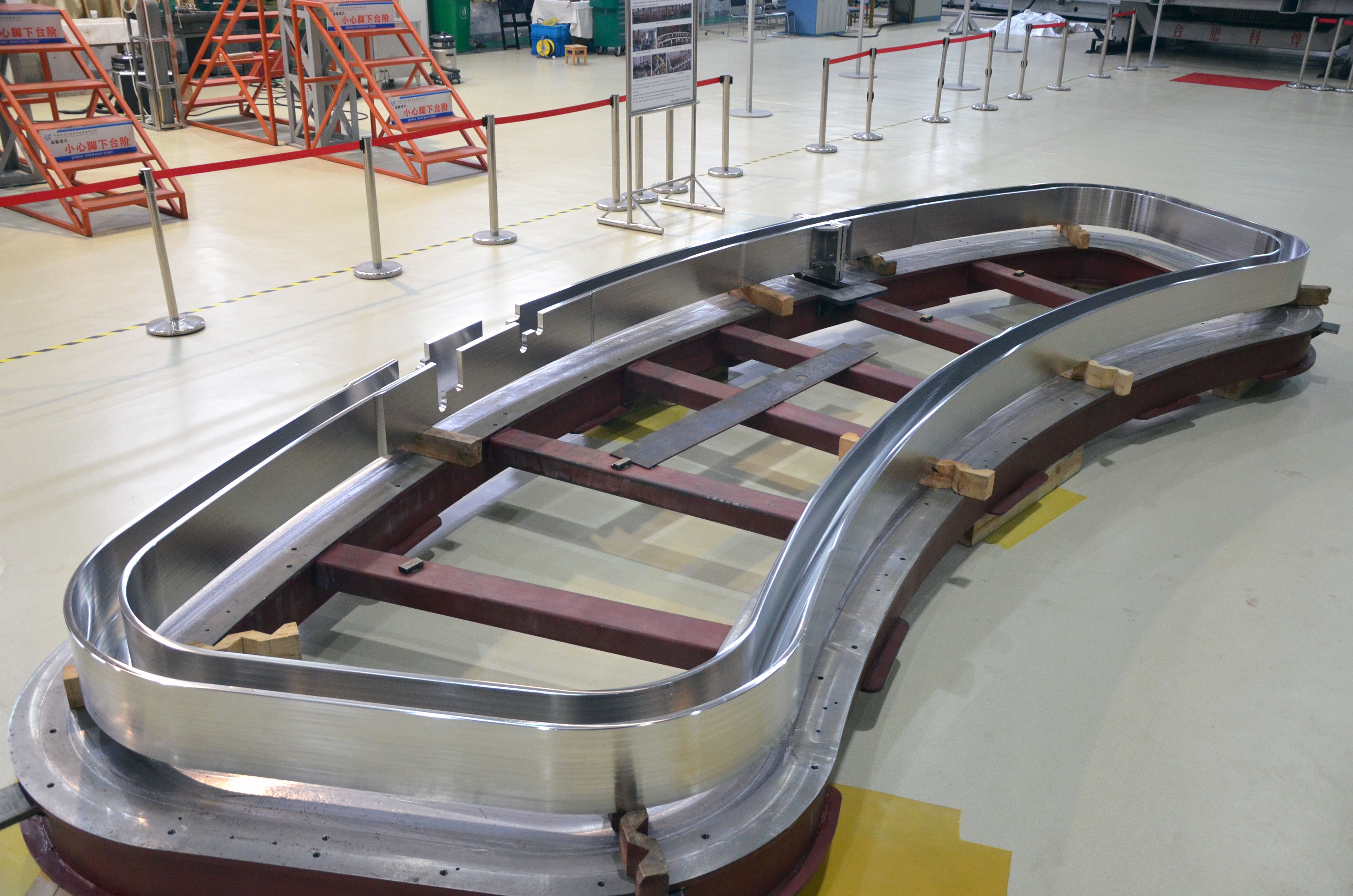
"ASIPP has achieved remarkable progress in manufacturing and examination for the most of critical components of the correction coils in just three years," says Fabrice Simon, of ITER's Magnet Division. "This includes the development of the helium inlet welding process and 100 percent volumetric examination, as well as the development of extruded parts of high quality stainless steel for the coil casing. The successful achievement of the qualification phases has provided a solid base for the kickoff of series production. Now, the second bottom correction coil winding is underway without any sign of schedule delay."