First Russian gyrotrons installed
With equipment being procured by Europe, India, Japan, Russia, and the United States, ITER’s electron cyclotron resonance heating system—one of three external heating systems needed to bring the plasma to 150,000,000 °C—reflects the international cooperation driving the ITER project.
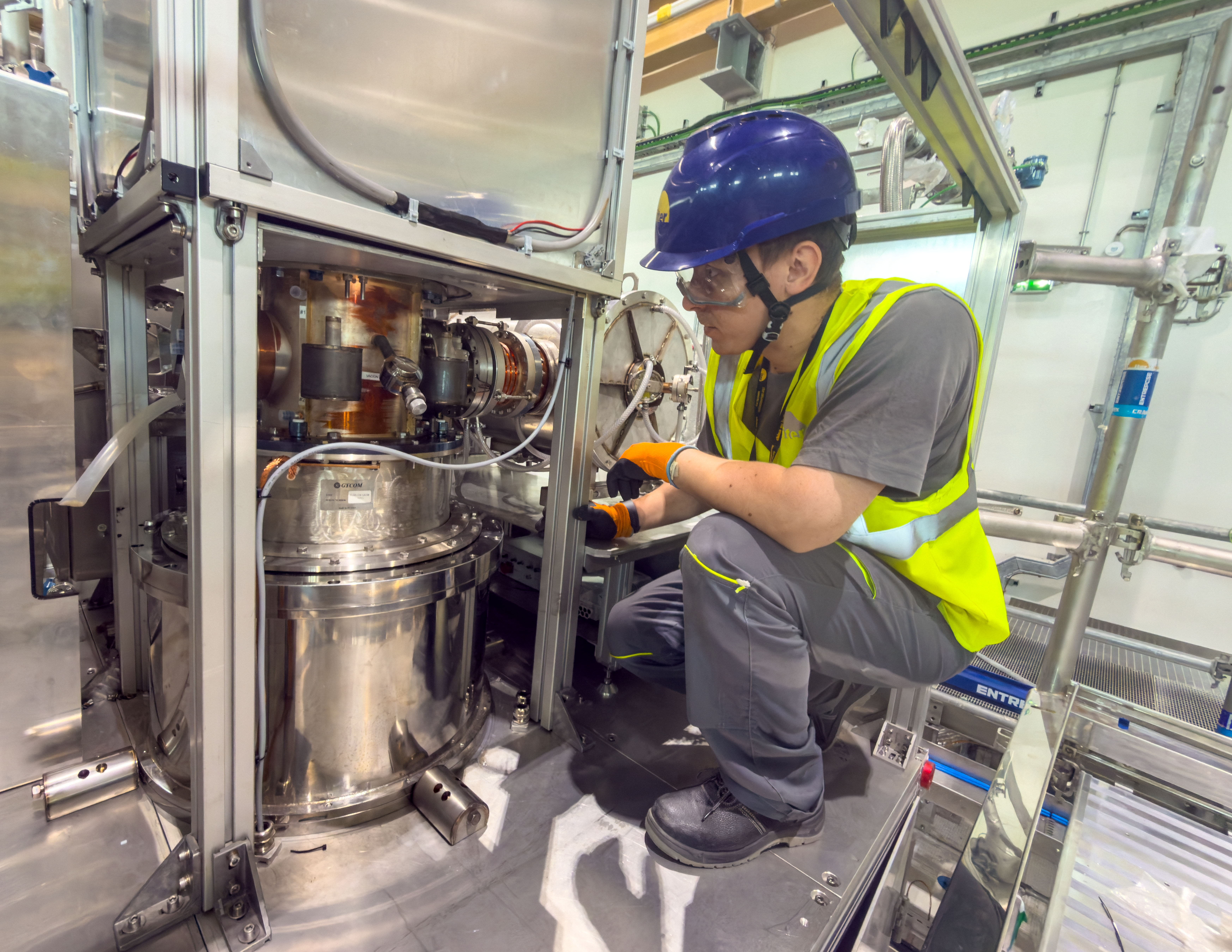
On the top floor of the Radiofrequency Building, the first three Russian-made gyrotrons have been successfully installed, marking another step forward for the system that will heat the electrons in the plasma with a high-intensity beam of electromagnetic radiation.
“Having the first Russian units in their operational locations is a major step forward because gyrotrons are the principal components of the electron cyclotron heating system and these units are needed for the first phase of ITER operation,” says Caroline Darbos, Technical Responsible Officer for the gyrotrons at ITER. “Auxiliary work such as cabling and associated systems can now be done and then testing will begin once all connections are completed.”
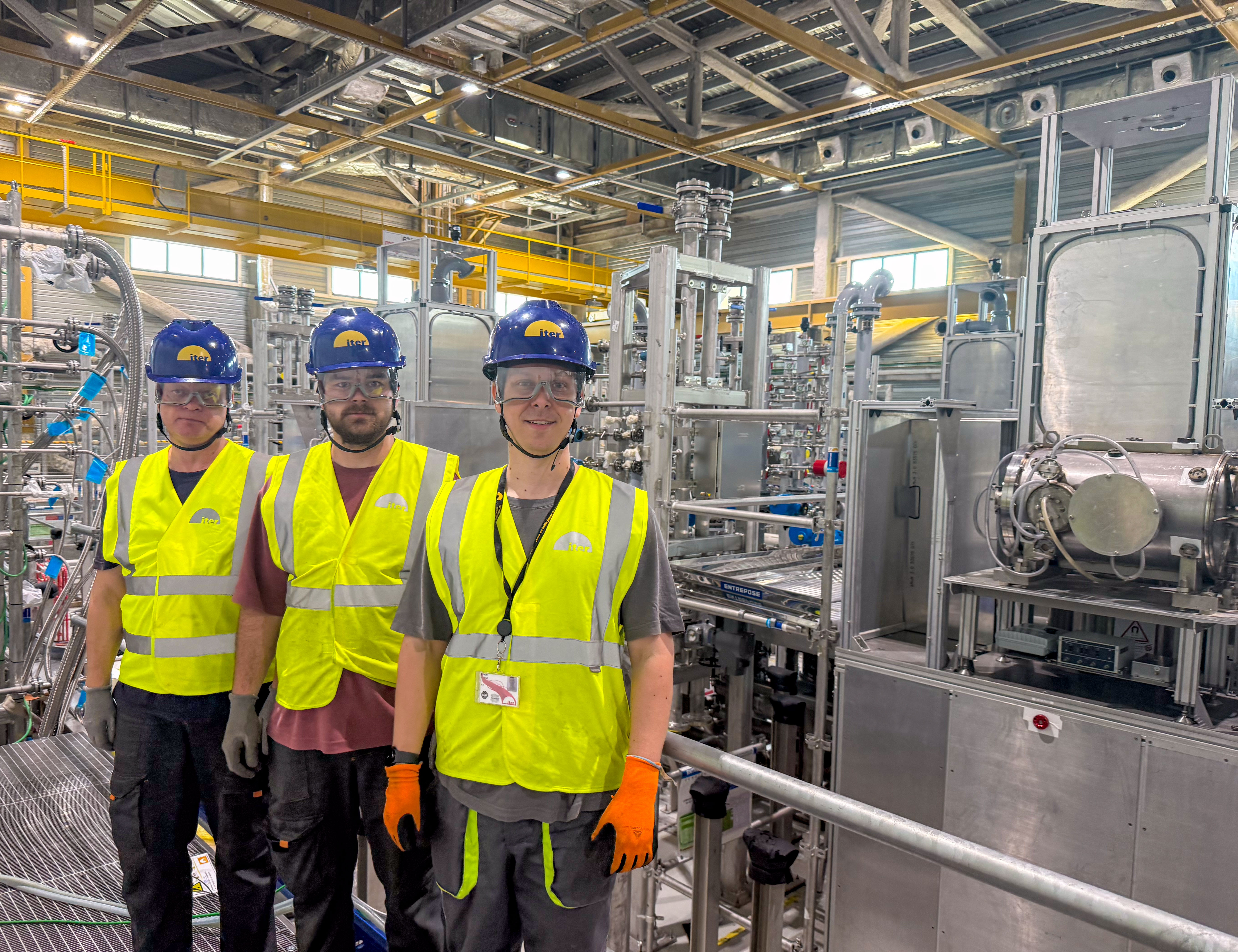
The installation was carried out during a six-week mission to ITER by a three-person team representing the Russian Domestic Agency, the Institute of Applied Physics of the Russian Academy of Sciences, and the Russian gyrotron manufacturer GYCOM.
“We were able to progress very quickly and complete 100% of the planned work,” says Andrei Fokin, the ITER Project Associate who led the team. “This is important for ITER and for the Russian Federation because it shows we are moving forward.”
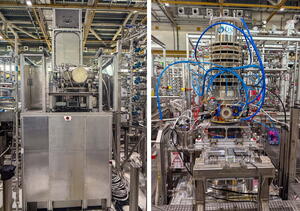
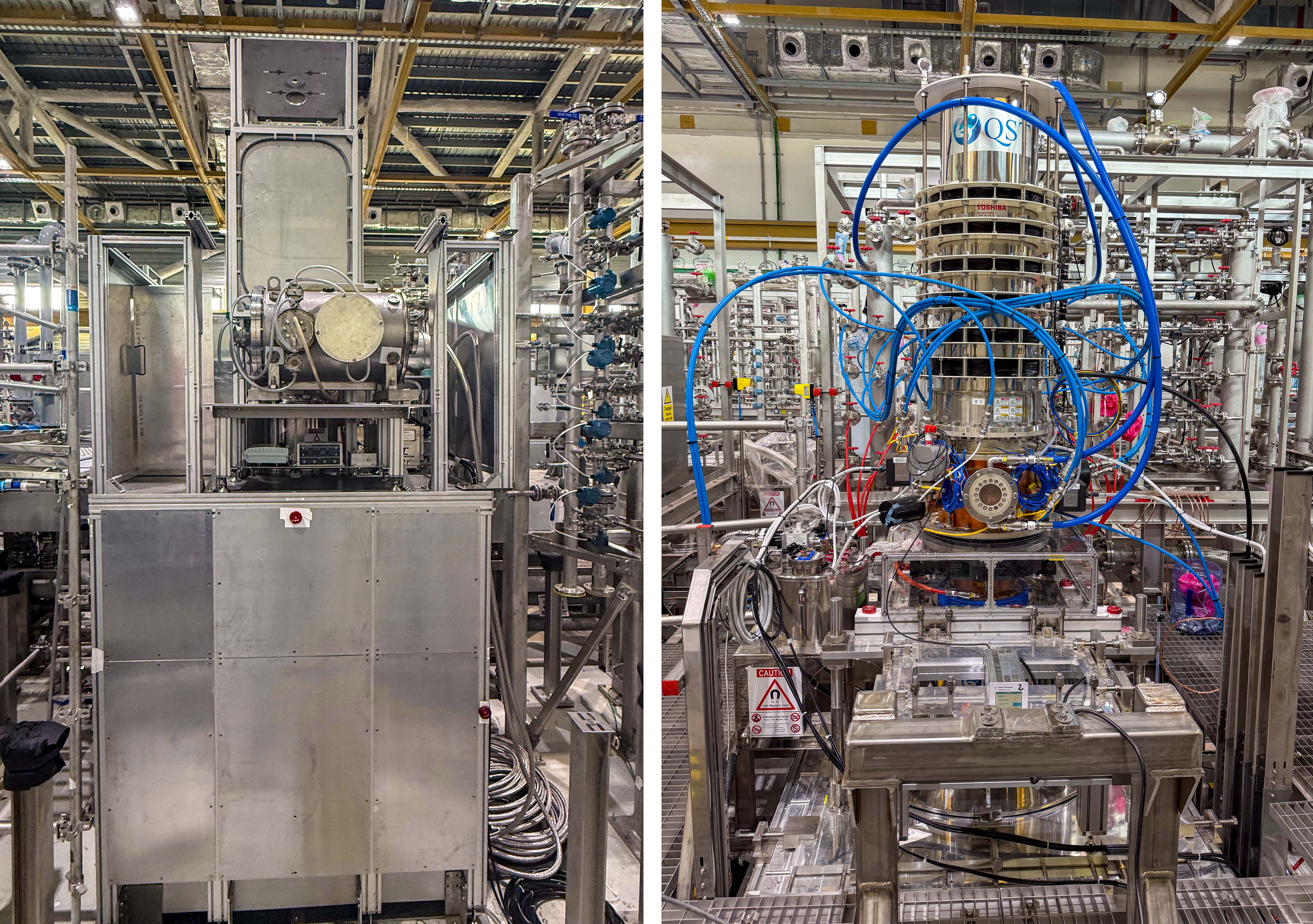
Gyrotrons generate the high-intensity electromagnetic radiation used for electron cyclotron resonance heating. Fokin says it is helpful to compare gyrotrons to microwave ovens: “Imagine a microwave that is 1,000 times more powerful than the one in your kitchen and focused on a volume 1,000 times smaller. Then imagine how hot that small volume becomes.”
Gyrotrons were developed over decades of research and prototyping to meet ITER’s high-power, high-frequency, and long-pulse requirements.
The first three Russian gyrotrons are now ready to be connected to the matching optics units, which are two-mirror systems that connect the outputs from the gyrotrons to the transmission lines that lead to the tokamak. Another team will arrive from Russia in September to complete the connections and start commissioning.
Five ITER Members are participating in the procurement of the electron cyclotron resonance heating system at ITER: Europe (6 gyrotrons, 12 high-voltage power supplies, upper launchers), India (2 gyrotrons, 4 high-voltage power supplies), Japan (8* gyrotrons, equatorial launcher), Russia (8* gyrotrons), and the United States (transmission lines).
*Under the new ITER baseline, which demands more powerful radiowave plasma heating, 48 gyrotrons will be required at the start of ITER operations and another 24 for the first phase of deuterium-tritium plasma operations. Japan and Russia will both be providing an additional 20 gyrotrons with an option for four more units for a possible total of 24 each to be delivered by 2032.