Getting the full once-over
When you receive a package, it’s always a good idea to give it a quick inspection to make sure it wasn’t damaged in transit. But what if the package is a 400-tonne vacuum vessel sector? In that case, that “quick inspection” is going to take a few days.
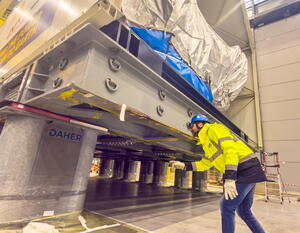
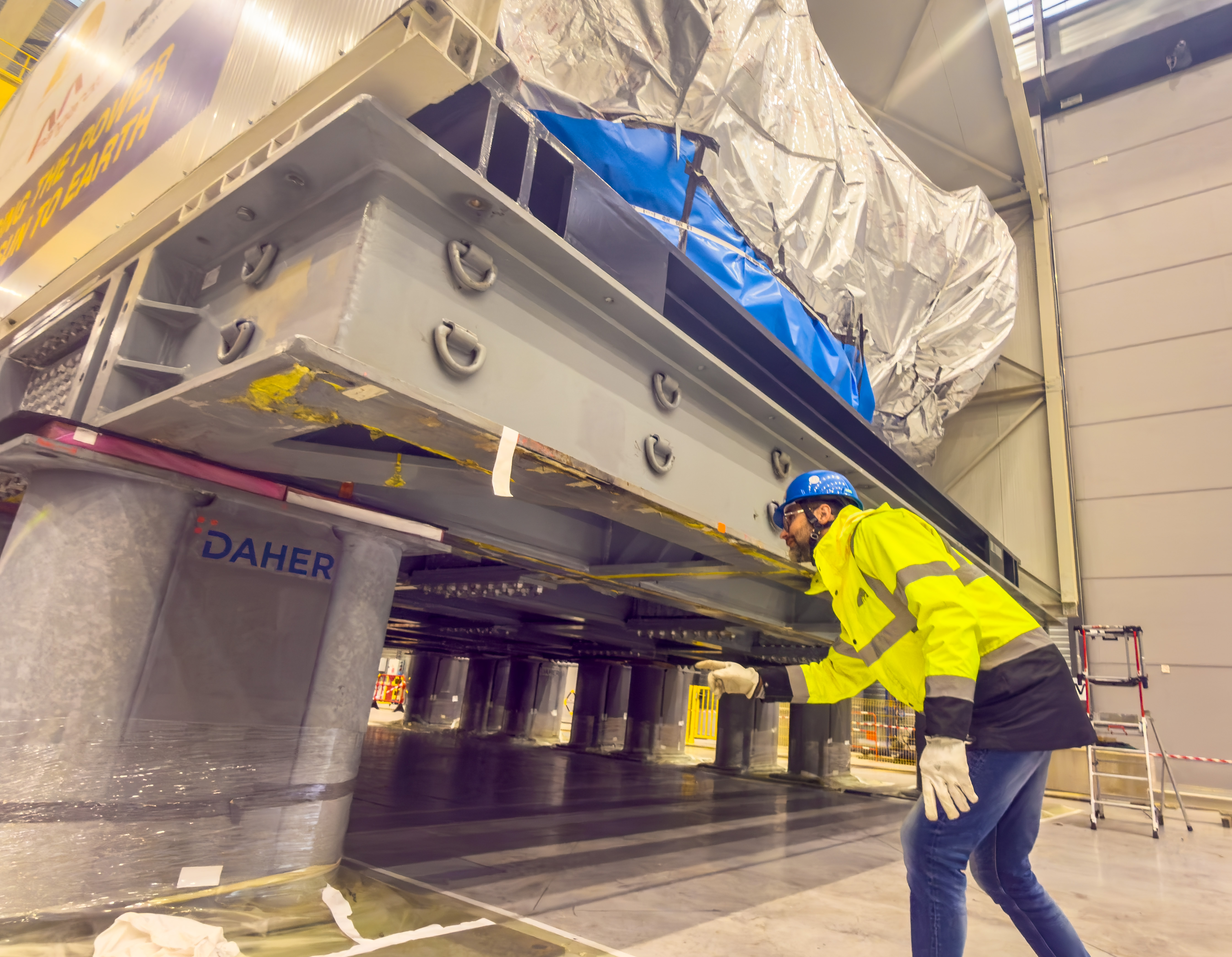
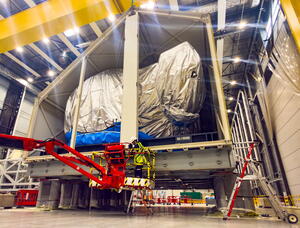
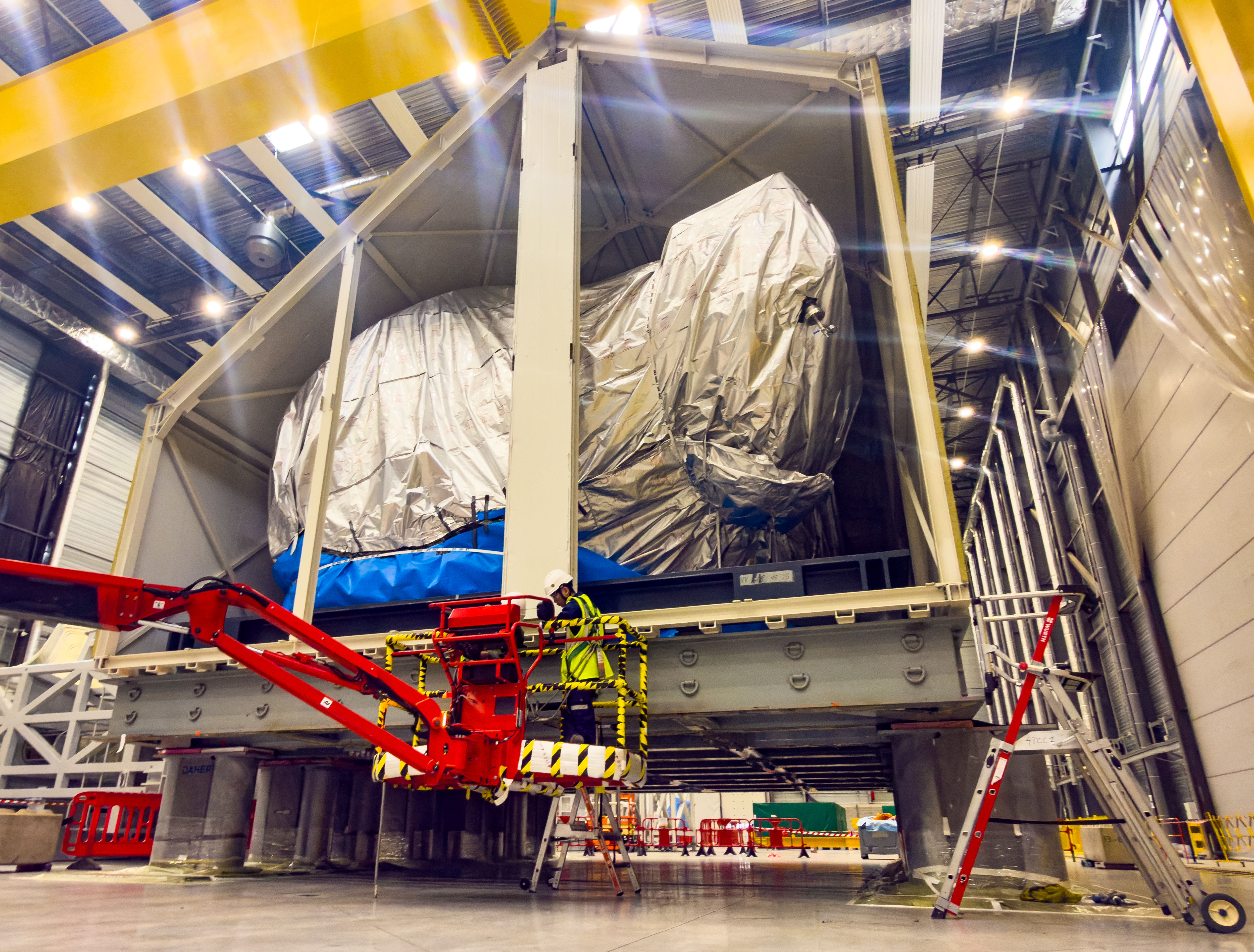
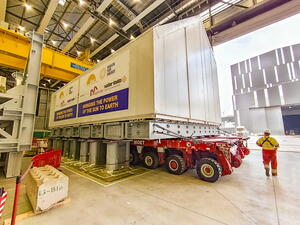
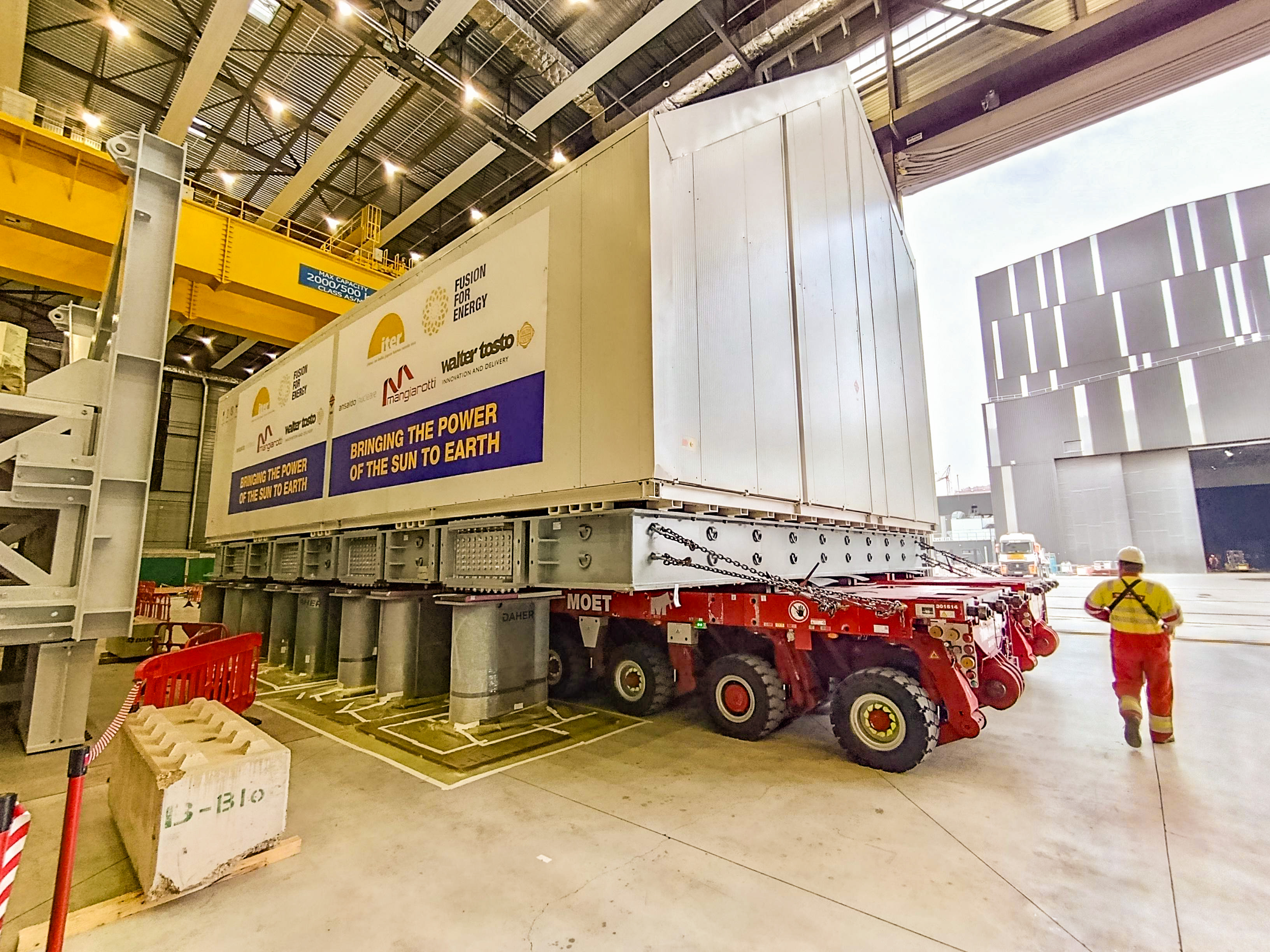
Vacuum vessel sector #9 arrived at ITER early on the morning of Friday 6 March after a long journey from Italy—first by sea and then by road along the 104-kilometre ITER itinerary. Once carefully removed from its protective transport housing, the component will be placed on stooling, its thermal bag will be removed, and it will undergo a site acceptance test. This multi-day visual inspection ensures there have been no scratches, dents, or other abnormalities since the component passed its factory acceptance test last year following the completion of manufacturing.
“It is a very thorough inspection. Our teams go up in cherry pickers and work underneath to examine the vacuum vessel sector from every possible angle,” says Gabriel Pruna, the ITER Assembly Technician overseeing the inspection. “This is an important first step in the assembly process and it is essential to verify the component is in the right condition before we move forward.”
Once the site acceptance test is completed, the component will begin its preparation for assembly. Bosses, studs, and clips will be welded onto the inner and outer shells, the component will be scanned so customized padding can be made to protect it during the upending, and other work will be carried out.
After this phase is completed, vacuum vessel sector #9 will be moved into the Assembly Hall sometime in June.