
ITER test facility earns international accreditation
With unmatched testing capabilities, ITER’s static magnetic field laboratory is poised to support equipment qualification and the development of international standards across the fusion sector.
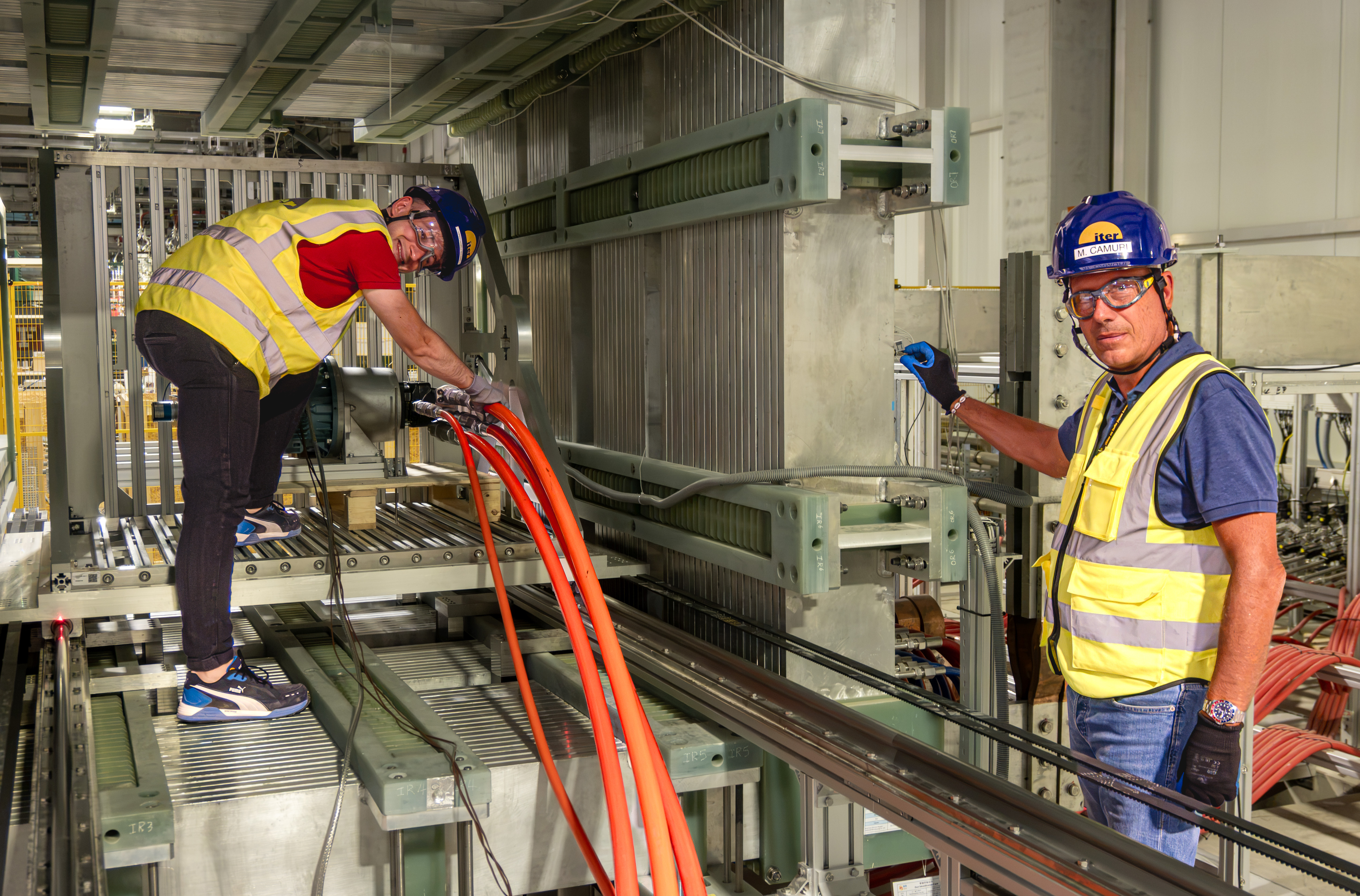
ITER’s static magnetic field test facility has achieved ISO/IEC 17025 accreditation, meaning qualification tests on fusion equipment carried out at the facility are now officially recognized by regulators, suppliers, and partners across the global fusion ecosystem.
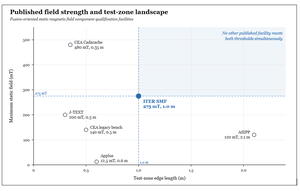
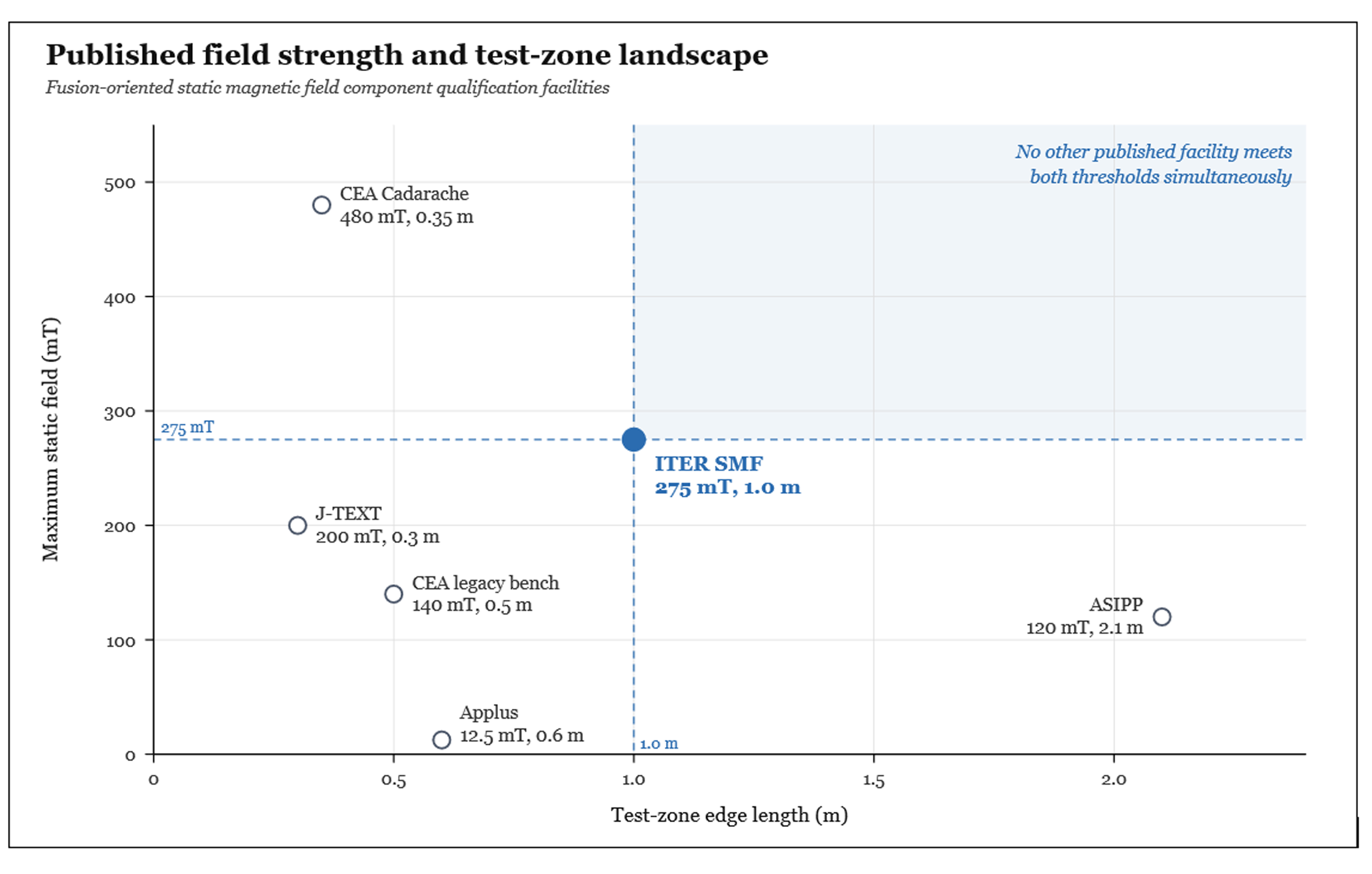
The laboratory offers what is believed to be the world’s best combination of static magnetic field strength and testing space with a working volume of 1 cubic metre and a field strength of up to 275 milliTesla or mT. (For context, a typical refrigerator magnet produces a magnetic field of roughly 5 to 10 mT). The facility is already open for testing equipment for ITER, the Domestic Agencies, and partner research institutions. As part of the ITER Organization’s knowledge-sharing and engagement initiatives, protocols are also being developed for external entities from ITER Members that have an established contractual, cooperation or partnership relationship with the ITER project.
Massimiliano Camuri, the ITER Magnetic Field Compatibility Project Leader, calls the facility a mosca bianca—a “white fly,” an Italian expression meaning something rare or exceptional—and says it will benefit a range of fusion stakeholders. “This laboratory is a highly specialized facility with capabilities that are difficult to find anywhere else,” says Camuri. “People working on fusion energy projects related to ITER can now use our laboratory and this will become increasingly important as fusion develops.”
In magnetic confinement fusion devices, magnetic fields can affect the performance of equipment and components. At ITER, equipment in the Tokamak Complex will be exposed to the fields generated by the central solenoid and poloidal field coils, making thorough performance assessments essential.
The static magnetic field lab was opened in 2023 to conduct these tests internally and has produced significant results, such as the discovery that design enhancements are required for fibre optic current sensors so they can operate reliably in the tokamak.
“The facility is a valuable asset for qualifying components,” says Shen Hong, the project leader from ITER’s Electrical Services Program who benefited from the sensor testing. “Identifying the limitations of the sensors at an early stage has mitigated the risk of significant delays to the schedule for the edge-localized mode power supplies.”
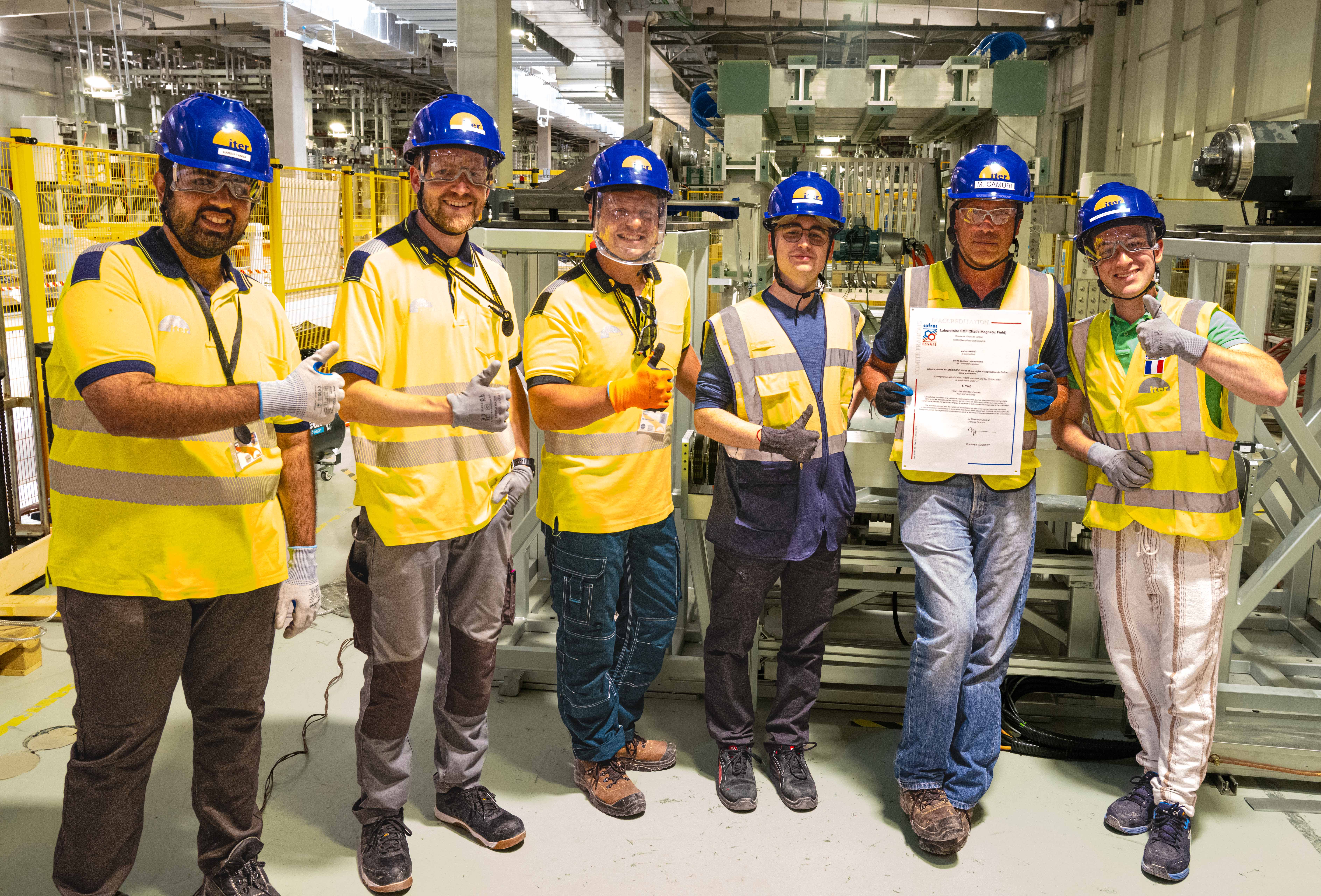
In November 2024, the process began to certify the laboratory to international standards. Conducted through COFRAC, the French national accreditation body, this involved an independent assessment of the laboratory’s testing methods, equipment, procedures, quality controls and staff expertise. In July 2026, the laboratory achieved full accreditation granted under ISO/IEC 17025 guidelines.
Beyond supporting equipment qualification, the laboratory could also play an important role in developing international standards for testing equipment under strong magnetic fields.
“Looking forward, the laboratory is poised to contribute to the development of dedicated international testing standards for strong magnetic field qualification because no such standards currently exist,” says Carmelo Riccardo Lopes, an ITER electrical engineer who contributed to the lab’s accreditation. “A purpose-driven standard would unite manufacturers around a single, unambiguous design target. It would also enable procurement bodies to specify magnetic qualification the way they already specify seismic or thermal qualification.”