
Preparing the next JT-60SA campaign to support ITER
The experiment team at the joint Japan/Europe international fusion experiment JT-60SA in Naka, Japan, is thinking now about how its 2026-2027 campaign can address ITER priorities.
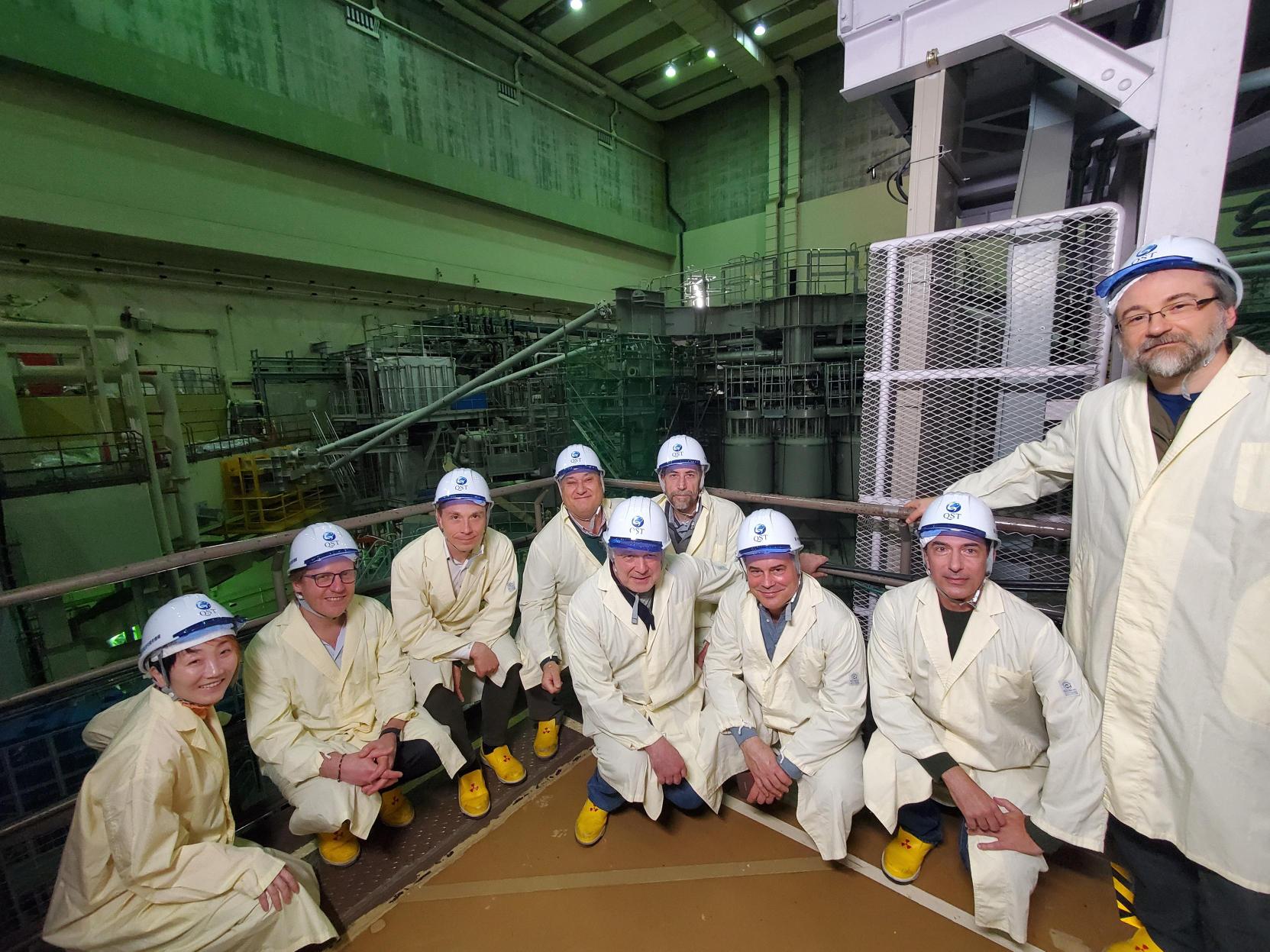
JT-60SA, the largest operating tokamak in the world, is progressing at a good pace with an extensive set of upgrades that is preparing the device for a new round of experiments later this year. The enhancements, which began in 2024, include heating and current drive systems, in-vessel control coils, diagnostics, and plasma-facing components. One of the key objectives of JT-60SA is to support ITER—and to formulate this support, a specific agreement between the ITER Organization, the European Domestic Agency Fusion for Energy (F4E), and the National Institutes for Quantum Science and Technology (QST) of Japan was set up in 2020.
Time has now come to define the experiments that will be conducted in the experimental campaign (OP2) foreseen to start next winter and extend into 2027. To this end, a call for proposals was launched by the Experiment Leaders to researchers in Japan, the European Union and the ITER Organization in autumn 2025. The call resulted in the submission of more than 150 proposals.
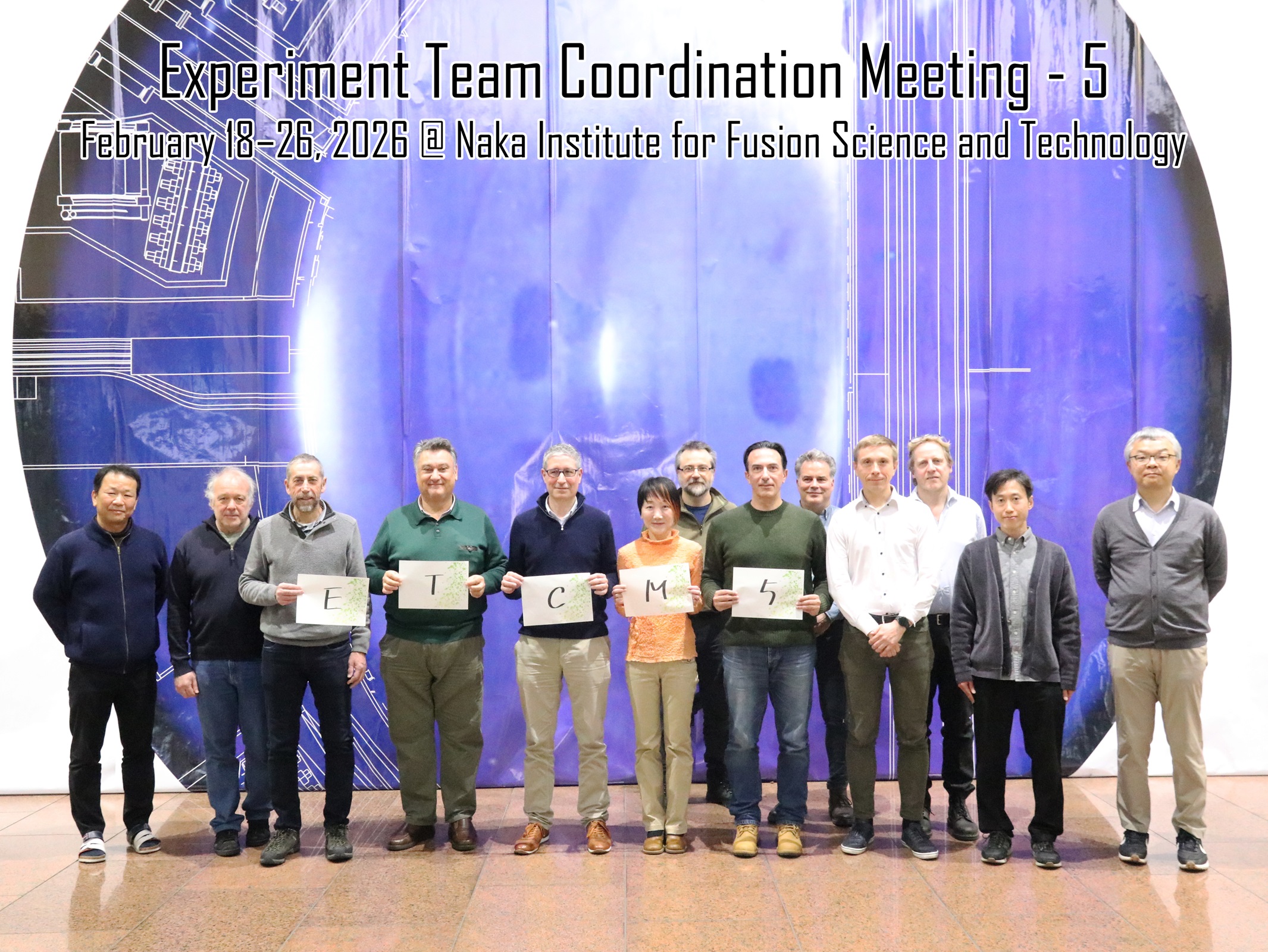
To review these proposals and discuss the main strategic lines of the 2026-2027 experimental campaign in detail, a coordination meeting of the experiment team took place in Naka from 18 to 26 February with representatives from Japan and the European Union. The ITER Organization was invited to attend the meeting to ensure that the campaign addresses ITER’s priorities, especially in the context of the new ITER baseline. Experiments in OP2 are therefore planned to address issues related to asymmetries in the magnetic configuration to support ongoing ITER assembly, disruptions and associated electromagnetic forces on the vacuum vessel and in-vessel components, negative neutral beam shine-through loads, and edge and pedestal physics in a wide range of H-mode plasma conditions, to cite a few key items.
ITER Organization staff who are also members of the experiment team will participate in the execution of the experiments both on site in Japan as well as remotely. In addition, it is expected that ITER Organization staff will participate in operation training activities that are being organized by the JT-60SA team in support of the 2026-2027 OP2 experimental campaign.