Redundancy achieved: spare solenoid module arrives at ITER
As the last highly exceptional load from the United States, the transport of the solenoid module was a momentous occasion carried out with the usual high-level logistics, rigorous security… and respect for frogs.

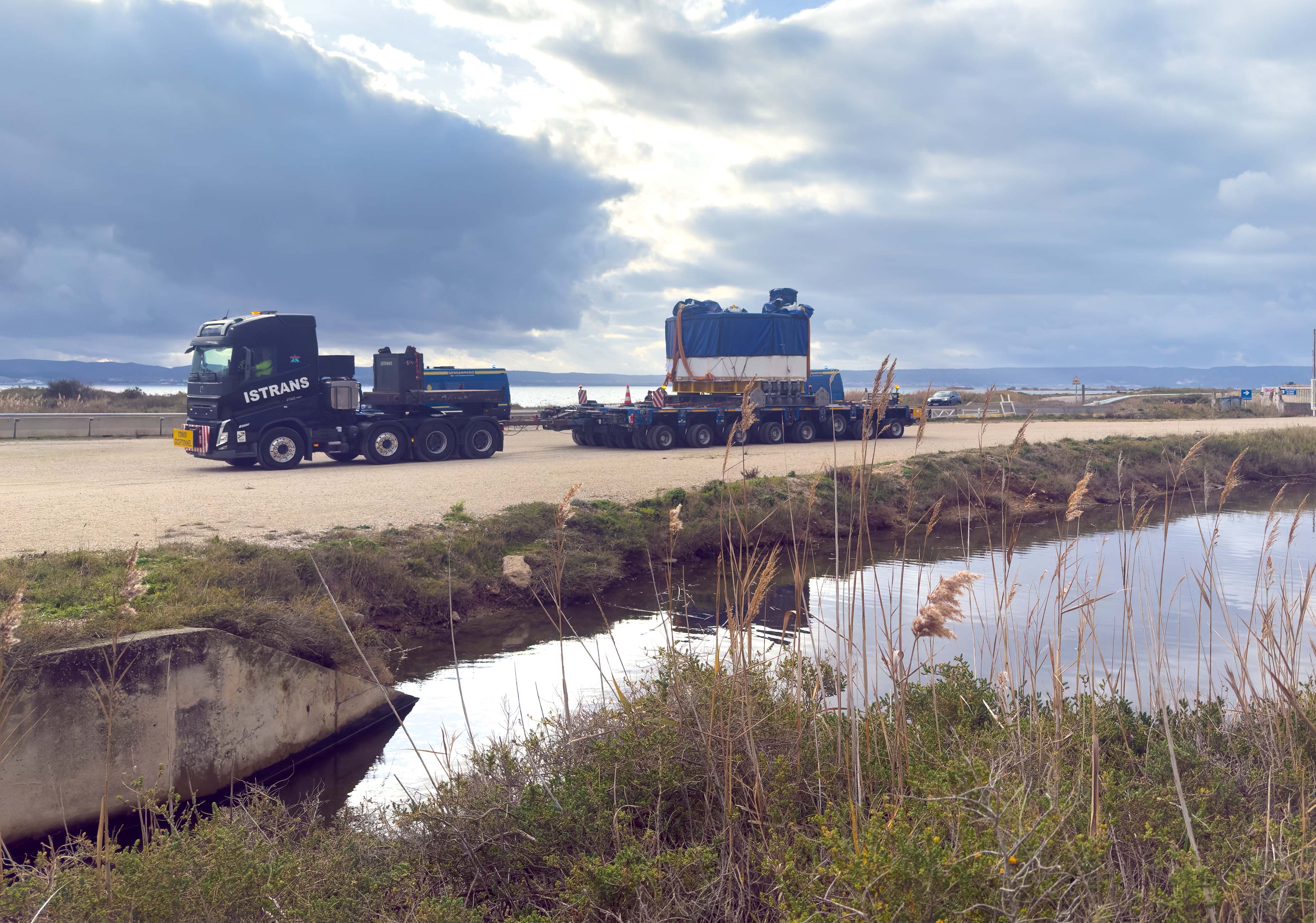
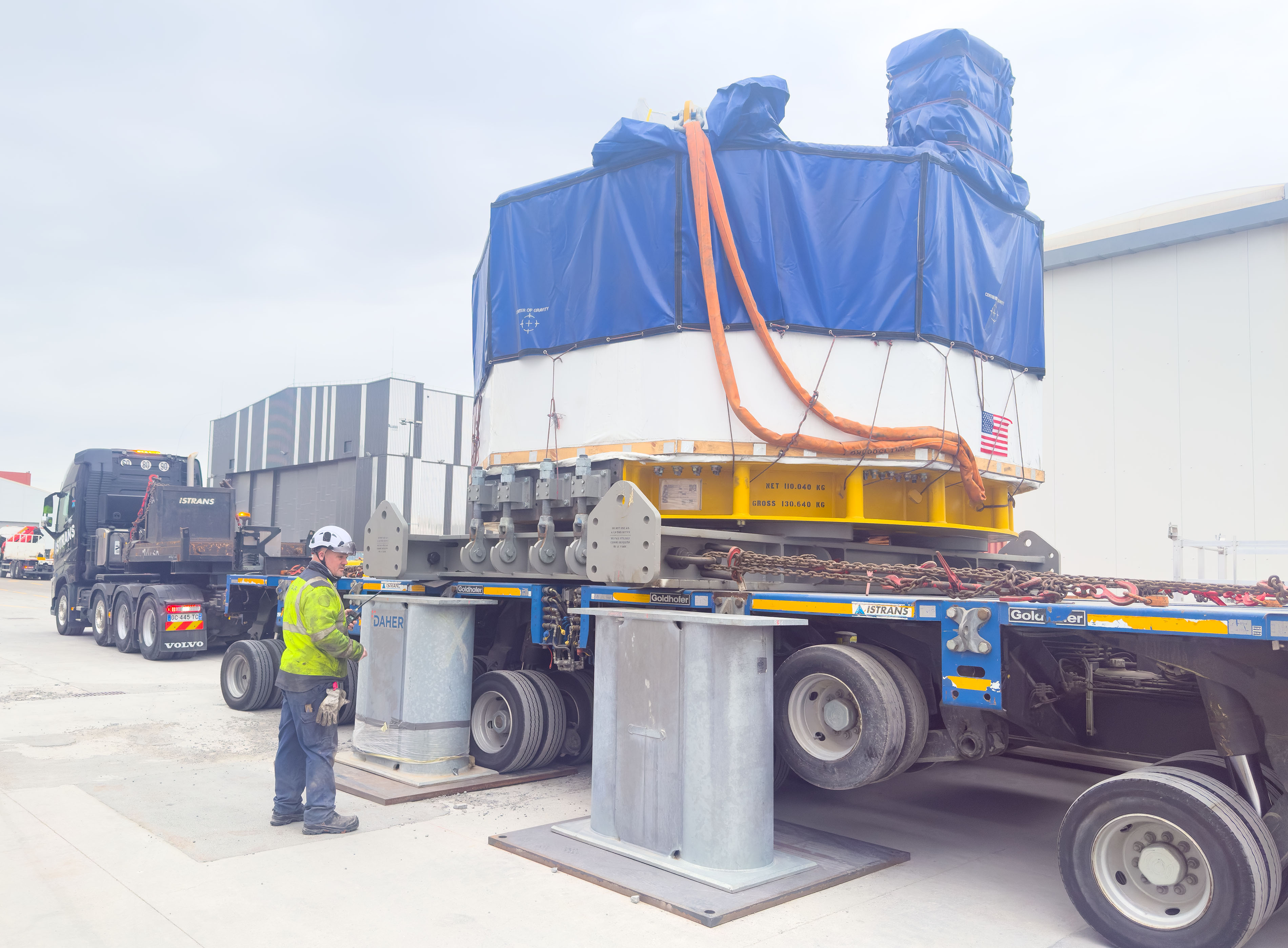
Sometimes peace of mind weighs 110 tonnes and gets delivered by a massive flatbed trailer truck.
The spare central solenoid module arrived safely at the ITER site on Friday 16 January after a weeks-long journey by boat and truck from the United States. The central solenoid magnet is the 18-metre-tall component located at the very centre of the ITER tokamak that plays an important role in starting and controlling the plasma. Currently, five of the six magnets are stacked and connected in the Assembly Hall, with the installation of the last module scheduled for March 2026. As part of ITER’s strategy to build redundancy into mission-critical systems, a full spare solenoid module was manufactured to reduce technical and schedule risk and will only be deployed if a problem emerges with one of the six installed components.
The spare solenoid module was manufactured by General Atomics in San Diego and first travelled by road to Houston, where it was loaded onto a ship for the south of France. After arriving at the port of Fos-sur-Mer, it was taken by barge to a staging area in Berre l’Étang before making the final leg of the journey along the ITER itinerary by trailer truck.
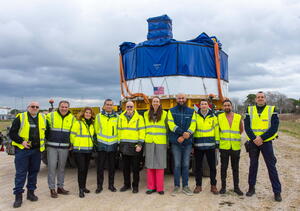
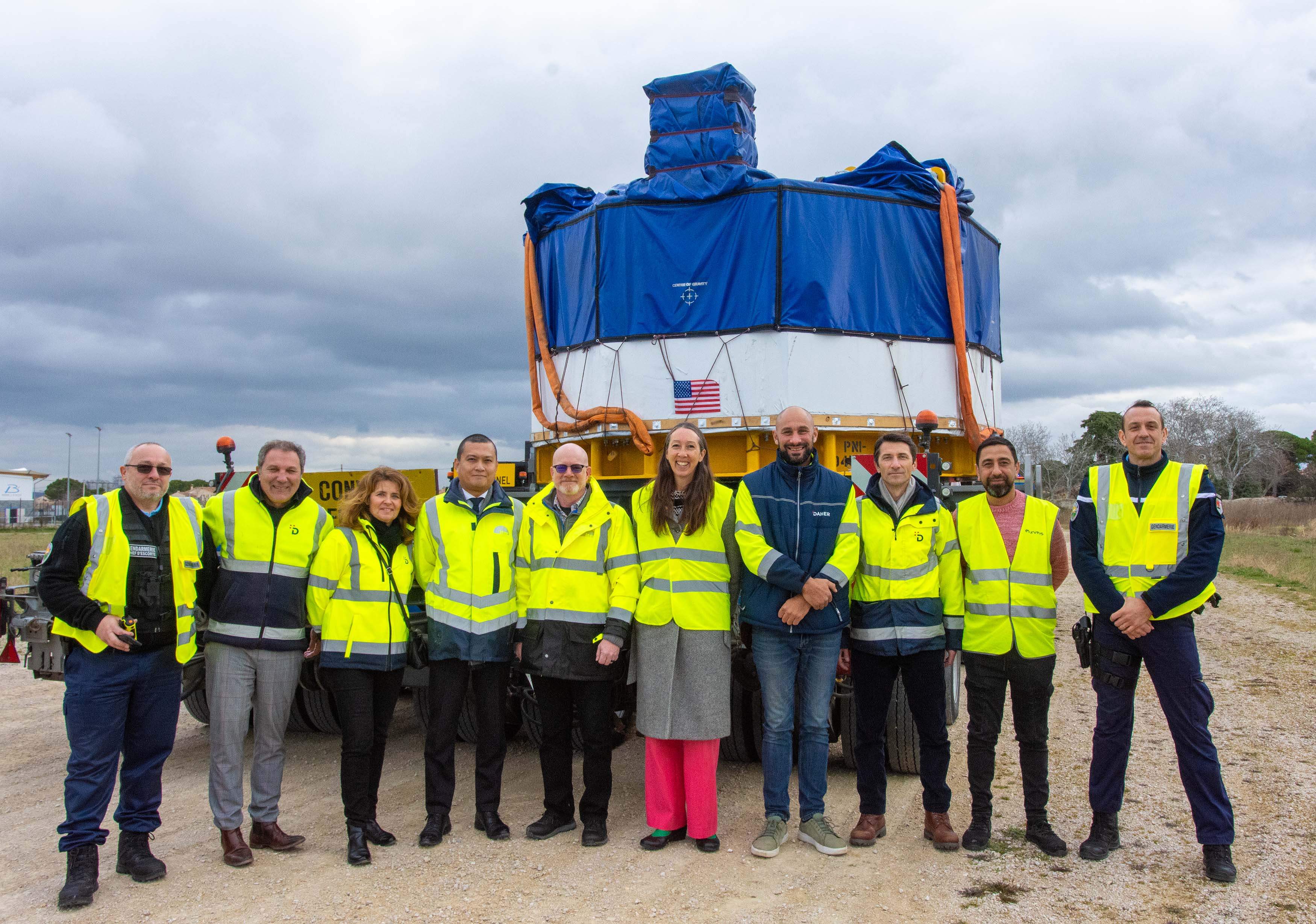
As the last highly exceptional load (HEL) coming from the United States, the solenoid module’s journey was an occasion to recognize American contributions to the project. The US Consul General in Marseille, Jessica Huaracayo, participated in the departure of the convoy from Berre l’Étang to learn more about the delivery logistics for American-made components. “It is very impressive and exciting to witness the international coordination involved with transporting this massive American-built module all the way from San Diego, through Houston, and finally to ITER,” she said.
Jeff Parrott, the logistics and transportation coordinator for US ITER, was more accustomed to monitoring the central solenoid components when they departed from San Diego and were loaded at the Port of Houston. But because this was the last delivery for the central solenoid, he flew to France for the final leg of the journey. “It’s very satisfying to see the transport executed so smoothly but also somewhat bittersweet since this is the last highly exceptional load shipment planned for the US,” he said. “There will be other large components we deliver but none requiring the same specialized transportation logistics.”
Indeed, more than 80 French police officers were mobilized to secure the convoy along the ITER itinerary. Planning for the operation also took environmental considerations into account. Although convoys travel as a general rule by night to limit traffic disruption, the first three-kilometre stretch is done during the daytime to respect the local ecosystem. The staging area in Berre l’Étang is classified as a Natura 2000 reserve (a European network of important ecological sites) and heavy transportation activities are limited at night to protect the frog population.