
Release of IMAS infrastructure and physics models as open source
In another step to support global efforts to develop fusion energy, the ITER Organization is releasing the tools it uses for physics modelling and analysis—the ITER Integrated Modelling & Analysis Suite, IMAS—under open-source licenses.
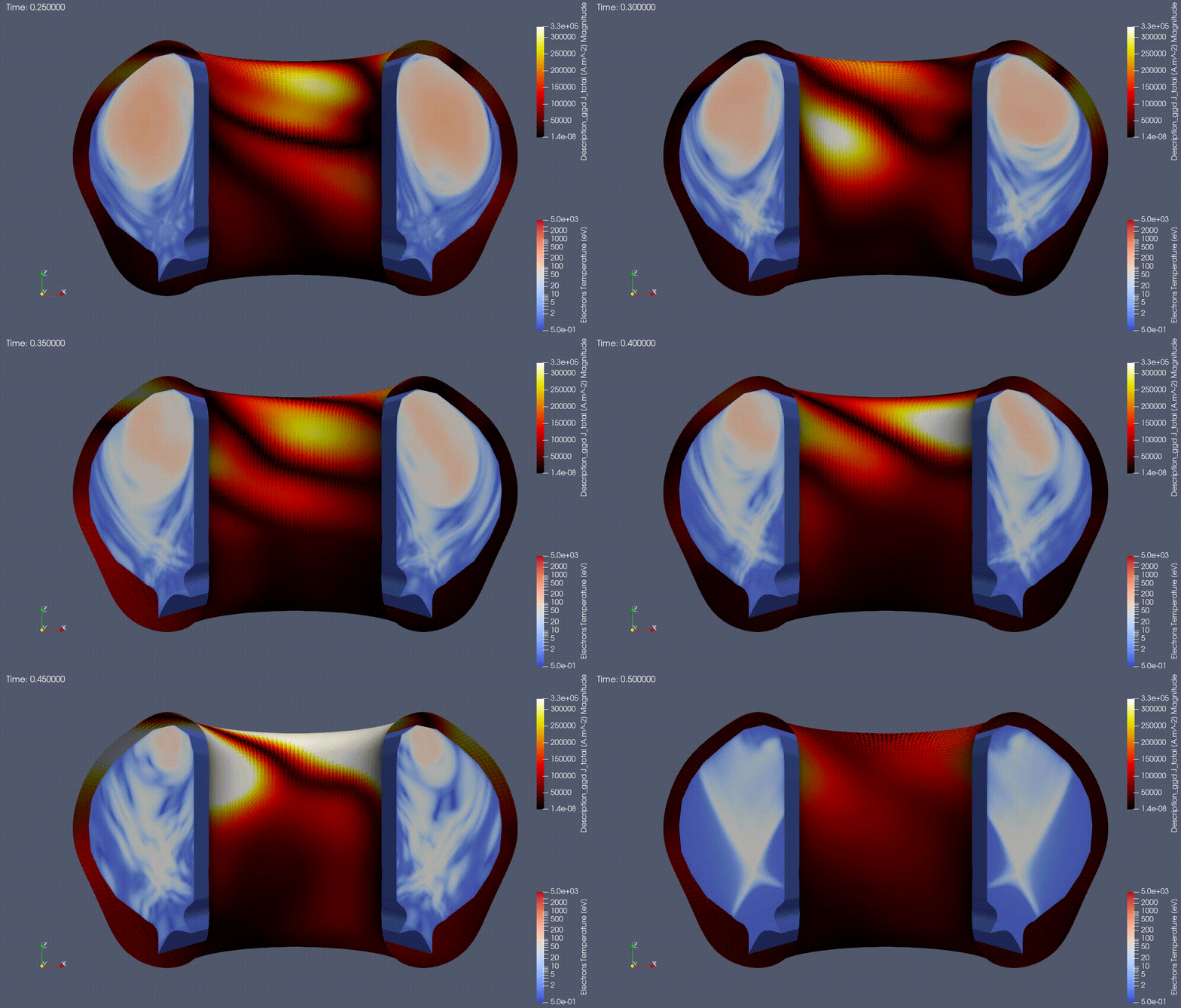
--Visualization with IMAS-ParaView (https://github.com/iterorganization/IMAS-ParaView) of induced currents in vacuum vessel and plasma electron temperature during disruption in ITER simulated with JOREK code (https://jorek.eu/).
In line with the ongoing efforts* to facilitate the development of fusion energy in the Members, the ITER Organization is pleased to announce that the Integrated Modeling and Analysis Suite (IMAS), including a wide range of physics modelling codes for tokamak plasma scenarios, is now available for access and use under open-source licenses on the GitHub platform. This culminates the effort initiated earlier this year after the decision by the ITER Director-General to release the IMAS Intellectual Property owned by the ITER Organization as open source, and has only been possible thanks to the support from a wide range of institutions across the ITER Members.
The Integrated Modelling and Analysis Suite (IMAS) provides standard tools and applications to support the integrated modelling and data analysis of fusion plasmas and has been developed in close collaboration with the Members’ fusion communities. This development has been guided by the need to address plasma scenario and plasma diagnostic design/performance issues and to optimize the ITER Research Plan towards the achievement of ITER’s goals. The IMAS infrastructure software now released as open source allows users to manipulate and perform a wide range of operations on data that follows the IMAS Data Dictionary. This is a device-agnostic standard for fusion data capable of describing experiments and simulations that has resulted from a decades-long effort by the ITER Organization and the ITER Members. The support of EUROfusion and EURATOM to enable this open-source release is gratefully acknowledged.
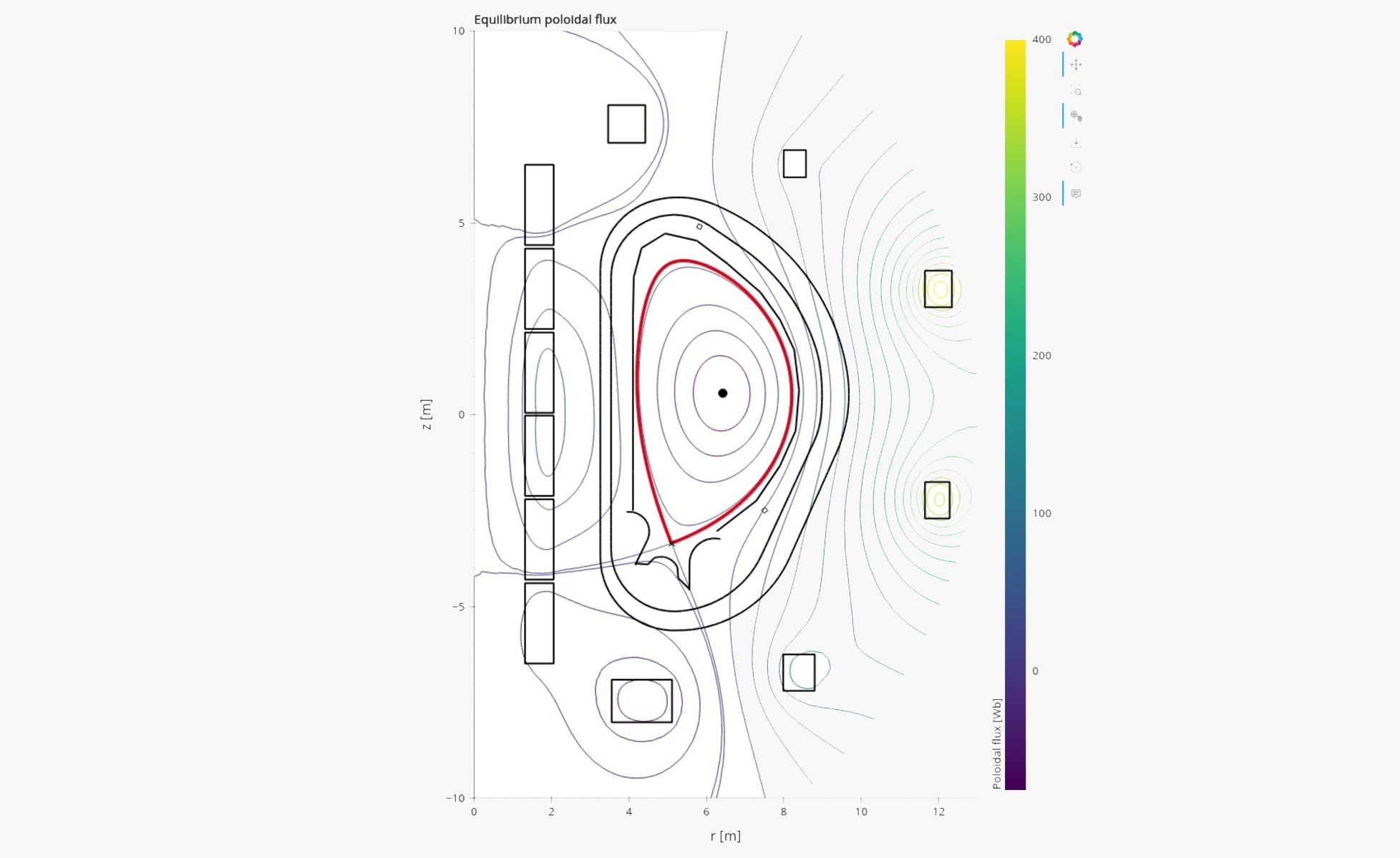
In addition to the infrastructure software, a wide range of physics models used extensively in the fusion modelling community have also been made openly available. This includes SOLPS-ITER (for the modelling of edge plasmas, principally composed of B2.5 and EIRENE), SOLPS-GUI (a graphical interface for SOLPS-ITER), DINA Plasma Simulator (for modelling tokamak scenarios) and a Heating & Current Drive Workflow (HCD-WF). The institutions that own the intellectual property for these codes (Max-Planck-Institut für Plasmaphysik, Forschungszentrum Jülich, Fusion for Energy, and the Plasma Simulation Center) are gratefully acknowledged for their support. Fully aligned with this ITER-led effort, many research institutes from the ITER Members and non-Members have also made their plasma simulation codes openly available under open-source licenses (such as METIS, CHEASE, GACODE, NICE etc.), greatly enhancing the open access of plasma simulation codes to the wider fusion community, including privately funded initiatives.
The IMAS software set available as open source will gradually be expanded moving forward and enriched with additional documentation to help users find the appropriate IMAS software for a given use-case. Near-term steps include the release of synthetic diagnostic models to simulate the expected measurements in tokamak plasma scenarios and support the inference of plasma properties.
And of course, contributions in all forms (source code improvements, bug reports, documentation, installation recipes on different platforms, etc.) by the worldwide fusion research community are very much welcome for all these different software packages.
See https://github.com/iterorganization
* The ITER Council, in its 33rd (November 2023) and 34th (June 2024) meetings, requested Members to encourage their national entities (government agencies, research institutes, private sector fusion companies) to support global fusion efforts.