
On the Adriatic, heading to ITER
Another piece of the ITER construction puzzle is arriving. Two days ago in Monfalcone, Italy, European-procured vacuum vessel sector #9 was loaded onto the cargo vessel that will deliver it to the south of France.
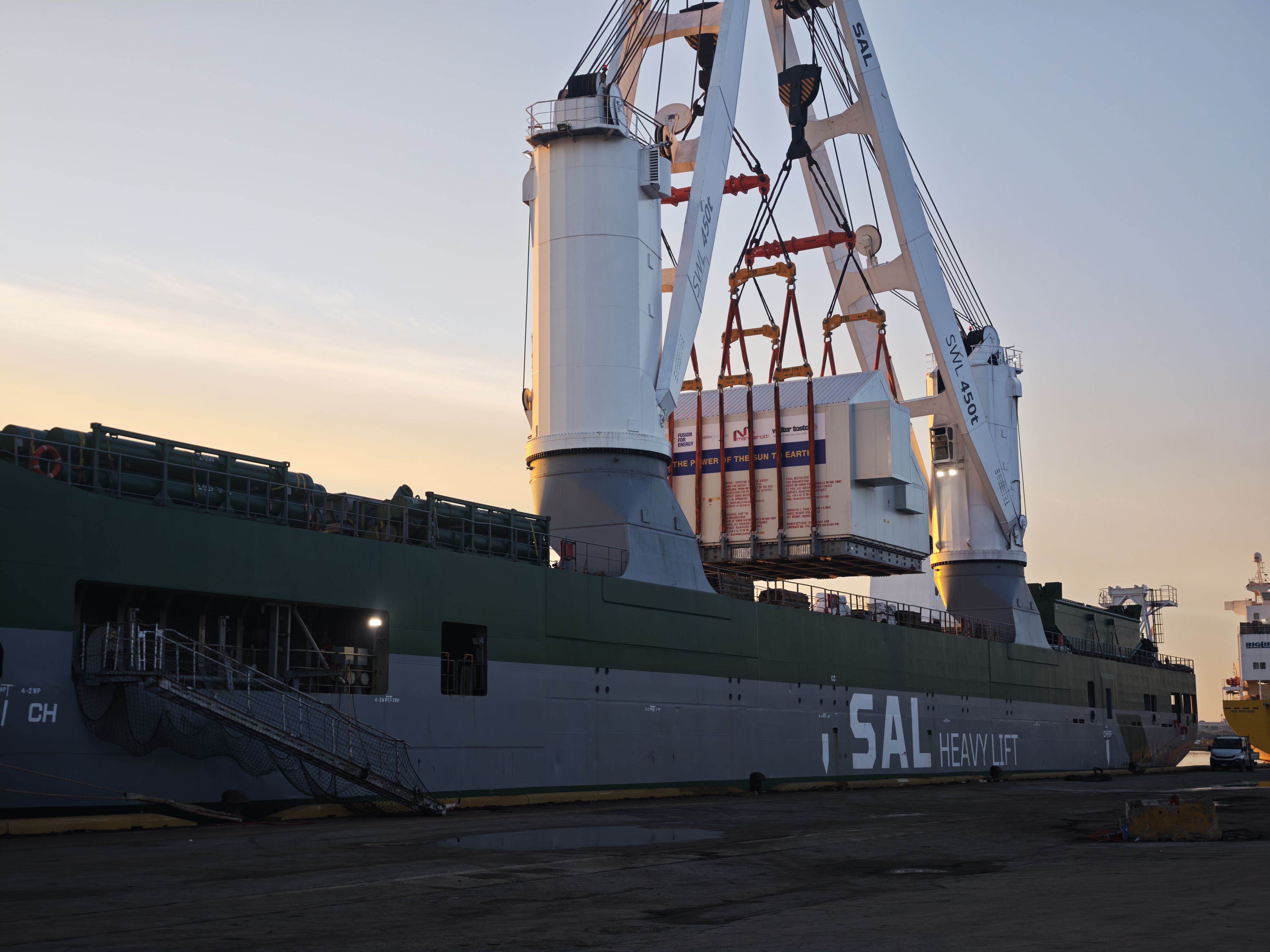
When sector #9 reaches ITER next month, it will be the seventh vacuum vessel sector received on site.
Two additional sectors are already in an advanced stage of completion in the workshops of Europe's Ansaldo Nucleare–Westinghouse–Walter Tosto consortium (AMW); once they arrive later this year, all the components required to form ITER’s torus-shaped plasma chamber will be in the hands of the assembly teams.
Vacuum vessel sector fabrication is an exceptionally complex, multi-step industrial process that begins with procuring specialized ITER-grade stainless steel forgings, which are machined into plates. The plates are welded into four large segments, which in turn are assembled into a single sector (see diagram below). In Europe, which was tasked with the procurement of five sectors, the supply chain for vacuum vessel procurement spanned numerous European companies, involved thousands of coordinated tasks, and implicated at least 150 professionals. For sector #9, each of the segments required for its assembly was produced in a different workshop—Equipos Nucleares S.A. (ENSA) in Spain, and Belleli Energy CPE, Walter Tosto, and Westinghouse Mangiarotti in Italy—adding logistical challenges.
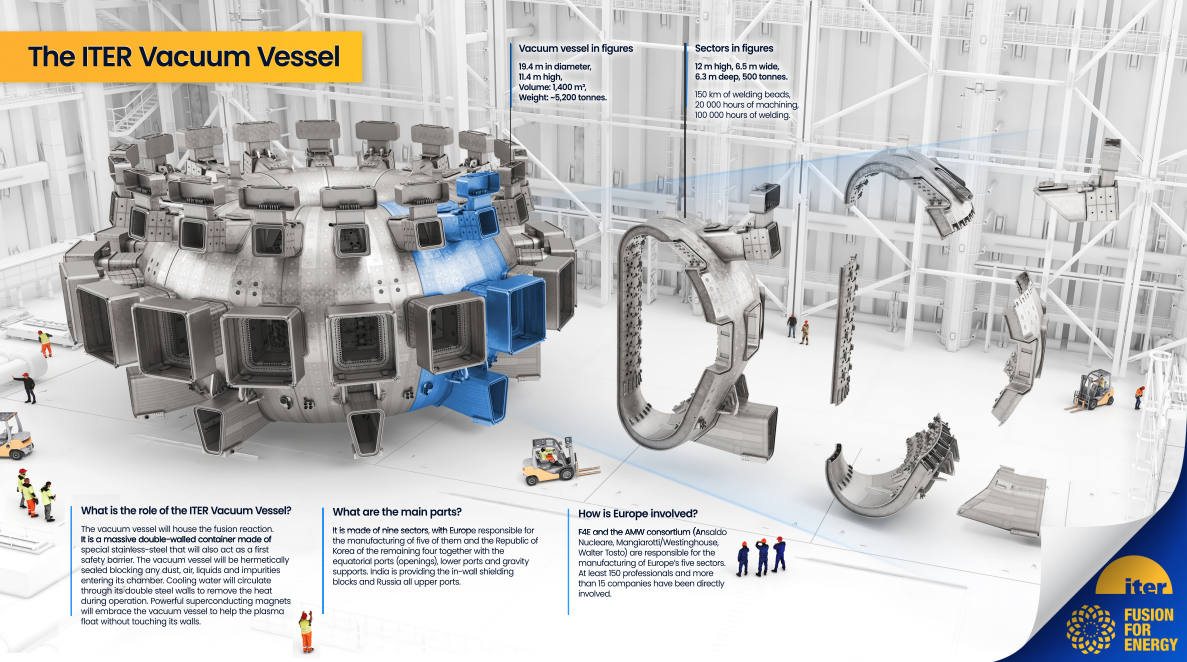
Each sector contains approximately 150 kilometres of welds, adding the risk of distortion and non-conformities to already demanding alignment and tolerance requirements. In sector 9, late-stage inspections identified defects in some joints, requiring invasive “surgical” repairs that involved reopening part of the structure and posed potential schedule delays. The team credits close coordination and established working relationships for the solutions that were eventually deployed that kept the project on schedule.
Read the full story on the Fusion for Energy website. Download the vacuum vessel diagram as a poster here.