ITER representatives visit China
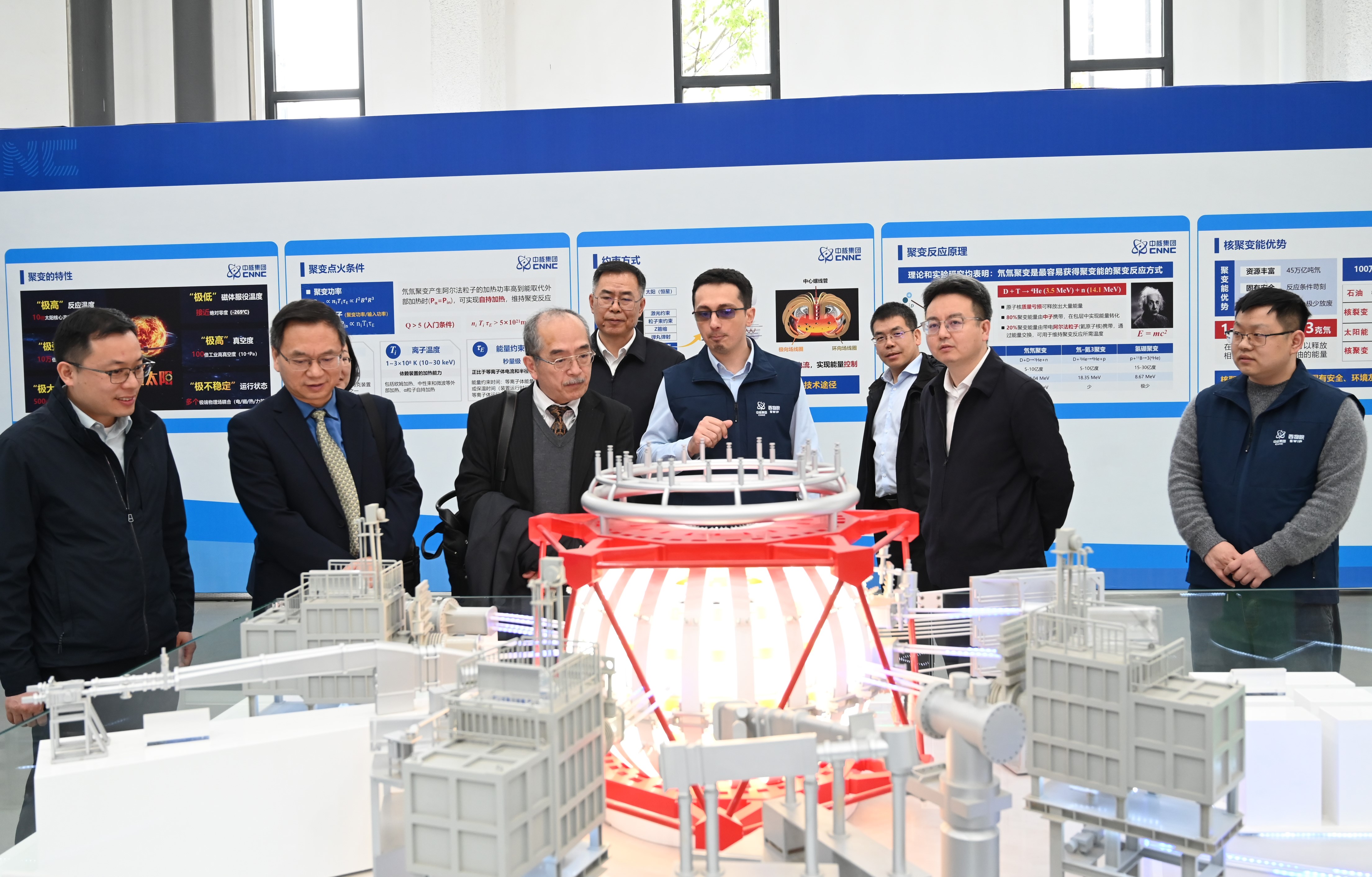
A delegation from ITER has just returned from a visit to China’s Southwestern Institute of Physics (SWIP) in Chengdu. Home in its history to more than 20 experimental devices for controlled nuclear fusion research, including the advanced-divertor tokamak HL-3 that has become a satellite device for ITER, SWIP is also an important contributor for Chinese participation in ITER construction, providing key technologies and components.
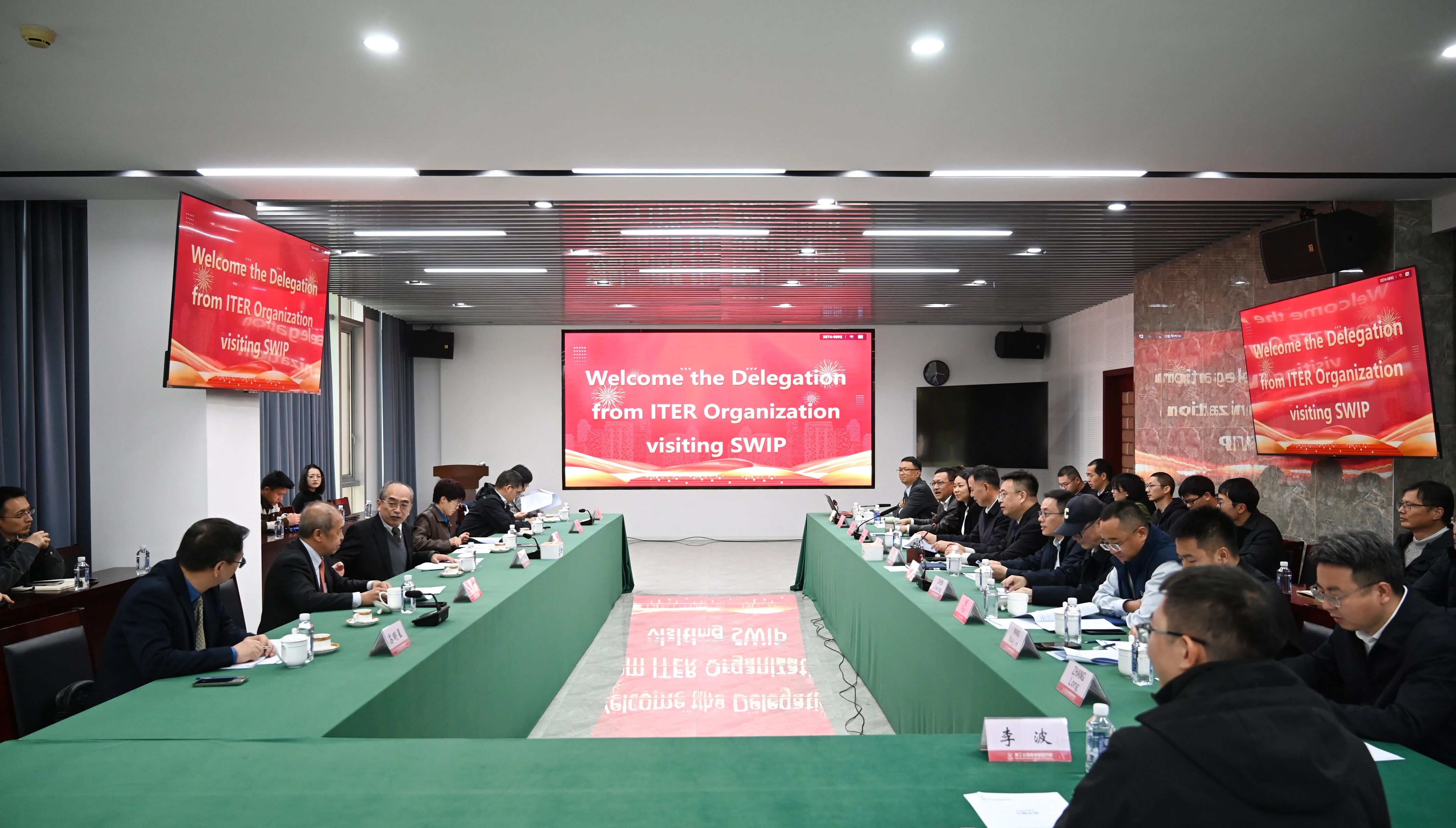
For five days in March, ITER Deputy Director-General Yutaka Kamada and ITER Strategy and Coordination Officer Su Mingxing visited China, making stops at the Southwestern Institute of Physics (SWIP), the China Fusion Energy Co., Ltd. (CFEC), and the ITER divertor assembly integration workshop located at the Qinshan Branch of the CNI23 Company, near Shanghai. At SWIP, they were joined by Luo Delong, ITER Deputy Director-General for Corporate. Wang Min, the Deputy Director-General of ITER China, also accompanied the delegation.
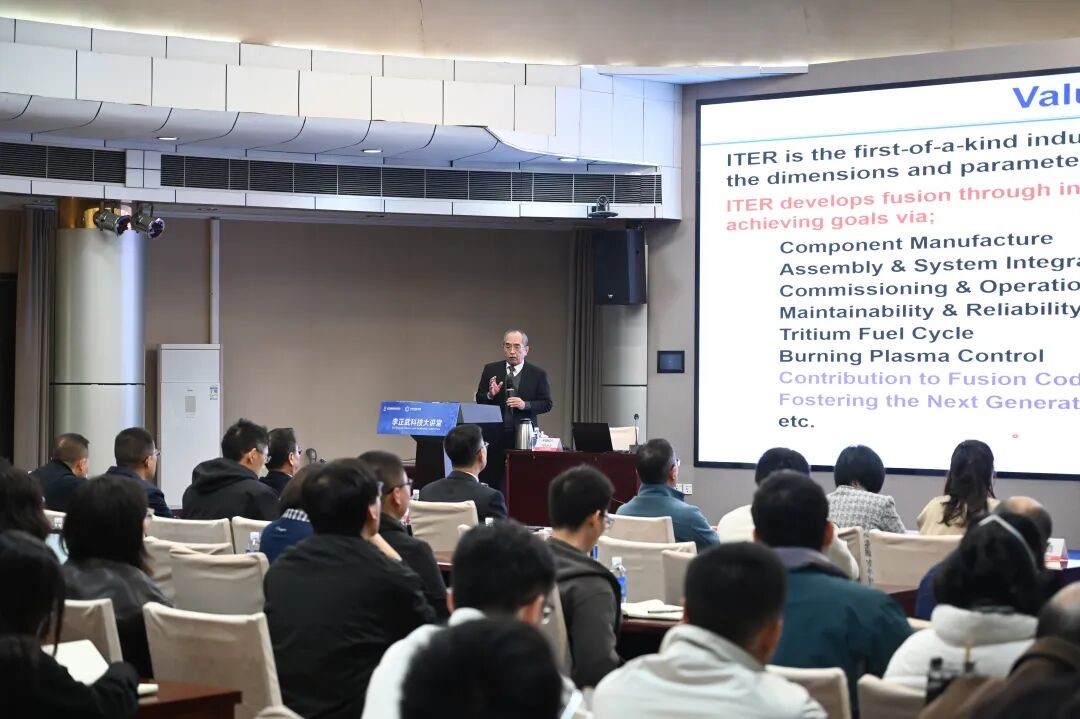
In welcoming the group from ITER, SWIP and CFEC Chairman Liu Ye highlighted recent scientific and technological innovation achievements in the field of fusion and the important cooperation underway with the ITER Organization. China's HL-3, as an advanced tokamak device, has become an important experimental platform for international fusion research. In 2023, the ITER Organization and SWIP signed an agreement for academic, scientific and technical cooperation including on the HL-3 device to provide support for physics research and future ITER operation. Cooperation intensified during the 2025 campaign on HL-3, where several ITER priorities were addressed. Last week, the parties discussed key scientific and engineering issues for the next-stage ITER experiments, as well as the issues of global fusion talent training and future trends in fusion development.