
Getting ready to flex
Preparations for the installation of bellows in the Tokamak Building are now underway with the completion of the first welds in the port cells and a customized installation tool sailing towards ITER.
The ITER tokamak is a machine of utmost precision with components positioned within a fraction of a millimetre and meticulous technical specifications to ensure everything fits perfectly together in compact spaces. But it is also a machine that is designed to move around.
Whether it is thermal expansion during plasma operation, the natural settling of the Tokamak Building, or minor seismic activity, the vacuum vessel chamber will undergo a subtle dance with expected vertical and horizontal movements of up to 2.5 centimetres. This motion, relative to other systems and to the surrounding concrete wall, will be accommodated by the ITER bellows system.
“Bellows will allow the machine to breathe,” explains Sébastien Koczorowski, ITER’s Deputy Program Manager overseeing the ports and bellows installation project. “We will be dealing with movements from a few millimetres to a few centimetres and the bellows help provide the flexibility for the structure to adapt to these loads.”
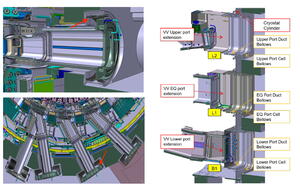
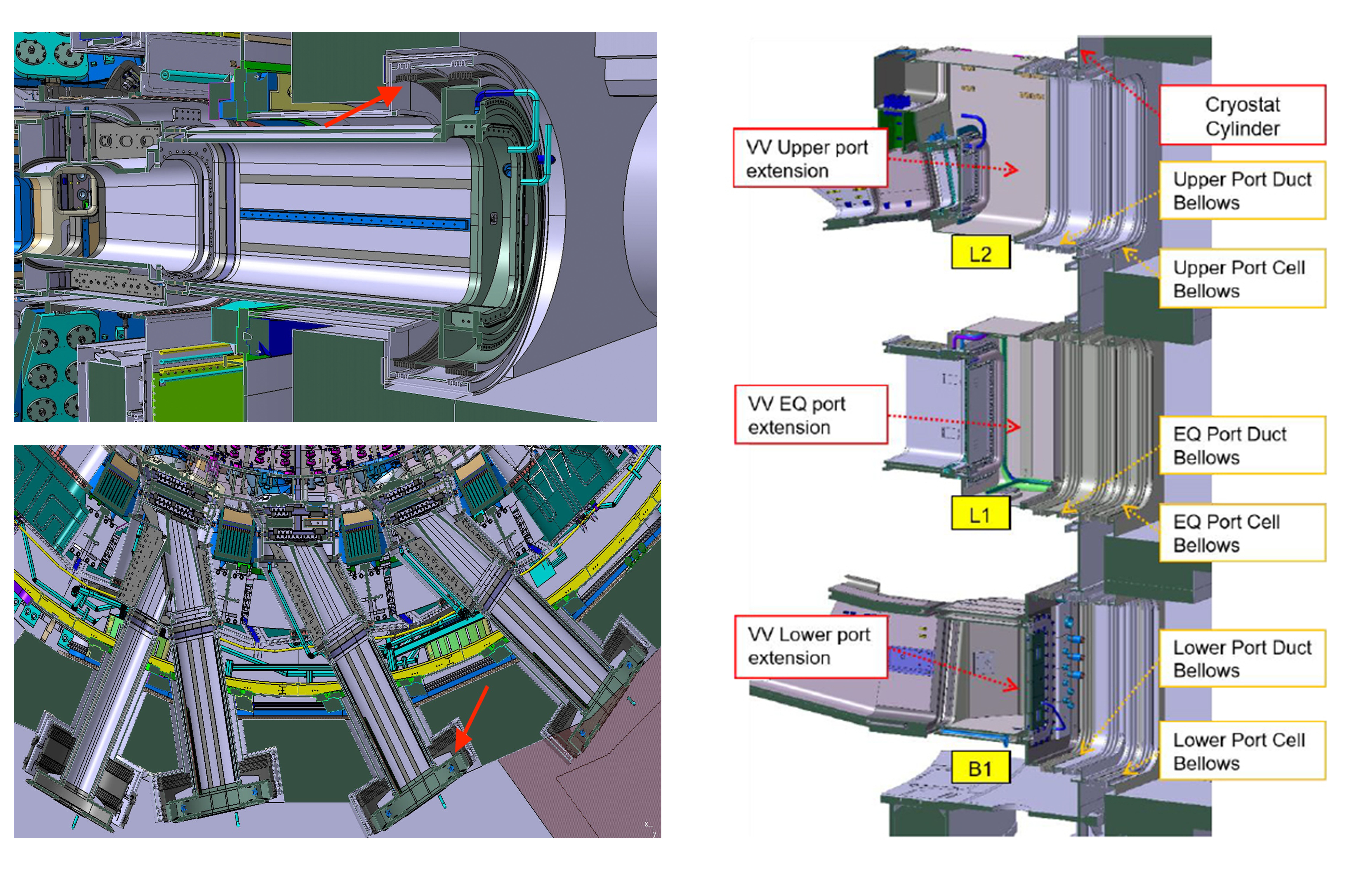
There will be two shapes of bellows used in the ITER tokamak: rectangular and circular.
Rectangular port cell bellows will connect the cryostat’s lower and upper cylinders to the Tokamak Building, compensating for structural movements and adapting to seismic activity, while rectangular port duct bellows will form an interface between the vacuum vessel chamber and the inner surface of the cryostat wall, accommodating thermal expansion and mechanical loads generated during operation. Each rectangular unit measures approximately 4 x 4 x 1 metres and can weigh up to four tonnes.
The circular bellows will be placed at the entry points for diagnostic neutral beam lines and heating neutral beam lines. As with the rectangular bellows, the circular bellows will accommodate movements both between the cryostat and the building and between the cryostat and the vacuum vessel chamber.
In total, the ITER tokamak will be equipped with 8 circular bellows and 85 rectangular bellows, all of which are being manufactured in China. There are currently close to 20 bellows already received and in storage at ITER.
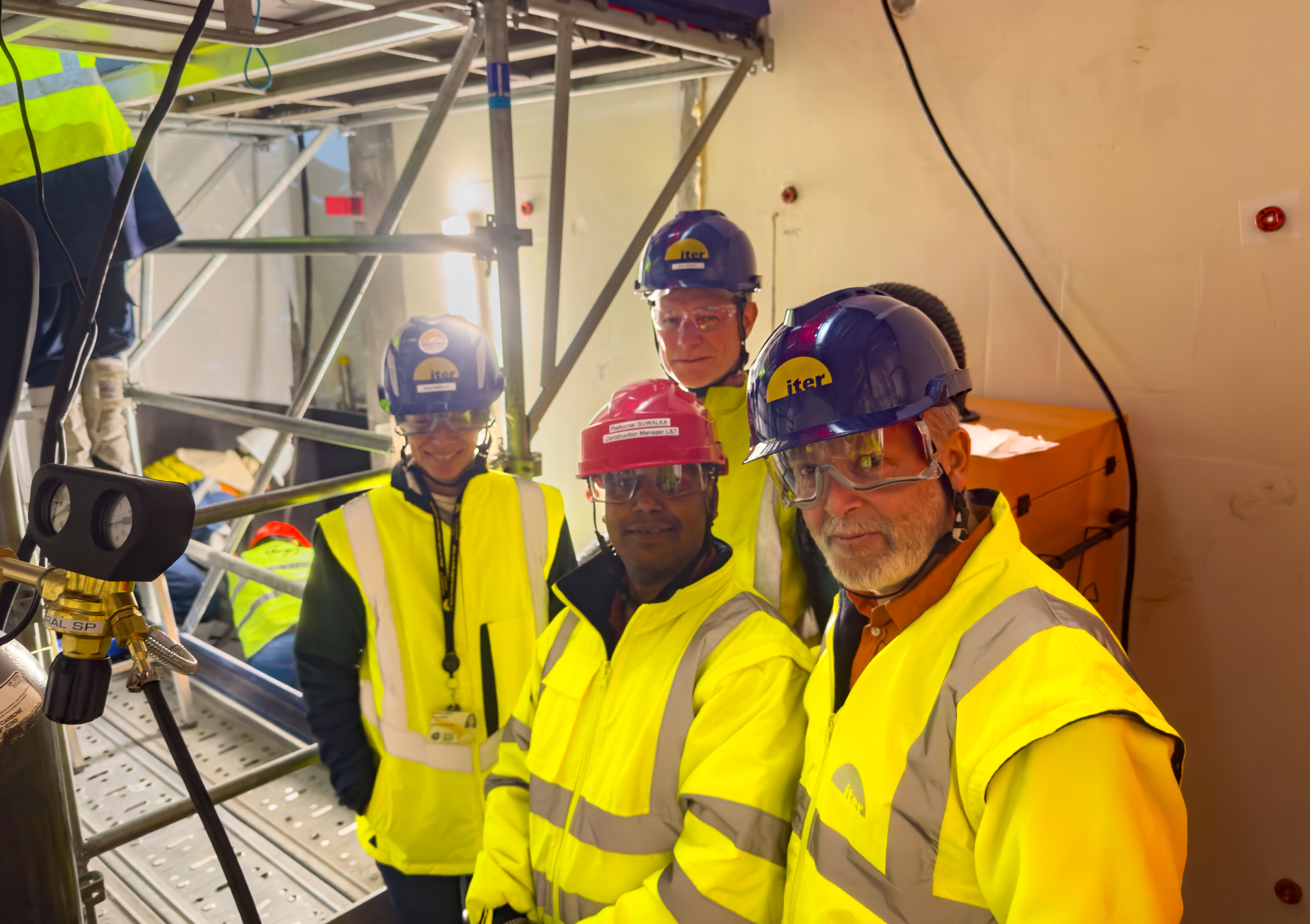
The installation of the bellows has been entrusted to the Indian firm Larsen & Toubro through a contract signed in 2024. As Larsen & Toubro also delivered the ITER cryostat, they have a valuable familiarity with the interfaces that will facilitate the process.
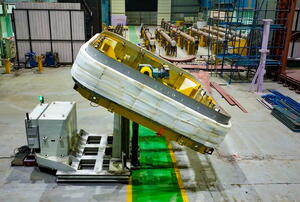
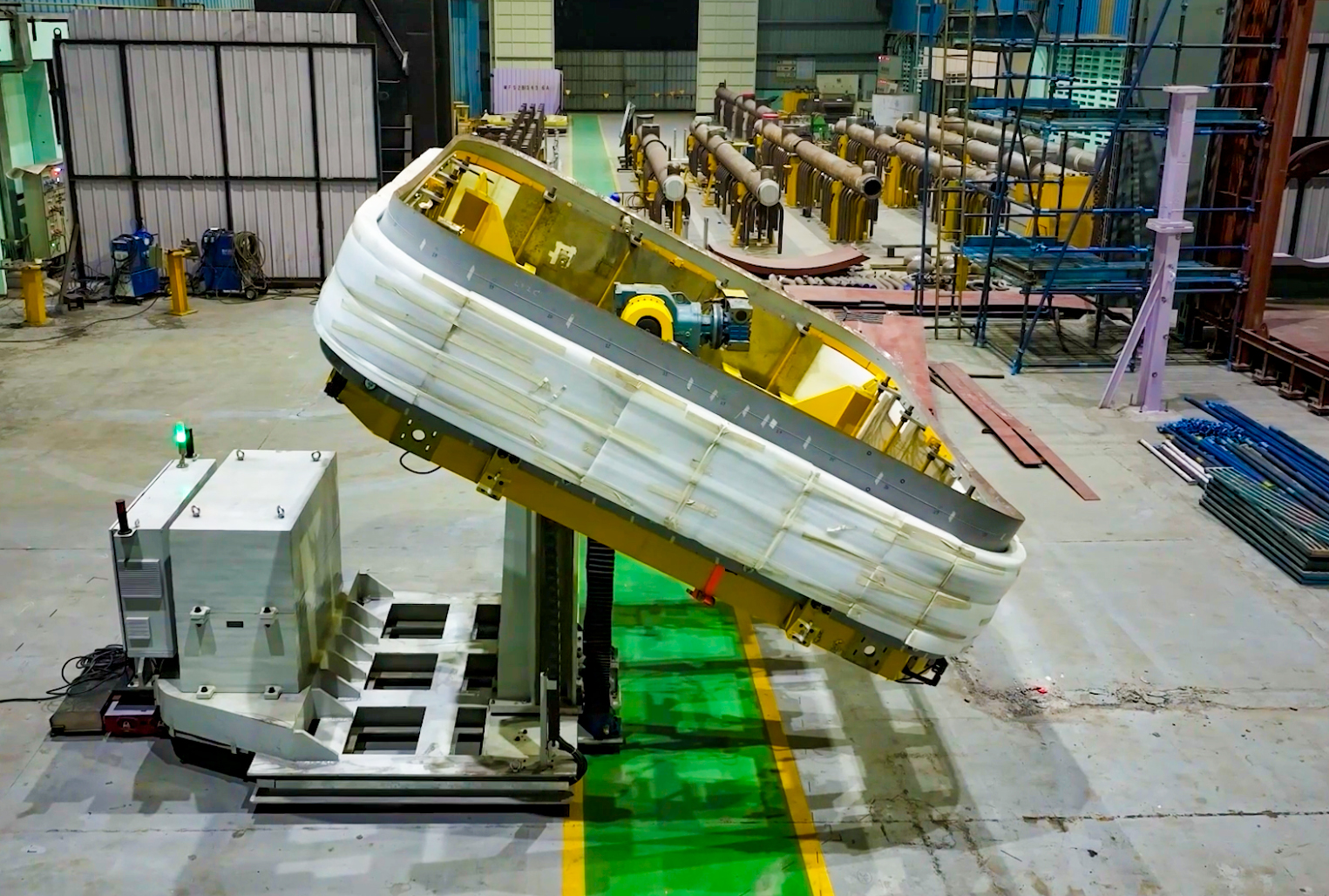
In recent weeks, two key benchmarks have been reached. First, the custom installation tool designed to position bellows ahead of welding operations has passed its factory acceptance test and has performed well in mockup tests that have been run in Hazira, India. The remote-controlled tool—known as the bellows transportation, upending and alignment trolley—was developed by Larsen & Toubro with support from Tata Consultancy Services and input from ITER designer Karsten Friedel so it can navigate the constrained environments of the Tokamak Building’s galleries and port cells. Interchangeable interfaces will allow it to adapt to the components with different shapes and fixation frames. The installation tool is expected to arrive at the Port of Marseille Fos in early May.
“The mockup tests have gone well, and we are pleased with the progress of the project,” says ITER Tokamak Assembly Engineer Nirbhay Naik, the deputy technical responsible officer for the project. “The completion of this tool means installation can stay on schedule or even move more quickly than anticipated, so it’s another step along the path for the ports and bellows project.”
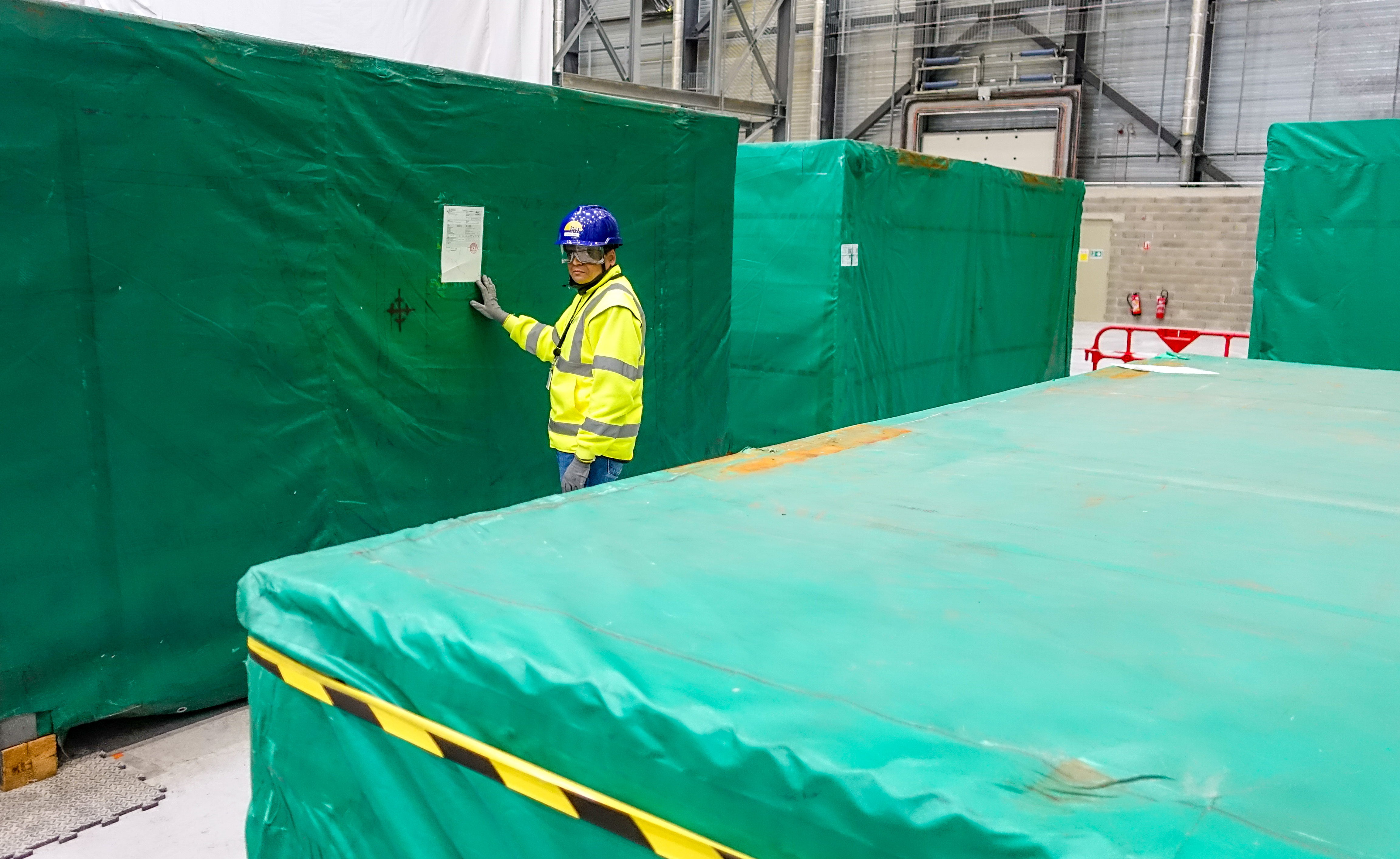
Meanwhile, on Tuesday 31 March, the first embedded plate corner joints were welded on the B1 level of the tokamak pit, clearing the way to start installation of the bellows in the first port cell. These corner joints will permit full installation work to begin in late May or early June.
The initial installation phase will involve the lower bellows at the B1 level of the Tokamak Building, a process that should take about one year. The other bellows will be installed after all the sector modules are in the tokamak pit and vacuum vessel welding has started. The target date for beginning this second phase of bellows installation is 2028.
All the bellows at equatorial (L1) and upper level (L2) will be installed with a slight vertical offset and horizontal pretension, allowing them to align horizontally with the port cells and reach normal state as the vacuum vessel expands during operation.