From around the world to one assembly line
After decades of design, qualification and manufacturing, the ITER divertor is entering a new phase: integration.
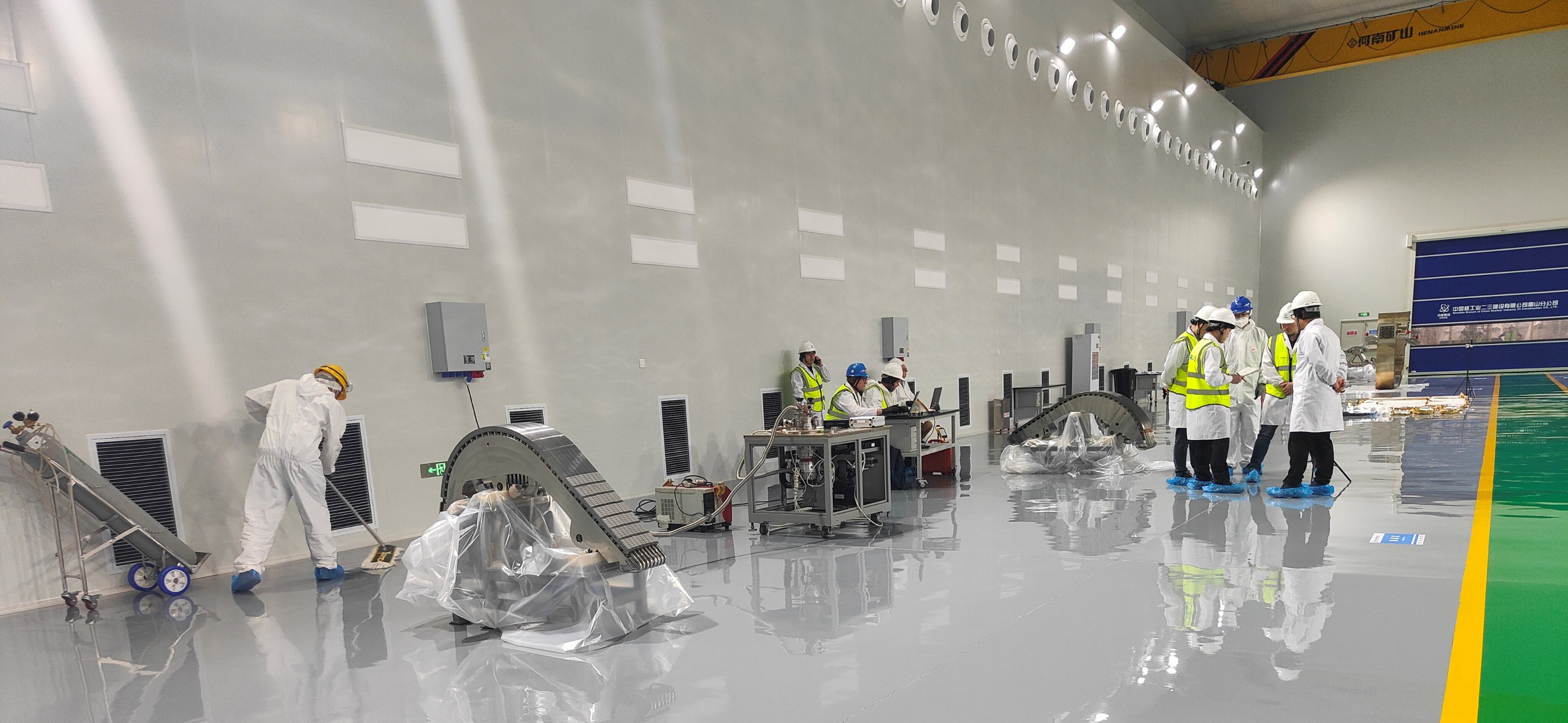
At the divertor integration facility in Qinshan, China, preparations are complete. The clean room is operational, air filtration systems are running, and divertor components in various stages of unpacking are spread across the polished floor.
For now, the elements visible in the workshop are prototypes that will be used to test processes and tools during the first practice integration activities later this year. But alongside the prototypes, production components are already arriving from suppliers around the world, as years of development and manufacturing give way to a new chapter for the ITER divertor program—integration.
ITER engineer Laurent Ferrand, who has been involved with the ITER divertor program for nearly 20 years, calls this “an exciting phase ahead.”
“We are turning our sights to the assembly and integration of components that have up to now been the focus of individual development programs. That allows us to start the countdown to the installation of the divertor in the ITER machine. It really does feel like a new phase.”
Following a global tender, the ITER Organization concluded a contract for divertor integration in December 2024 with a consortium led by the Southwestern Institute of Physics (SWIP)¹.
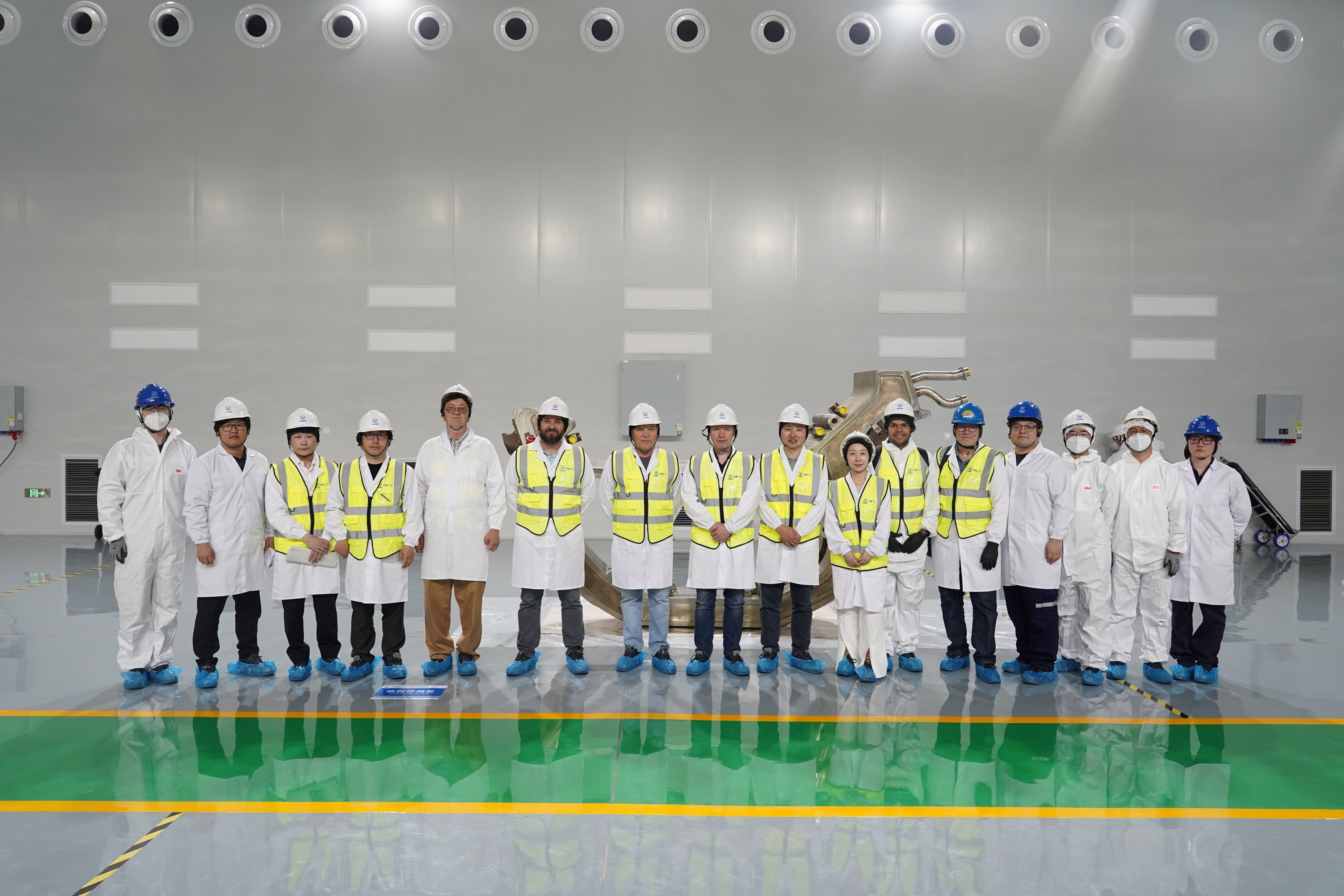
Dedicated facilities—including a warehouse, a workshop, and a clean room—were officially inaugurated in May in the presence of divertor team members from the ITER Organization and representatives of the Domestic Agencies responsible for divertor manufacturing—Europe (cassette bodies and inner vertical targets), Japan (outer vertical targets), and Russia (dome). (See the graphic below.)
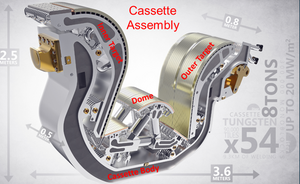
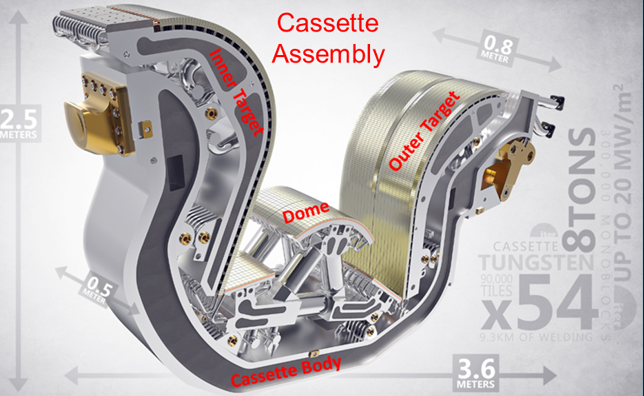
Variations in the design of divertor cassette assemblies will be one of the main challenges of integration, according to Ferrand. Not only does every cassette host three plasma-facing targets, but there are also diagnostic systems and operational instrumentation to be integrated.
“It’s not an exaggeration to state that no two divertor cassettes are exactly alike,” he says. “We can group the 58 divertor cassettes (54 for the machine and 4 spares) into three broad categories—those hosting diagnostics, standard cassettes, or one of two 'lower vertical neutron camera' cassettes with a unique design. But even within these groupings there are variations related to cooling pipe connections or the exact layout of diagnostics or instrumentation. That creates a lot of challenges for the integration team.”
Each divertor cassette also has its own specific position at the bottom of the ITER vacuum vessel and cannot be interchanged, meaning that any delay with a cassette assembly will reverberate through the divertor installation schedule at ITER.
One of the tasks underway now, before integration activities begin, is to design, procure, and qualify the bespoke tools that will be needed for divertor integration— robotic lifting equipment capable of positioning targets with extreme accuracy, custom swaging systems for mechanical attachment, and purpose-built welding equipment. (“Swaging” is a technique for joining two components without heat or cutting by pulling conically shaped elements through bore holes.)
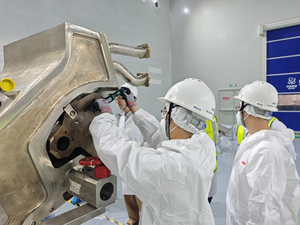
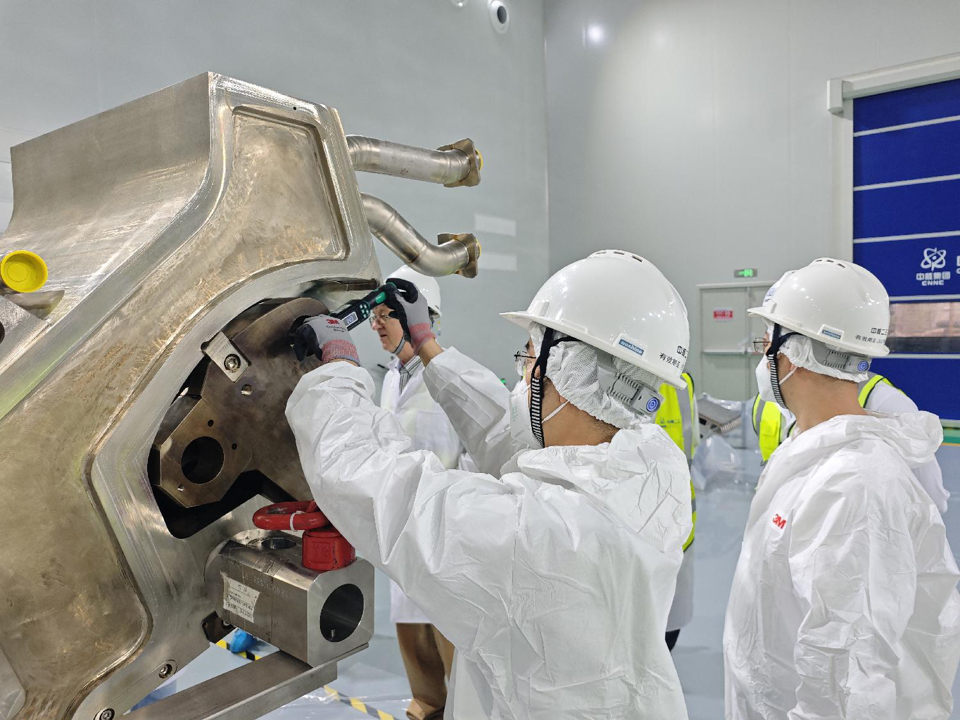
When integration activities are fully underway, the 1,400 m² clean room will host two production lines. Ferrand will work with ITER teammates Ruth García Vilela and Peng Liu to carefully liaise with the team in Qinshan, and also ensure that the different components needed for divertor integration are at the integration site when needed.
During the inauguration last month, the prototype divertor elements were unpacked in the presence of the manufacturing Domestic Agencies and a first set of dimensional, functional and visual examination tests was carried out.
“The gathering in May was an opportunity to recognize the result of the long-running efforts by three Domestic Agencies to develop their supply chain and to qualify their technologies and manufacturing processes,” said Ferrand. “Spirits are running high as the next stage of divertor preparation is materializing in parallel to series production.”
Prototype assembly will begin later this year, with series integration following in 2027—the point at which components developed and manufactured around the world finally begin to take shape as complete ITER divertor cassettes.
¹Consortium members include the China Nuclear Power Engineering (CNPE) Co. Ltd. and the China Nuclear Industry 23 Construction Co. Ltd. (CNI23). Divertor integration and factory acceptance testing is taking place at a CNI23 site in Qinshan, China.