Corking the ITER bottle
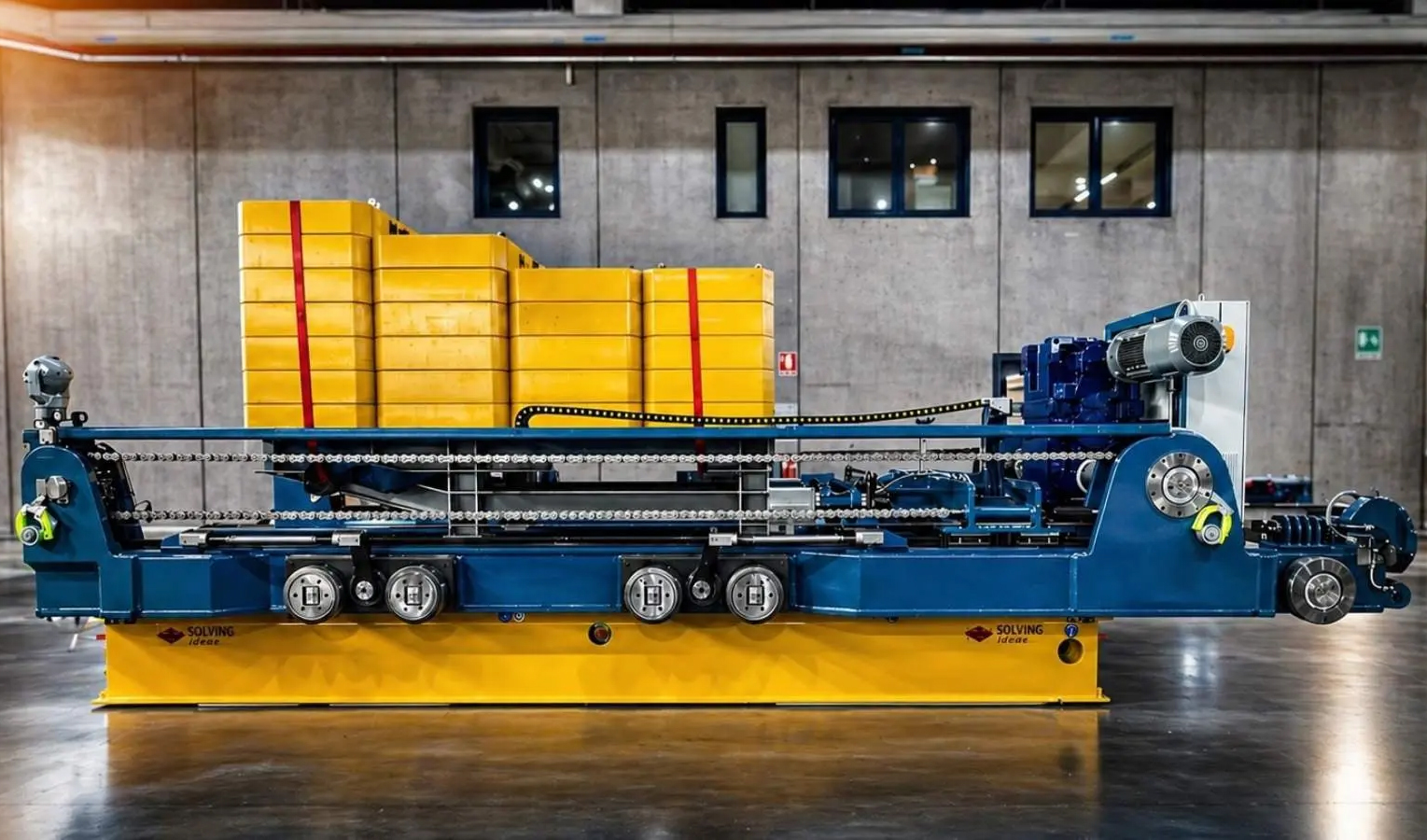
Longer than a small bus and powerful enough to maneuver 48-tonne components with millimetre precision, port plug assembly tools will play a central role in installing the port plugs that house critical heating and diagnostic systems. The arrival of the first assembly tool on site opens the way to a testing and training phase that will help prepare teams for the next stages of tokamak assembly.
The vacuum vessel’s 44 openings, or “ports,” distributed around the machine at three levels, provide access for component installation and maintenance while also providing passage for the heating, fueling, vacuum, and diagnostic systems that are essential for plasma operations.
The ports will be sealed by large stainless-steel box structures called port plugs that provide nuclear shielding while also hosting the systems that need access to the plasma. Weighing up to 48 tonnes when fully assembled and measuring as much as 2.5 × 3 × 2 metres, these plugs will be installed with very little clearance and—whenever access to the vacuum vessel is required—removed and reinstalled, much like giant corks being extracted and inserted into a bottle.
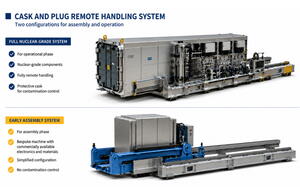
The system charged with these activities—the cask and plug remote handling system—is being designed by the European Domestic Agency Fusion for Energy (F4E) in collaboration with the ITER Organization. Procurement will take place in two phases: an early set of handling tools integrating commercially available electronics and materials will serve to accelerate tokamak assembly and provide the experience that will help to optimize a second generation of equipment for tokamak operation, featuring nuclear-grade components, fully remote handling capabilities and a protective cask to provide the required contamination control function for activated components.
“This was an opportunity to improve technological readiness because we will get experience using the tool for installation and this will improve specifications and the development of the cask,” says Massimo Battaglia, the ITER remote handling engineer who oversaw the design, manufacturing and testing of the port plugs handling tools.
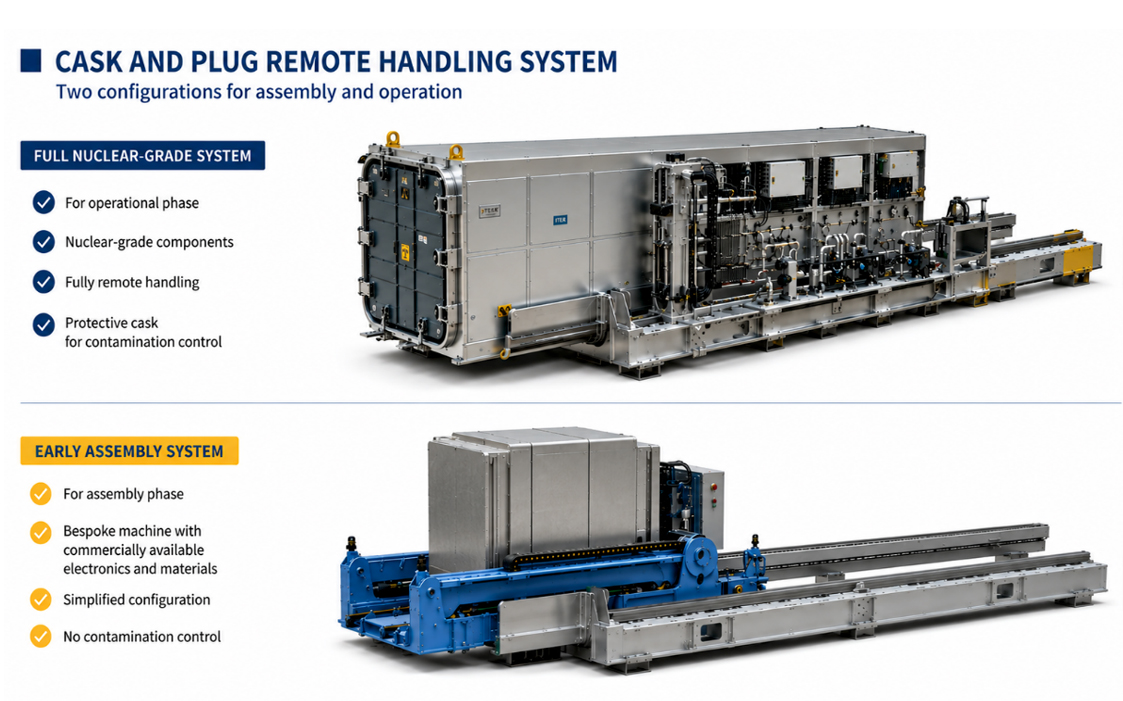
The tool set for port plug assembly consists of a semi-automated transport system and equatorial and upper port plug handling machines. The transport system will carry the plug handling machine with the port plug through the narrow galleries of the Tokamak Complex to the port cell. Depending on what level the port cell is on, either the equatorial or the upper port plug handling machines will be used to precisely position and insert the port plugs into the opening.
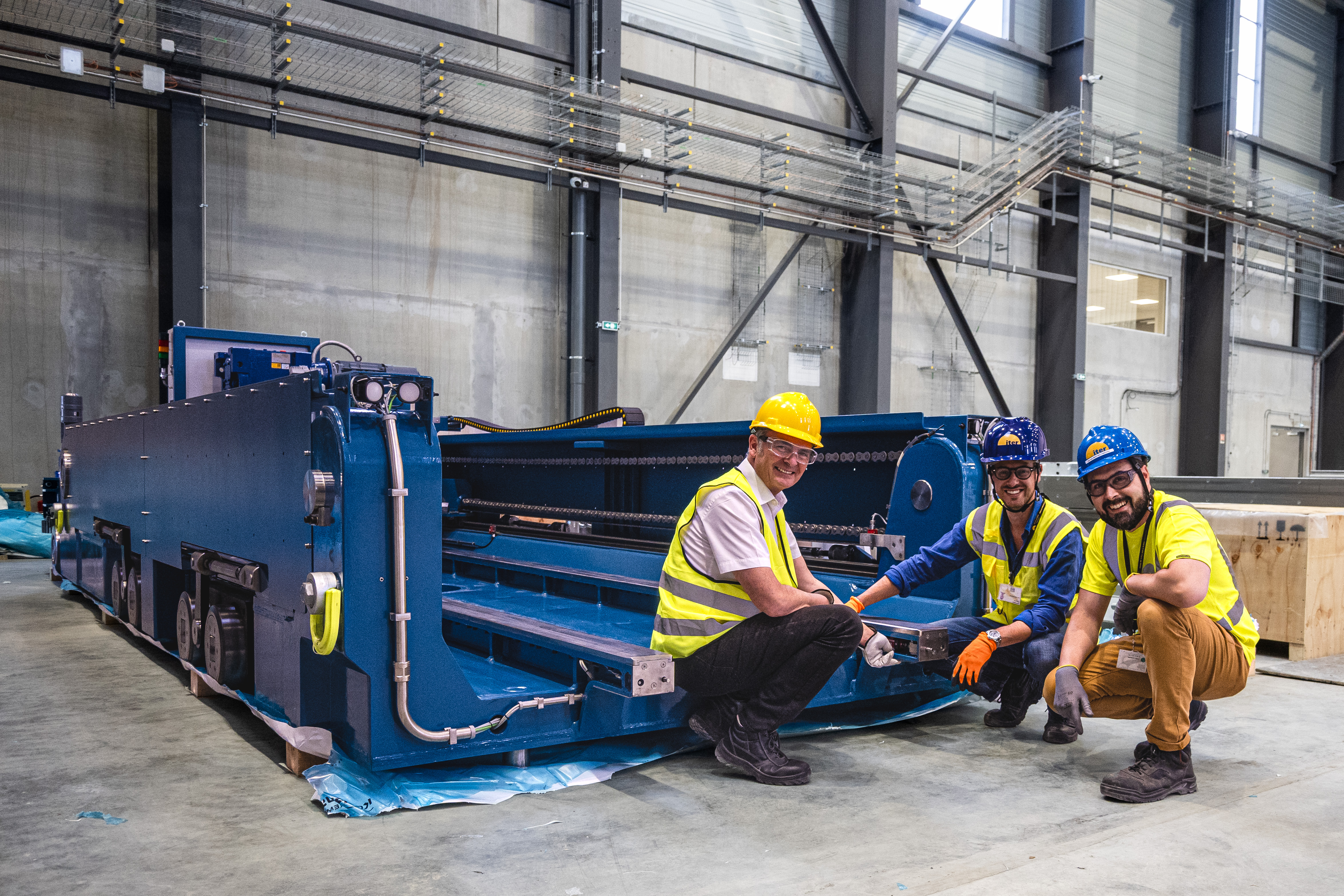
The system’s first deliverable, the assembly machine to handle equatorial port plugs, arrived at ITER on Wednesday 1 July. The major remaining equipment—the upper port plug handling machine assembly tool and the cask transport system—are expected to be delivered later this year.
The equipment will be tested onsite in a facility equipped with a port cell testing environment, where operators will practice inserting and maneuvering dummy plugs.
“The delivery of the tool is the beginning of an important testing and training process,” says Gonzalo Hinojosa Martinez, the ITER remote handling engineer who will be overseeing the tools. “We can now start to prepare for the smooth installation of the port plugs when we reach that phase of tokamak assembly.”
See a report by the European Domestic Agency here.