
Monitoring the tokamak from within
From 18 kilometres of wobbled cabling to thousands of specialized sensors, the inner walls of the ITER vacuum vessel will feature an elaborate mosaic of diagnostic and instrumentation systems.
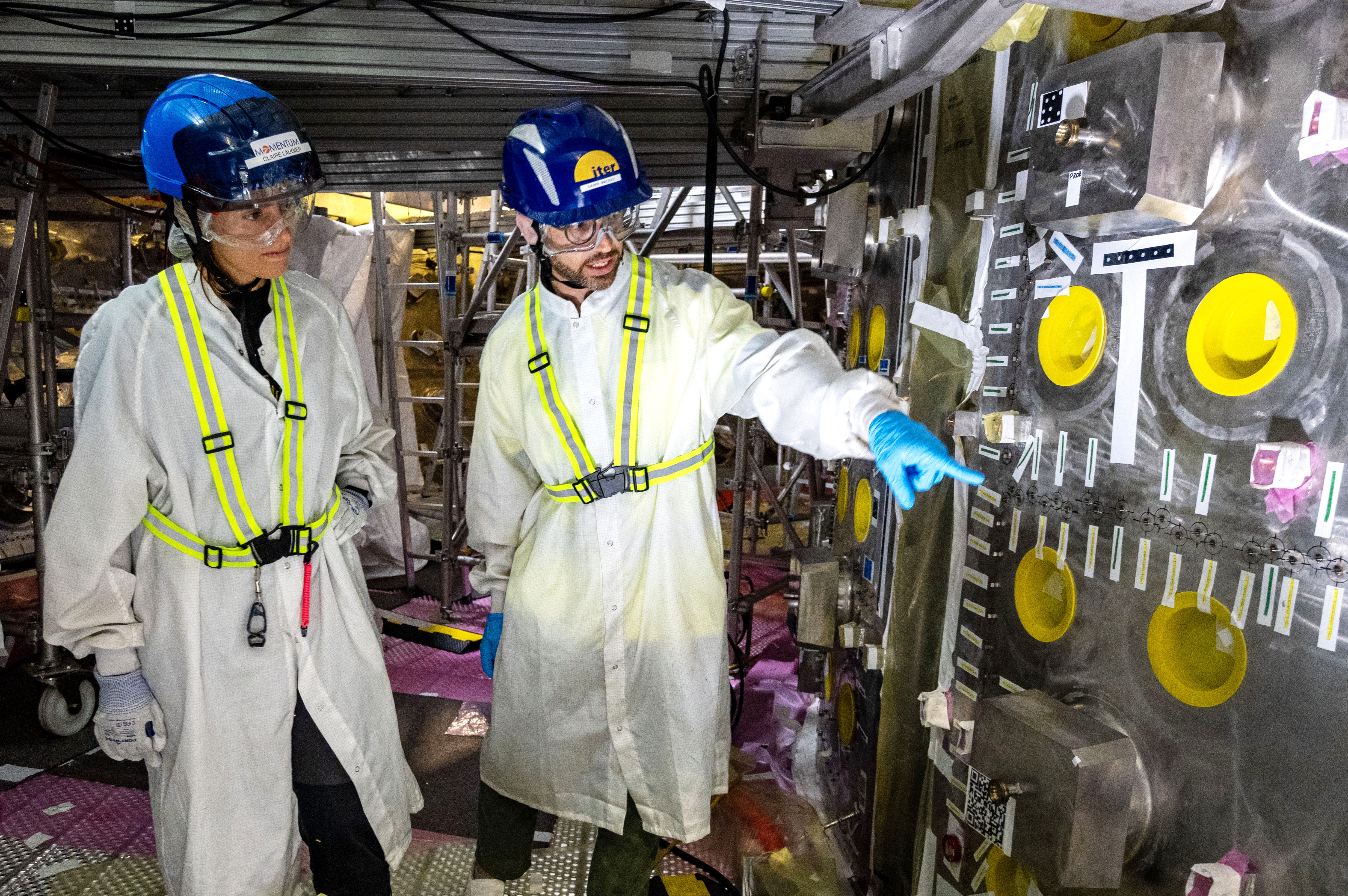
When the ITER tokamak begins operations, scientists will need to measure the performance of the plasma and monitor the condition of the plasma chamber. Two different systems will provide these capabilities: diagnostics that observe, measure, and characterize the plasma, and instrumentation that monitors the structural parameters of the vacuum vessel and its protective blanket.
Teams attached diagnostic equipment and instrumentation to the outer shells of vacuum vessel sectors before they were installed in the tokamak pit, but this month marks the start of the complex installation of sensors and cables on the inside of the chamber as part of the in-vessel diagnostics, fuelling, and instrumentation project. The head of the ITER Construction Project, Sergio Orlandi, calls these activities “critical,” saying that, “This phase of installation is receiving the highest level of attention because any delay would directly affect the project schedule.”
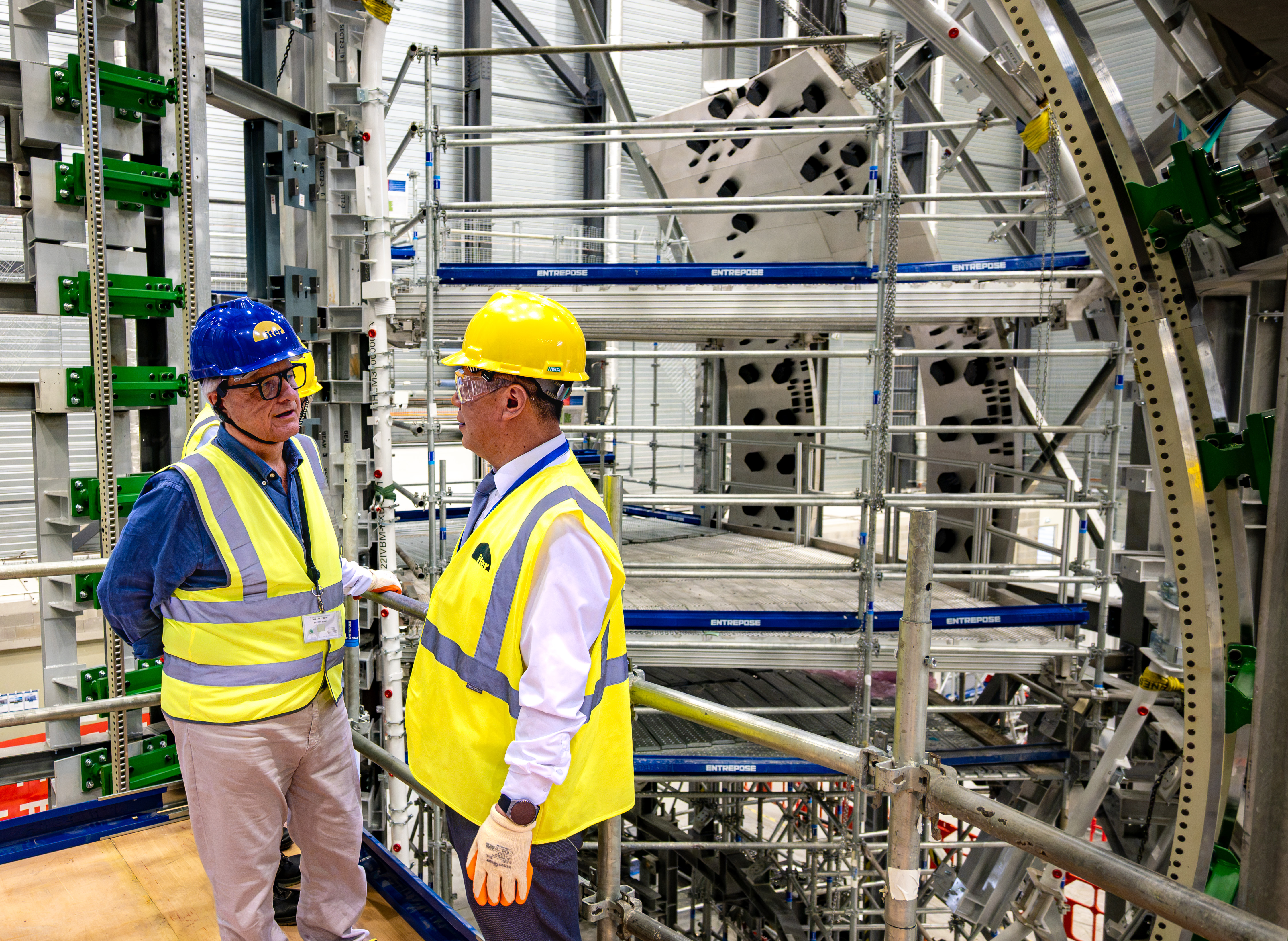
Work began in 2025 to attach the supports that will hold the instrumentation and diagnostics against the inner wall of the plasma chamber behind the blanket. This includes close to 20,000 bosses where sensors and other equipment will be mounted as well as more than 80,000 clips that will hold 18 kilometres of cabling in place. Preparations are now underway for the installation of the first cabling and sensors in the coming weeks.
“This is a genuine milestone for the project because it marks the transition from installing the mounts and supports to installing the actual instrumentation and diagnostics,” says Davide Macioce, the ITER engineer who is overseeing the contract for the work.
The installation will be carried out in two stages. The first stage—before the welding of the vacuum vessel sectors into a single chamber—involves about two-thirds of the sensors and cabling whose final positions will not interfere with the welding or be affected by minor movements in the vacuum vessel caused by welding shrinkage. Once welding is completed, the teams will install the remainder of the in-vessel instrumentation and diagnostics.
“This two-stage approach improves overall efficiency because the installation work can proceed in parallel to other activities,” says Daria Nikolaeva, an Operational Instrumentation Officer at ITER. “By starting with what can be accomplished now, we’re making use of time that would otherwise be lost waiting for sector welding.”
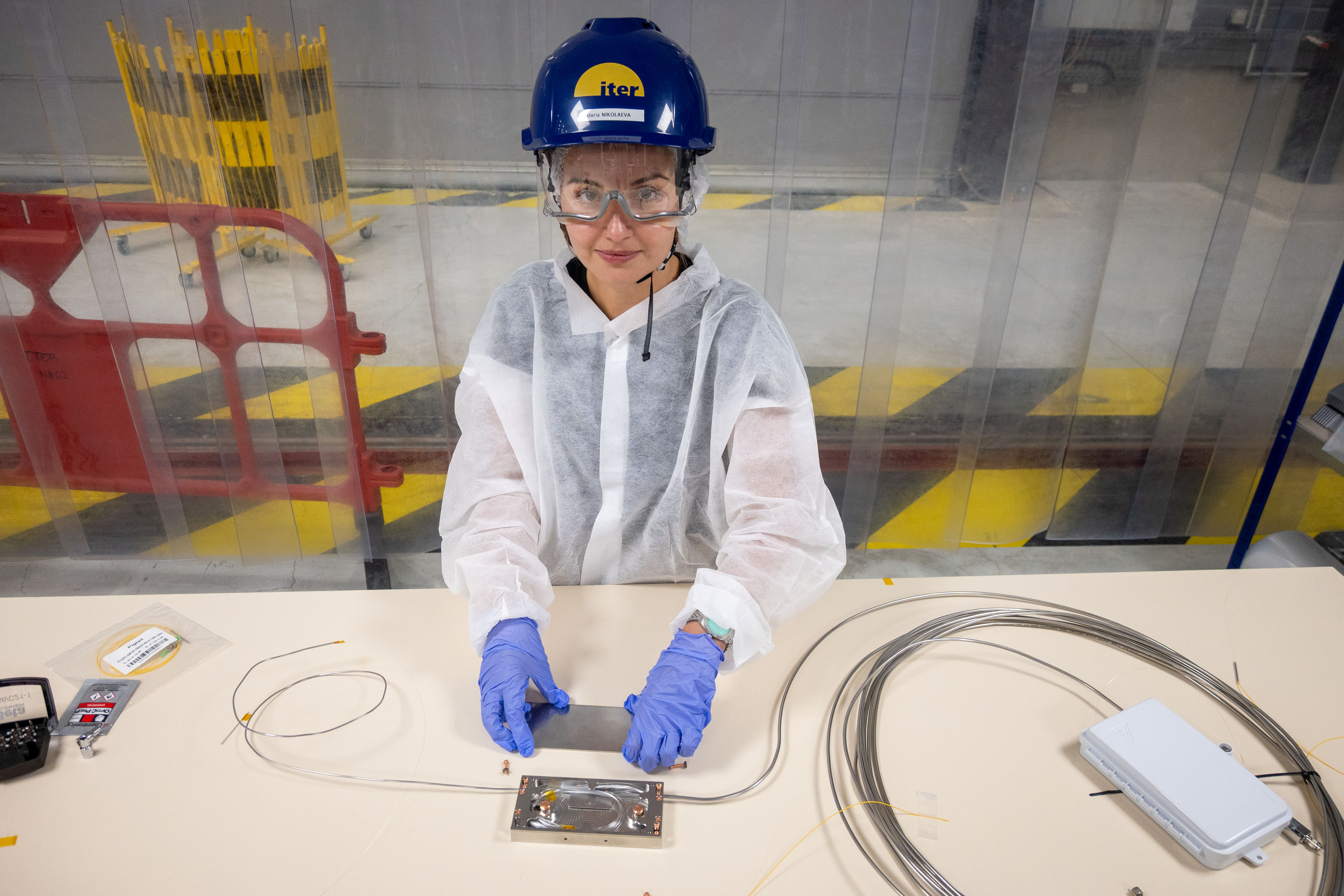
One of the biggest challenges will be the routing of the many kilometres of cable required for the instrumentation and diagnostics. Multiple fibre optic cables for transmitting data and electrical cables will be combined into looms. Then, in a process known as “wobbling,” they will be meticulously bent and shaped so they follow the inner surfaces of the vacuum vessel and match the locations of the pre-installed clips that will secure them to the walls.
“The surface is never flat and it’s full of pipes, blanket supports, penetrations and other equipment,” says Lukasz Tomkow, the Electromagnetic Services Engineer overseeing the cables and looms. “Some of the large curves can be bent by hand, but we will have an automated process for the complex local wobbles. We’ll laser-scan the vessel to determine the exact as-built positions of every boss and feed the positions into an algorithm that calculates the required cable routing so the data can be sent to a bending machine.”
While some of the standard equipment can be attached immediately within the vacuum vessel, there are also first-of-a-kind devices and components that have to be installed in challenging positions with limited access. For these operations, technicians will train on a replica of the vacuum vessel wall—part of the ITER Trial, Test and Training Facility—to perfect the process before the work is done in the vacuum vessel. The first training exercises for instrumentation and diagnostics will begin in late July.