A defining Korean contribution
Four of the nine vacuum vessel sectors that make up ITER’s plasma chamber were manufactured in Korea. With the last of those sectors now assembled into a full sector module and about to be installed in the tokamak, representatives from Korea and ITER gathered to mark this key achievement.
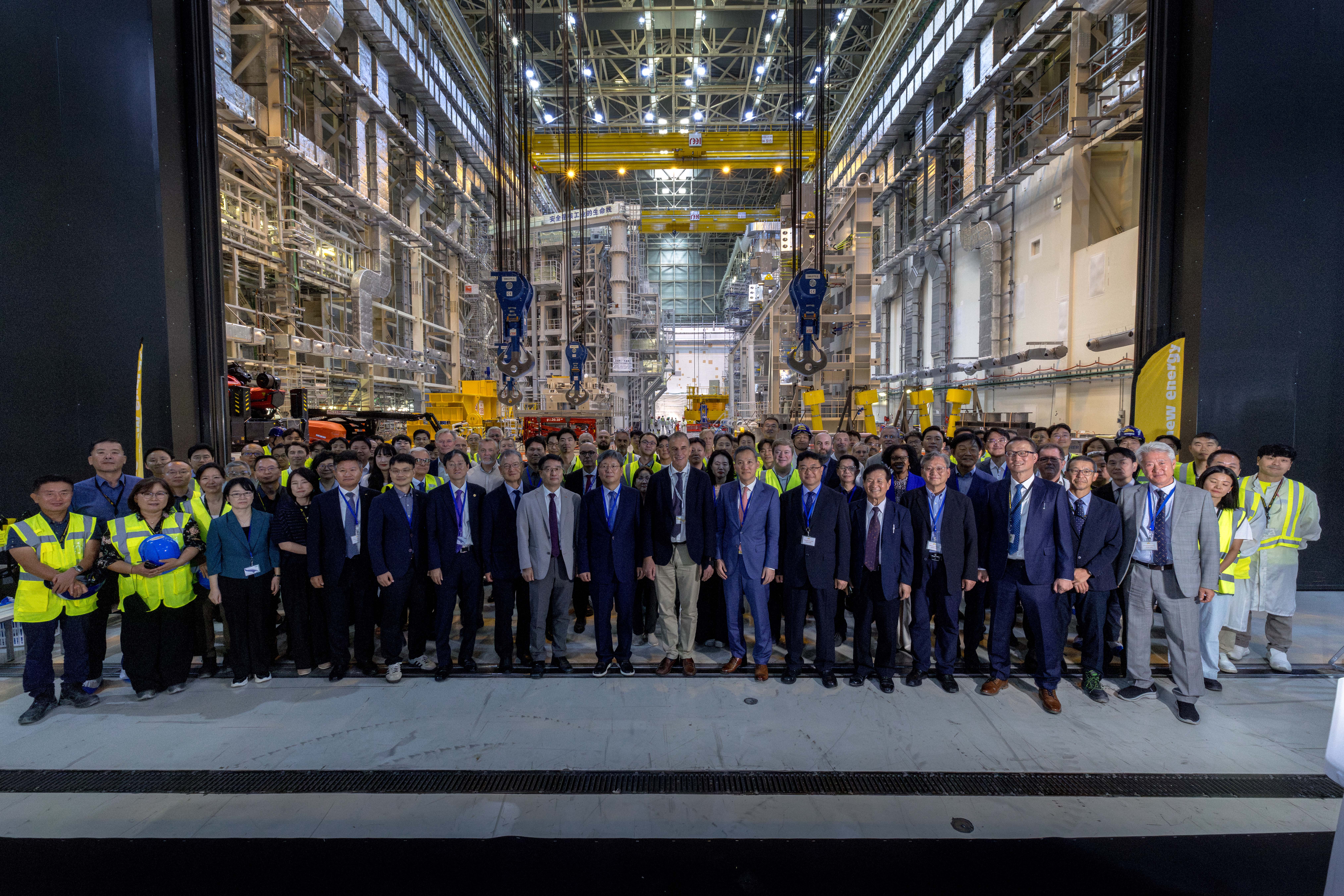
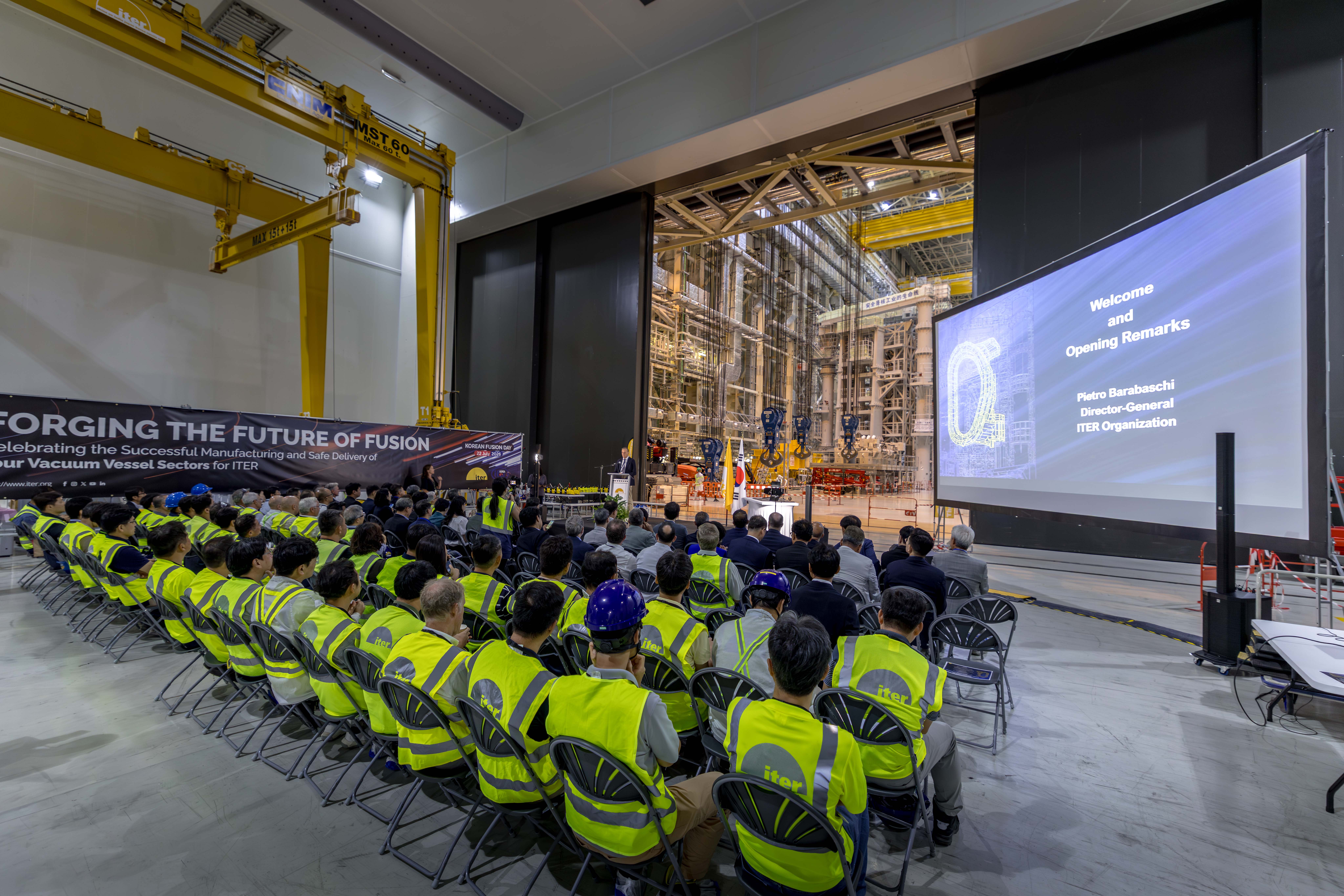
Senior Korean government officials, diplomats, industrial leaders, and ITER staff gathered this week to celebrate the culmination of Korea’s vacuum vessel sector program and the country’s broader contributions to the project over two decades of international collaboration.
“The successful completion of the Korean vacuum vessel sectors is the result of the extraordinary dedication of many people who transformed funding into an exceptional piece of hardware through their skill, commitment and determination,” said ITER Director-General Pietro Barabaschi. “This is truly a first-of-a-kind achievement.”
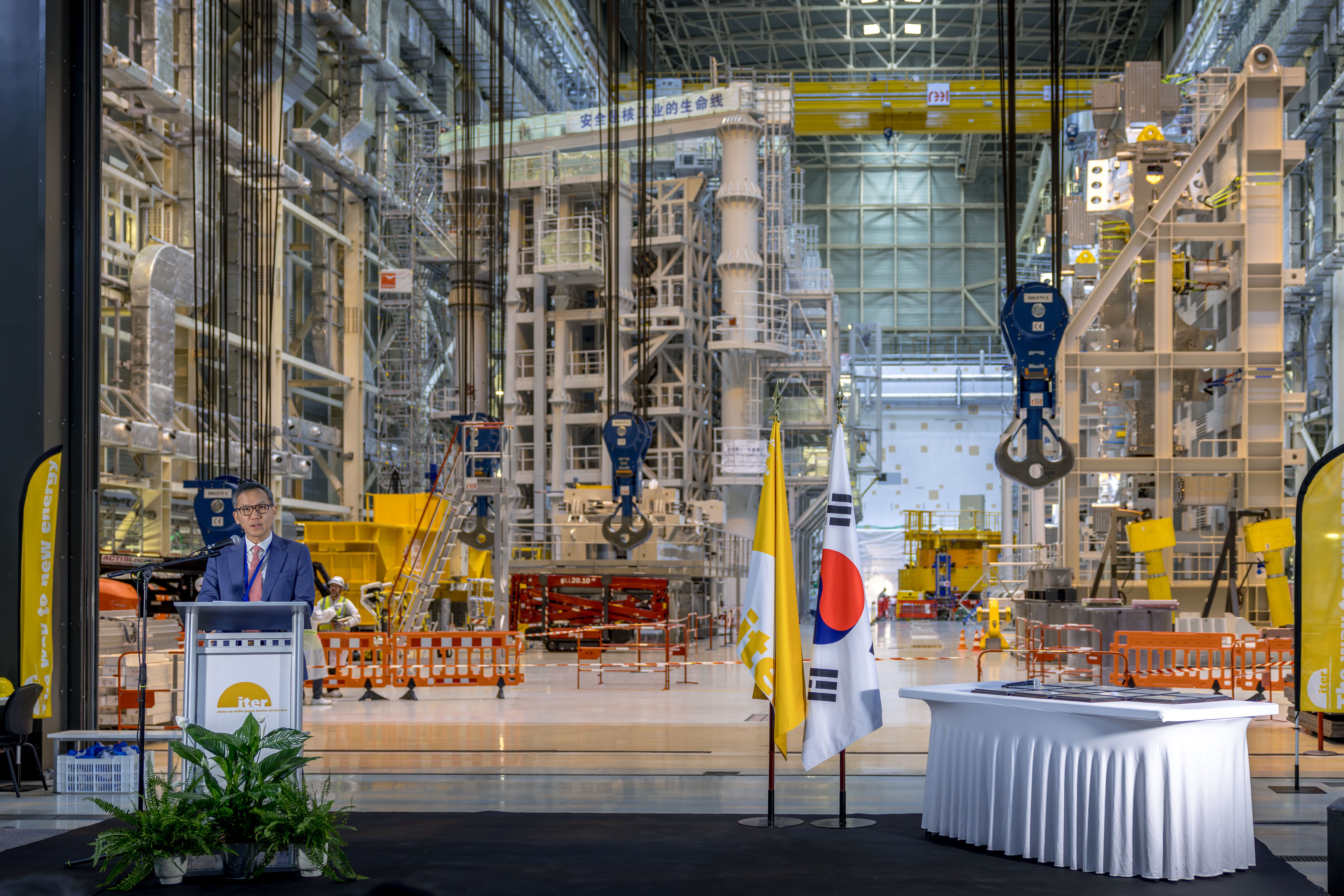
The ITER Korean Fusion Day ceremony was held on Wednesday 22 July at the entrance of the Assembly Hall. Among the guests was the Ambassador of the Republic of Korea to France, Hyuk-Woon Kwon, who hailed the international collaboration that is at the heart of ITER.
“Around the world, countries are searching for energy that is reliable, sustainable and low in carbon emissions,” he said. “Nuclear fusion offers tremendous promise for meeting that need. But promise alone is not enough. Turning that promise into reality requires advanced science. It requires sophisticated engineering. It requires sustained investment. And, above all, it requires international cooperation. No single country can accomplish this challenge alone. That is why ITER matters.”
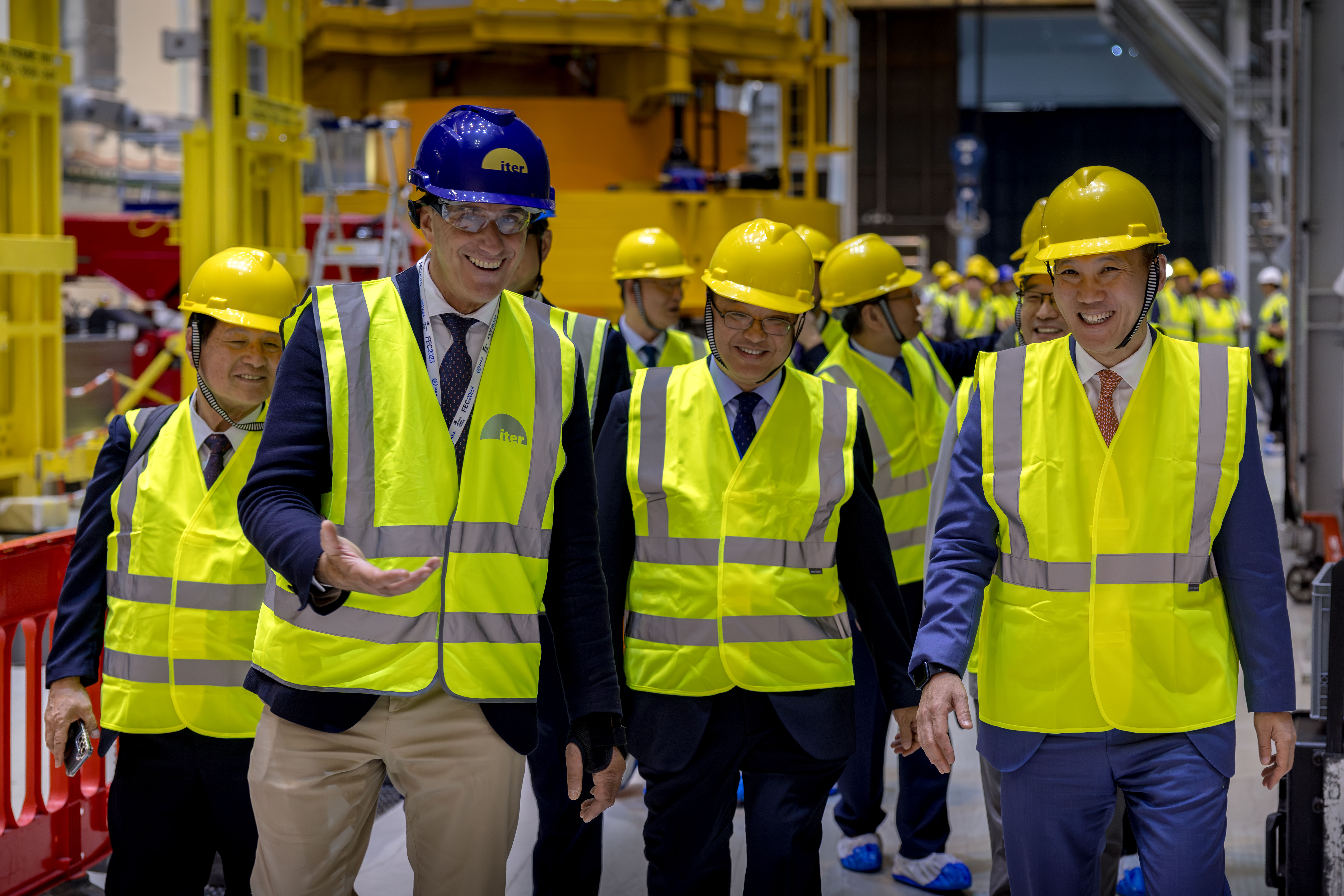
Sung Soo Kim, Deputy Minister of Korea's Ministry of Science and ICT, also spoke at the event and noted that as a result of its contributions to ITER, Korea had strengthened its industrial and research ecosystem.
“Through participation in ITER, Korea has accumulated advanced manufacturing technologies and valuable experience in large-scale international collaboration, laying the foundation for future fusion industries,” he said.
The ITER Korean Fusion Day ceremony was also attended by representatives of the Korean companies that manufactured ITER's vacuum vessel sectors.
The vacuum vessel is one of the most technically demanding components of the ITER tokamak. Formed from nine double-walled stainless-steel sectors, it will provide the ultra-high-vacuum environment in which fusion reactions take place while supporting many of the systems required to operate the tokamak. Korea manufactured four of the nine sectors, with Europe supplying the remaining five.
On Monday 27 July, the final Korean sector module is scheduled to begin its transfer from the Assembly Hall into the tokamak pit, where it will become the sixth of nine sector modules to be installed.
They said
Pietro Barabaschi, ITER Director-General
“We are not developing fusion technology together to simply build one machine. We are doing this so that future fusion plants can be built more efficiently, more quickly and at lower cost.”
Hyuk-Woon Kwon, Ambassador of the Republic of Korea to France
“The road toward fusion energy is long. It is difficult. It demands patience, consistency and cooperation across generations. But today's achievement demonstrates one very important fact: steady progress is being made.”
Sung Soo Kim, Deputy Minister, Korea's Ministry of Science and ICT
“By combining knowledge, technology and experience toward a common objective that transcends national boundaries, ITER stands as one of the finest examples of international collaboration.”
Kwangshik Won, Senior Executive Vice President and COO, HD Hyundai Heavy Industries
“Today’s achievement has only been possible because of years of trust, collaboration and shared commitment among the ITER Organization, ITER Korea, the Korea Institute of Fusion Energy, our industrial partners, and the many researchers, engineers and technicians who contributed to this program.”
Sergio Orlandi, Head of ITER Construction Project
“What we celebrate today is the sectors, but Korea’s contribution to ITER goes far beyond this… What Korea has done for this project is very impressive and we are all very proud of the contributions that you make every day.”
Kijung Jung, Senior Advisor at the Korea Institute of Fusion Energy
"Today's achievement is far more than the completion of a major component. It is the tangible result of years of dedicated effort, countless hours of work, and the unwavering commitment of everyone working together as one team."
Jens Reich, ITER Machine Assembly Program Manager
“This has been an extraordinary effort, not only by those responsible for manufacturing the vacuum vessel sectors, but everyone contributing to the assembly of the tokamak. Together we are transforming individual components into one integrated fusion machine.”