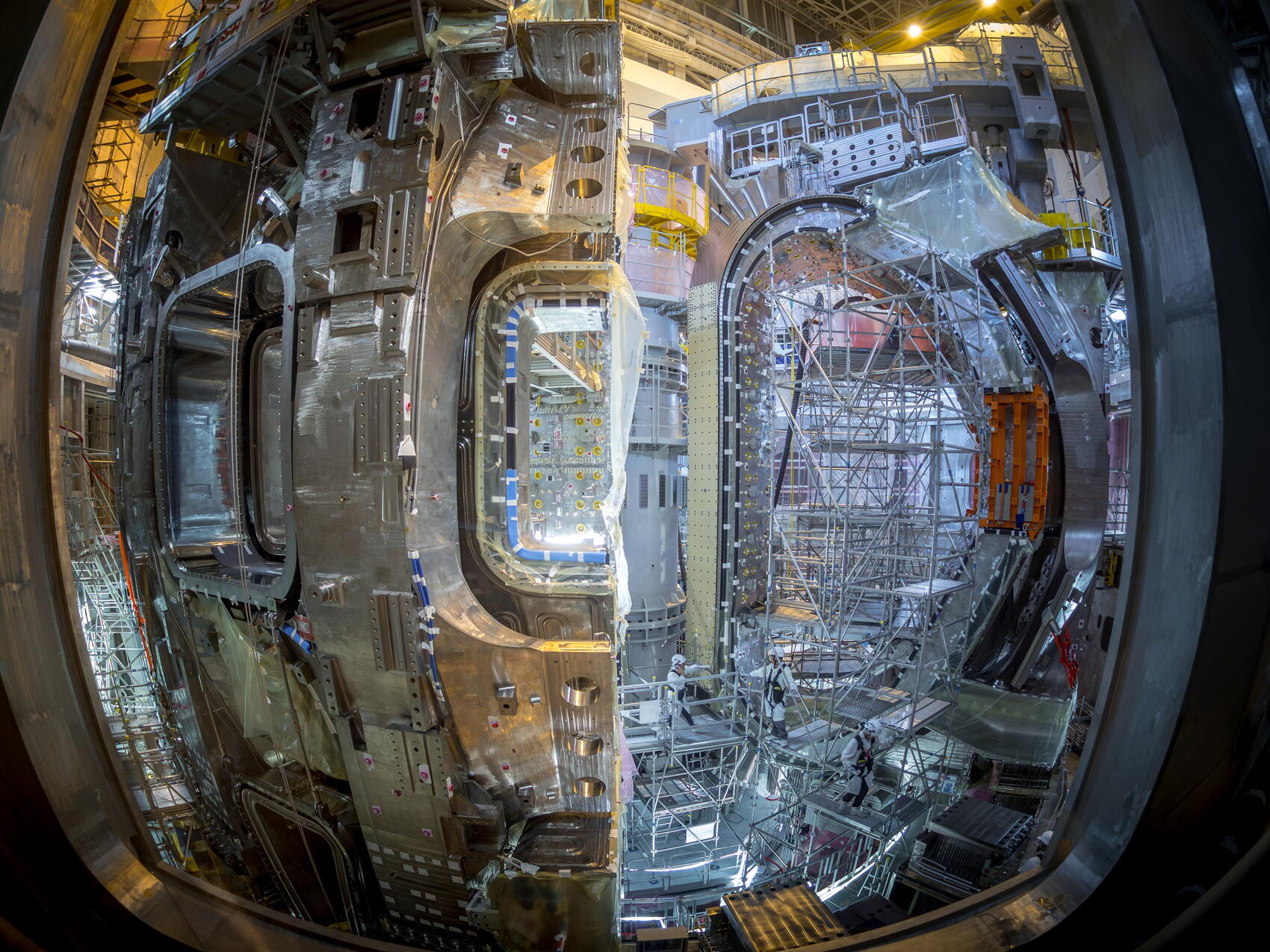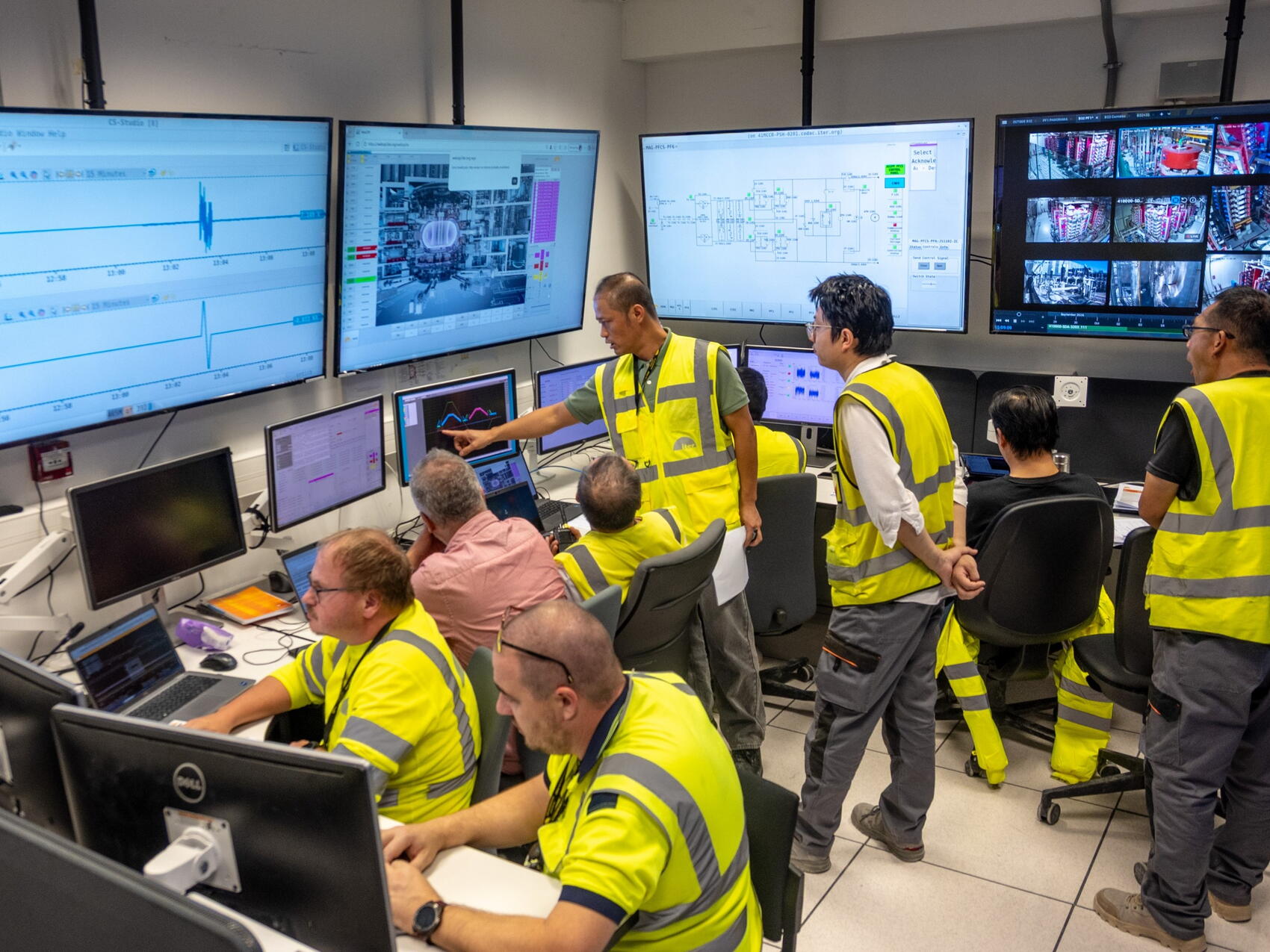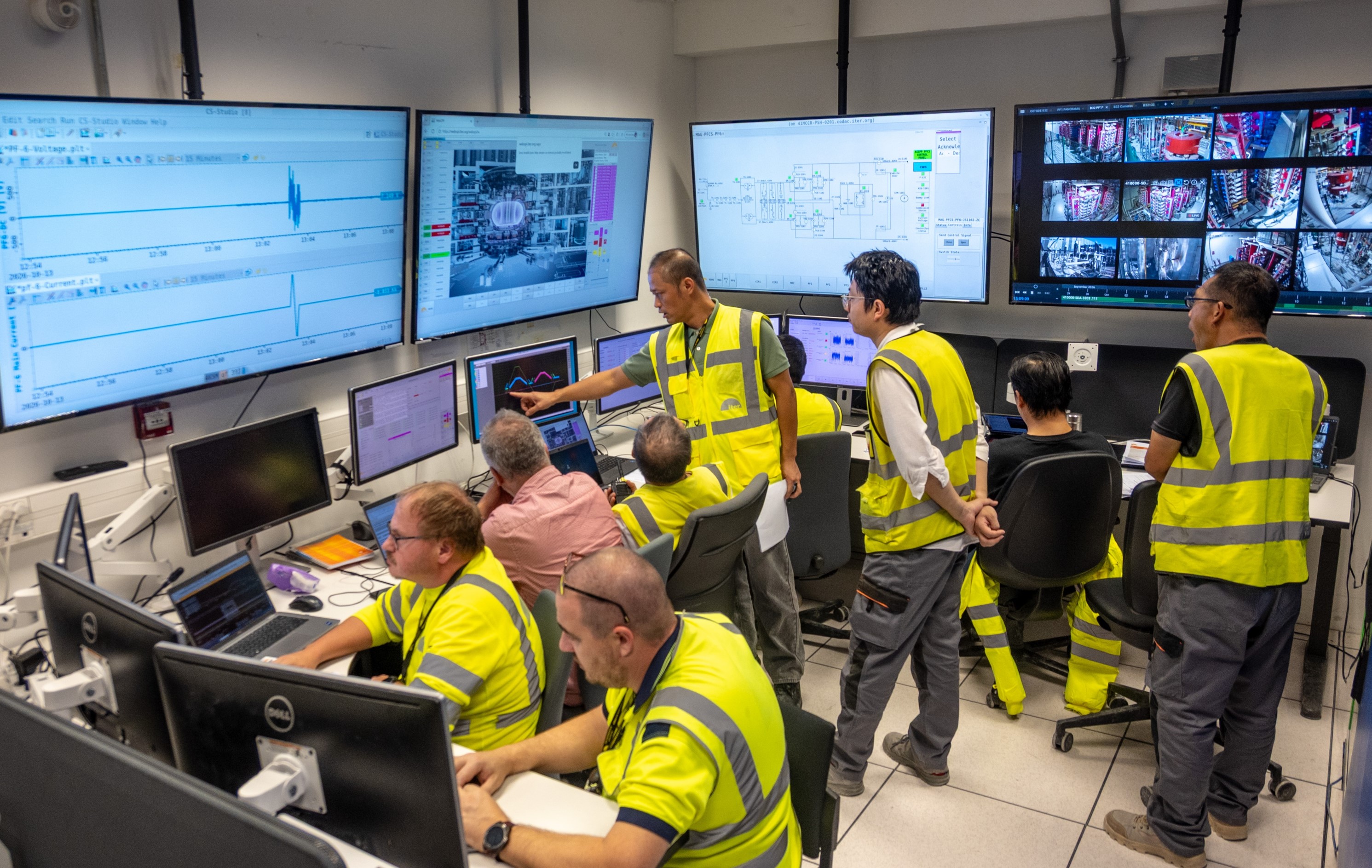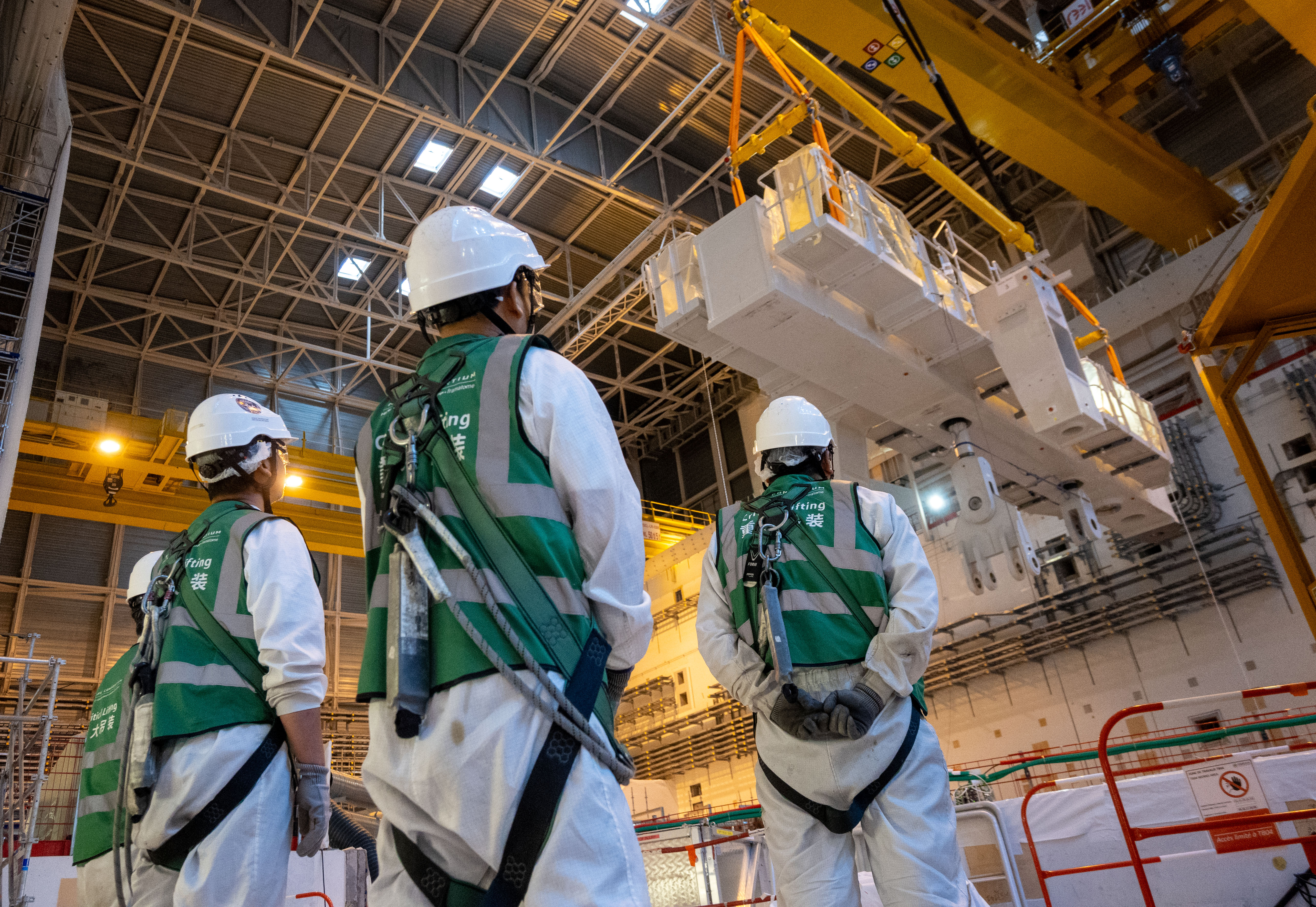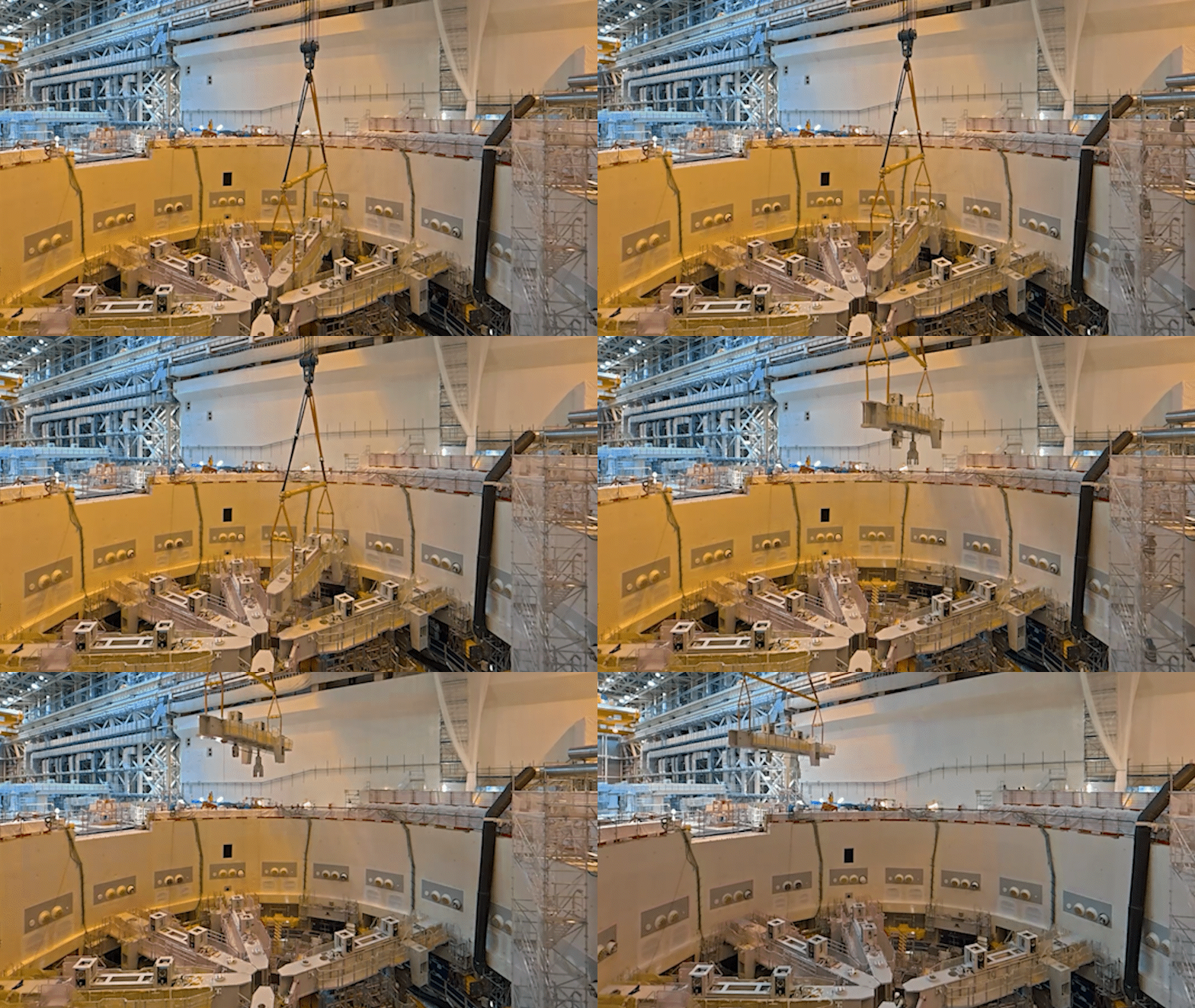
Des millions de points de données pour un levage réussi
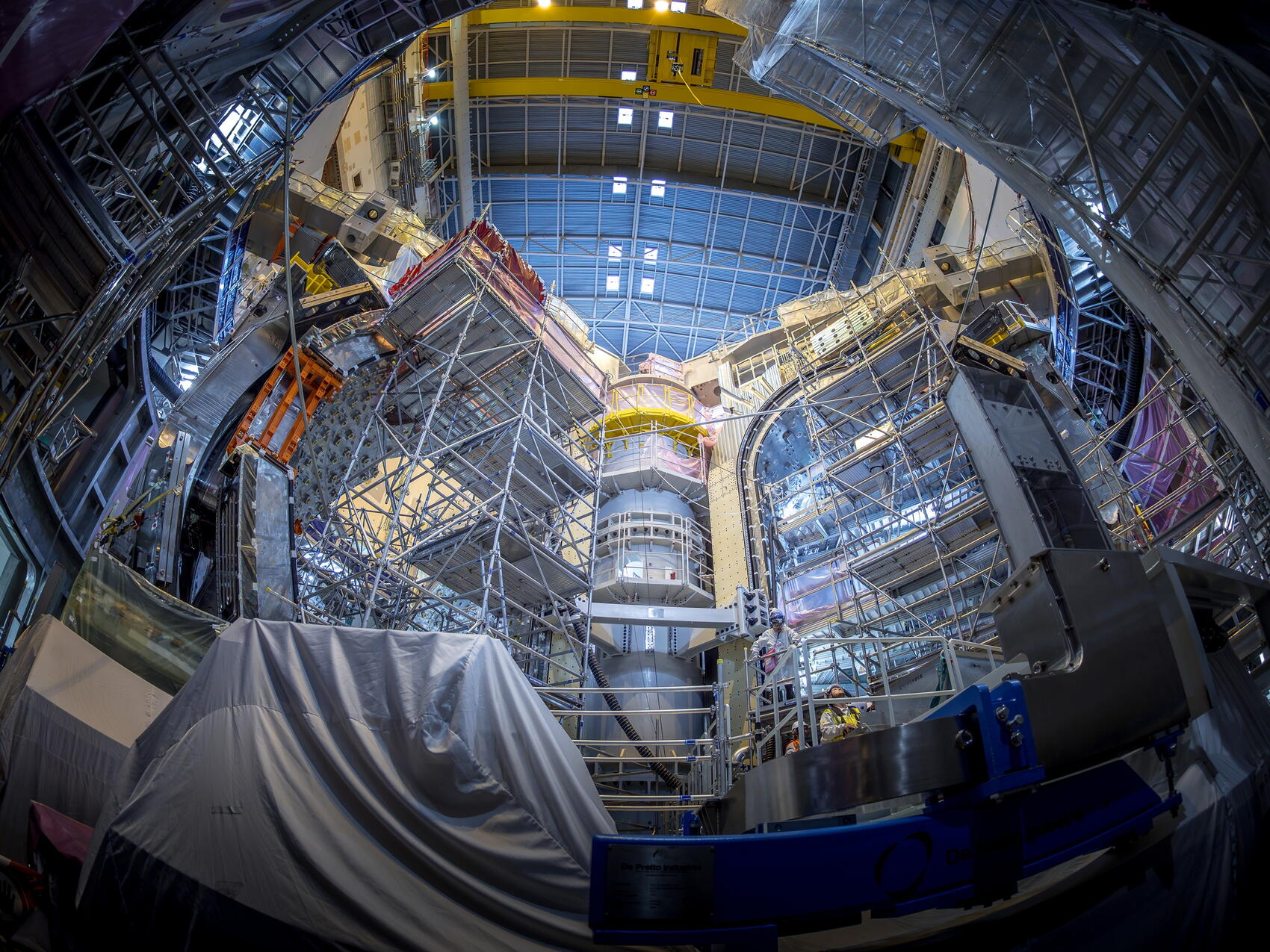
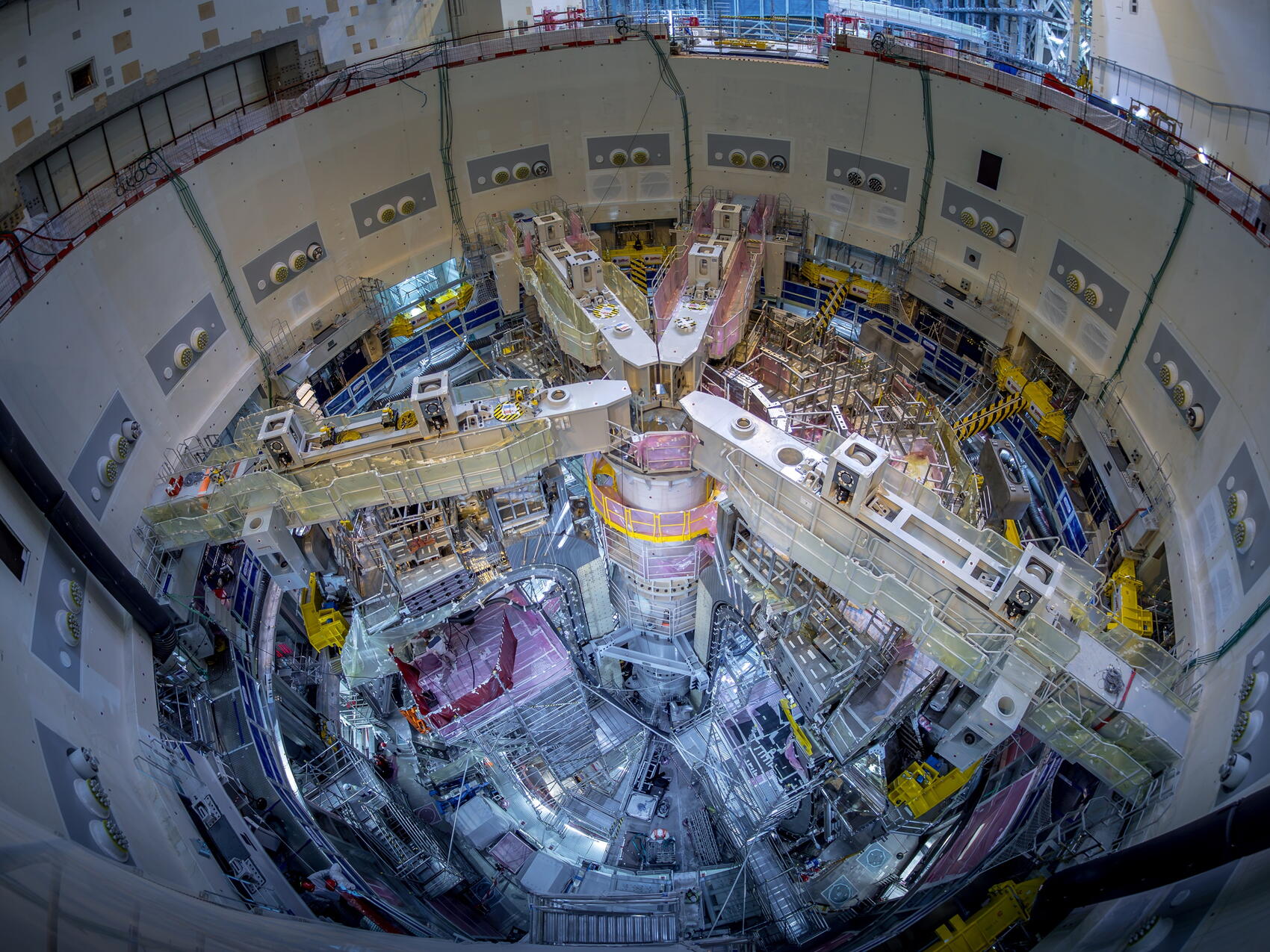
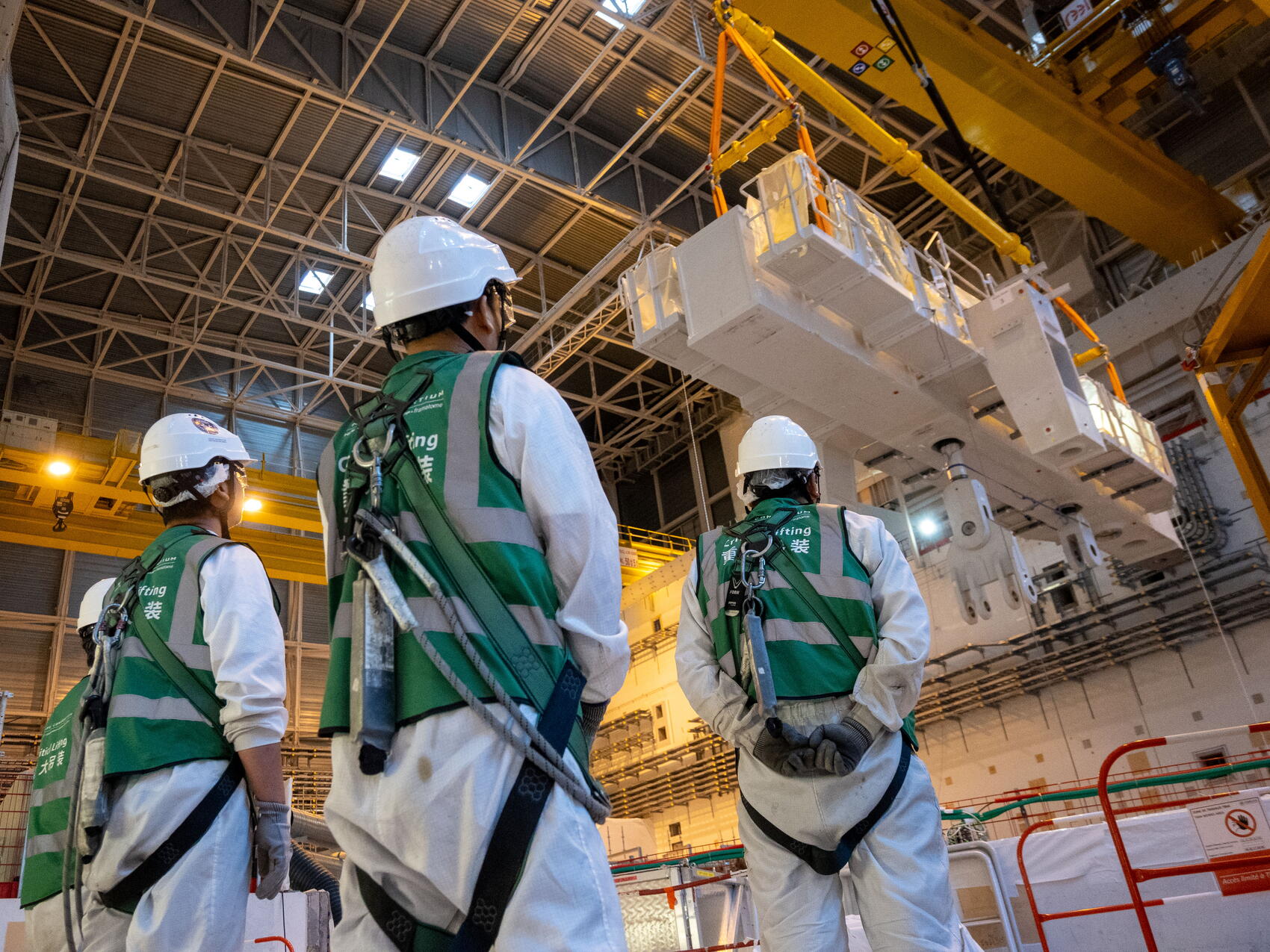
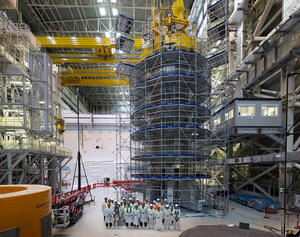
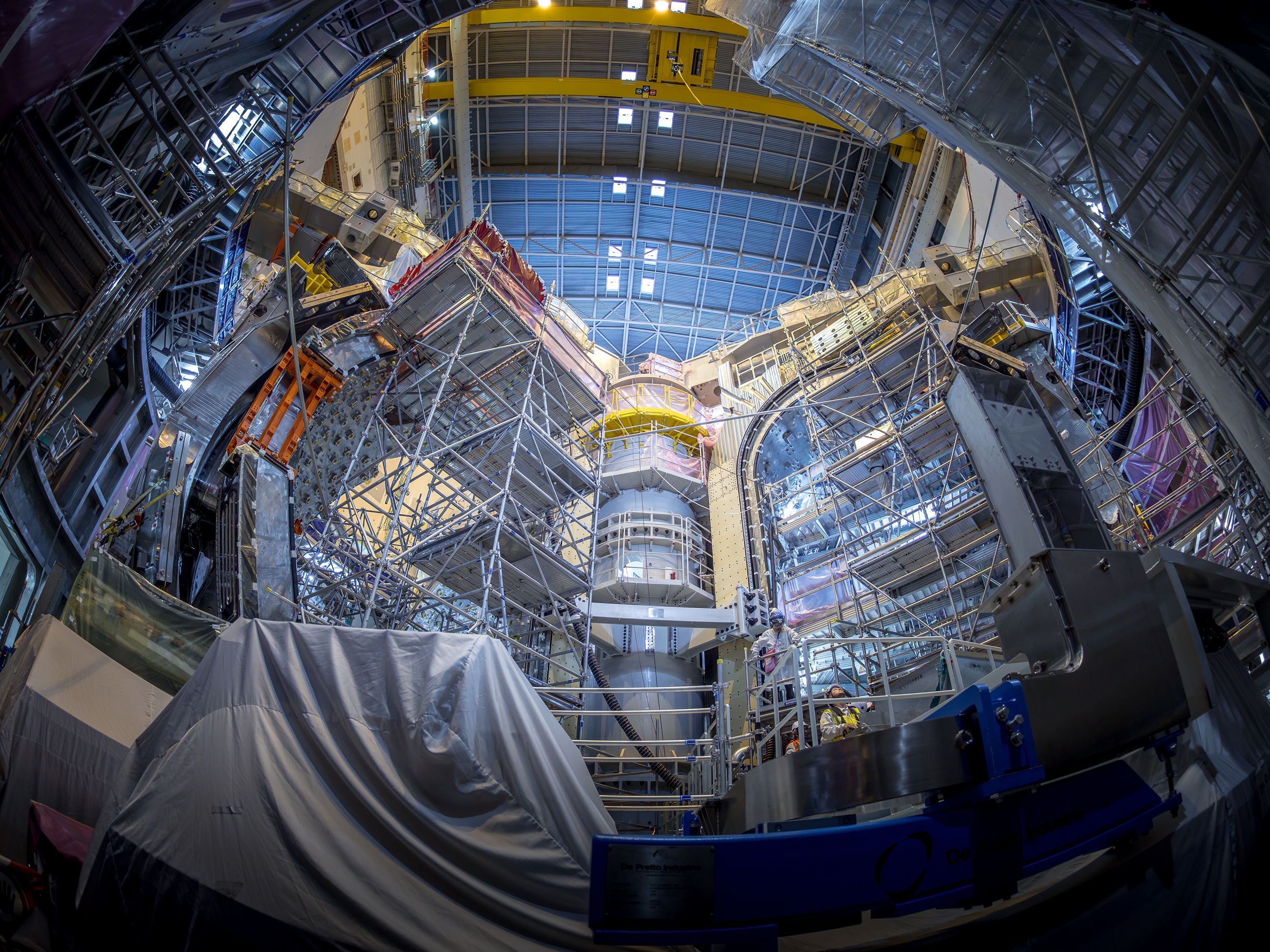
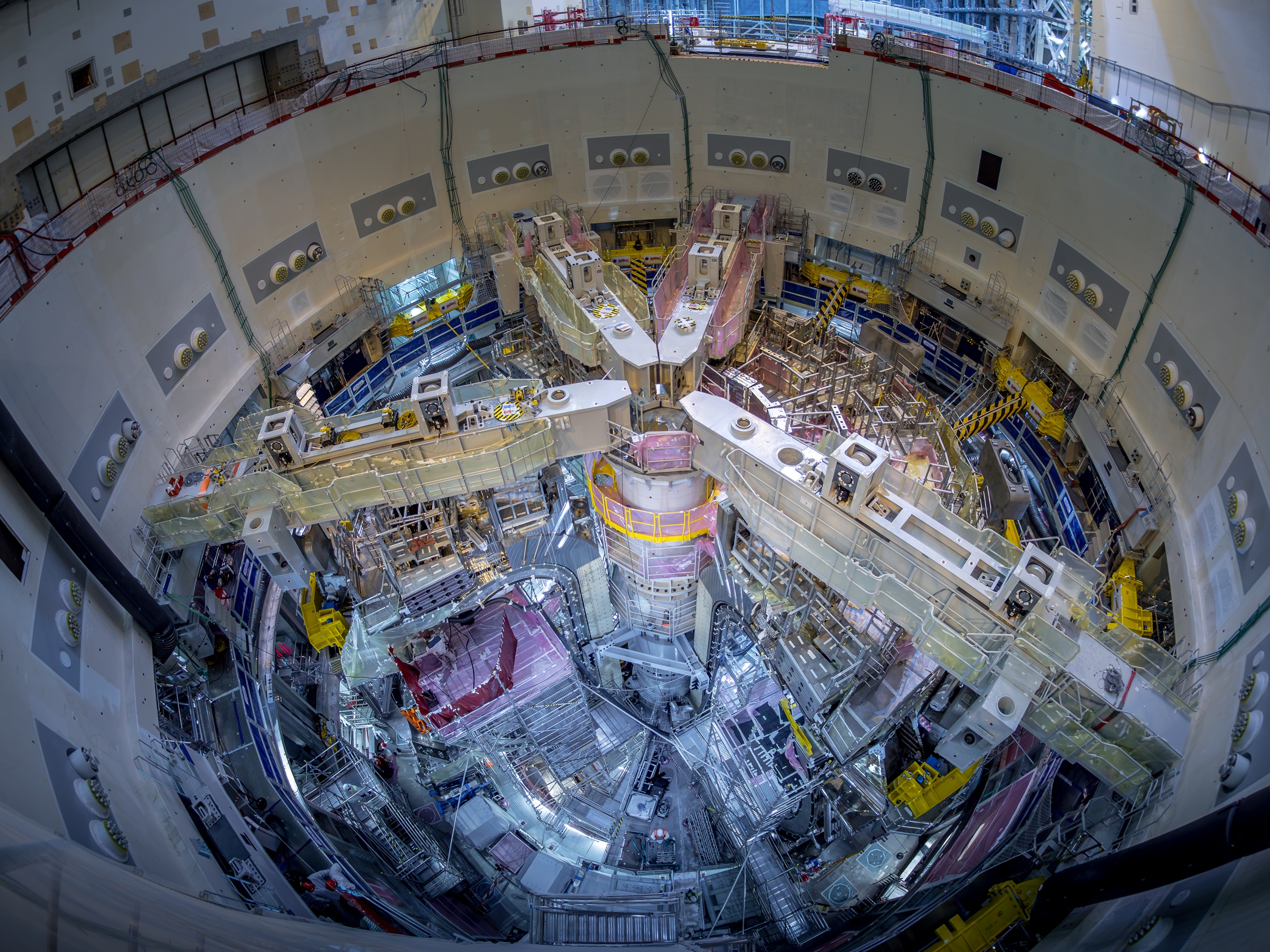
Avec la mise en place du sixième module, les deux tiers du cœur de la machine ITER sont désormais positionnés dans le puits du tokamak. Voir le composant de plus de 1 000 tonnes s’élever depuis son outil de pré-assemblage et atteindre sa position finale avec une précision millimétrique est spectaculaire, mais le flux...
Still time to apply for joint ITER/ASIPP postdoc projects
En savoir plus
Still time to apply for joint ITER/ASIPP postdoc projects
Under a new agreement signed in June 2026, ITER and the Chinese Academy of Sciences, Institute of Plasma Physics (ASIPP) have launched a joint postdoctoral training program that will give early-career researchers the opportunity to conduct fusion research at both institutions under the supervision of experts from China and ITER.
ASIPP will be creating a series of postdoctoral positions focused on research topics of mutual interest to the ITER Organization and ASIPP. The selected researchers will be employed by ASIPP and jointly supervised by experts from both organizations. The positions are offered for a two-year term, with research carried out both at ITER and at ASIPP headquarters.
These postdoctoral positions are now open to application by Chinese nationals and nationals of other ITER Members. Further information, including application details, is available in Chinese and English here.
French YouTuber Amixem takes millions of followers into ITER
En savoir plus
French YouTuber Amixem takes millions of followers into ITER
French YouTuber Amixem recently visited ITER for a video exploring three of France’s most “off-limit” locations, alongside secret areas of the Eiffel Tower and the French presidential plane. Filmed earlier this year, the visit included a tour of the Assembly Hall with project engineer Raphael Tieulent and the tokamak pit with assembly facility coordinator Isabelle Gentili.
The video attracted more than two million views within its first 24 hours online and has since surpassed four million views.
Drawing a parallel between the Eiffel Tower and ITER, Amixem remarked: “[The tower] was a kind of technological demonstration, a way of saying to the world: look at what we can do in our time. And I think ITER is exactly the same.”
Amixem, whose real name is Maxime Chabroud, launched his YouTube channel in 2012 and today has around 9.5 million subscribers. According to vidIQ, his videos have generated more than 4.5 billion views. While he first gained popularity through gaming content, his channel has since expanded to include humour, challenges, travel, experiments, and large-scale documentary-style productions.
The full video is available at: https://www.youtube.com/watch?v=l1bW68QJMUI. The video is in French and includes English subtitles as well as an automatically dubbed English audio track.
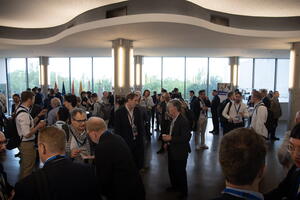
The 16th ITER International School on the topic of "Tokamaks as Fusion Reactors" will take place from 30 November 2026 to 4 December 2026. The school is jointly organized by Institute for Plasma Research (IPR), Bhat, Gandhinagar, Gujarat, and The International Center for Theoretical Sciences – Tata Institute of Fundamental Research (ICTS-TIFR), Bengaluru, in collaboration with ITER Organization and Aix Marseille University, France. The school will be hosted at ICTS-TIFR, Bengaluru.
The ITER International School aims to prepare young scientists and engineers for working in the field of nuclear fusion and in research applications associated with the ITER project. The 16th edition will cover a broad range of topics related to tokamak fusion reactors’ physics and technologies, such as plasma confinement, heat and particle exhaust, integrated control and operation, integrated modelling and digital twins, plasma-materials interaction, superconducting magnets technology, neutron shielding, and tritium breeding.
Registration has been extended through 3 September. For all information see this website.
The Joint European Torus (JET) operated for 40 years before entering decommissioning in 2023. It was the last tokamak capable of operating with deuterium-tritium (D-T) fuel until devices like ITER begin their own D-T research, which makes the datasets generated in JET’s final campaigns effectively irreplaceable.
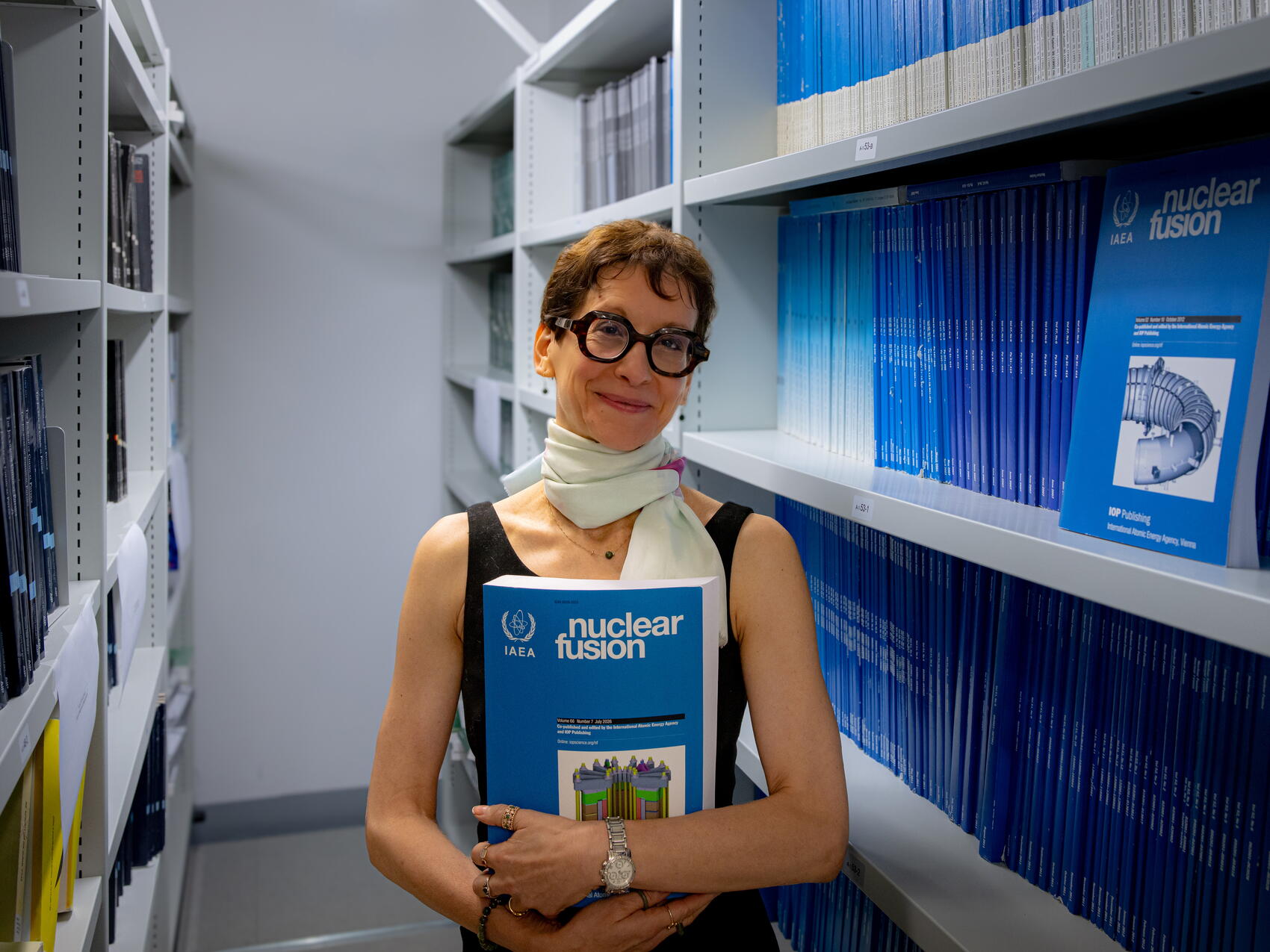
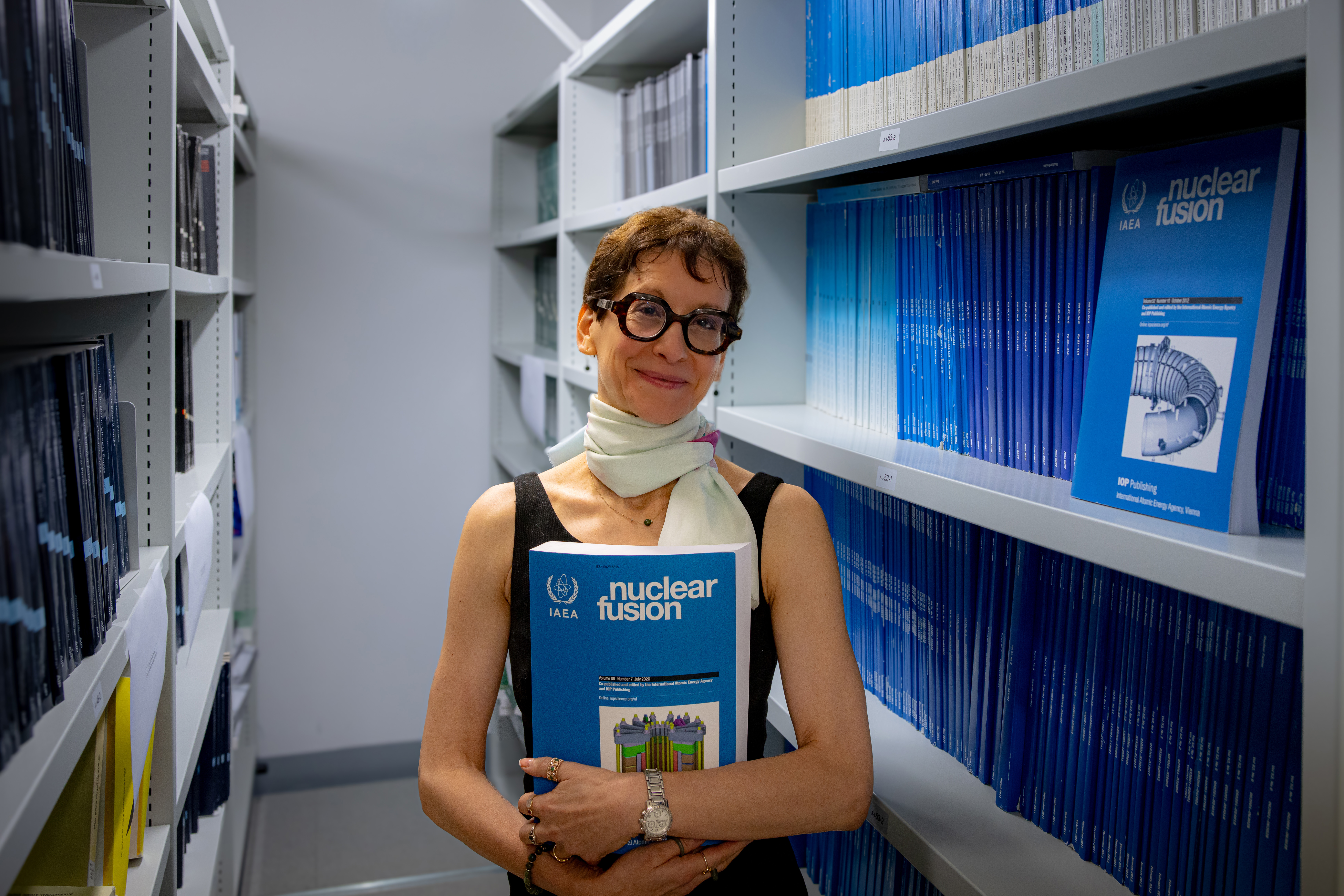
The outcome of its final experiments between 2022 and 2023 was presented as an Overview contribution to the last IAEA Fusion Energy Conference in Chengdu and was recently published in Nuclear Fusion. These results are already validating predictive models, contributing to shared international databases, and informing the design of first-of-a-kind fusion power plants.
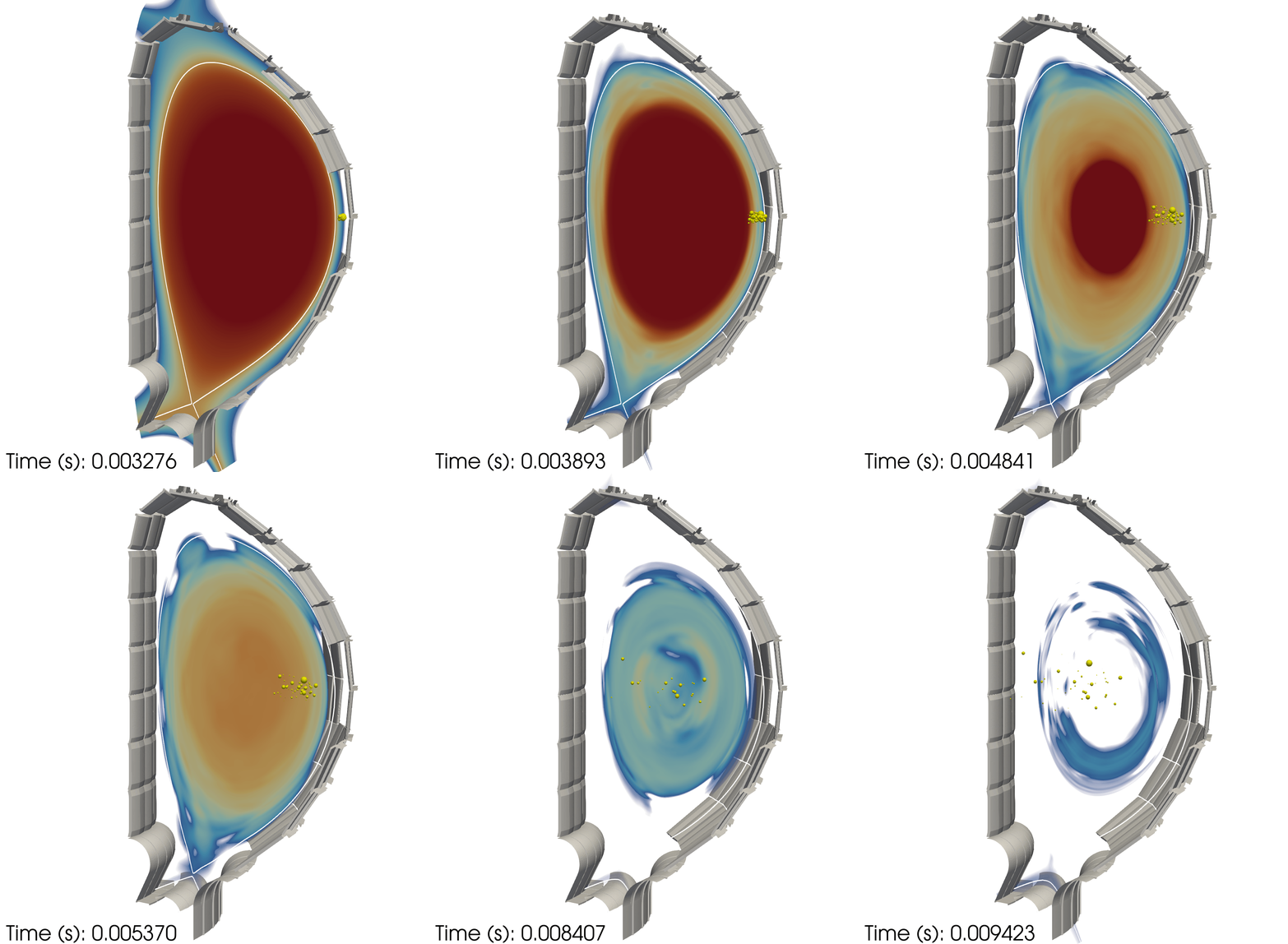
The results speak for themselves. JET set a new fusion energy record of 69 MJ in tritium-rich hybrid plasmas and achieved long-pulse H-mode operation up to 60 seconds. The team also demonstrated ITER-relevant integrated scenarios and generated critical data informing the pellet injection mechanisms for ITER’s disruption mitigation system. JET’s comprehensive fuel-retention studies will also act as a precedent for how ITER may track and manage its tritium inventory.
Beyond the physics, JET’s final years leave behind decades of operational experience in handling tritium and nuclear-grade components will directly shape how ITER and future power plants are safely operated.
JET’s results are further described in an article published by EUROfusion and in the newly published scientific paper.
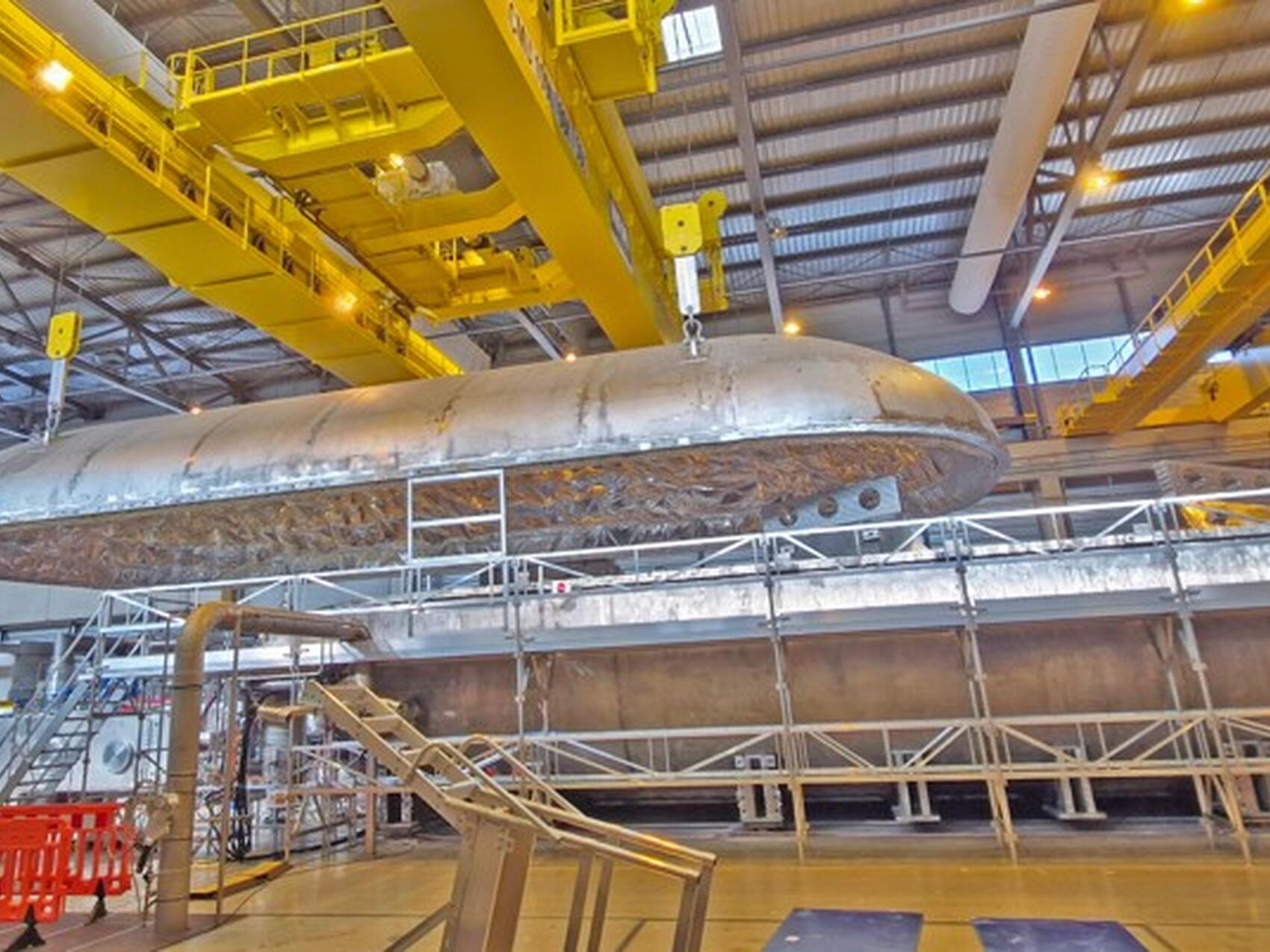
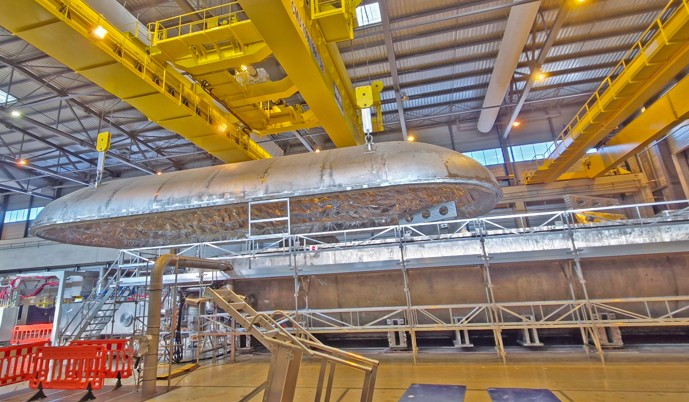
2026-09-16 - Avant de pouvoir être positionné dans un portique d'assemblage, le secteur n° 3 doit être relevé de sa position horizontale à la verticale. C'est le rôle des outils de basculement d'ITER, dont l'un est visible ici en action.
Le dernier secteur de la chambre à vide ITER quitte l'Italie
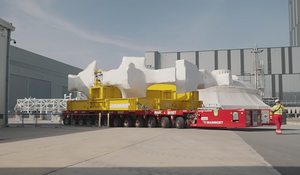
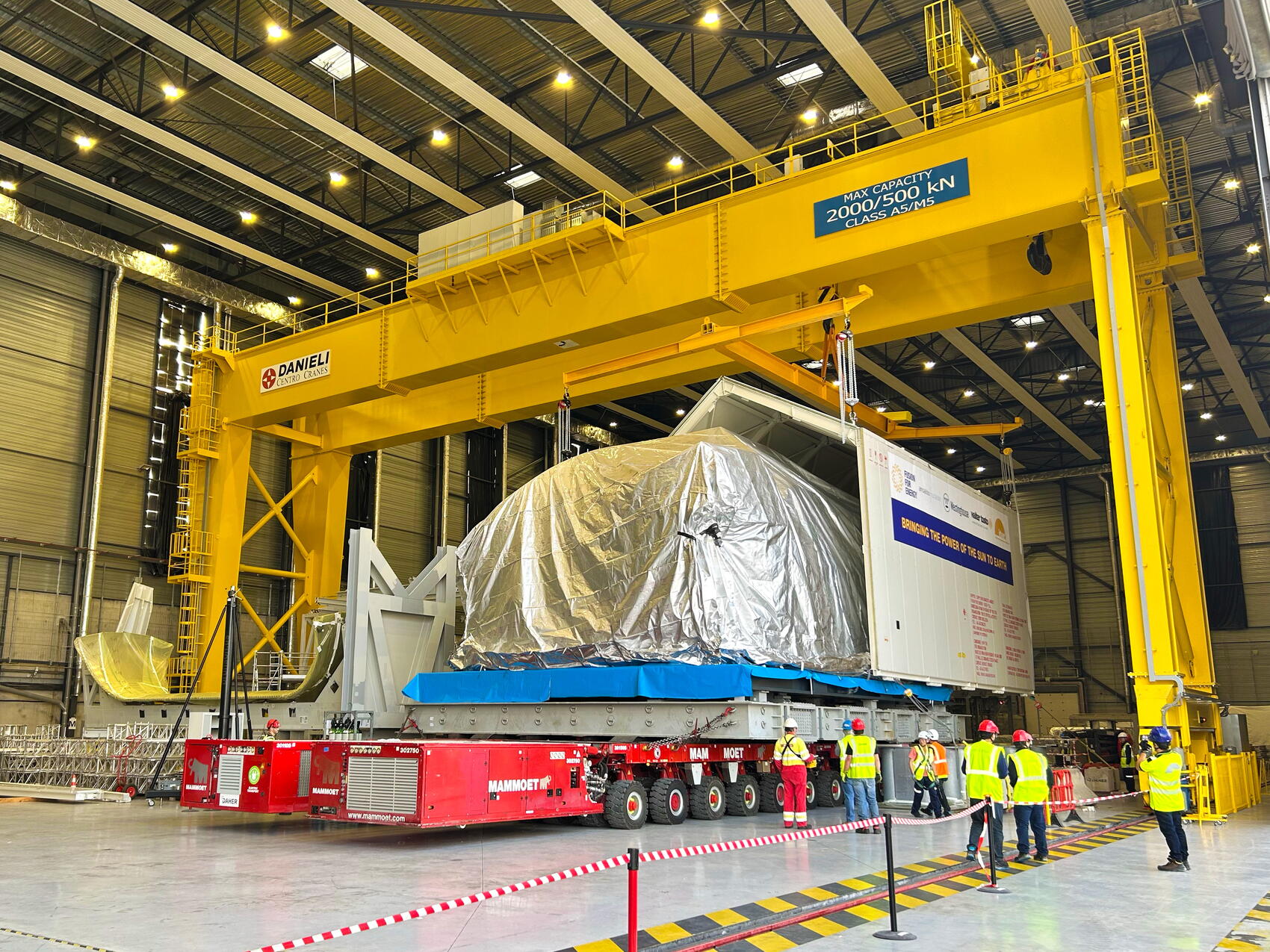
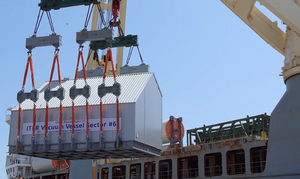
2026-09-16 - Le neuvième et dernier secteur de la chambre à vide a quitté son lieu de fabrication en Italie. Il est attendu sur le site ITER d'ici quelques semaines.
Les modules tritigènes expérimentaux d'ITER entrent dans la phase finale de conception technique
2026-09-14 - Cet été, les quatre concepts de production de tritium qu’ITER testera lors de sa première phase d’exploitation au deutérium-tritium ont franchi l’étape du PDR (revue de conception préliminaires). Cela ouvre la voie à la phase d’ingénierie finale.
Secteur n° 3 : en route pour un basculement
2026-09-10 - Le 10 septembre, le secteur n° 3 a été transféré vers un berceau de levage où il sera mis en position verticale. Le secteur n° 3 est l'avant-dernier secteur de la chambre à vide ; il ne reste plus que le secteur n° 2 à livrer à ITER.
Un secteur fait son entrée dans le Hall
2026-09-08 - Le secteur n° 3 de la chambre à vide n° 3 est acheminé jusqu'au Hall d'assemblage pour intégrer le processus de sous-assemblage.
Wall climber
2026-09-07 - Suspendu entre acier et ciel, un ouvrier gravit la façade étincelante du Hall d’assemblage pour atteindre une série de bouches d’aération. Dans le métal poli se reflète le bleu profond du firmament, où se confondent la structure et le ciel.
Réparations des chanfreins terminées
2026-09-03 - La remise du secteur n° 3 marque la fin des travaux de réparation sur les chanfreins des secteurs de la chambre à vide. Depuis près de trois ans, ITER collabore avec SIMANN (SIMIC et Ansaldo Nucleare) à la remise en état des bords chanfreinés (là où les secteurs seront soudés ensemble), suite à la découverte de certaines non-conformités dimensionnelles.
La réparation des chanfreins est terminée
2026-09-03 - Après la découverte d’irrégularités au niveau des chanfreins (les bords où les secteurs seront soudés entre eux pour former la chambre à plasma du tokamak), ITER a lancé une campagne de réparation en partenariat avec SIMANN (SIMIC et Ansaldo Nucleare). Cette campagne est désormais achevée.
Secteur n° 3 prêt pour le sous-assemblage
2026-09-03 - La campagne de réparation des chanfreins, qui a duré près de trois ans, s'est achevée avec succès avec la remise officielle du secteur n° 3 de la chambre à vide à l'équipe d'assemblage. Tous les secteurs nécessitant une réparation ont été pris en charge.
La bobine de champ toroïdal n° 07 passe à la verticale
2026-09-01 - La bobine toroïdale n°07 est transféré dans un berceau de basculement, où elle sera mise en position verticale.
Dévoilement
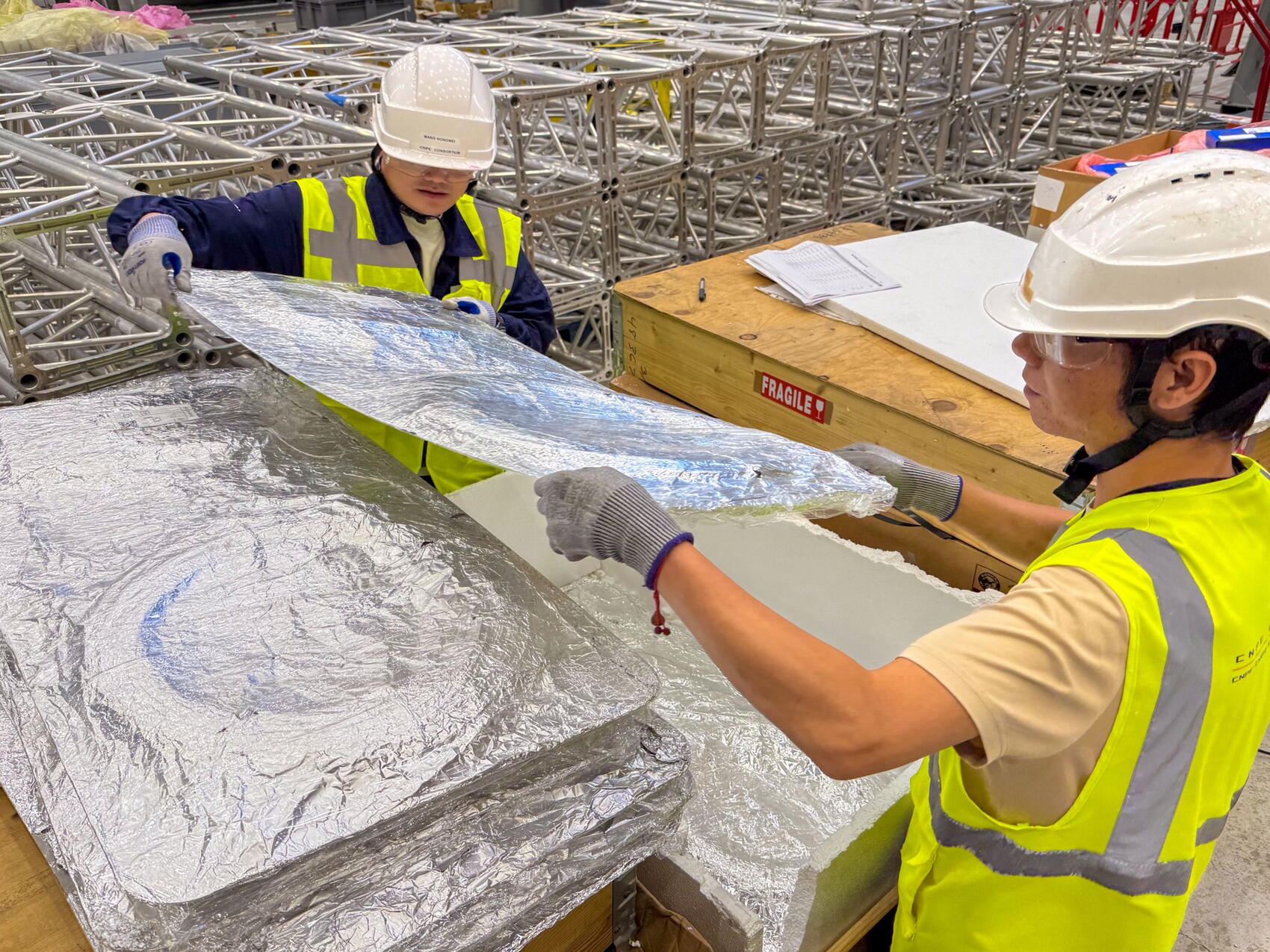
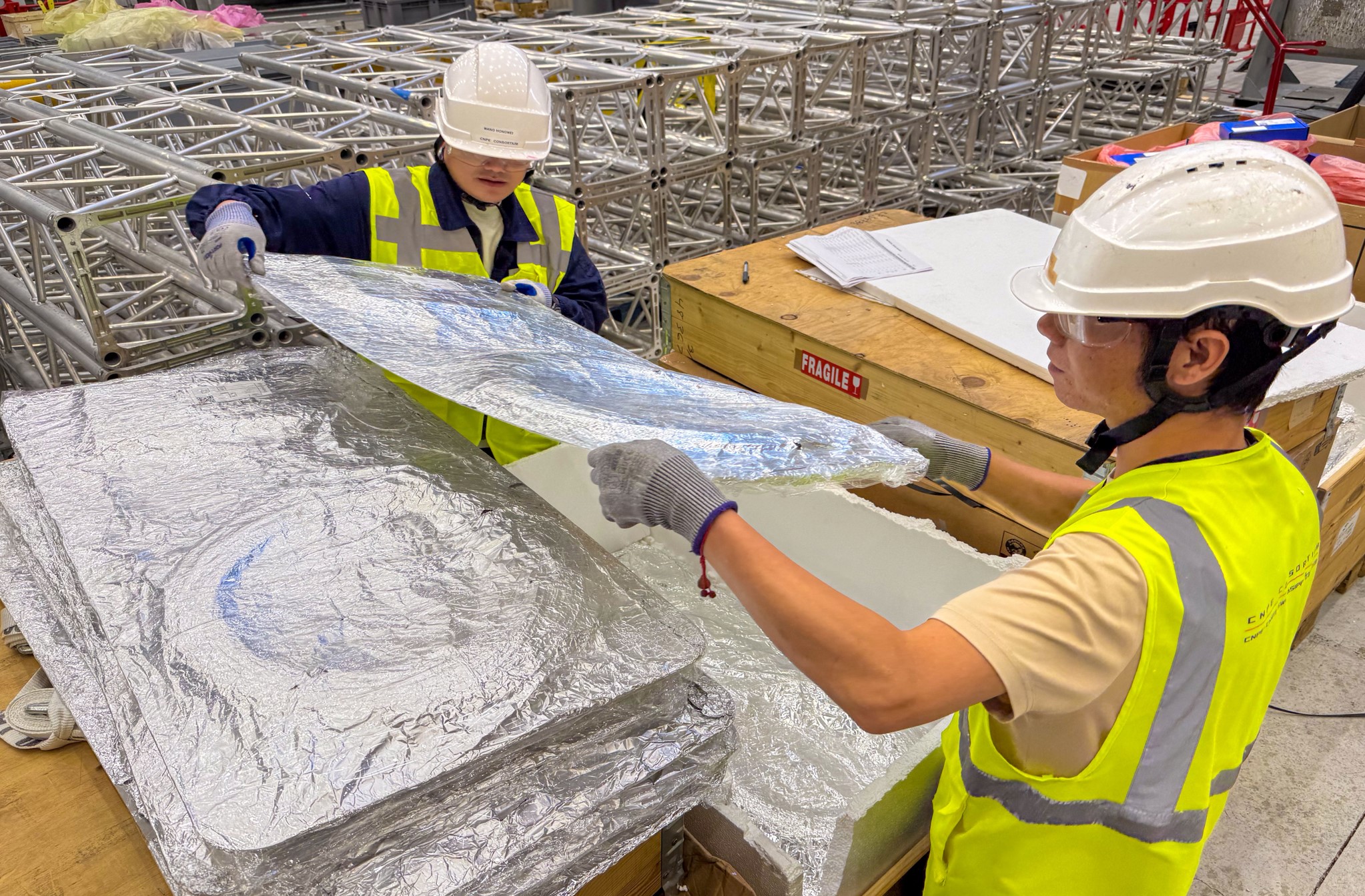
2026-08-31 - Un segment de l’écran thermique est déballé dans un bâtiment de préparation d’ITER. Chaque secteur de la chambre à vide est associé à trois panneaux d’écran thermique lors du processus de sous-assemblage dans le Hall d’assemblage.
L'équipe responsable du pont « TCWS »
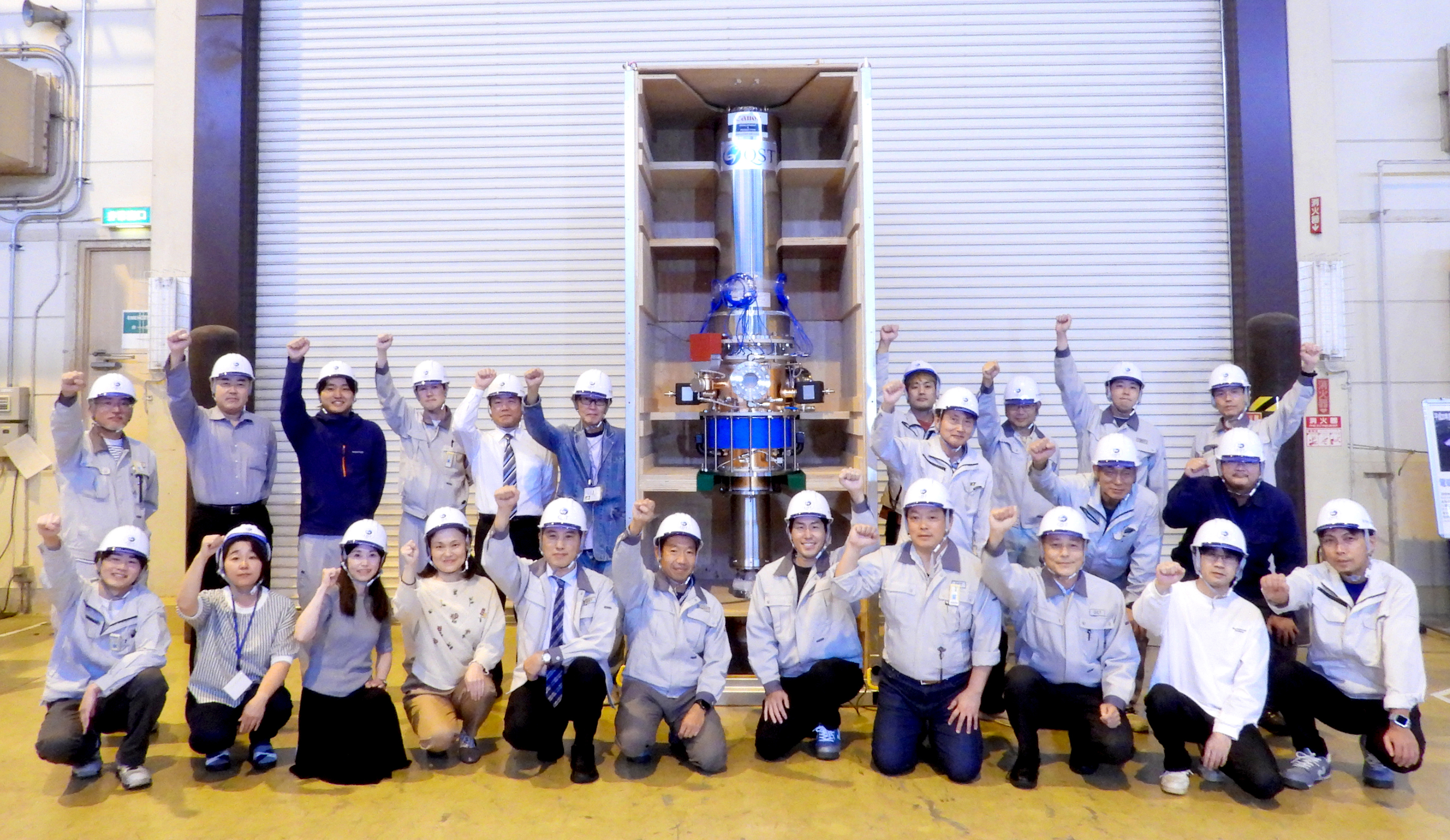
2026-08-30 - Une équipe d'experts a été chargée de la réalisation du pont du circuit d'eau du tokamak. Le plastique coloré sert à la conservation.
Un pont spécialement conçu
2026-08-30 - Le pont qui constitue un point de raccordement essentiel pour le système d'eau de refroidissement du tokamak, de 11 mètres de long, vient d'être achevé. Ce pont comporte 28 conduites techniques destinées aux différentes opérations de refroidissement.