
Blanket manifold system flows through its final design review
13 Dec 2015
-
ITER Blanket Section

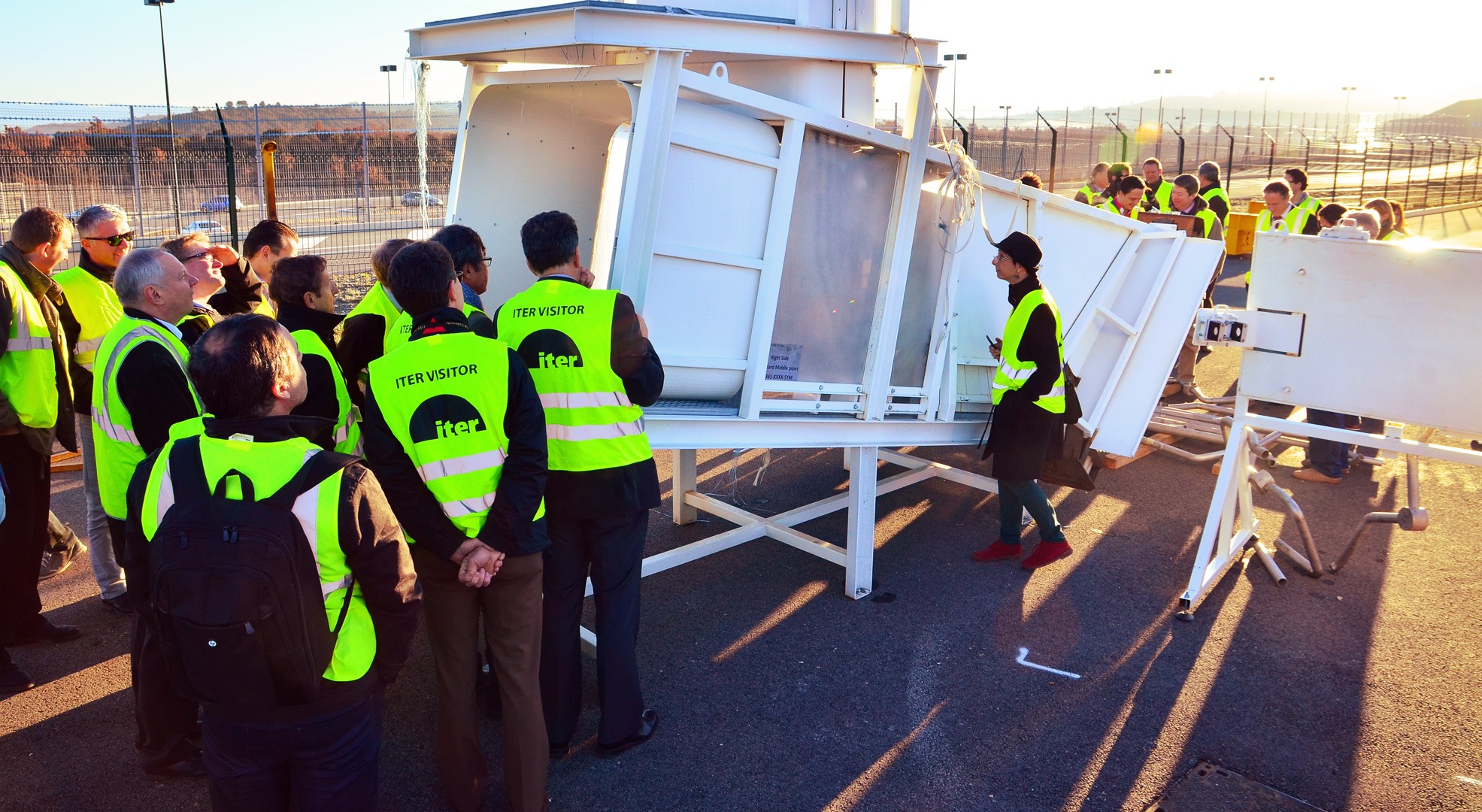
On the second day of the review, participants were able to visit mockups of the blanket manifold design
The final design review of the ITER blanket manifolds was held on 9-10 December, with more than 30 participants from the ITER Organization Central Team, the European Domestic Agency, contracting organizations, and invited external subject matter experts.
The blanket manifold system feeds cooling water to the different blanket modules through pipes arranged in bundles and routed mostly through the upper ports of the vacuum vessel. With a total flow rate of 3 120 kg/s—or the average flow rate of a small river—the blanket manifold system removes up to 736 MW of thermal power through 6.5 km (45 tonnes) of piping.
"The development and validation of the final design is a major achievement as the blanket manifolds are planned for installation during the first phase of machine assembly, before First Plasma," says Rene Raffray, who leads the Blanket Integrated Product Team and the Blanket Section. "We are designing and manufacturing the first blanket manifolds to operate in a fusion reactor environment."
Traditionally a manifold system can be described as a fairly conventional assembly of pipes. Due to the demanding operating conditions and constraints of ITER, however, the design of the blanket manifold system was particularly challenging. For example, the attachment features between the pipes and the vacuum vessel supports need to be electrically insulated in order to maintain electromagnetic forces during plasma disruptions at acceptable levels. At the same time, these features need to be thermally conducting so that the nuclear heat generated in the supports is transferred to the pipes and not to the vacuum vessel where it might cause unacceptable thermal stresses.
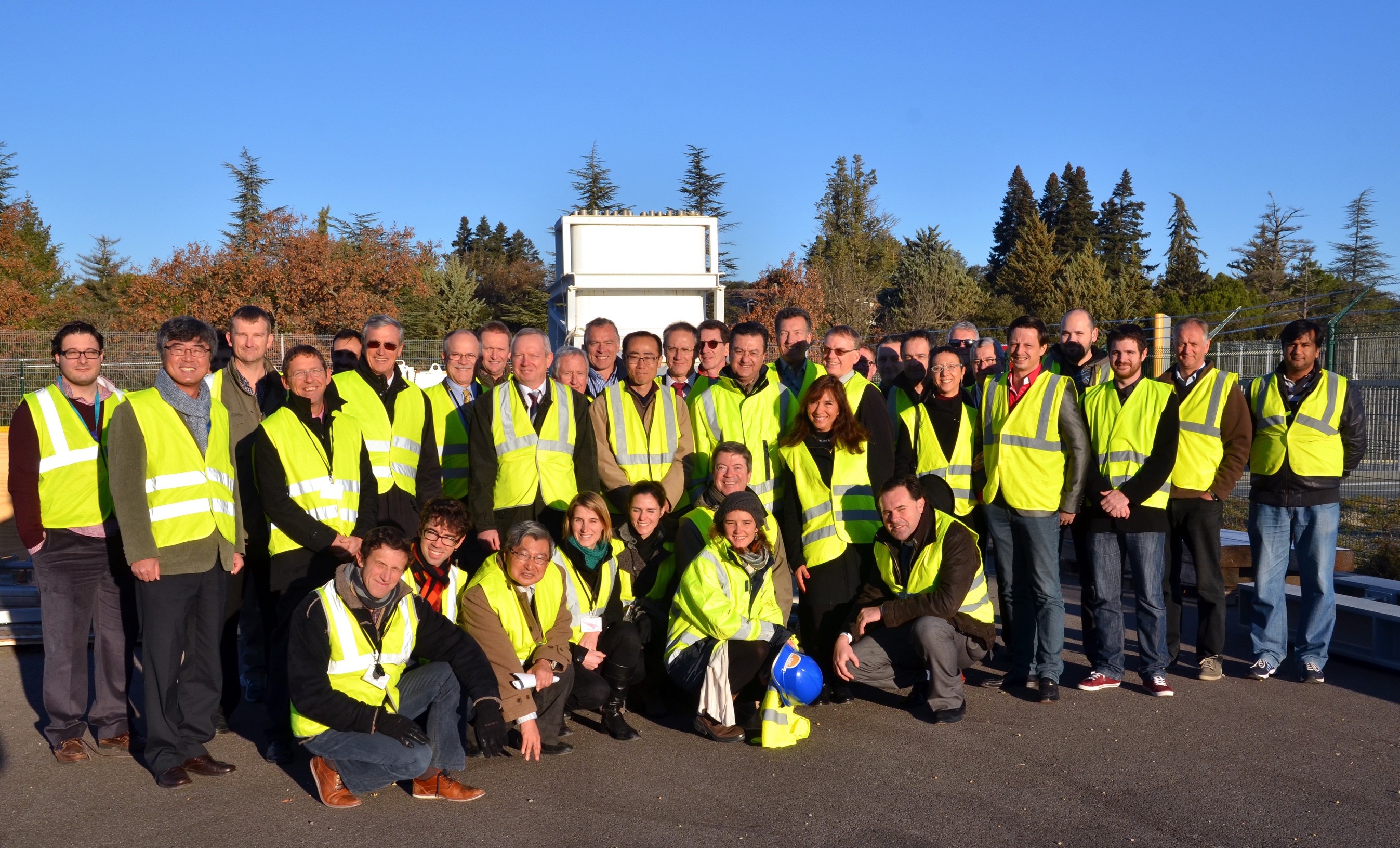
The review panel confirmed the soundness of the design and congratulated the manifold team, with contributions from the ITER Organization Central Team, the European Domestic Agency and contracting organizations.
The blanket manifold design makes use of a ceramic insulating layer configuration (alumina being the preferred option) to meet these constraints.
Other design challenges are linked to the need to achieve tight assembly tolerances (on the order of 1 mm) for a component measuring 6 to 7 metres. An extensive validation program has been performed on mockups to demonstrate that these tolerances can be met; another program is underway to validate the support design.
In assessing the work presented at the final design review Brad Nelson, chief engineer at the US ITER Project Office and chair of the review panel, confirmed the suitability of the design and thanked the manifold team for the high level of preparation, clear presentations and thorough documentation. During the debriefing, one panel member added: "Ownership and competence in the design team is evident."
The focus will now be on final touches to the design based on the panel feedback and preparation for the Blanket Manifold Procurement Arrangement with the European Domestic Agency planned for signature in 2016.