Building fusion knowledge, one weld at a time
From developing welding procedures for first-of-a-kind components to devising strategies for welding in the tokamak’s confined spaces, ITER’s welding engineers are helping to define the techniques and standards that may shape fusion projects for decades to come.
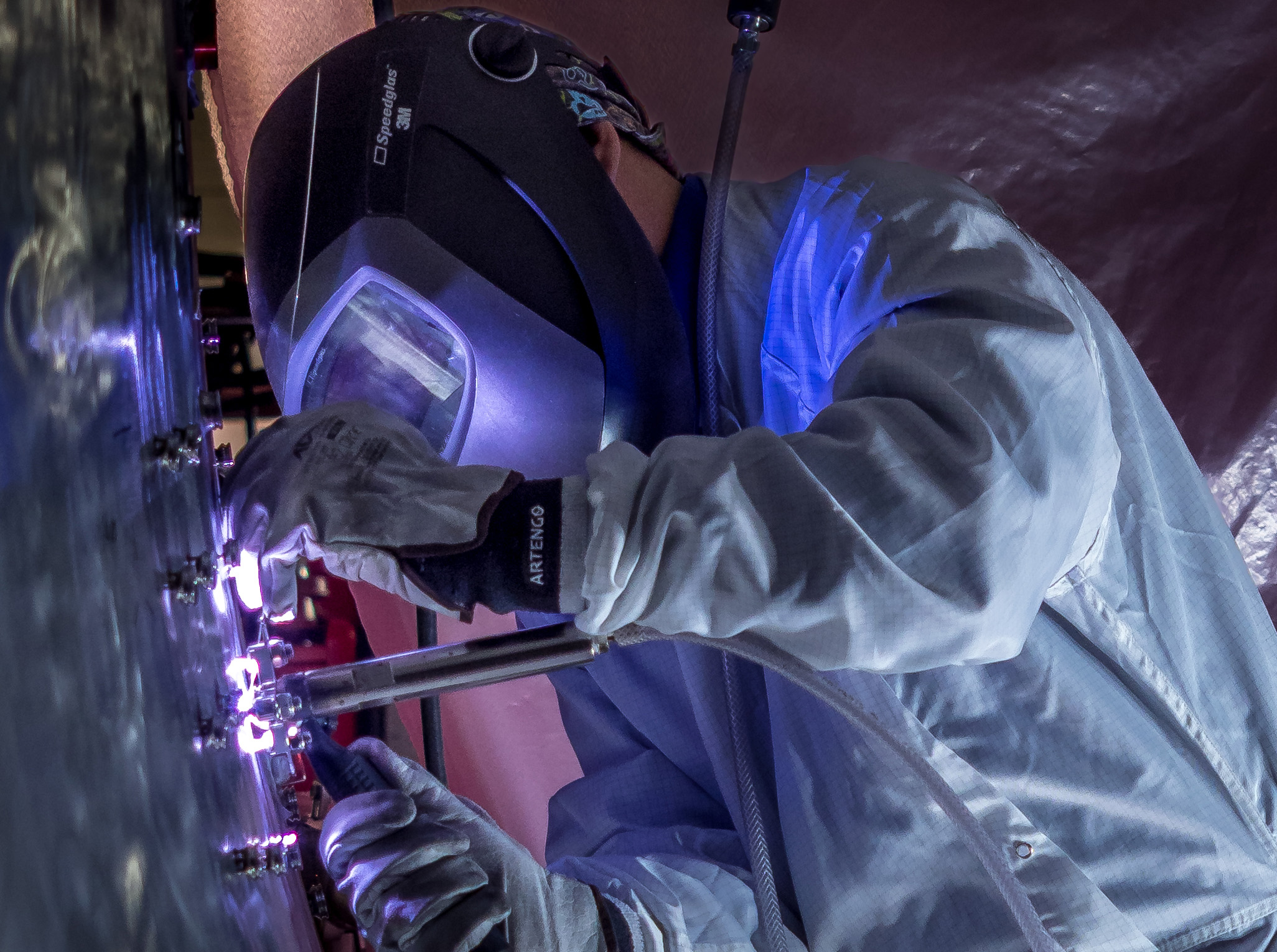
Welding is fundamental at ITER. Everything on the tokamak is metallic and every major system relies on welding—from joining cooling pipes or attaching diagnostic sensors, to joining the nine vacuum vessel sectors into a single plasma chamber. Yet while the basics of the welding methods used at ITER are the same as those found in fission projects and across heavy industry, there are challenges that are unique to fusion and to ITER.
“Because of the size of the tokamak, the complexity of the instrumentation, and the space constraints, we are solving problems that nobody has encountered before,” says Frédéric Lobinger, an ITER welding engineer in the Machine Assembly Program who focuses on port cells, diagnostics, and other tokamak systems. “Accessibility, shrinkage, installation sequencing, repair strategies, quality requirements, and integration of diagnostics are all areas where ITER is creating new knowledge.”
Welding at ITER can be measured in both small and big ways. Welds range from the miniscule (0.1 mm-thick welds to attach temperature sensors on the central solenoid magnet) to the mammoth (105 mm-thick closure welds on the toroidal field coils). In between, there are so many welds of all sizes that the cumulative volume is colossal: 10 tonnes of weld metal will be deposited on the plasma chamber, while a further 40 tonnes will be deposited in the port cells.
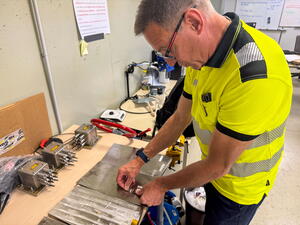
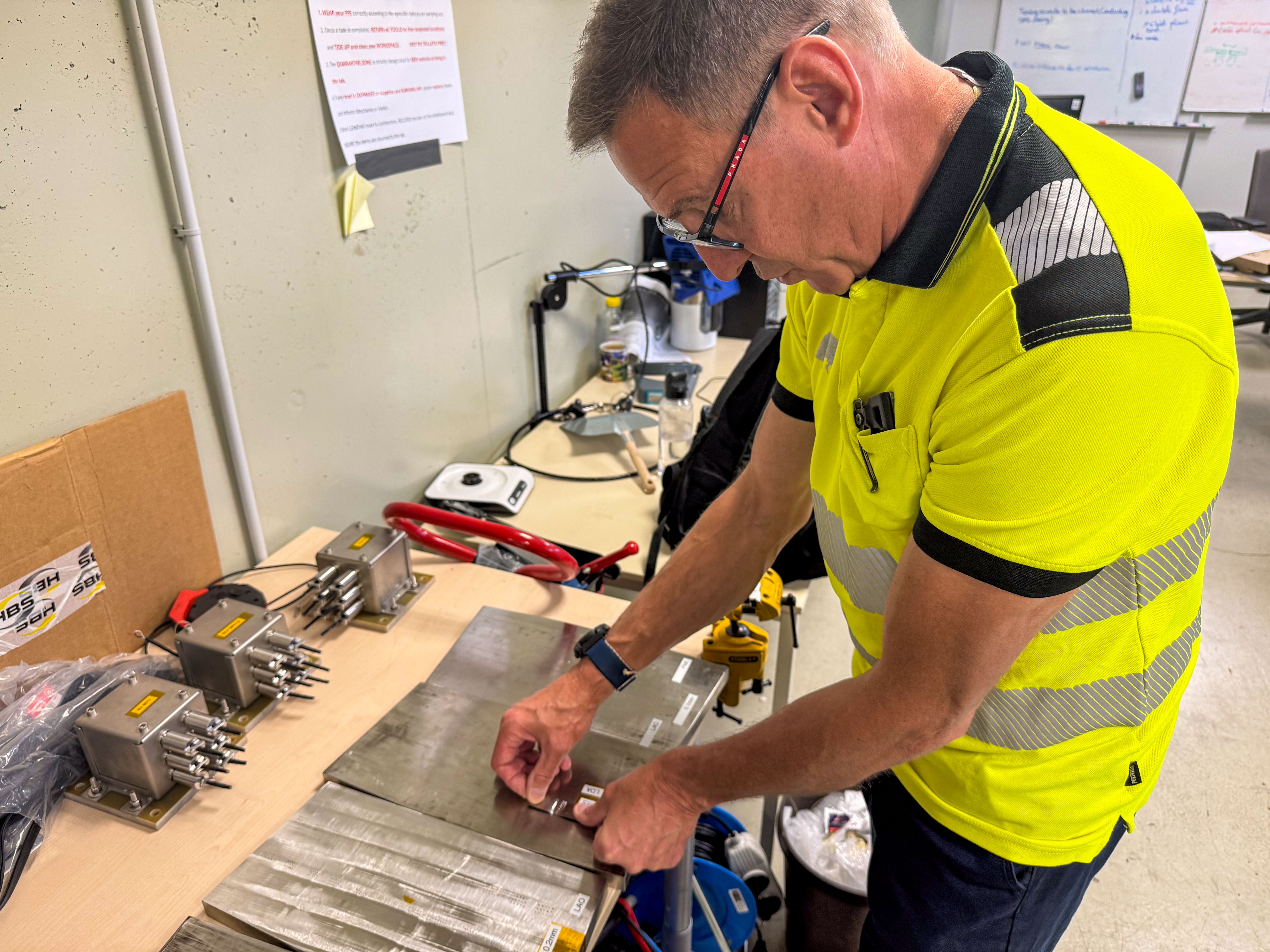
One of the welding challenges at ITER is that the project involves first-of-a-kind components and new instrumentation configurations. While the fission sector has had 60 years of experience building reactors and optimizing designs to facilitate welding, there have only been a handful of tokamaks built and none have been as big as ITER.
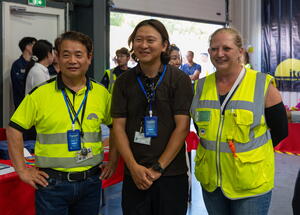
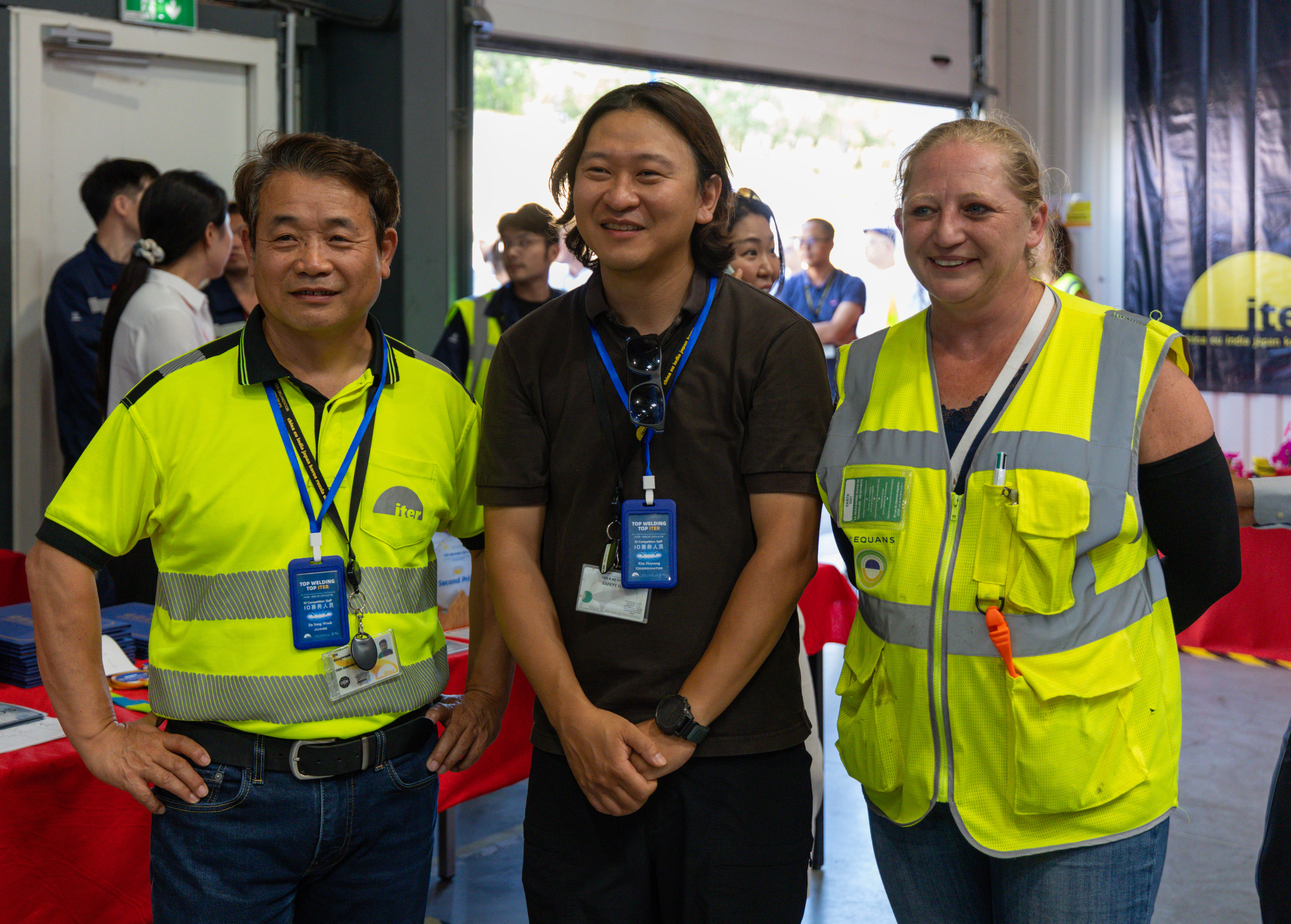
“The standards we use are based on proven industrial experience, but ITER's designs are often unlike anything that has been built before,” says Hoyoung Kim, a welding engineer at ITER who supports assembly activities for systems such as cooling water and cryogenic networks, thermal shields, magnet feeders, and the central solenoid. “The welding process itself is not fundamentally different. The difference is that in the fission industry, decades of experience have led to standardized designs that are practical to manufacture and weld. Fusion systems are newer and many of the component designs have not yet been fully optimized for welding. Future fusion projects will benefit from the experience gained here.”
Another of the welding challenges ITER faces is “shrinkage.” When metal is welded, it heats up. As the weld cools, both the deposited metal and the surrounding material contract. In stainless steel this shrinkage can be significant, and it becomes more pronounced as thickness increases.
While devices such as JET faced shrinkage challenges, the dimensions and thicknesses involved were smaller so the experience cannot be perfectly extrapolated to ITER. Work is ongoing to model the welding shrinkage of the ITER vacuum vessel because of the importance shrinkage will have on final dimensions, alignment, and assembly tolerances.
Compared to existing fusion projects or fission reactors, instrumentation is also a consideration for welding engineers at ITER. The ITER tokamak contains an enormous number of diagnostics, sensors, cables, studs, and supports because the machine is designed as an experimental device and scientists want to measure and understand virtually everything that happens inside the plasma. This means ITER has far more instrumentation to weld into place than any eventual commercial fusion power plant, which would be optimized for operation.
But perhaps the most daunting challenge welders face is space constraints. When components are manufactured in factories or welds are performed on-site in ITER’s support buildings or sector sub-assembly tools, there is room to work. Inside the tokamak, space is becoming increasingly constrained and some welding locations are difficult to access. ITER has developed virtual reality simulations of the tokamak configuration that will help engineers create new welding strategies adapted to the environment.
“Now that five sector modules have been installed in the tokamak pit, everyone can see how limited the available space is becoming,” says Frédéric Lobinger. “The machine is large, but once dozens of workers, tools, pipes, diagnostics, and support structures occupy the same area, access is an issue. Accessibility will be one of the defining challenges of welding.”
As these diverse welding issues are solved over the coming years, the techniques will be rigorously documented to help define future fusion standards.