
Final correction coils received on site
With the arrival in May of two coils from China, all 18 correction coils are now on site at ITER.
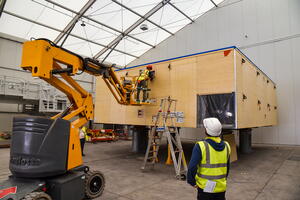
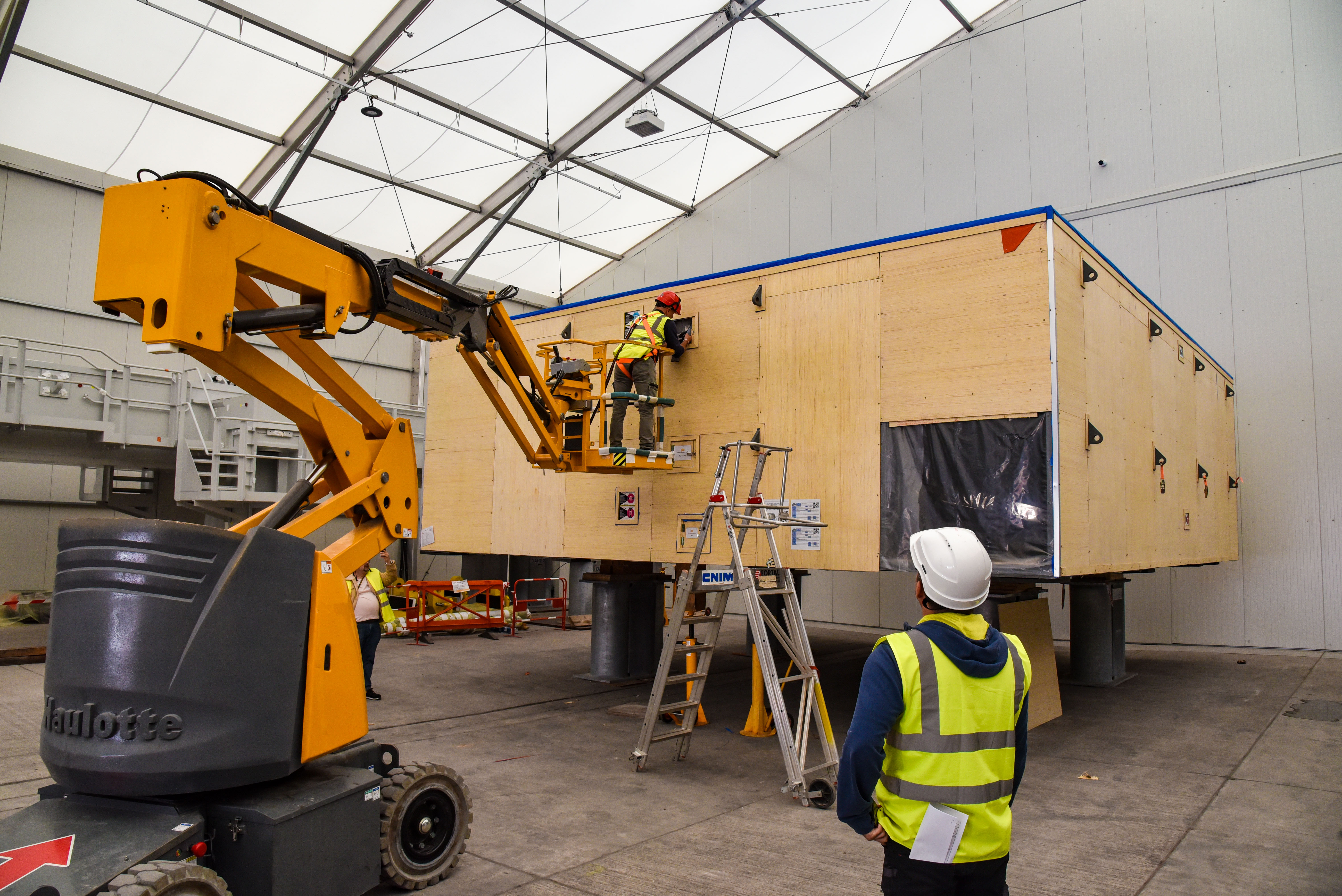
ITER correction coils, though less prominent than the massive toroidal, poloidal, and central solenoid magnets, play a critical role in ensuring the stability and precision of the fusion machine’s magnetic environment. Distributed below, around and above the vacuum vessel, the coils are designed to correct magnetic asymmetries and compensate for small field errors that can arise from the manufacturing and assembly of ITER’s principal magnet systems.
While comparatively lighter and slimmer than ITER’s larger magnets—and with a lower operating current (10 kA)—the correction coils stand out for their scale and unusual geometry. The side coils are square but non-planar, while the top and bottom coils feature a distinctive curved, banana-like planar design.
Six bottom correction coils have already been installed in the machine; the side and top coils will be installed later in the installation sequence after the load of all 18 toroidal field coils has been transferred to their gravity supports.
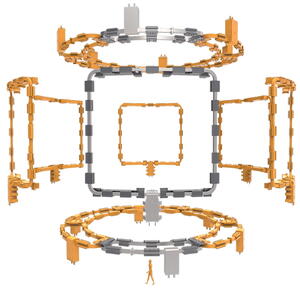
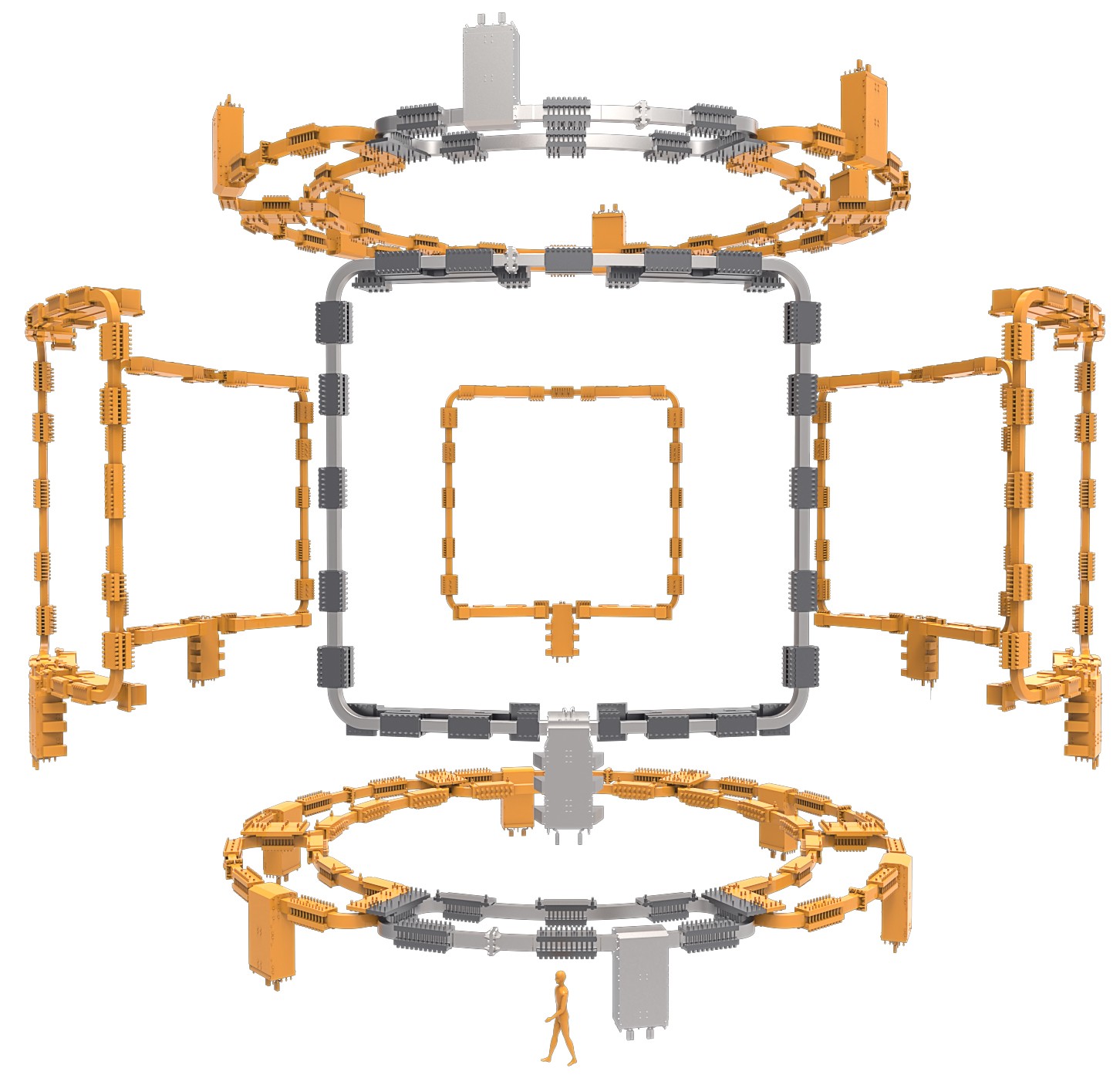
ITER’s correction coils are built from long lengths of superconducting cable wound into layered structures known as “pancakes.” These layers are insulated, vacuum pressure impregnated for structural integrity, and enclosed within stainless steel casings designed to withstand the demanding operational conditions of the ITER machine.
Designed and manufactured by Chinese Domestic Agency supplier ASIPP (Institute of Plasma Physics, Chinese Academy of Sciences), the coils had to be produced to extremely tight precision requirements. Before production could begin, engineers completed an extensive qualification program covering winding techniques, the impregnation processes, case manufacturing, and final assembly procedures.
“This is the end of an industrial journey that started in 2010,” says Fabrice Simon, who has been involved since the earliest days. “Key to our success has been the excellent collaboration that we have with the Chinese Domestic Agency and supplier ASIPP.” The six side and six top correction coils will now be stored at ITER until early 2028, when they will be tested, surveyed and prepared for installation in the machine.
The delivery of the completed correction coil set marks another milestone in ITER’s procurement-sharing program, under which Members contribute to the project primarily through in-kind delivery of components and systems, while gaining valuable industrial experience in key fusion technologies.