
First assembly tools reviewed successfully
11 Jan 2015
-
Krista Dulon
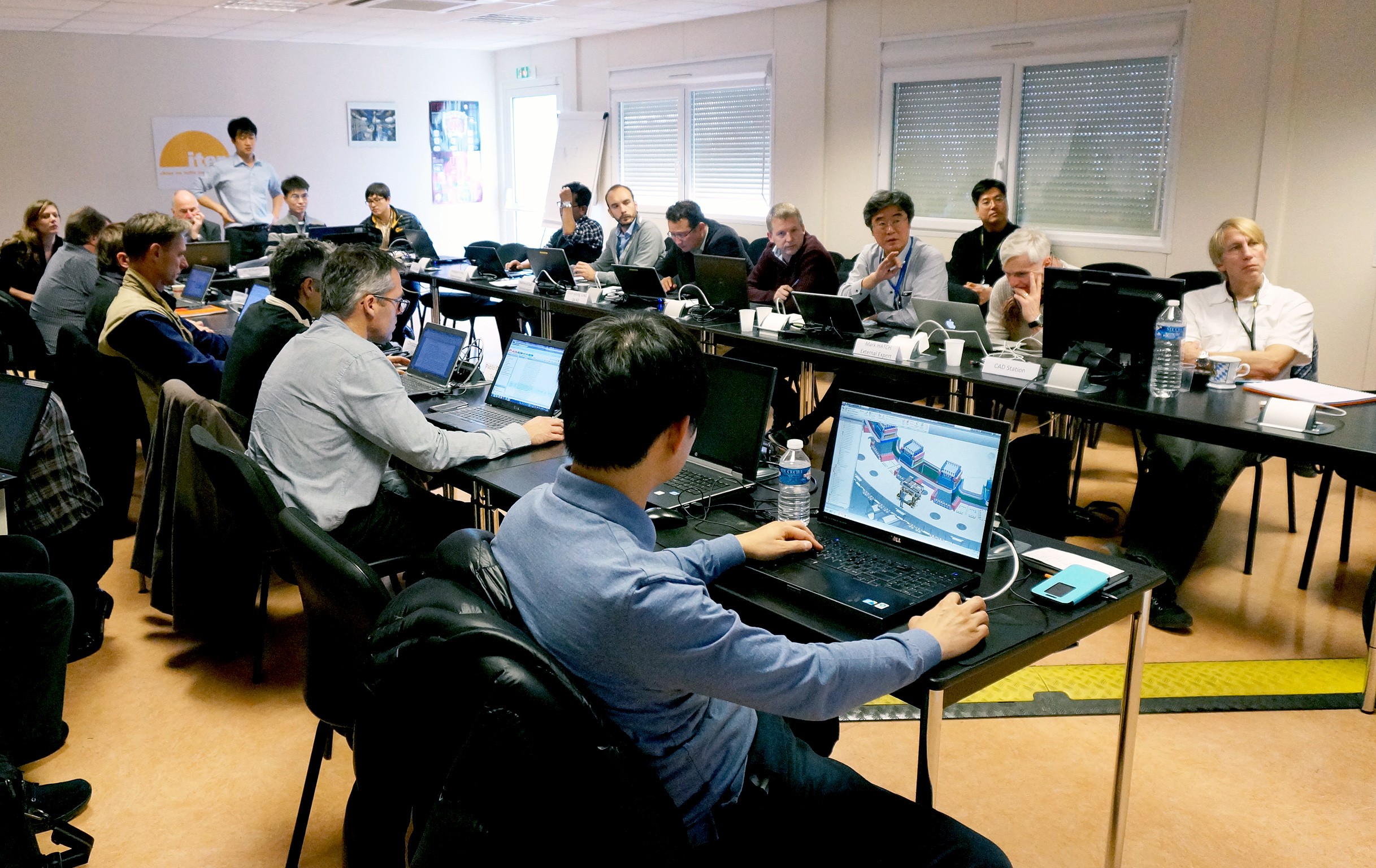
The Final Design Review for the Group A subset of assembly tools took place in December, with 35 experts in attendance. A set of 128 purpose-built tools will be required for ITER assembly.
In order to successfully pre-assemble and manoeuver hundreds of large components, a very precise, made-to-order set of tools will be required for ITER assembly.
The design and fabrication of 128 tools—including all of the purpose-built tools required up to First Plasma—falls to the responsibility of the Korean Domestic Agency on the basis of a Procurement Arrangement signed with the ITER Organization in August 2009.
The design of the tools is challenging. Not only must the tools meet the load and handling specifications of the components and achieve the required alignment resolutions, but they must also be designed with the full lifecycle of ITER assembly in mind and all of the different ways the components will be handled, including their transfer from tool to tool.
Since 2010, ITER Korea has been working with industrial supplier SFA Engineering for the preliminary design of a first batch of 71 tools. Of these tools, a subgroup of 21 tools has been the object of particular focus—these are the tools that are most critical with regard to the schedule. Meetings are held regularly to review design maturity and a 1:5-scale mockup of the largest tool in the subgroup—the Sector Sub Assembly Tool—has been built and tested.
For four days in December, a Final Design Review was held at ITER Headquarters for the subgroup of 21 assembly tools, called the Group A tools.
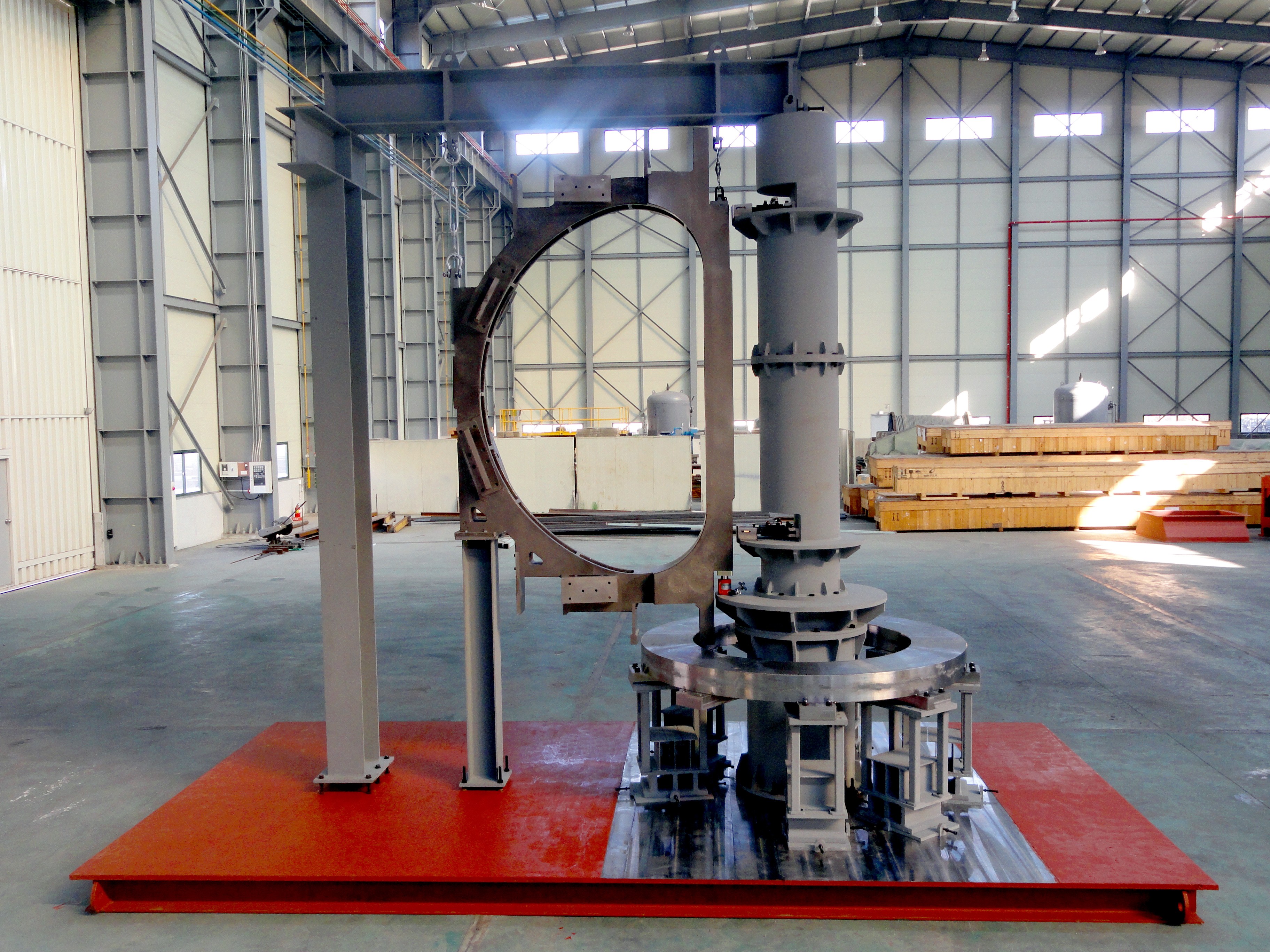
Korea has built and tested this 5:1-scale mockup of the largest tool in the subgroup—the vacuum vessel sector sub assembly tool.
Under the chairmanship of external expert Ian Williamson (Jacobs Engineering), 35 people—representatives of the Korean Domestic Agency, the manufacturer, ITER technical responsible officers for each of the components or systems interfacing with the tools, and experts—carefully reviewed the design of each tool and examined reports on structural analysis, interface status, and load cases.
"One of the major challenges of assembly tooling is determining the exact interaction between the component and the specific tool or tools," says Robert Shaw, head of the Machine Assembly & Integration Section and technical responsible officer for the Assembly Tooling Procurement Arrangement. "These interactions need to be identified in an exhaustive way over the entire handling and assembly period so that they can be provided for in the respective designs (tool and component)."
The review panel concluded by acknowledging the considerable effort that was made by the Korean Domestic Agency and its design contractor in preparing design documentation for the review. Designs were considered generally sound, with some small adjustments necessary. Following the resolution of chits from the Final Design Review, the next phase will be to produce all the manufacturing plans and drawings leading up to the Manufacturing Readiness Review for the Group A subset of tools.
"The timeliness of machine assembly depends on the preparation of the assembly team and on having all the required tools in place," commented ITER Chief Engineer Joo-Shik Bak on the last day of the review. "For this reason, the Final Design Review for the first group of schedule-important tools is an important milestone and a very important demonstration of project progress."