
Guiding the journal "Nuclear Fusion" into a new era
With the fusion landscape evolving at an unprecedented pace, questions of plasma physics are increasingly being joined by those related to engineering and materials science. Having recently been named editor-in-chief of Nuclear Fusion, ITER’s Francesca Poli is helping the journal follow these crucial developments.
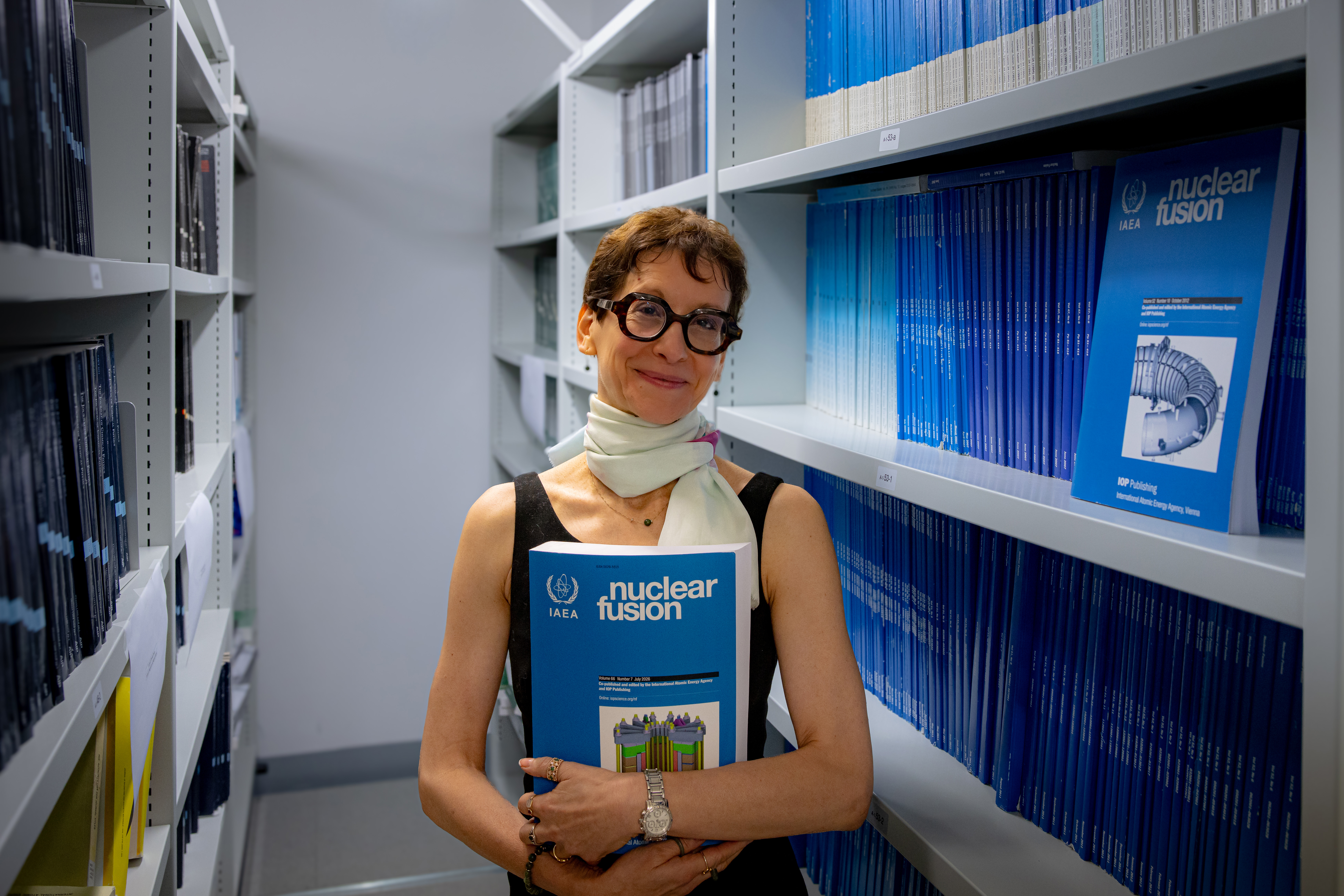
Peer-reviewed academic journals play an essential role in advancing science by providing a rigorous, independent process for evaluating and disseminating research. Published by the International Atomic Energy Agency (IAEA) since 1960, Nuclear Fusion has served the fusion community in this capacity for more than six decades—and now an ITER scientist, Francesca Poli, is at its helm.
“Nuclear Fusion is the reference journal in our field and as a young scientist I always thought it would be an achievement to join the board of editors,” says Poli. “To take on the position of editor-in-chief is a truly great honour. I look forward to helping the journal shape the future of fusion research with the support of our authors, readers, and editorial team.”
At ITER, Francesca Poli is working on the development of a plasma simulator that will allow scientists to model plasma behaviour and test operational scenarios before carrying out experiments in the tokamak. She holds a PhD in plasma physics from the École Polytechnique Fédérale de Lausanne and spent 13 years at the Princeton Plasma Physics Laboratory before joining ITER in 2023. Following six years on the board of editors for Nuclear Fusion, Poli was appointed editor-in-chief in June 2026. She is succeeding the late Professor Francesco Romanelli, who led the journal from 2021 to 2026.
Poli is taking on this key position at a critical time for fusion research, as the development of commercial-scale fusion machines brings increasingly complex challenges in materials science, engineering and technology to the forefront.
“As we go into building many more fusion devices than in the last decades, much more research is being done on materials, on technology, and on operation,” explains Poli. “Nuclear Fusion needs to follow these developments and ensure the applicable research is being published, while also providing some leadership and guidance. This is a direction that the journal had already started and I'm really pushing for us to continue in this direction.”
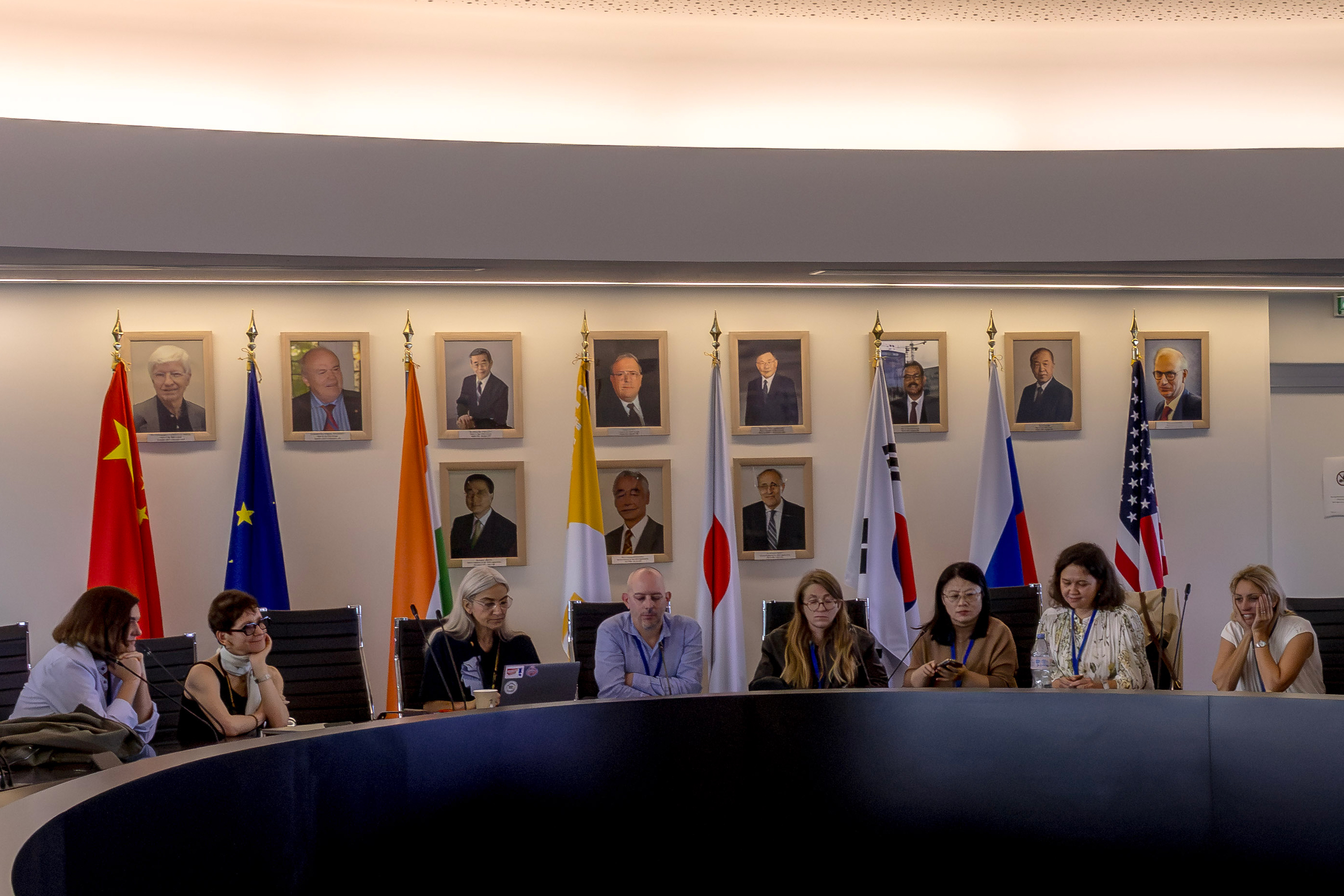
Released monthly, Nuclear Fusion now receives approximately 1,000 submissions a year, a number that has grown by 50% since the early 2020s as the fusion sector expands. The journal has played an important role in documenting ITER’s scientific basis. It published the landmark 1999 ITER Physics Basis that established the physics foundations for the ITER tokamak, followed in 2007 by Progress in the ITER Physics Basis. In 2025, the journal published the special issue On the Path to Tokamak Burning Plasma Operation summarizing the work done since 2007 by the International Tokamak Physics and Engineering Activity (ITPEA) on the physics of burning tokamak plasmas and operation. Most recently, in 2026, Director-General Pietro Barabaschi and 26 ITER colleagues published Progress of ITER and its importance for fusion development.
“Nuclear Fusion is a major scientific and technical resource for fusion research and it has a long association with ITER that dates back to the project’s inception in 1988. The first energy confinement scaling law to guide the ITER design was actually published in Nuclear Fusion,” says ITER Science Division Head Alberto Loarte, whose first published academic paper appeared in Nuclear Fusion in 1992. “At the ITER Organization, we place a great emphasis on sharing knowledge with our Members, so having a deeper connection with such a respected journal will only benefit ITER and the worldwide fusion research community.”
As editor-in-chief, Poli will also lead the board of editors in selecting the winner of the Nuclear Fusion Award, which recognizes outstanding research published in the journal. In 2025, the award was presented to Stefan Jachmich, ITER's coordinating scientist for disruptions, for a paper on shattered pellet injection.
You can read Francesca Poli’s introductory message as editor-in-chief in the July 2026 issue of the journal (issue 7, volume 66).