High hydrogen + low density = top protection
To protect machinery from possible radiation damage, ITER has applied a layer of first-of-its-kind protective mortar to the floors of rooms housing sensitive electronics.
High up in the Tokamak Building are special rooms with electronics that require protection from the neutron and gamma ray radiation that could degrade them over time or cause software errors. The solution? A brand-new twist on the type of mortar that is familiar to any home improvement enthusiast.
“When it isn’t feasible to relocate sensitive equipment away from the tokamak or implement radiation hardening on electronic components and circuits, our main strategy is extra shielding to mitigate radiation risks,” says Moustafa Moteleb, Construction Engineer in the Civil Engineering Interface Project. “As a result, we created the specialized mortar.”
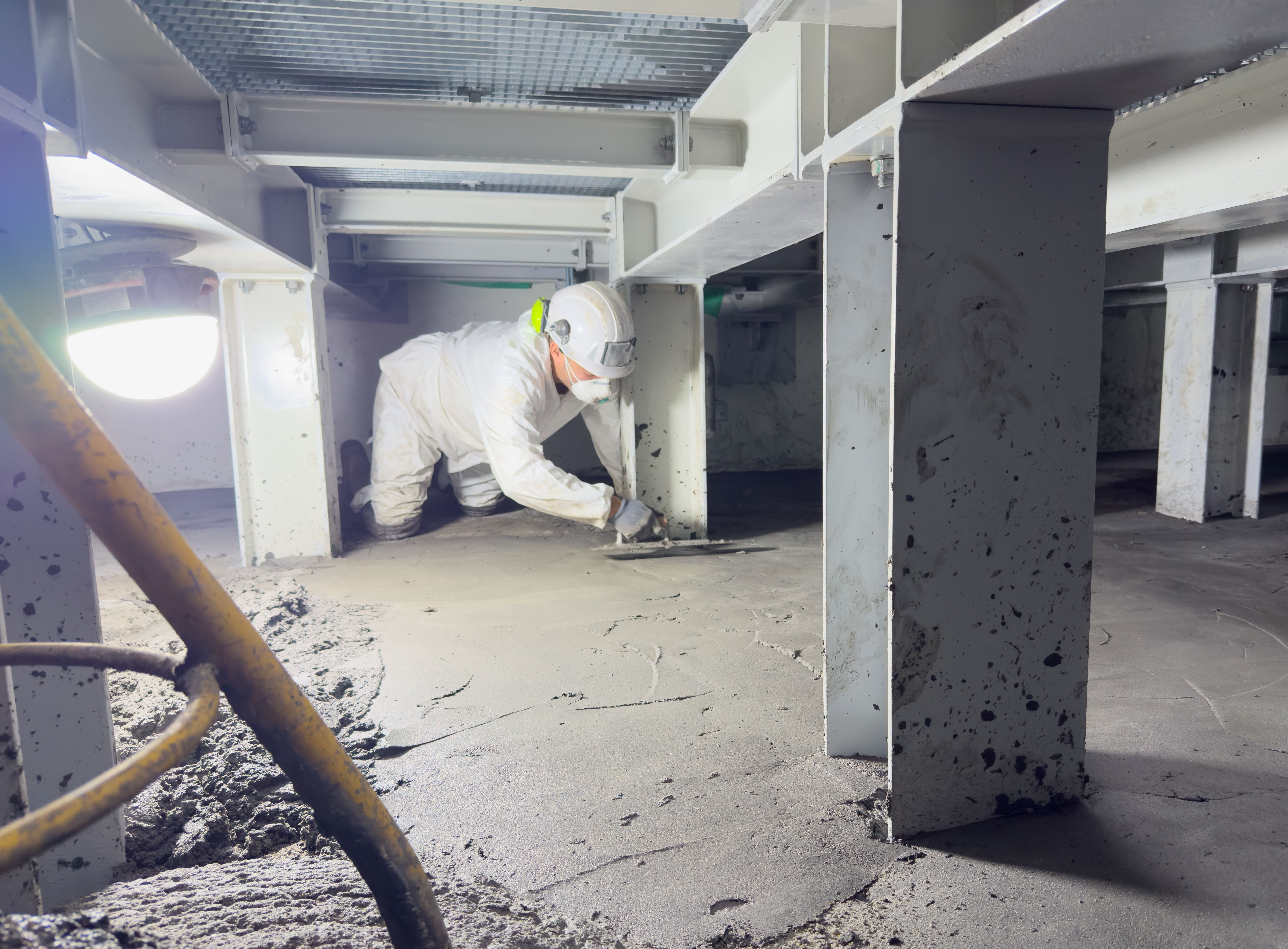
In January, this new made-for-ITER mortar was poured for the first time at two SIC (Safety Important Component) rooms located on Level 5 of the Tokamak Building. These rooms will house instrumentation and control equipment and are now protected against radiation.
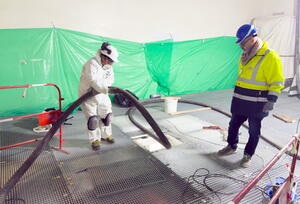
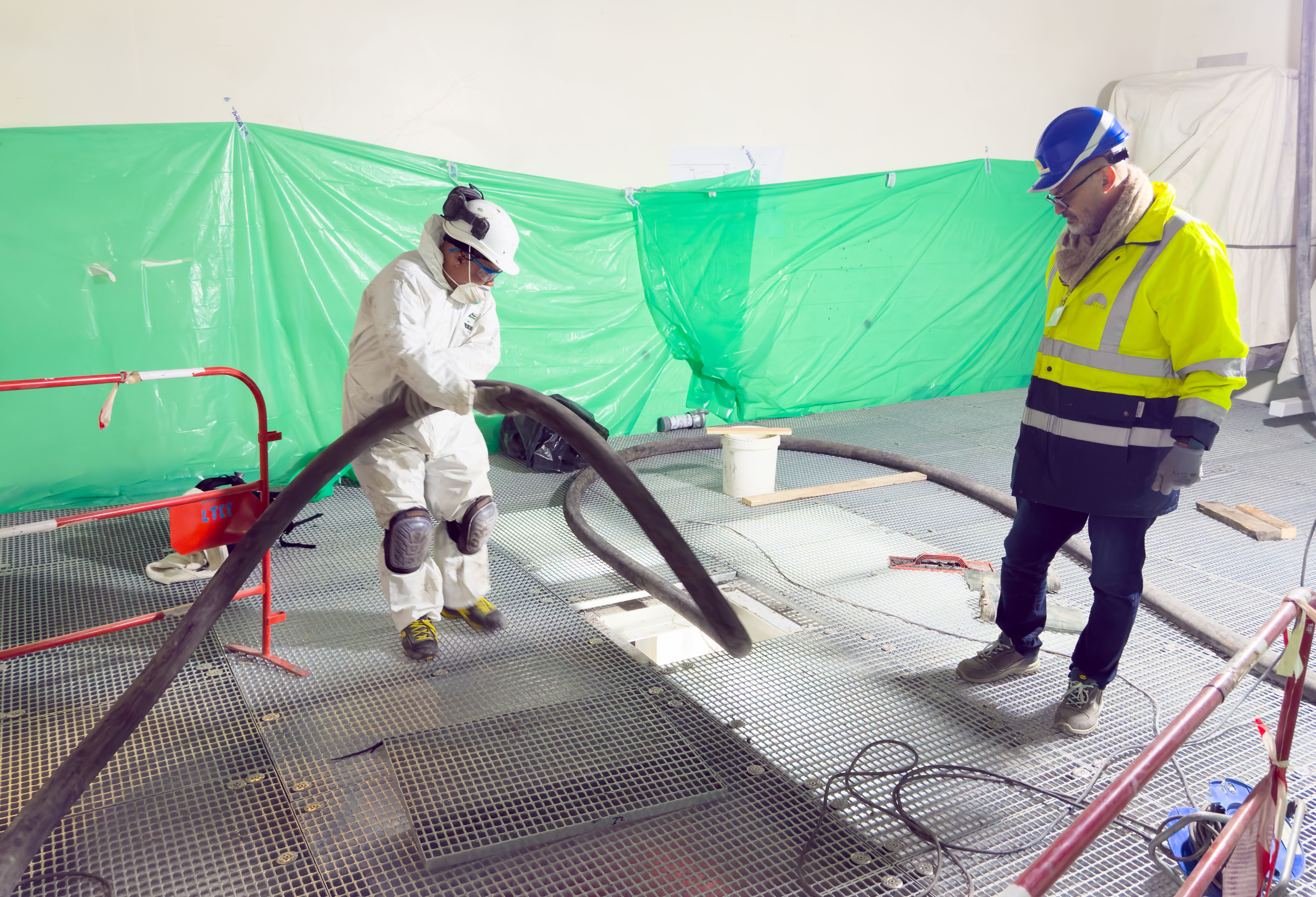
ITER contracted Lemer Pax, a French radiation protection company, to develop a first-of-its-kind mortar, Borated MORTAR 075. While the mortar uses standard cement, it features a groundbreaking aggregate mix that has an optimized hydrogen content to slow down the neutrons and a level of boron that enhances neutron absorption rate. It also has a much lower density than standard mortar to meet the building’s load constraints at the basement level.
“The mix is a very special combination,” explains Fady El Haber, the materials science expert from Lemer Pax who participated in the development of the mortar. “In fusion, the neutron is in a high flux, so you need a high hydrogen content for efficient radiation protection. We also had to maintain fire resistance and respect a specific low density per square metre for the weight limits.”
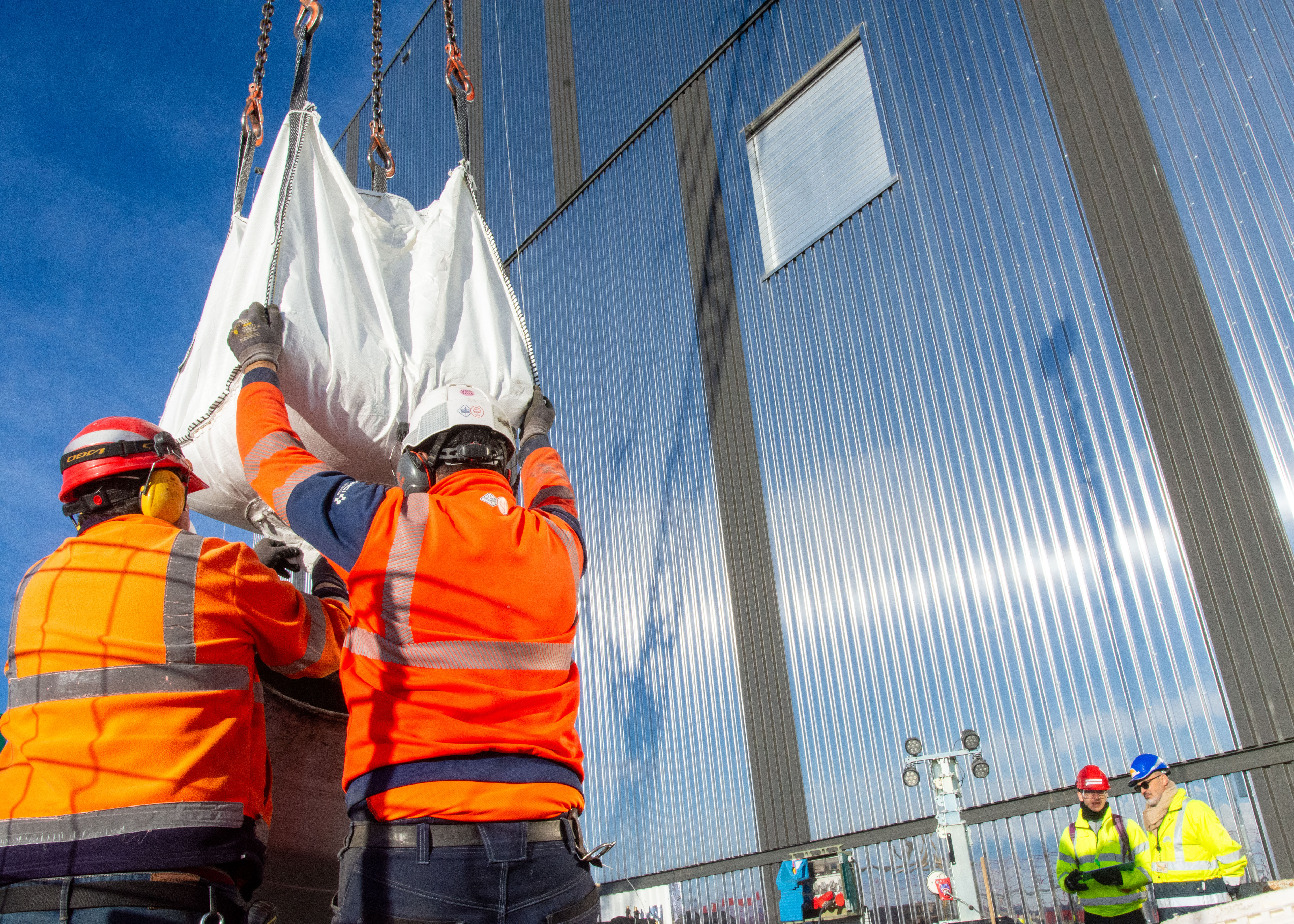
In total, 48 cubic metres of mortar were poured to provide a 20-centimetre-thick layer of radiation-shielding mortar on the floors of the two rooms. The work was subcontracted by Lemer Pax to the Italian company Monsud and began in early January 2026 with a tower crane hoisting 100-kilogram bags of the aggregate mix to the roof of the Tritium Building, where it was mixed with water and cement. It was then pumped along a 100-metre tube down into the SIC rooms. The project was completed in late January and the final step will be to add a 3- to 5-millimetre layer of hydrophobic coating in March.