
The shared dream of fusion energy
From Tokyo, my wife and I flew to Beijing to the Ministry of Science and Technology (MOST), where I met Vice-Minister Cao Jianlin to discuss the ITER project schedule, its cost, and human resource issues in depth. I expressed my sincere appreciation for China's continuous support to ITER and for their understanding of the series of reforms we have undertaken to ensure successful project implementation during the construction phase. Mr. Cao replied by reassuring me that China would keep to its commitments and complete its fabrication tasks on time. Besides in-cash and in-kind contribution, China is planning to strengthen its human resource support to the ITER Organization in the coming few years, including sending more visiting researchers and providing more expertise.
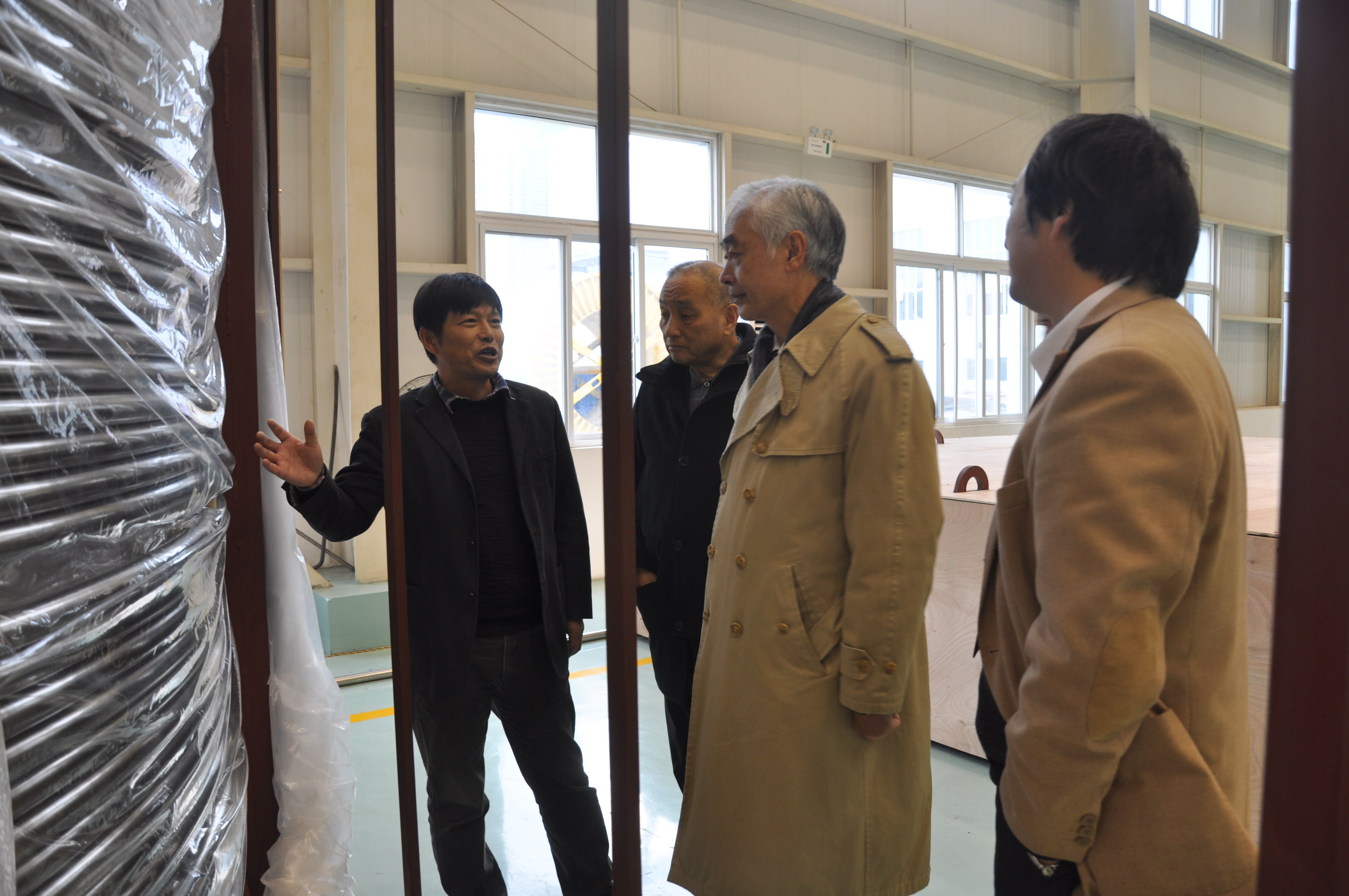
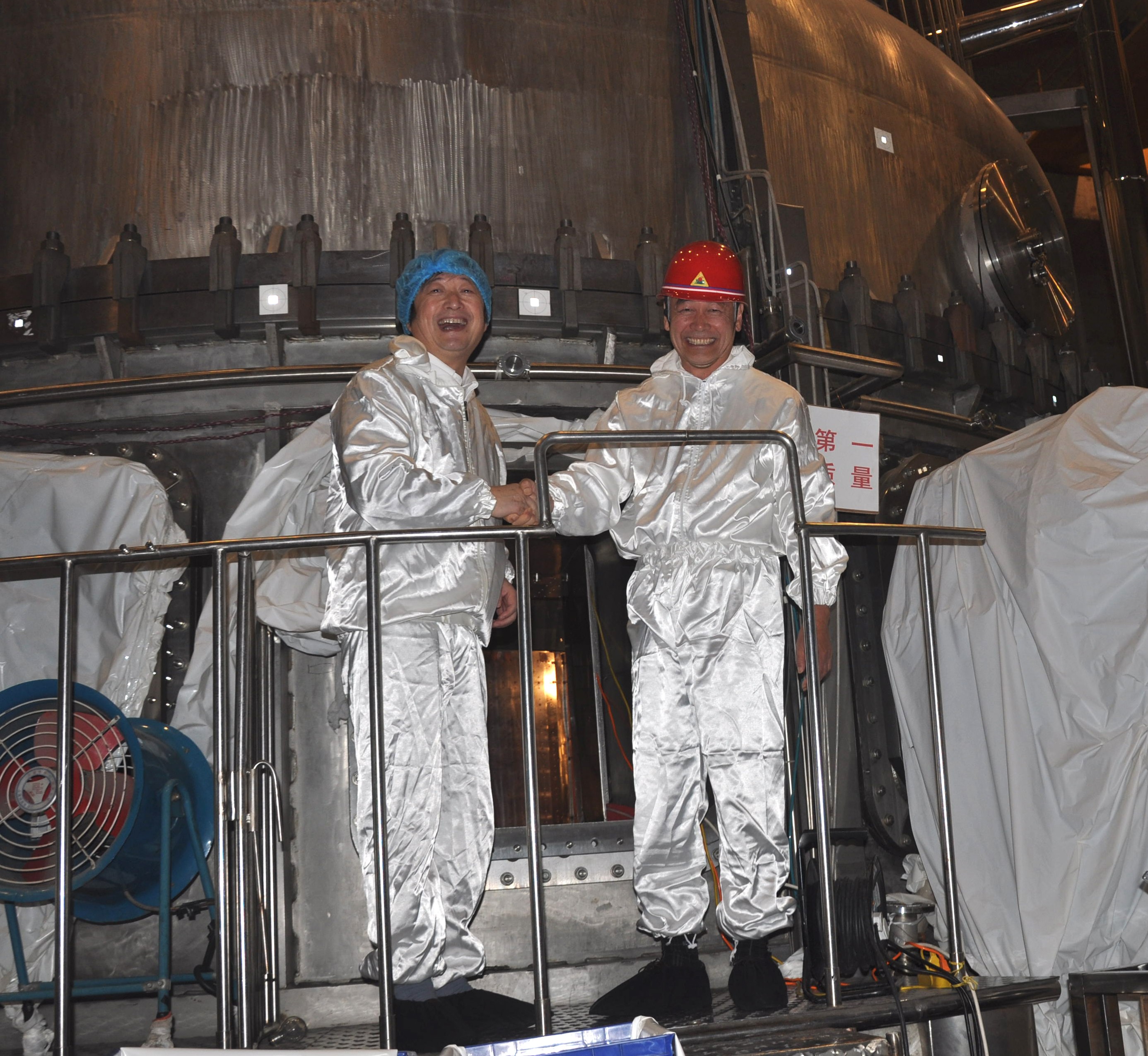
Hefei is the hometown of the Institute of Plasma Physics at the Chinese Academy of Sciences (ASIPP) and the home of the EAST tokamak. This was my first trip to ASIPP since attending the second EAST International Advisory Committee meeting in October 2006 and I must say that it was with both great pleasure and great excitement that I returned.
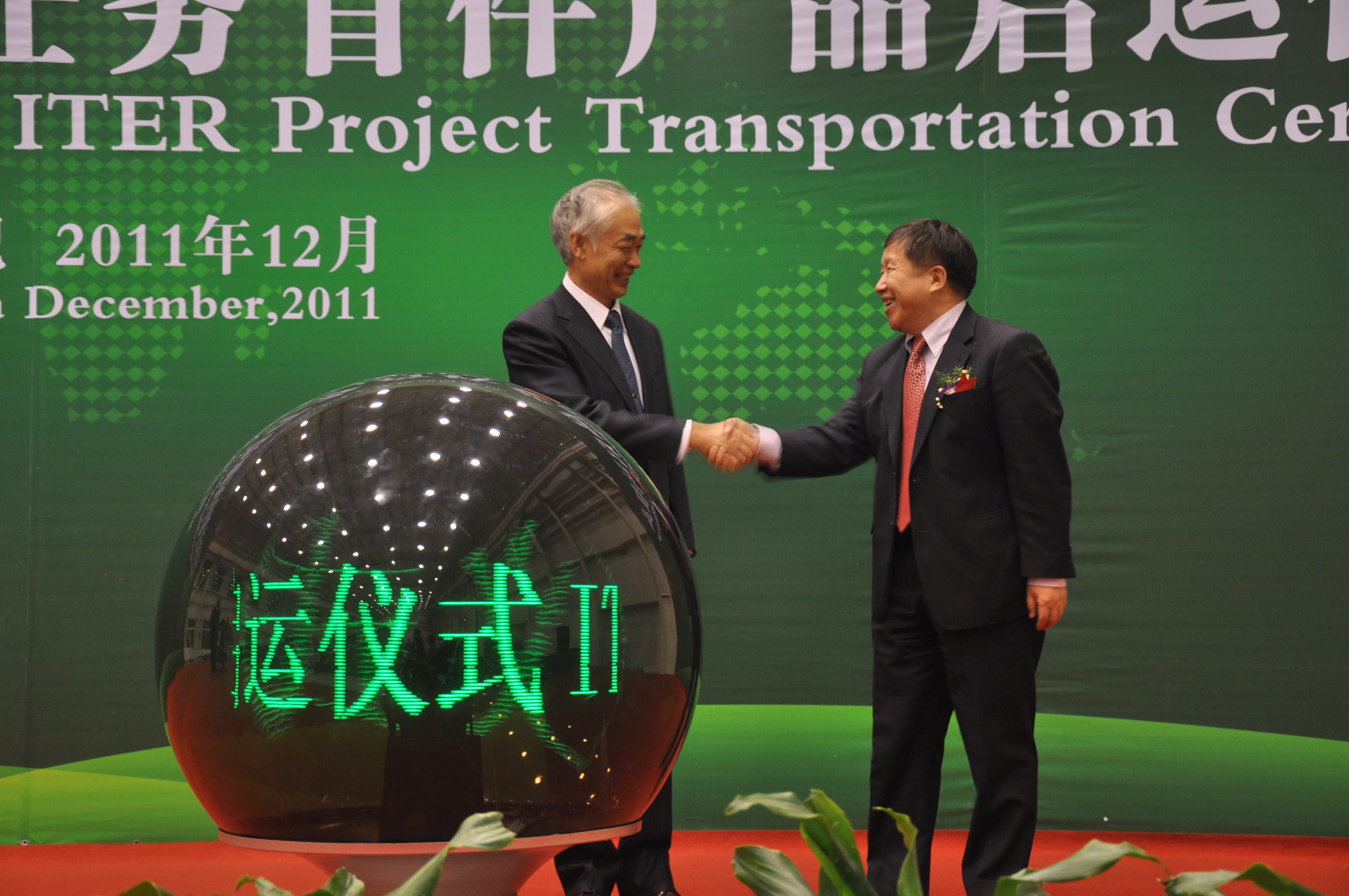
Needless to say, the ceremony in China celebrated a major milestone toward the success of the ITER project. In front of some fifty participants, I was invited—together with Vice Minister Cao Jianlin of MOST—to ignite an electric-optic ball (see picture) to symbolize the transport of the first component and the "ignition of the shared dream of fusion energy."
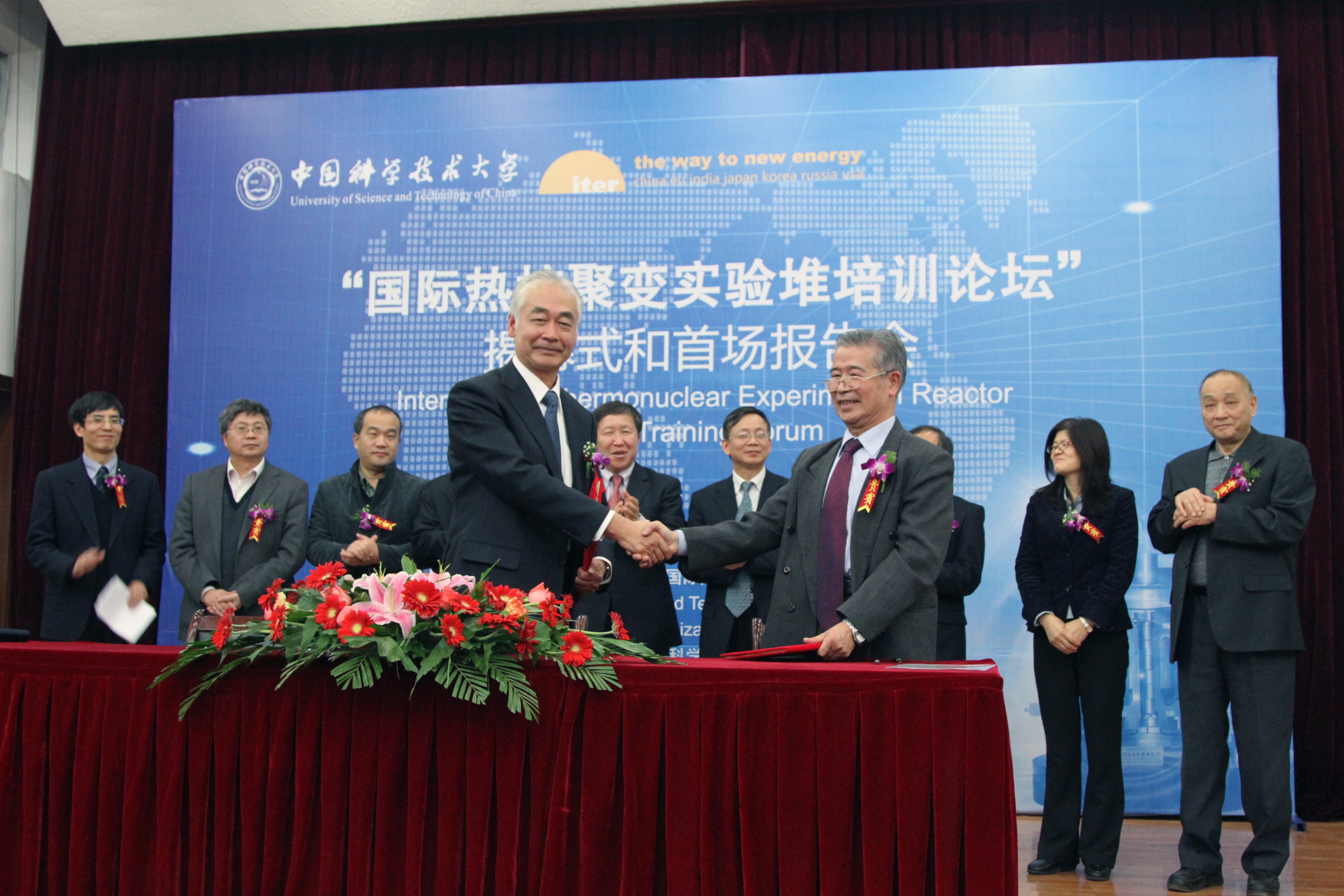
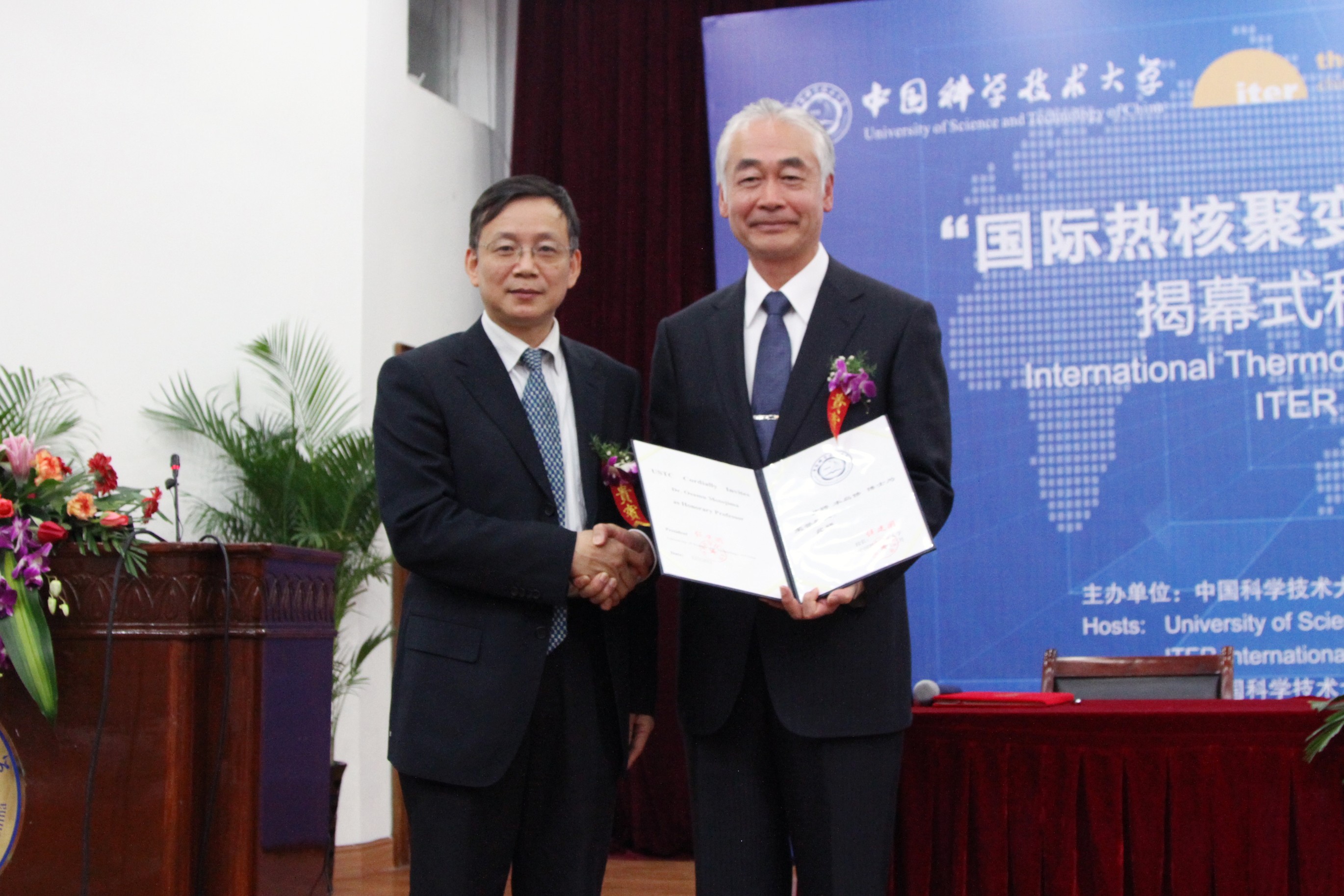
In order to promote academic and scientific cooperation between the ITER Organization and the USTC, President Hou Jianguo and I signed a Memorandum of Understanding. The key to our cooperation will be the training of young fusion scientists—a worthy pursuit which I also emphasized in the speech I gave on the occasion of receiving a USTC Honorary Professorship. I feel very honored receiving this commendation and I wish to thank President Hou and all the USTC staff once more for the nice arrangement and their hospitality.