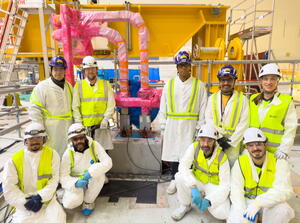
Blue goo, good to go
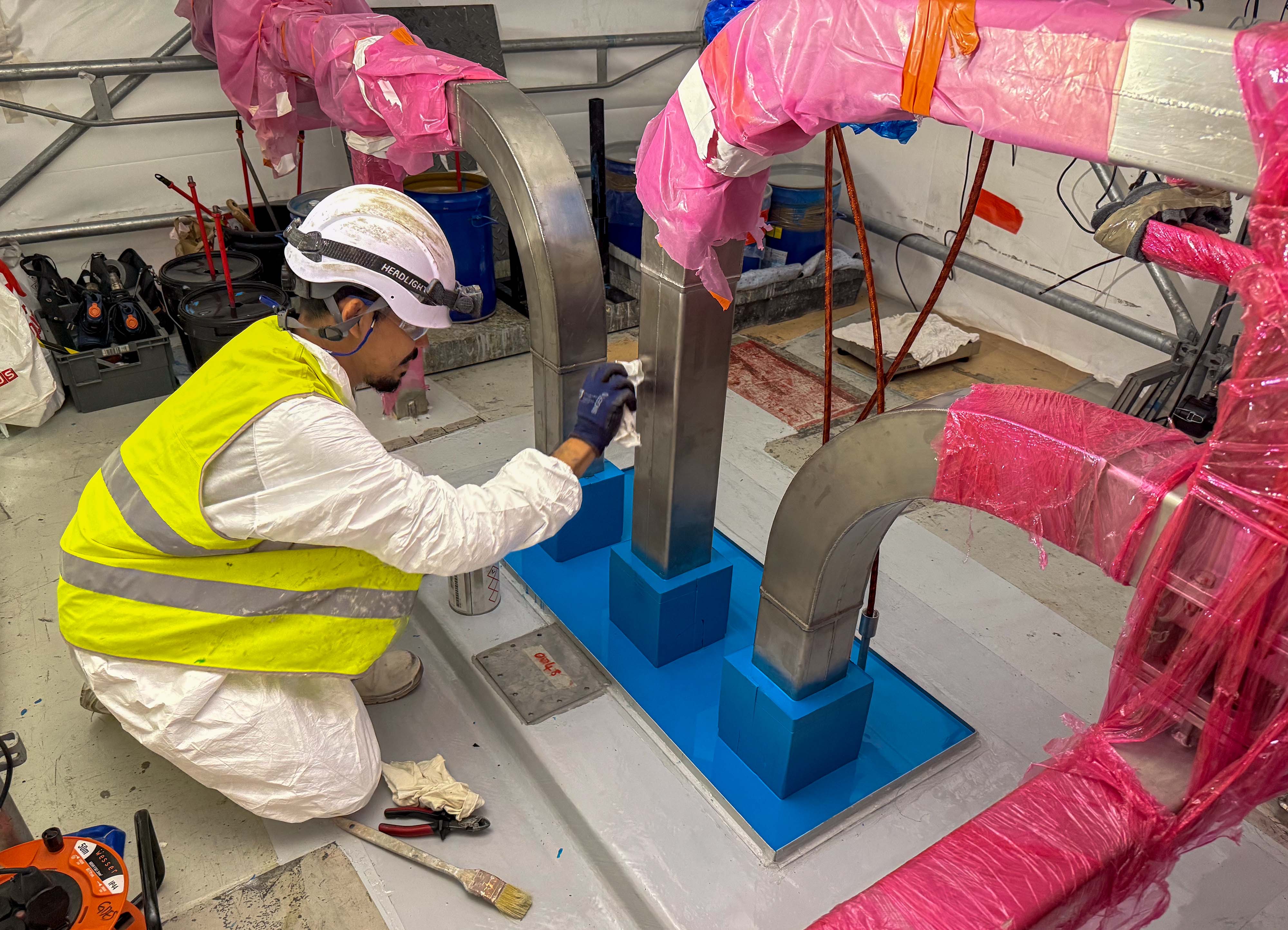
With a final dollop of vibrant Smurf-blue goo, another penetration benchmark was reached in December—the infilling of 15 busbar openings on the L3 and L4 levels of the Tokamak Building.

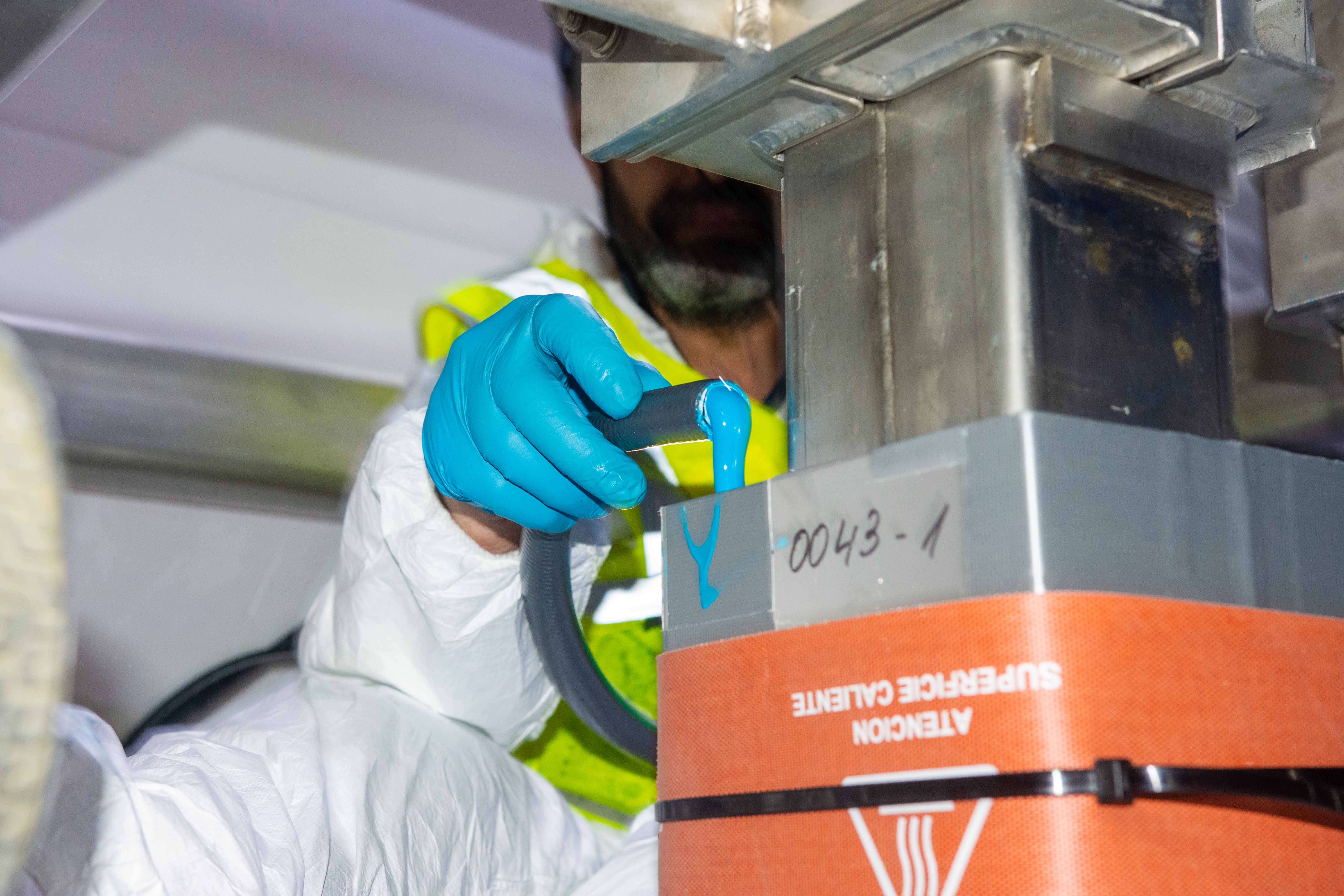
For this project, the infilling team spent months qualifying a bright blue elastomer produced by the Norwegian company Elkem to ensure it met the required fire segregation, radiation shielding, leak-tightness confinement function and other standards. Among other assessments, the fire qualification tests included heating the elastomer to 1100 °C in a specialized furnace and ensuring it did not permit a heat transfer in excess of 120 °C on the other side of the opening. By undertaking this qualification process, which was done in partnership with the Efectis laboratory in France, the teams ensured that future fusion construction projects can use this elastomer product from day one if they have matching safety requirements.
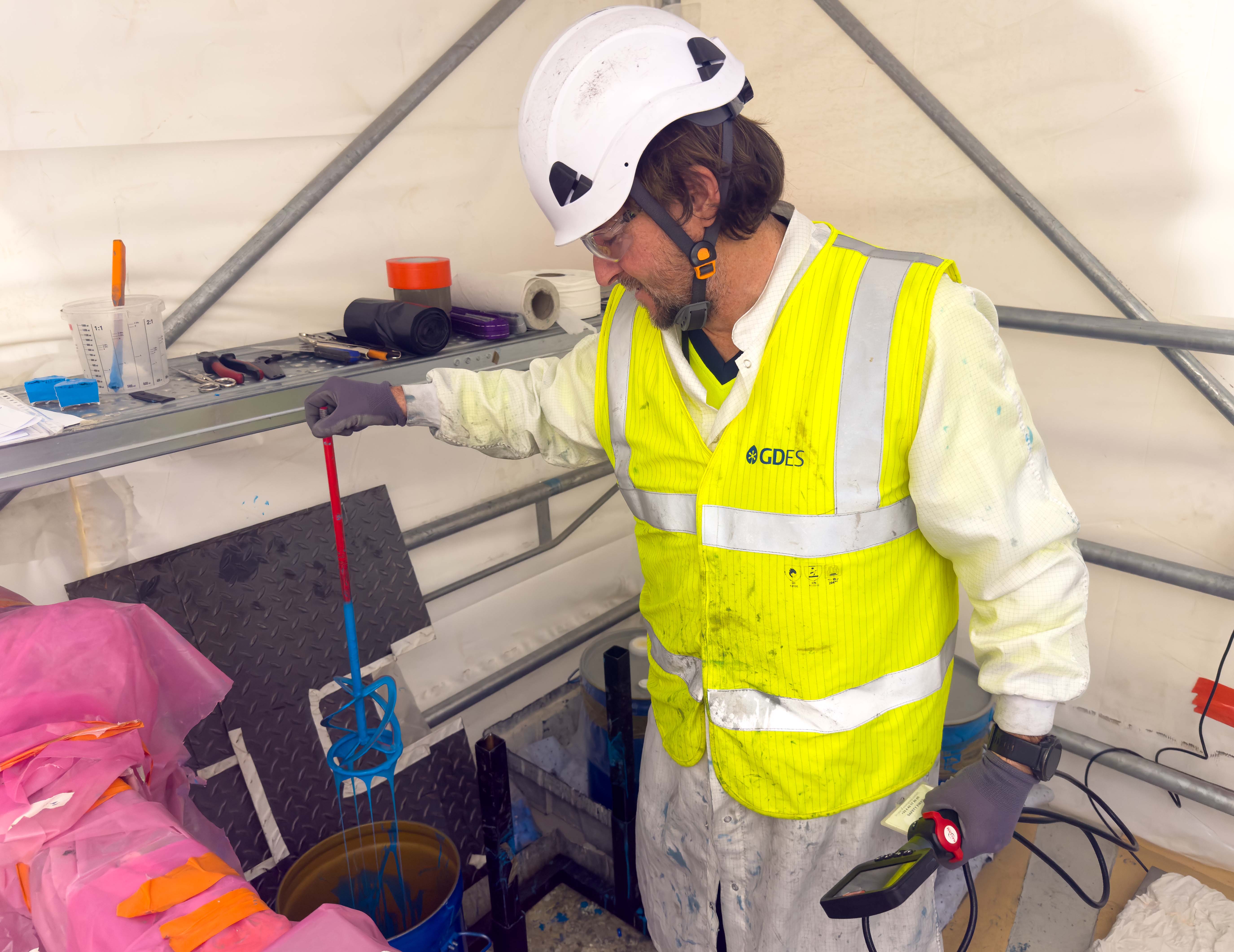
“This was the first time this type of infilling had been done at ITER, so we had a very complex problem and, together, we found a simple solution,” says Jose Manuel Sanchez Cuevas, the mechanical and piping supervisor who was the contract responsible officer for the busbar infillings.
There are thousands of small penetrations (openings) in the Tokamak Complex to allow pipes, cables and components to pass through walls and slabs. These penetrations need to be infilled using different solutions that meet the same safety and nuclear safety standards as the surrounding wall material.
As further infilling gets designed, ITER will spend many more months qualifying dozens of formulas to ensure they meet the safety requirements. At the end of these qualification efforts, a catalogue of products and solutions will be available for future fusion construction projects.
The infilling of the busbar penetrations with bright blue elastomer is part of a broader contract being fulfilled by the Spanish company GDES. The team is now turning its attention to a new set of 150 penetrations.