Standing tall
The placement of the final 110-tonne central solenoid module means the world’s largest pulsed superconducting electromagnet has now reached its full height.
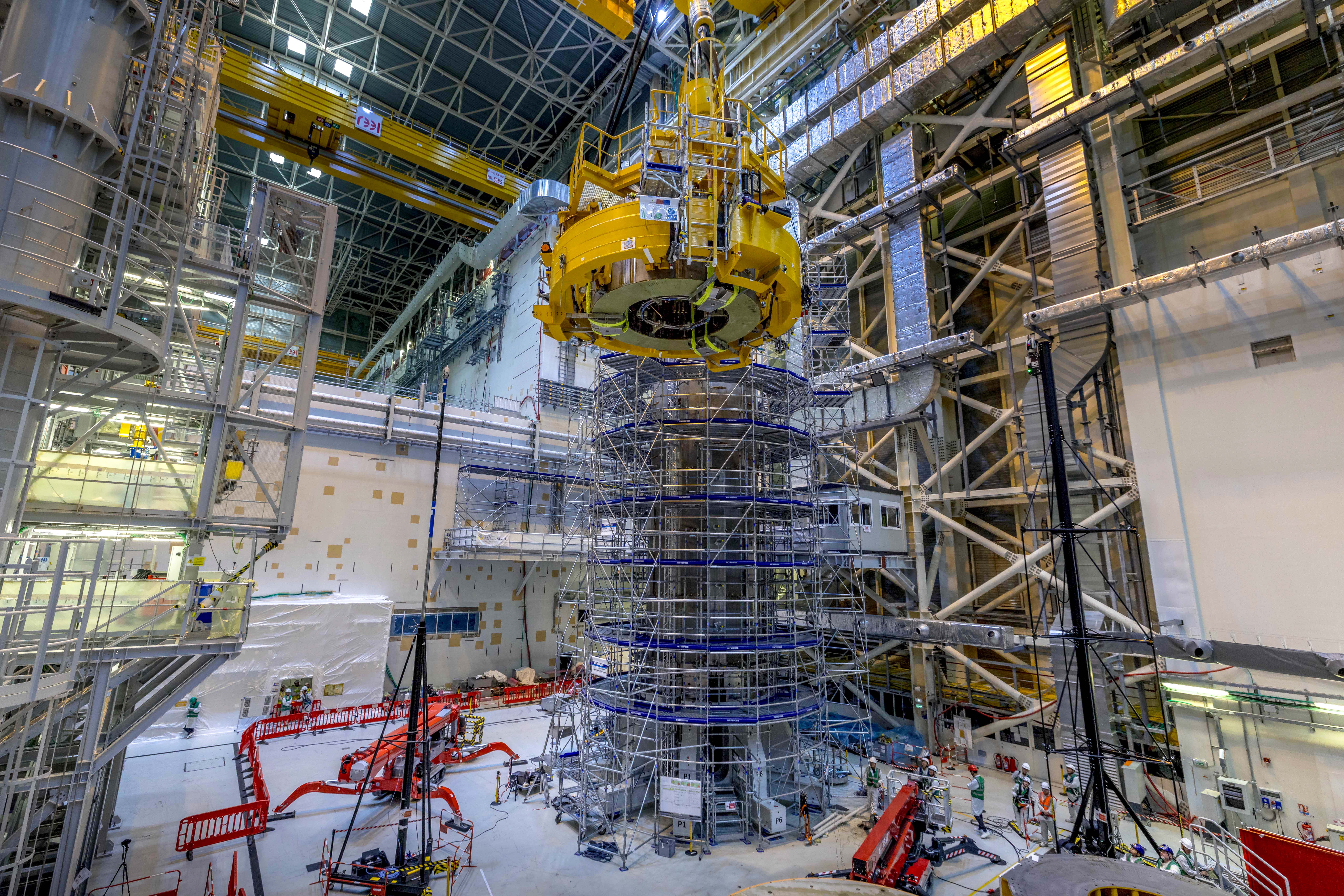
With the successful lift of the final module on 23 June, the stacking of the central solenoid—the powerful magnet at the heart of the ITER tokamak with magnetic force strong enough to raise an aircraft carrier out of the water—is now complete. While crucial technical work remains before the magnet is ready to be transferred into the tokamak pit, the completed stack is a landmark moment for the project and represents the culmination of years of international coordination for the manufacture, transport, and assembly of the component’s magnetic core.
“This was a critical operation and thanks to the excellent work of the well-integrated technical team we have reached an important assembly milestone,” says Patrick Petit, ITER’s In-Cryostat Assembly Project Leader. “This success is a concrete demonstration of the effective cooperation between ITER and its partners.”
Standing 18 metres tall and weighing almost 1,000 tonnes, the central solenoid will induce the plasma current needed to initiate and help control the fusion reaction inside the tokamak. Procured by the US Domestic Agency, the central solenoid’s six main modules and one spare module were manufactured by General Atomics in California using niobium-tin superconducting conductor produced in Japan.
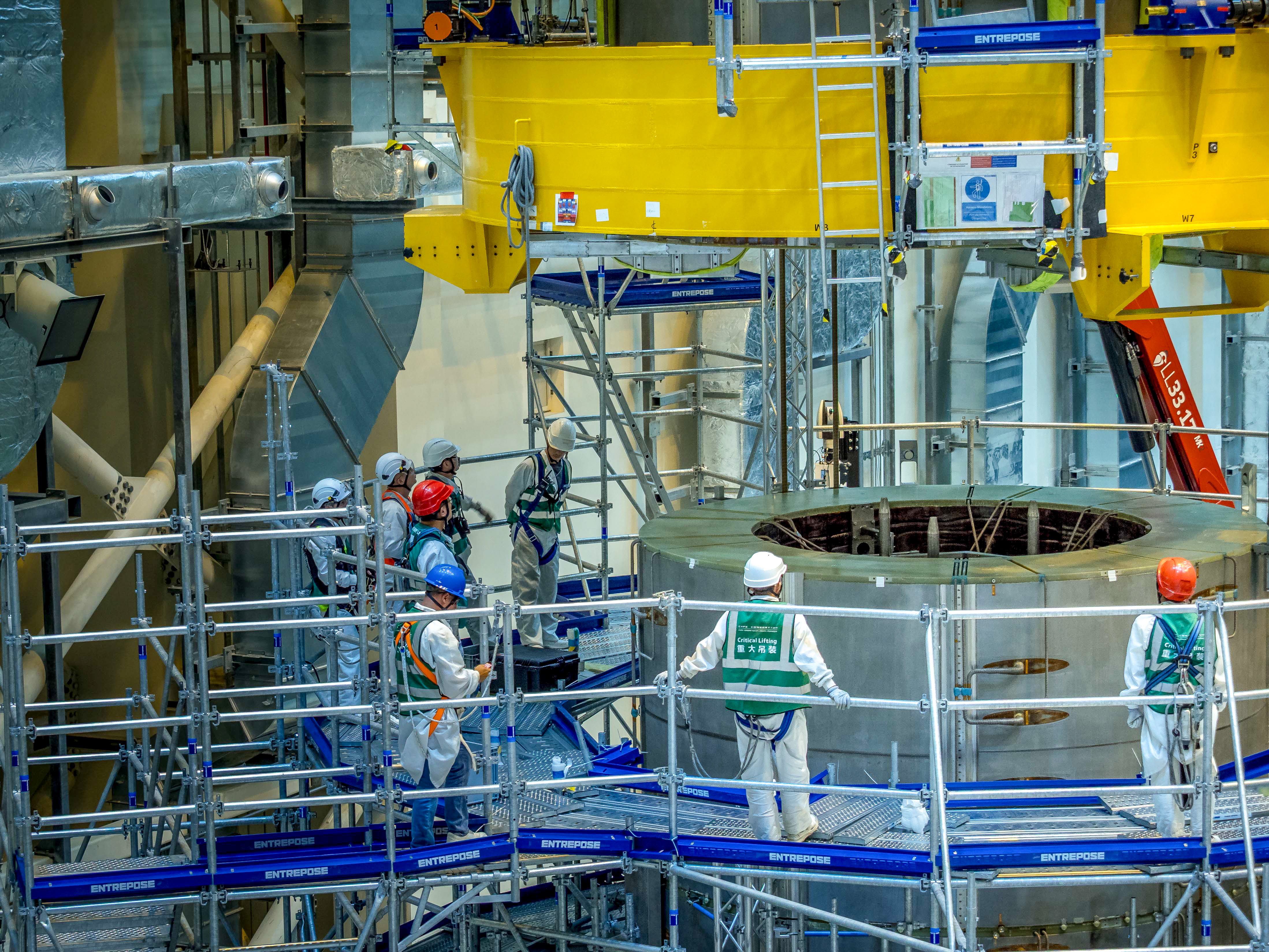
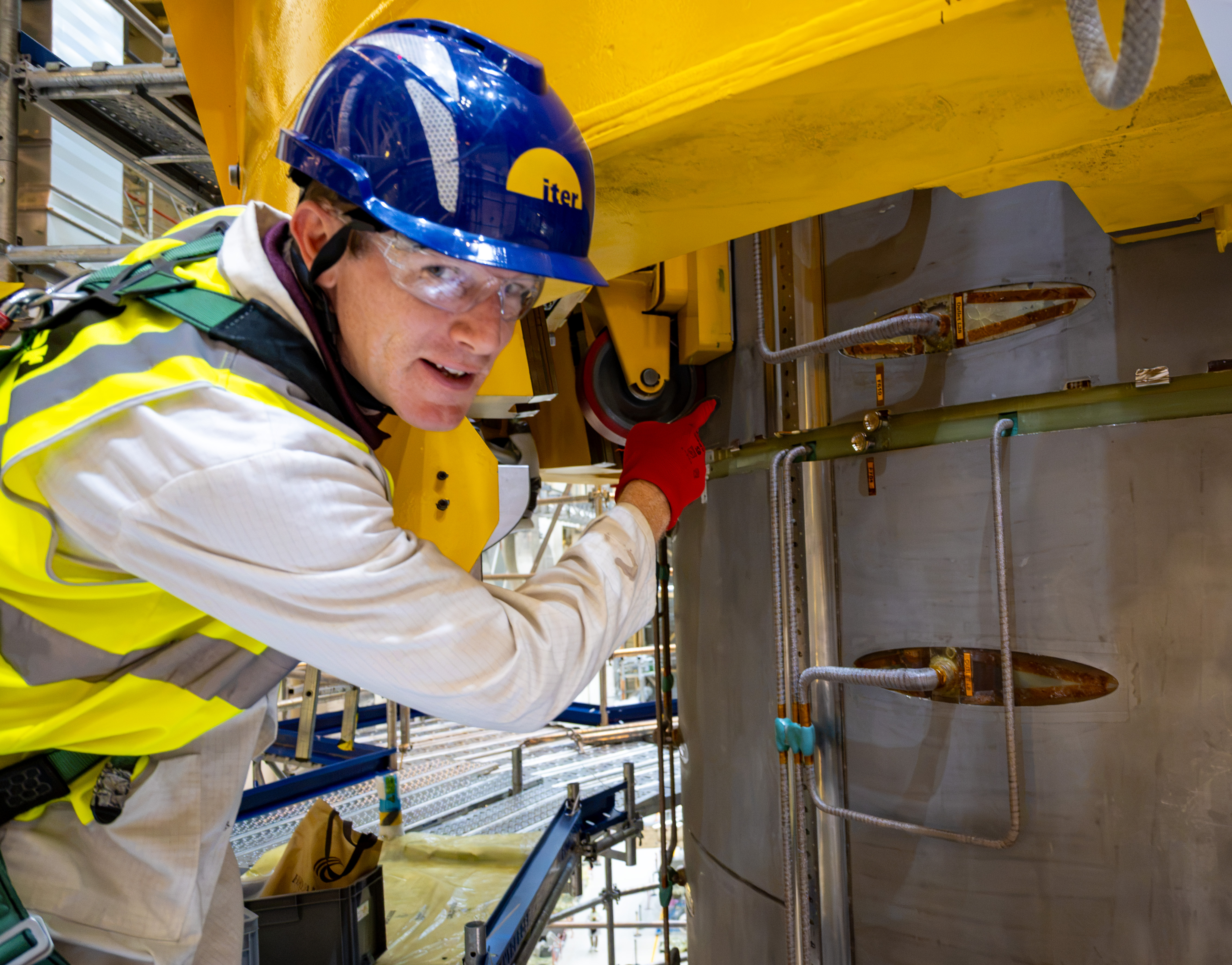
The final lift was a demanding operation. After being raised above the five modules that were already stacked, the 110-tonne component had to be lowered into place between busbar leads with clearances of just 50 millimetres on one side and 65 millimetres on the other.
“Each module had slightly different clearances and the final module was particularly interesting because it’s the top module and required a unique installation path and a rigorous metrology effort to avoid the busbar leads from the two previously installed modules,” says Carl Cormany, the ITER superconducting engineer who supervised the operation. “We’re happy with how the lifting operation went and having the six modules in place is a major accomplishment. But things are moving quickly so we’re already looking ahead to the next phase of activities on the central solenoid.”
Indeed, although the stack has now reached its full height the assembly campaign is far from complete. Engineers will next carry out a detailed survey to verify the alignment of all six modules before connecting piping, installing instrumentation, assembling the tie plate system that will provide structural support, and compressing the stack into its final operating configuration. These activities are expected to continue for more than a year.