Putting welding tools to the test
Three machines that are essential for vacuum vessel welding activities are being put through their paces as ITER’s Trial, Test and Training Facility begins official operations.
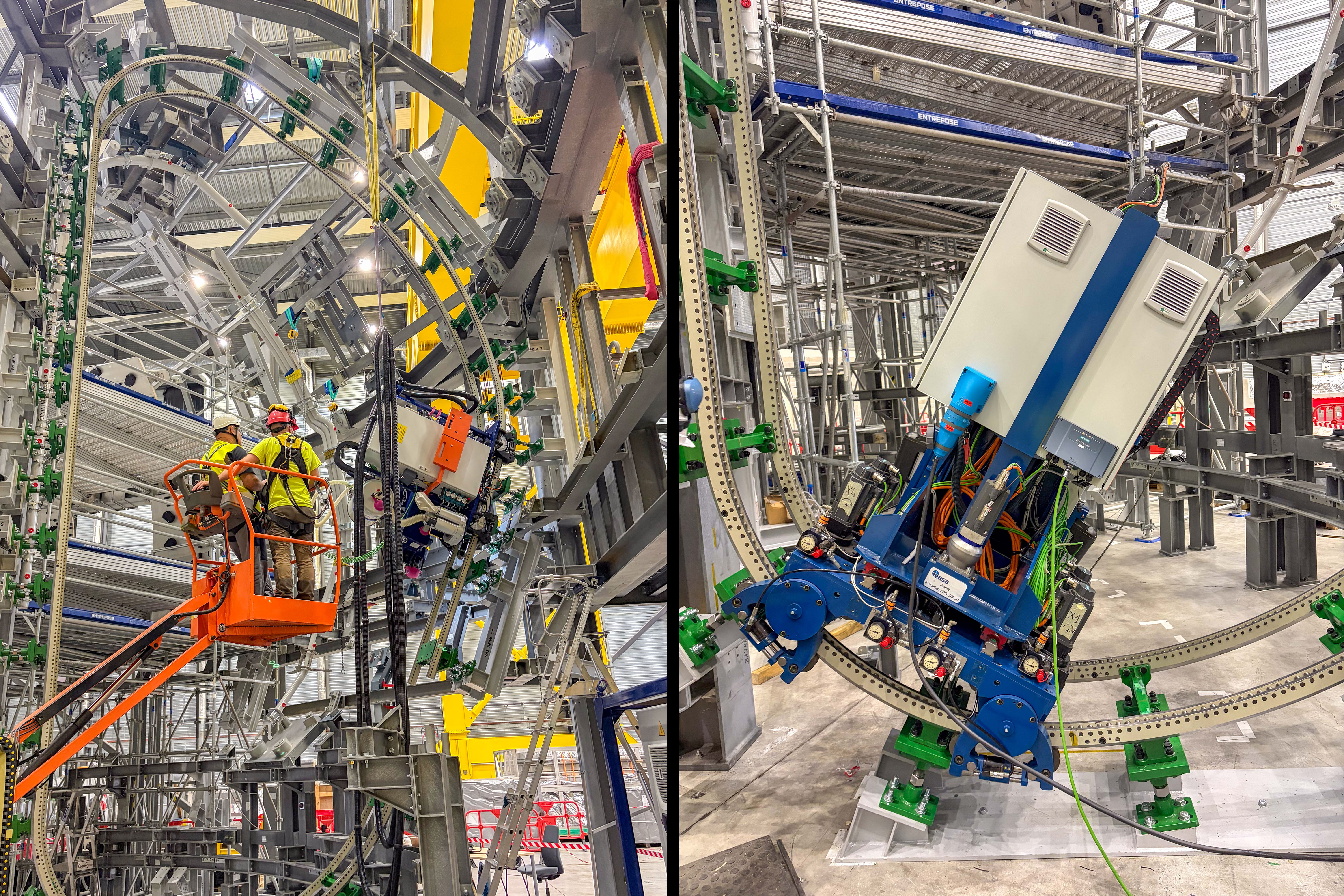
When work begins to weld ITER’s nine vacuum vessel sectors into a single plasma chamber, different machines will be deployed to perform tasks such as verifying the welds are structurally sound or scraping away excess weld material. To ensure these machines are ready to perform when called upon, they are now being tested in one of the replica vacuum vessel sectors at a test facility on the ITER site.
“This testing allows us to de-risk first-of-kind operations,” explains Daniel Coelho, the project coordinator who is overseeing part of the vacuum vessel welding program. “You can learn a lot from 3D models, but if you don’t do a physical test, you are going to miss things. Thanks to our first trials, we’ve learned what is working perfectly and where there are weaknesses. This allows us to improve the machines and the different processes before the welding begins.”
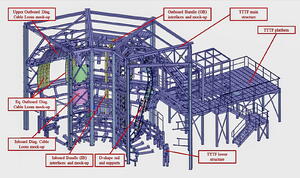
The Trial, Test, and Training Facility is a 500-metre-square facility located in a building across from ITER’s Tokamak Complex. It features replicas of three vacuum vessel sectors that have been individually customized to meet different training needs: one for in-vessel diagnostics and instrumentation, one for in-vessel coils and blanket modules, and one for welding activities.
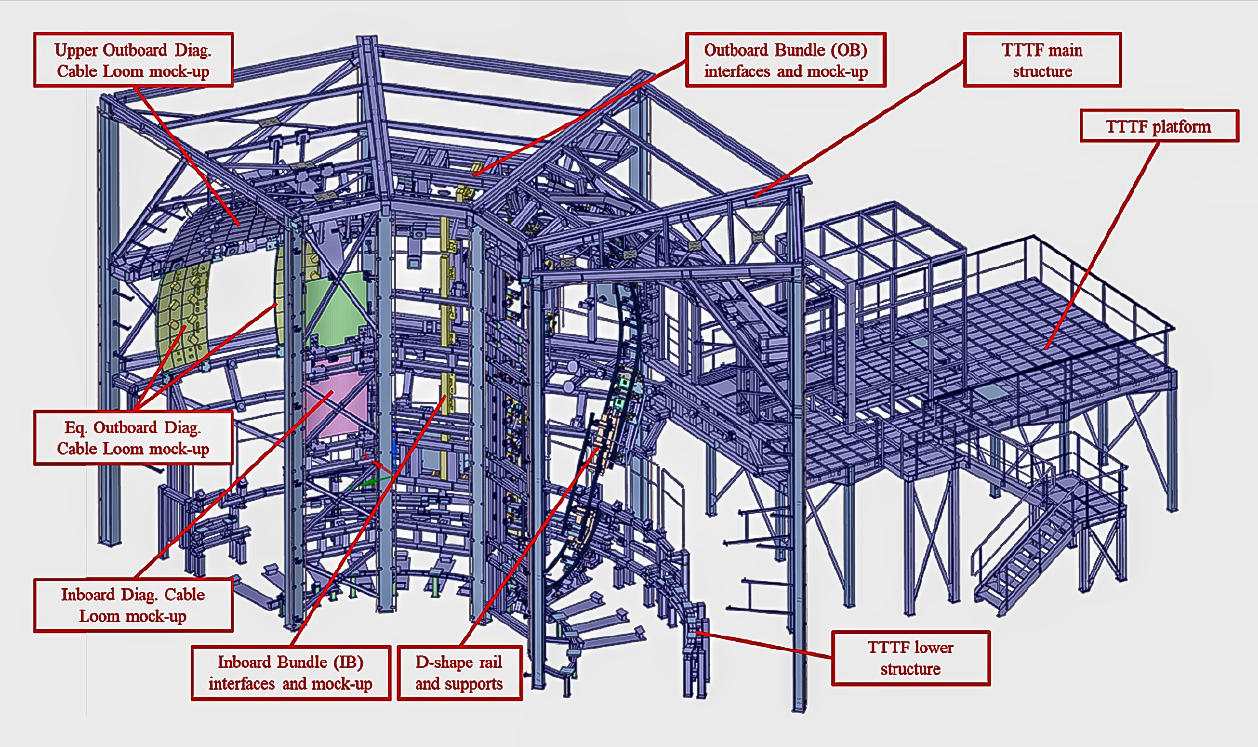
Official activities were launched at the facility in July and the first testing campaign involves three machines that are scheduled to be used in early 2028 after the vacuum vessel welding campaign begins:
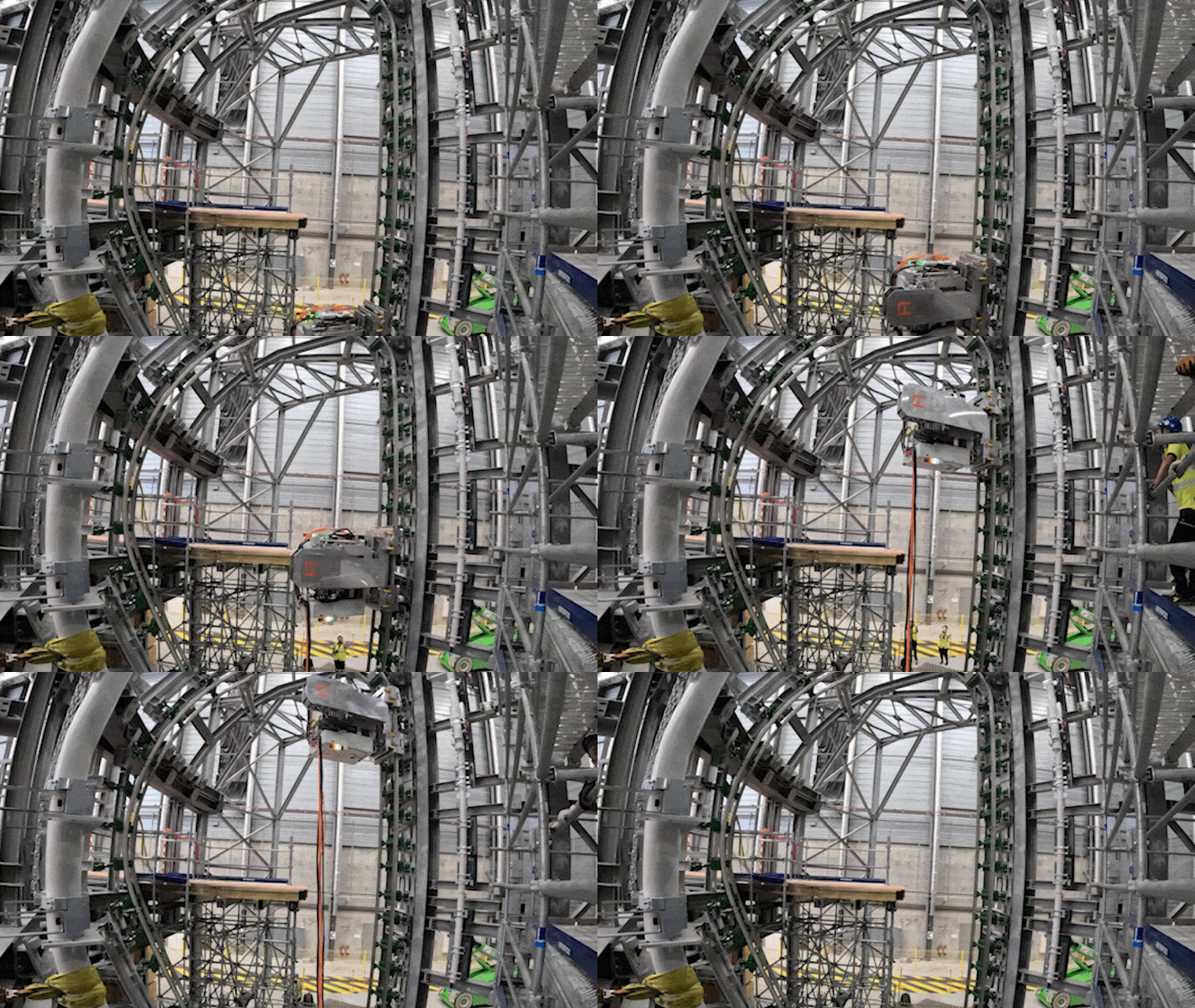
* The LINAC (for LINear ACcelerator) will travel along rails inside the vacuum vessel to perform non-destructive testing of welds using high-energy x-rays. Trials are underway on the trolley that will carry the beam head, with initial results identifying improvements to the interface that will allow it to navigate the rails more easily.
* The milling machine CRENO creates holes for “biscuits”—round splice plates that provide structural continuity and leak tightness along the joints where the sectors are welded together. It also can remove material from a splice plate or biscuit if a weld defect needs repairing. The first tests showed that the machine’s narrow wheelbase is well suited for manoeuvring the tighter bends in the D-shaped rails.
* The splice plate positioning system is a specialized machine used to accurately position the splice plates that will be welded across the joints between two sectors to provide mechanical strength. Initial testing revealed the machine had a shortage of clearance with the rail at certain points, so design modifications will be implemented.
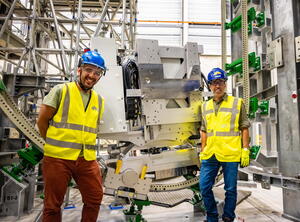
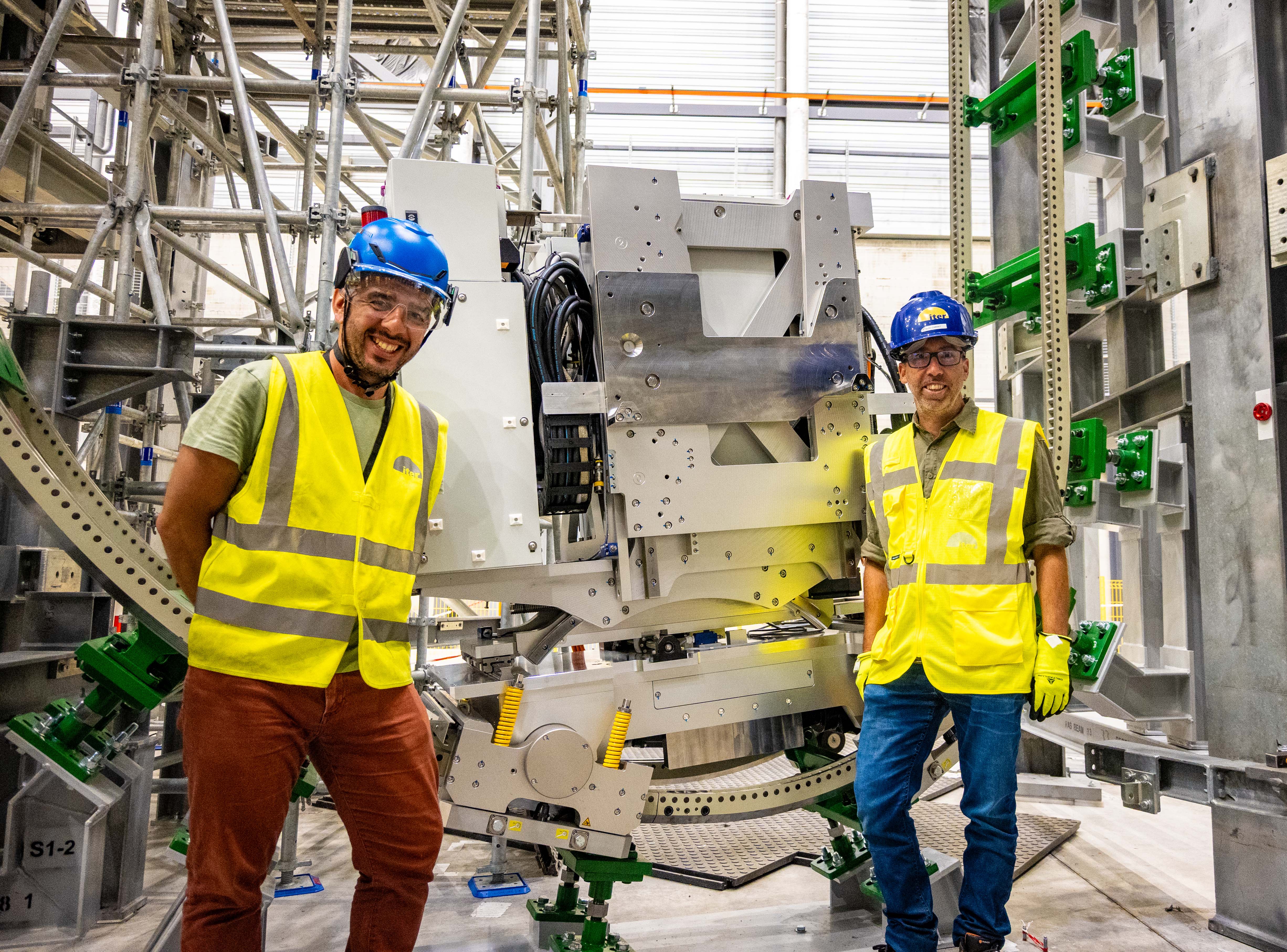
“We are really happy with the results and the fact that we found imperfections during testing, because should we discover them in the tokamak pit there would be a schedule impact, a cost impact, and an organizational impact,” says Coelho, who coordinated the testing of all three machines. “The more of these problems we can catch in 2026, the easier our life will be in 2028.”
Activity at the Trial, Test and Training Facility will continue in the coming months. Testing of the welding machines will run until November while preparations are being finalized on another replica sector so that training can begin for the installation of instrumentation and diagnostics.
“It has been a big project to get the facility ready for operations,” says Claudio Fichera, the ITER mechanical engineer overseeing the facility. “We have the capacity to adapt each replica sector for specific training and testing functions that are needed at ITER, so we hope to welcome even more activities in the years ahead.”