Holding steady
Before lifting a 1,300-tonne sector module from the assembly tool into the tokamak pit, all the components must first be perfectly secured to prevent movements or damaging clashes. This is where the bracing tool system comes into play.
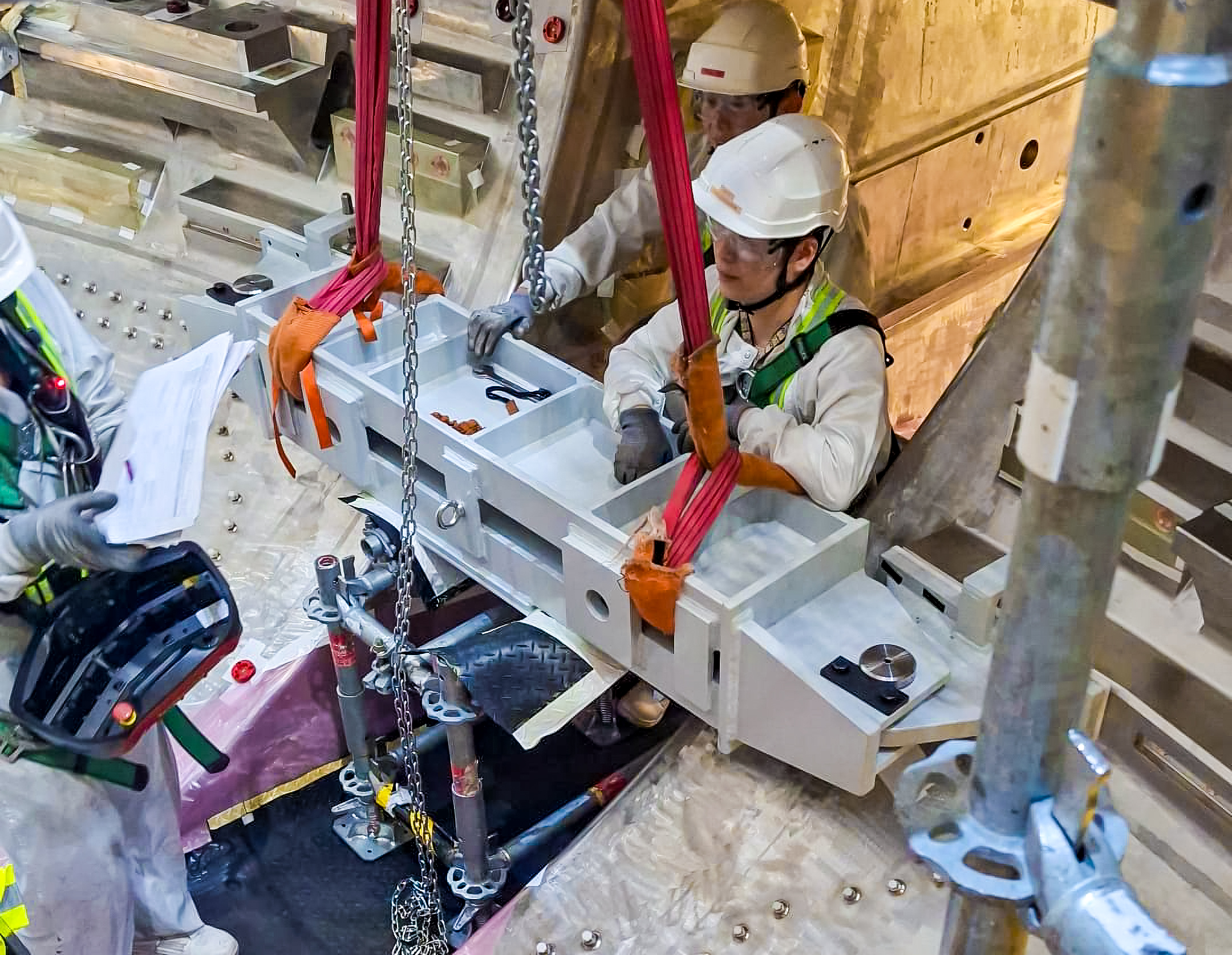
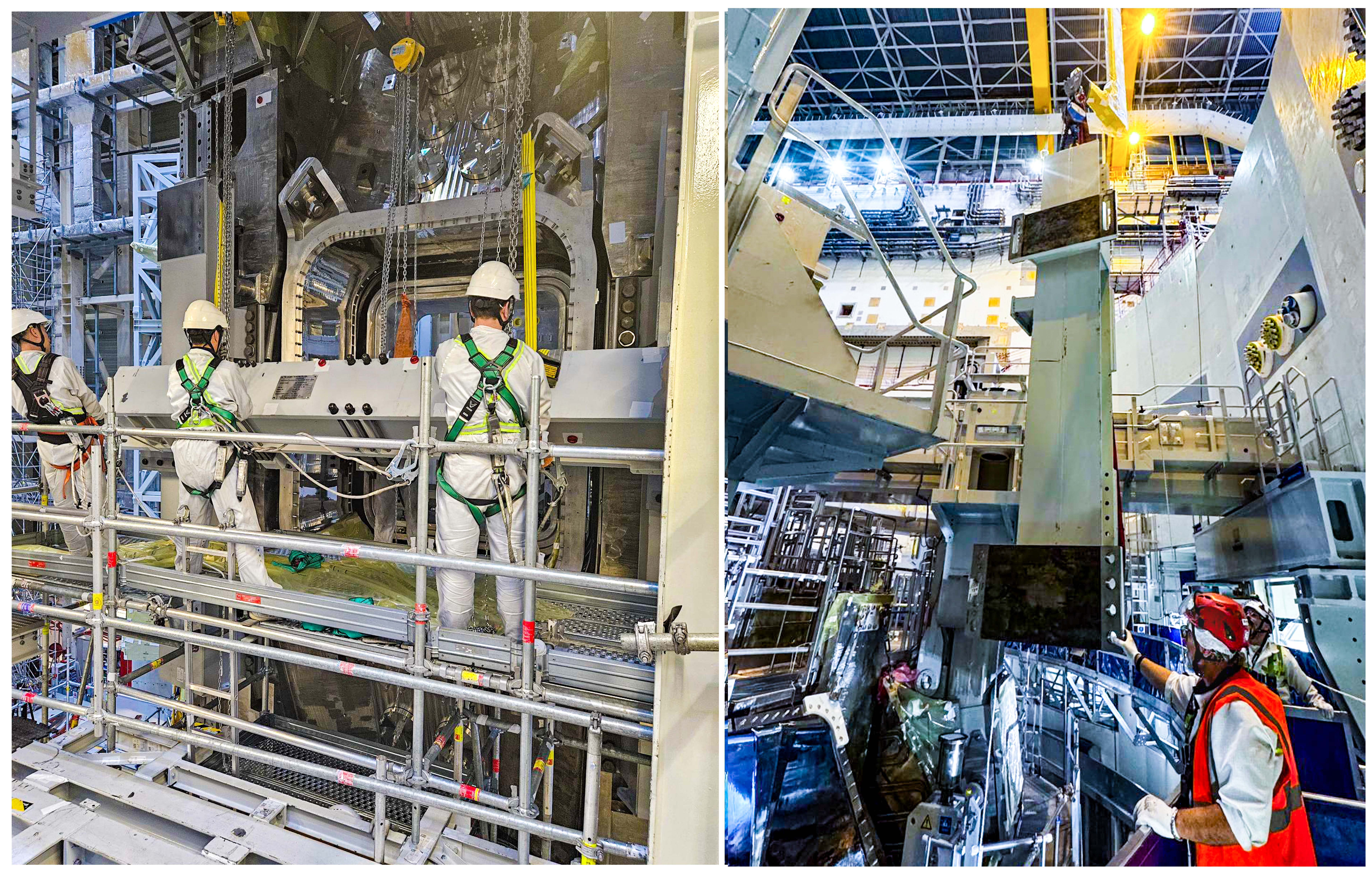
In a process resembling a giant game of Jenga, the bracing tools that kept sector module #7 steady and safe during its lifting operation have been successfully disconnected and removed from the tokamak pit.
ITER’s plasma chamber consists of nine sector modules that are each composed of three main elements: a vacuum vessel sector, two toroidal field coils, and vacuum vessel thermal shield panels. However, while the coils and vacuum vessel sector are associated in tooling, there is no permanent connection between them as they will operate independently in the tokamak pit. Instead, a series of temporary braces are attached to maintain strict separation and alignment so that no damage is caused to components by the swaying movements that occur during the lift.
“The components have different centres of gravity, and these bracing tools keep them in good balance during the lift while maintaining the proper displacement between them,” says ITER Assembly & Installation Engineer Pablo Garcia Sanchez, who helped develop the bracing tool system. “Once in the tokamak pit, the bracing tools also serve to prevent any damage to the components in the case of possible seismic activity before they are properly ‘landed’ and attached to stability clamps.”
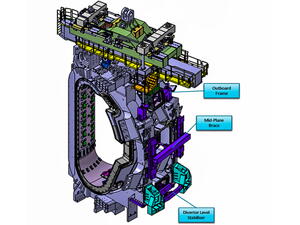
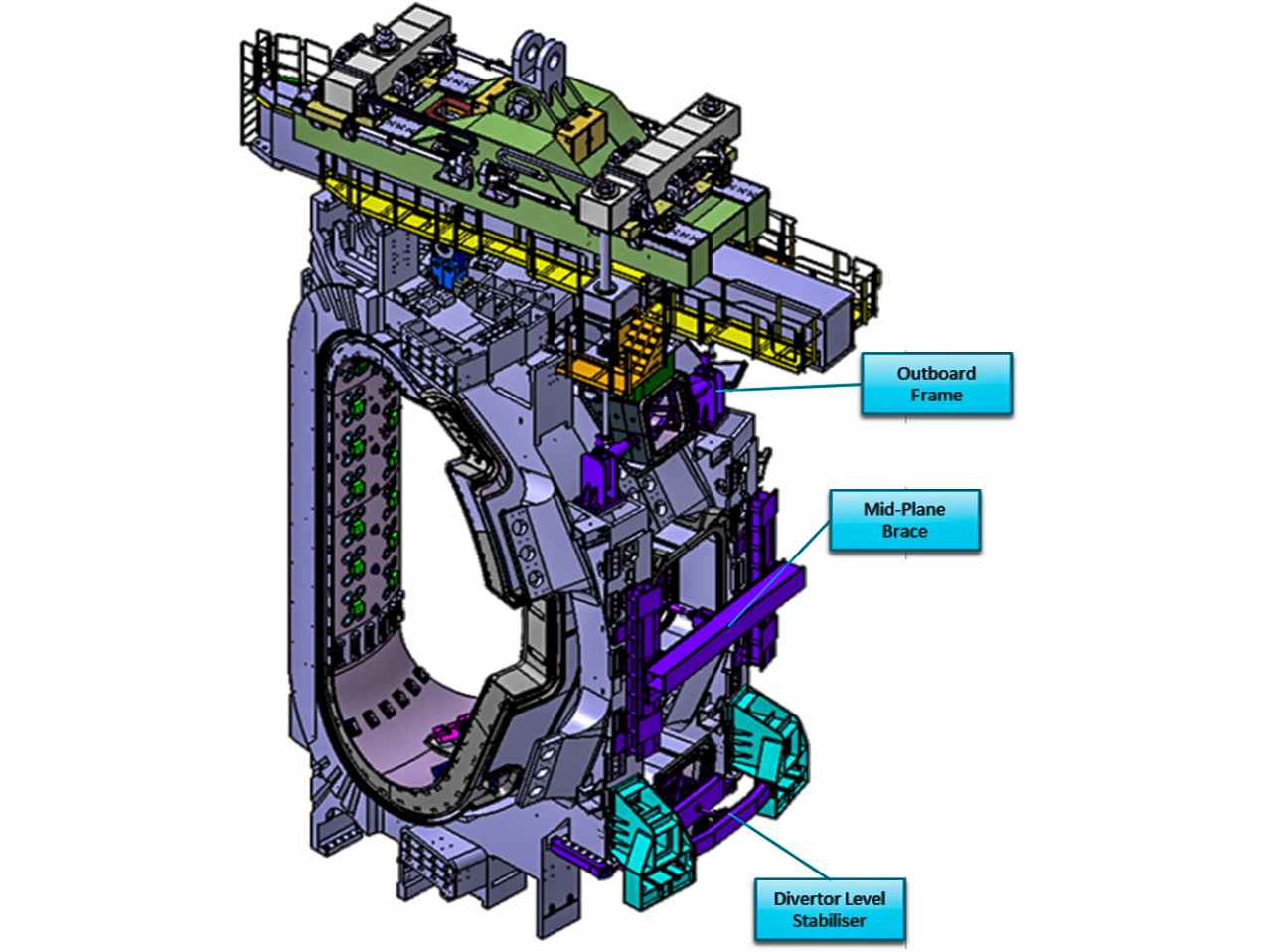
Bracing tools are installed at the top, mid-plane, and bottom of each sector module, in a sequence of operations that lasts several weeks due to the size and weight of the bracing tools.
However, the true challenge—requiring scaffolding, rails, hoists, and counterweight lifting tools—comes when the bracing tools need to be disconnected from the installed modules and removed from by crane from the tight confines of the tokamak pit. The most difficult bracing tool to access is inner jaw beam, which is attached on the inside of the vacuum vessel sector as part of divertor-level stabilization and needs to be lifted and guided out of the module while navigating incredibly tight turns.
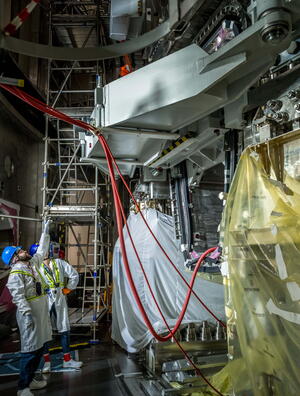
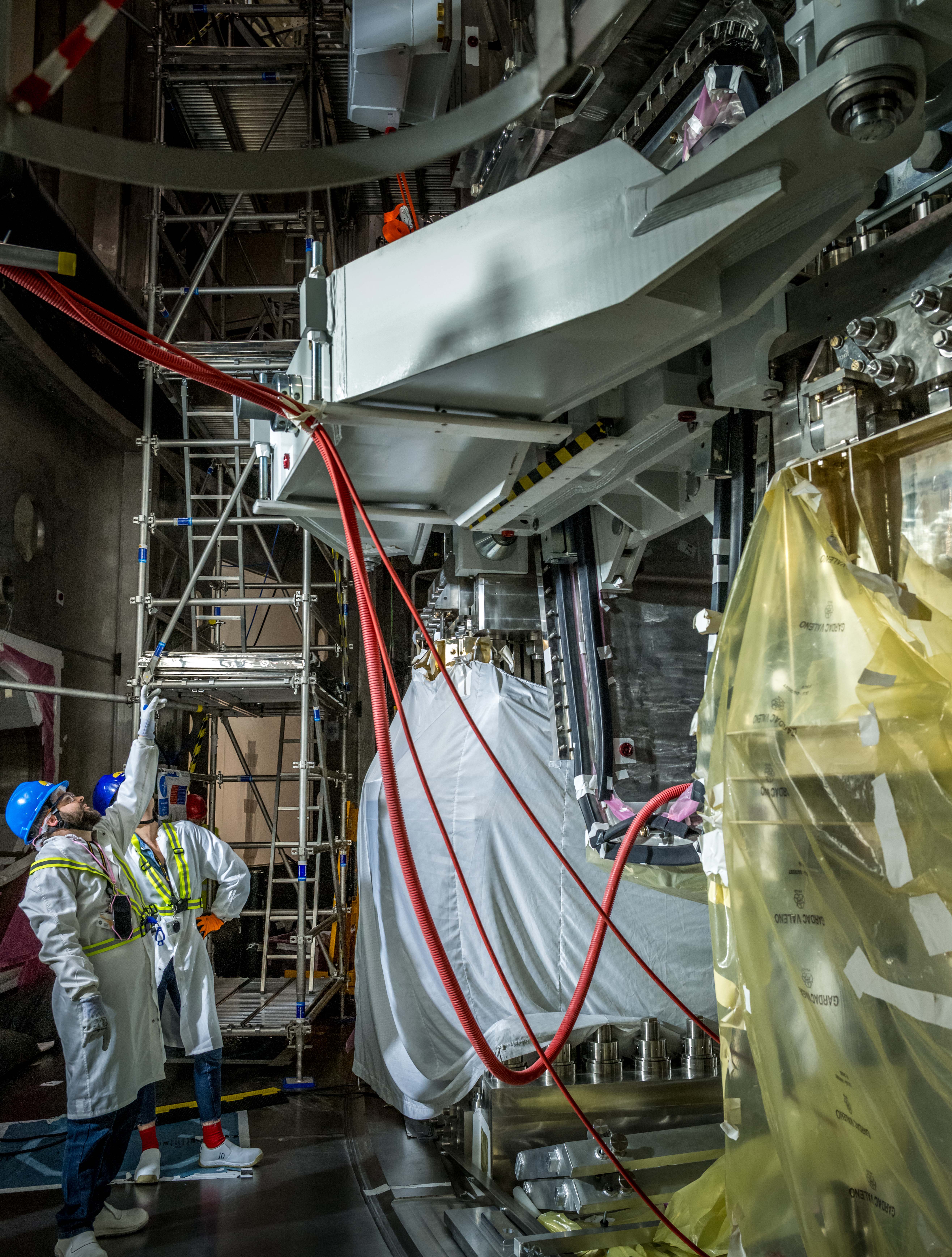
“This last phase is particularly complex because everything depends on precise positioning,” says ITER Assembly Coordinator Grégoire Daumy. “If scaffolding placed to access the bracing tool for removal is off by just a few millimetres, the inner jaw beam won’t pass.”
The removal of the bracing tools is an essential step, because the vacuum vessel load can’t be transferred to dedicated gravity supports while the sectors are still connected to the toroidal field coils.
Sector module #6 was the first to have its bracing tools detached and removed from the pit in a process that was completed in January 2026. For sector module #7, the last brace was removed on Monday 13 April. The team will now turn its attention to the removal of the bracing tools from sector module #5.