Practice makes precision
With the installation of the first interface panel, the Trial, Test and Training Facility is moving closer to hosting full-scale practice sessions for in-vessel assembly.
Just like every major football team has both a home stadium and a practice field, ITER will have a one-to-one-scale replica of the inside of three vacuum vessel sectors where teams can train for vital tasks such as installing in-board diagnostic cables (“looms”), welding sector modules, and attaching blanket shield blocks.
“Having this facility onsite means we can train for complex, first-of-a-kind installation activities in an environment that matches the specific space constraints of the tokamak,” explains Claudio Fichera, the ITER mechanical engineer in charge of overseeing the Trial, Test and Training Facility. “Practicing will improve efficiency and help assess how much time each installation activity requires so we can have a more accurate assembly schedule.”
A first version of the test facility was built in partnership with the industrial solutions company CNIM, and the testing and training took place at its site near Toulon in the south of France. In 2024, the decision was made to bring the facility to ITER to facilitate access for installation teams and improve oversight of training activities. The “bare-bones” steel structure was disassembled, shipped to ITER, and then, with support from the contractor Cegelec, reassembled inside the former Cryostat Building, only about two hundred metres away from the actual tokamak.
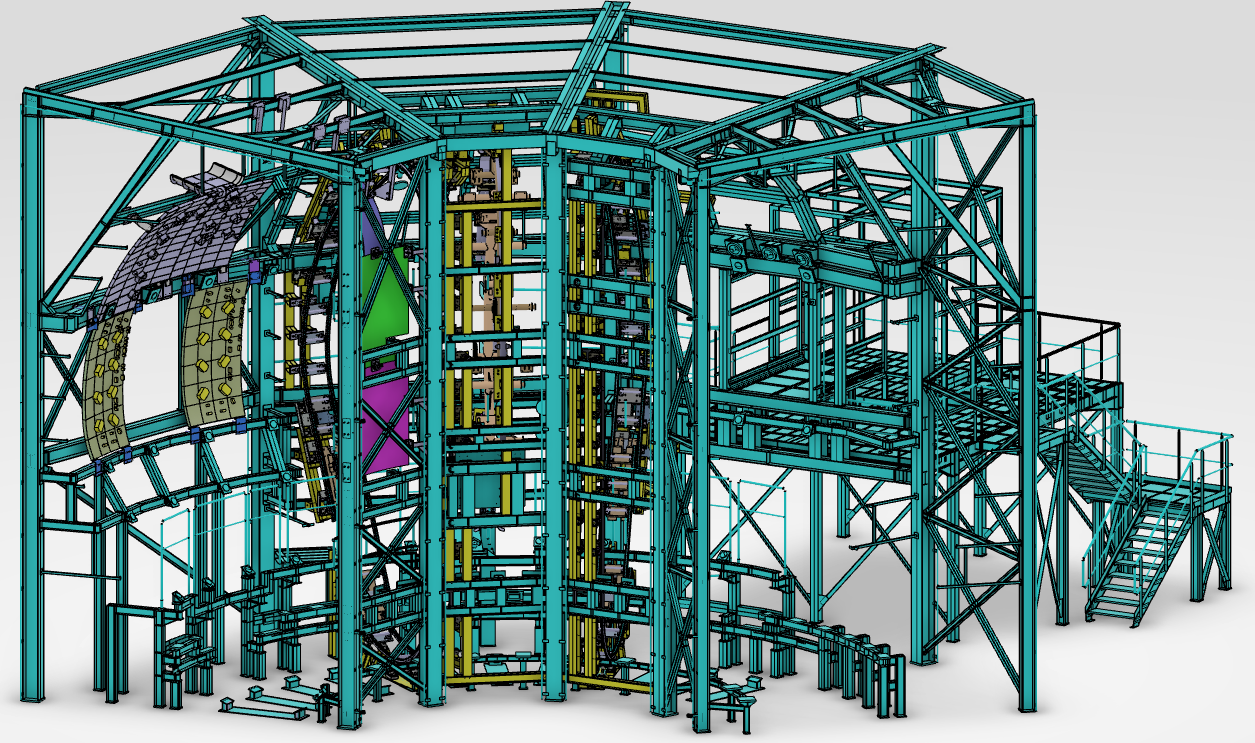
The move of the structure to ITER was also an opportunity to adapt the facility so that a more diverse range of training activities could be conducted. In the current configuration, the 500-metre-square facility will feature three replica vacuum vessel sectors that have been customized to meet different training needs:
- One sector will be configured for the in-vessel diagnostic, fuelling, and instrumentation team to allow it to test the installation of components such as in-vessel looms, thermocouples, and diagnostic sensors.
- One sector will be reserved for the in-vessel coils and blanket team to practice installing components such as blanket modules, shield blocks, and in-vessel coils. This set-up will include a tower crane and cherry picker for handling components as well as tracks at the bottom of the sector for the movements of these tools.
- One sector will be dedicated to the delivery, repairing, and welding team to practice welding activities. This sector will be equipped with D-shaped rails so that the automated LINAC (linear accelerator) tool can move across the full inner surface to perform radiographic testing on the welds.
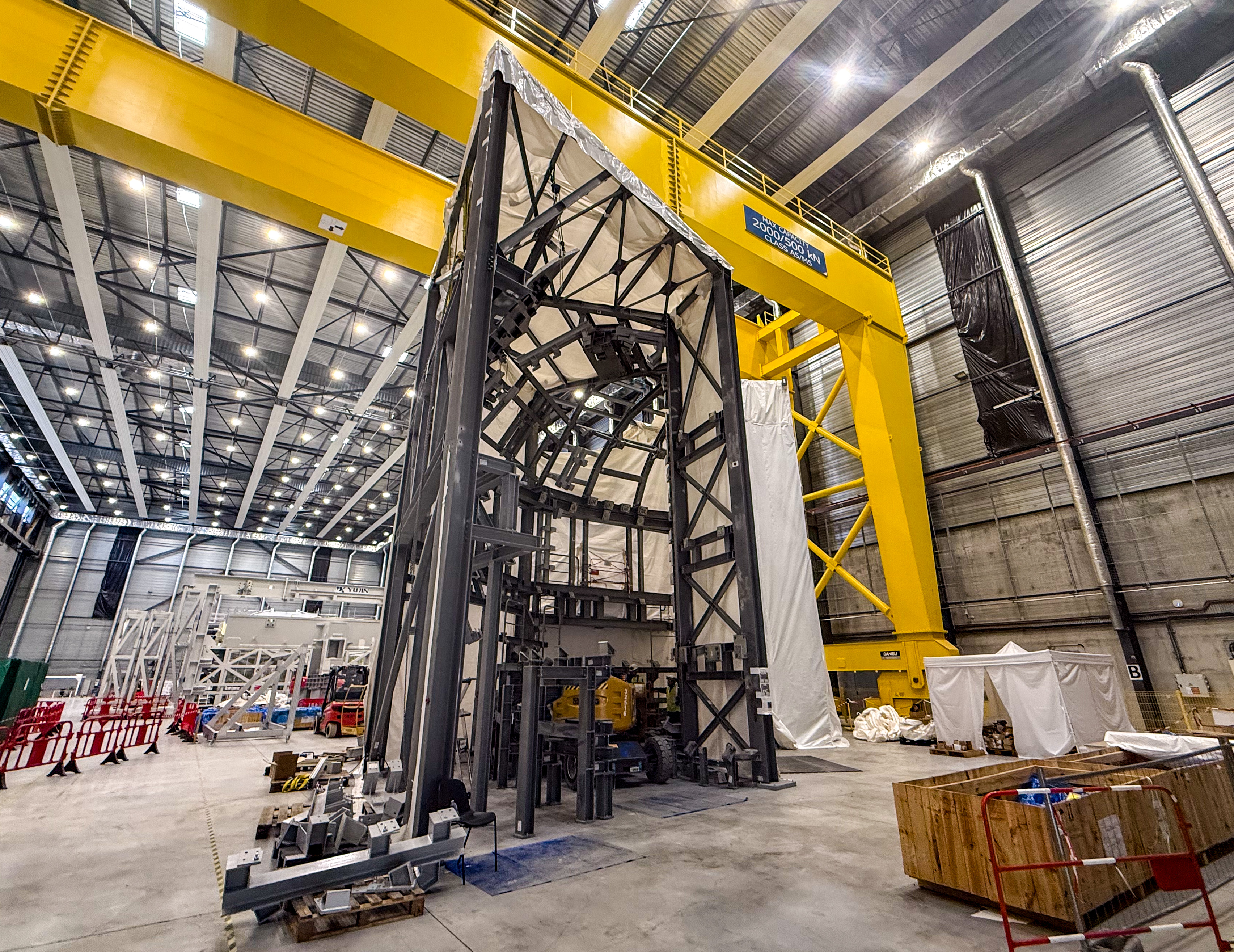
The Trial, Test and Training Facility also has a replica port cell and port extension to allow training on the “through port” transfer system and its monorail that will bring components into the vacuum vessel.
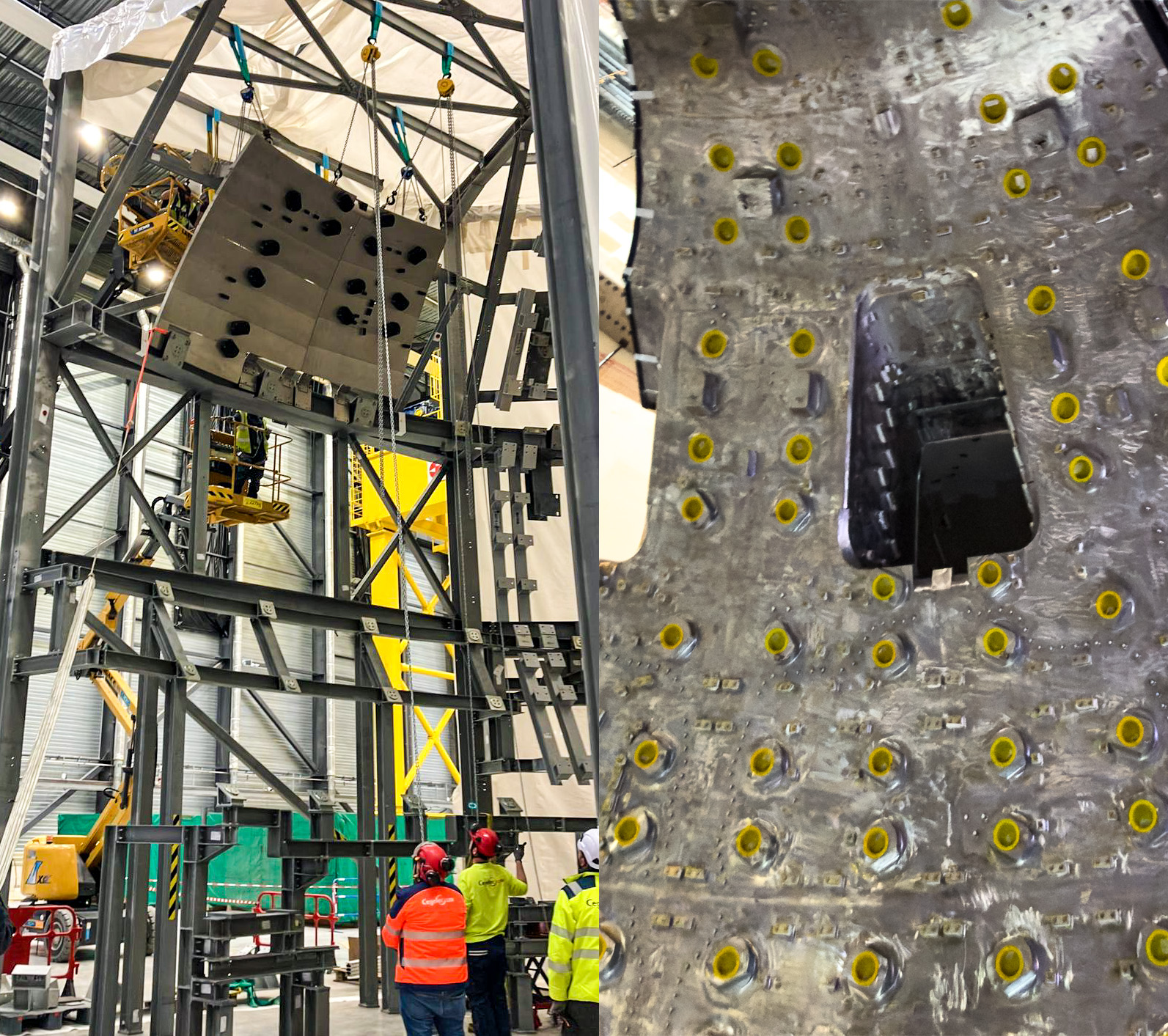
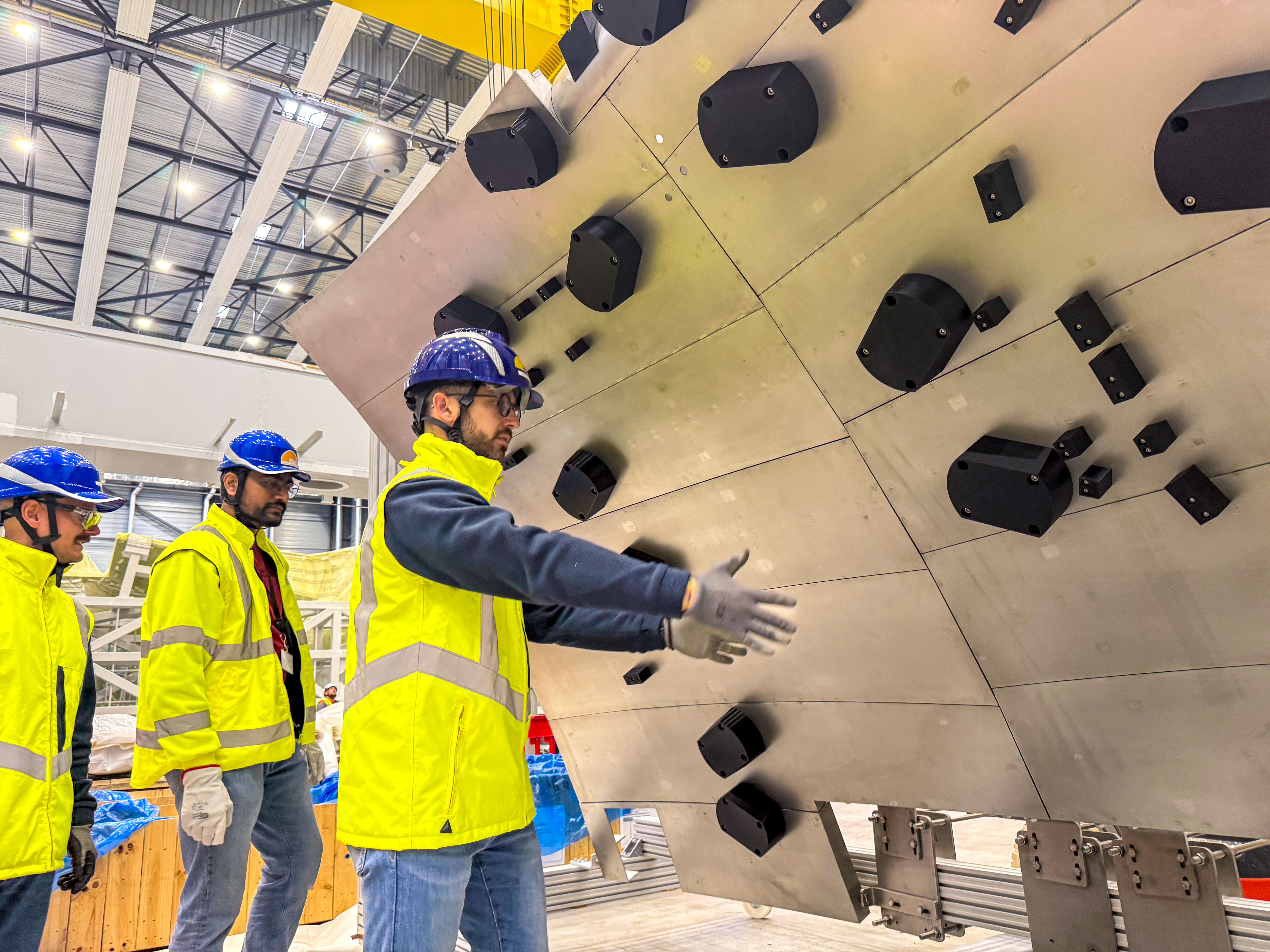
On 27 March, the first purpose-built panel was installed on the structure devoted to in-vessel diagnostics to replicate the environment the operators will face in the upper outboard region of the vacuum vessel. Equatorial outboard panels and inboard panels will follow, and teams will start practicing with the installation in-vessel looms in June. These cables will carry diagnostic information from inside the tokamak and they need to be crimped and installed in meticulous patterns on the interior surface of the sectors.
“We need all personnel who are installing in-vessel components to be fully trained and qualified because these are unique processes,” says magnet engineer Davide Macioce, who is supervising in-vessel diagnostic, fuelling, and instrumentation training. “We don’t want people installing a loom cable in the tokamak if it is the first time in their lives that they are picking one up.”
The Trial, Test and Training Facility is scheduled to host training until the early 2030s and may welcome other types of practice installations as well. “This facility is a valuable asset for ITER,” says Claudio Fichera. “It is adaptable, so we expect there will be requests from other teams to practice their assembly techniques.”