
China’s ENN joins the ITPEA physics activities
A major private fusion company in China, ENN Science and Development Co. Ltd, is joining the ITPEA physics activities—the second private sector fusion firm to do so.
The International Tokamak Physics and Engineering Activity (ITPEA) provides a framework for internationally coordinated fusion research activities among the ITER Members.
Replying to the ITER Council’s request in late 2023 to engage with private sector fusion initiatives, the ITER Organization and Members continue their efforts to encourage private sector initiatives to access ITPEA . Under the existing framework, staff from ENN Science and Technology Development (ENN), a major private company in China developing fusion along the spherical tokamak line, will join ITPEA physics activities from April 2026 on the same basis as staff from publicly funded research institutes that are located in the ITER Members.
In December 2025, the Coordinating Committee of the ITPEA made the formal decision to invite ENN to join its coordinated physics research activities. ENN completed all of the formal steps in February and will join ITPEA physics activities from April. This will allow its staff to participate, on an equal basis to ITER Members’ staff from public research institutes, in the Topical Group meetings that are planned to take place in spring 2026. ENN is the second privately funded fusion company to join the ITPEA after Commonwealth Fusion Systems (CFS) joined ITPEA physics activities in spring 2025.
The ITPEA has provided a framework for internationally coordinated fusion research activities for ITER Members since 2001. Since 2008, it has operated under the auspices of the ITER Organization. ITER Members provide experts from their national fusion research institutions to carry out research in a wide range of physics and engineering areas. The physics research is implemented by seven topical groups under the chairmanship of an ITER Member expert and the co-chairmanship of two experts, one coming from the ITER Organization.
Until 2025, the experts and institutions participating in ITPEA activities came exclusively from publicly funded research centres. Staff from privately funded initiatives could be invited to attend individual topical group meetings on an ad-hoc basis, but they were excluded from long-term involvement in ITPEA research activities. To facilitate the participation of staff from privately funded companies, modifications were implemented in 2025 in the ITPEA Charter and the International Energy Agency (IEA) Technology Collaboration Programme on Tokamak Programmes (CTP-TCP), which provides the legal basis for the implementation of ITPEA activities. By the beginning of 2026, the scope of the ITPEA was revised to include engineering activities in addition to physics R&D.
Taking advantage of these new possibilities, ENN recently completed all of the formal steps to join the IEA CTP-TCP agreement and the ITPEA.
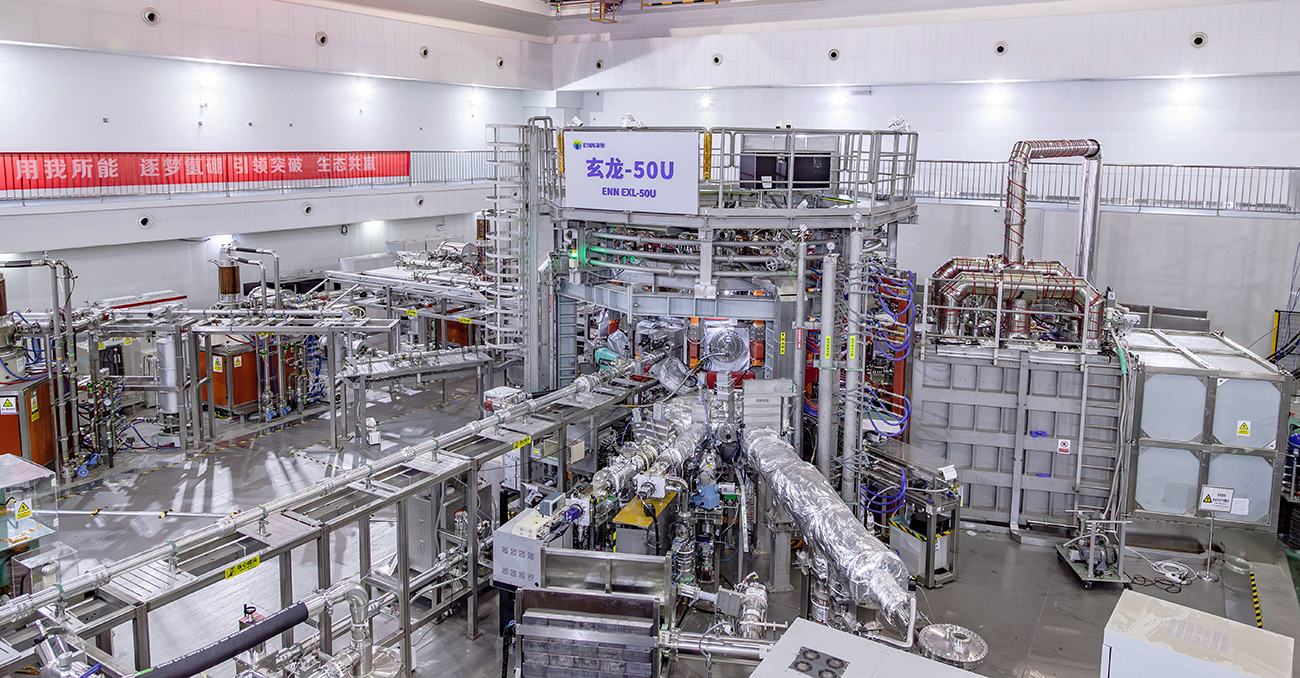
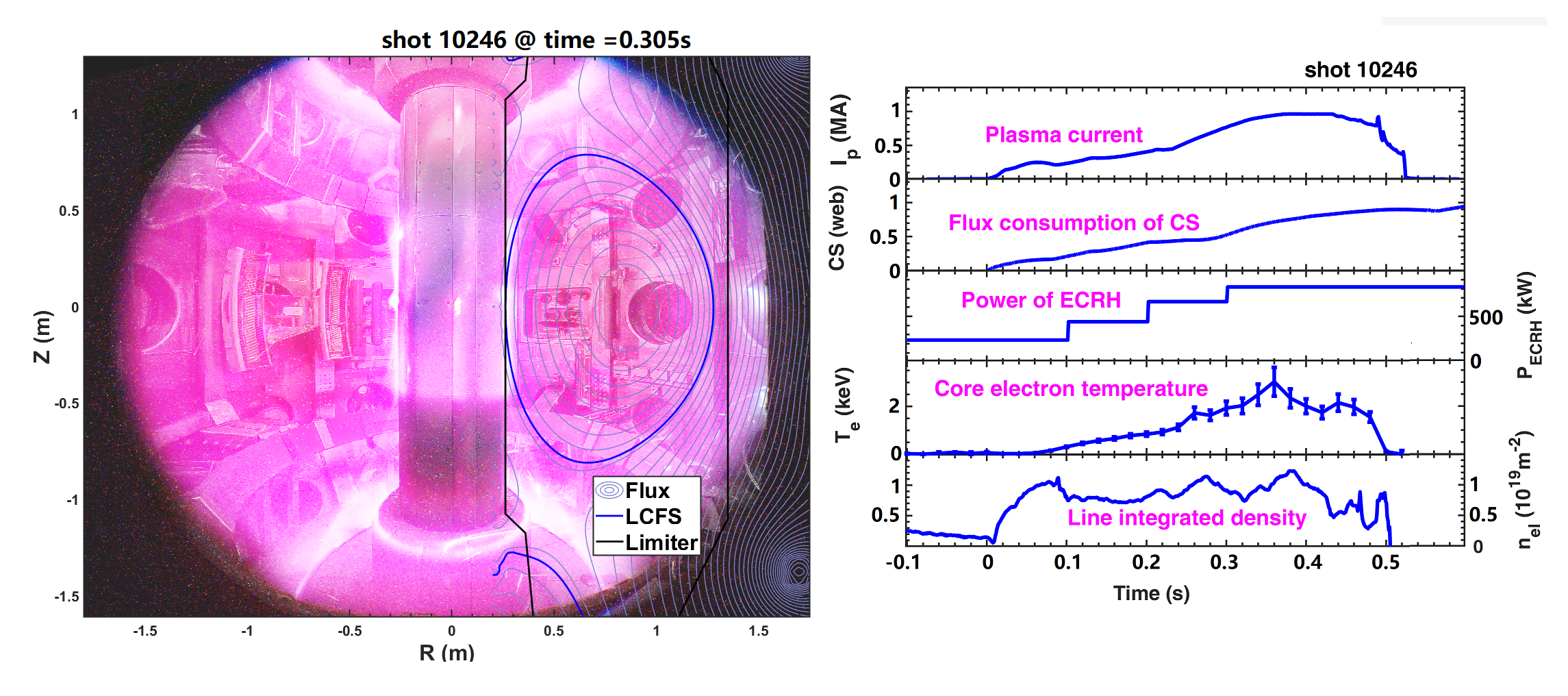
At its campus in Langfang, Hebei Province, ENN is developing fusion research based on the proton-boron process following the spherical tokamak line. In 2018, ENN initiated the design and construction of its first medium-sized spherical torus experimental device, EXL-50 (Xuanlong-50), which demonstrated first plasma in August 2019. In 2022, ENN embarked on the upgrade of the device to EXL-50U (Xuanlong-50U), which has since achieved significant experimental results, including a plasma current of 1 MA, a central magnetic field of 1.2T sustained for seconds, an electron temperature of 100 million degrees, an ion temperature of 40 million degrees, and operation in H-mode. Also in 2022, ENN commenced the design phase for EHL-2 (HeLong-2), planned to operate with a plasma current up to 3 MA. This device will be completed in 2027.
The ITER Organization and the ITER Members look forward to fruitful collaboration between public labs and the privately funded initiatives such as ENN and CFS—in the framework of both the ITPEA and other channels for knowledge transfer—for mutual benefit and to speed up the development of fusion as a practical energy source.