
A finger on the installation’s pulse
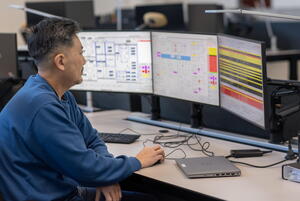
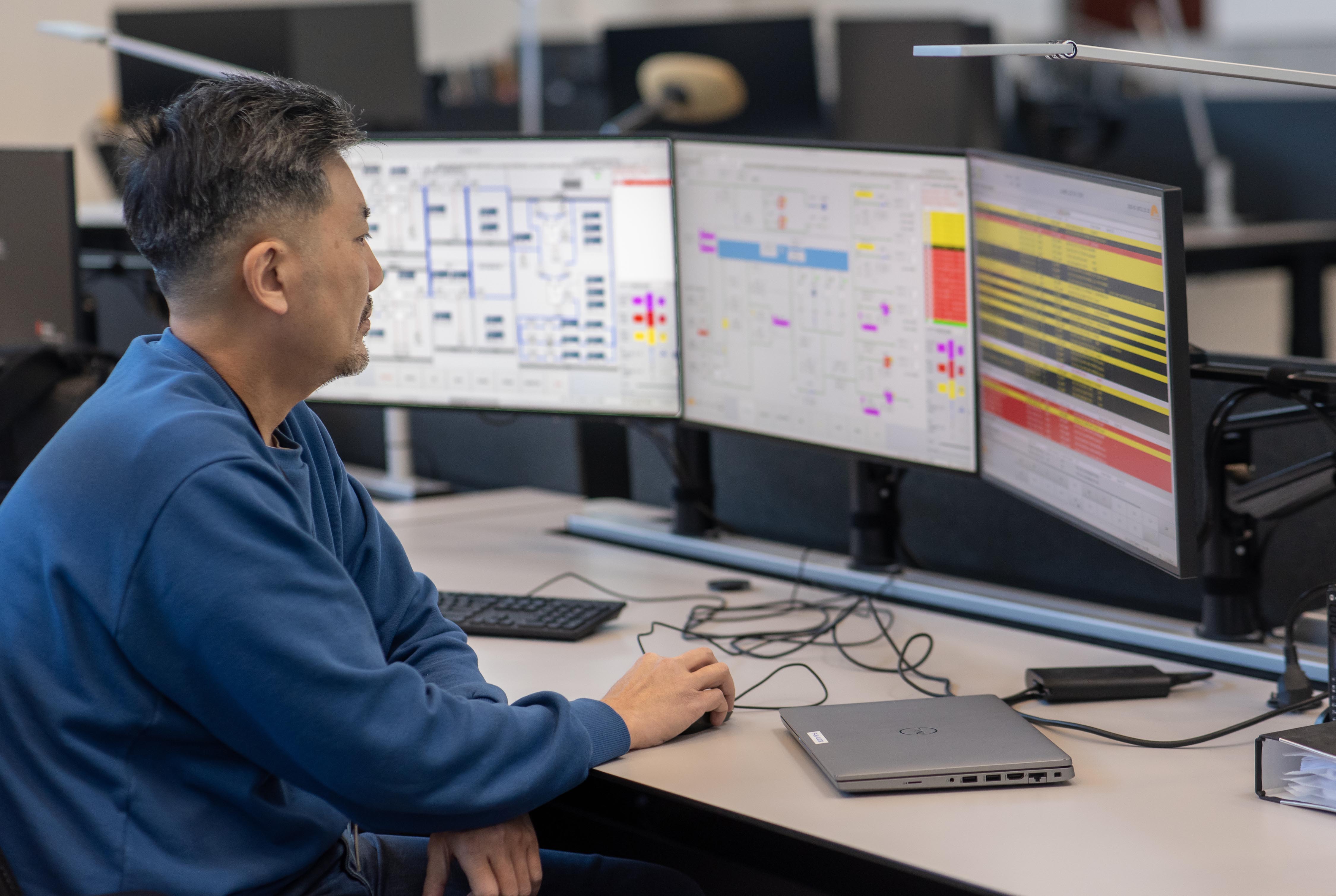
Facing four large screens on her desk, plus an extra one on her laptop, Rossella Rotella has her finger on the installation’s pulse. Besides being in charge of the Tritium Breeding Blanket Project, Rossella is one of a dozen specialists from different ITER units who devote part of their time to managing shift operations in the ITER control room. A few desks away from her, principal shift operator Vladislav Kim keeps a close watch on a variety of systems, some already active, others still in the commissioning phase. Besides them, the 750-square-metre space on the first floor of the Control Building is empty.
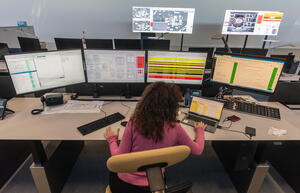
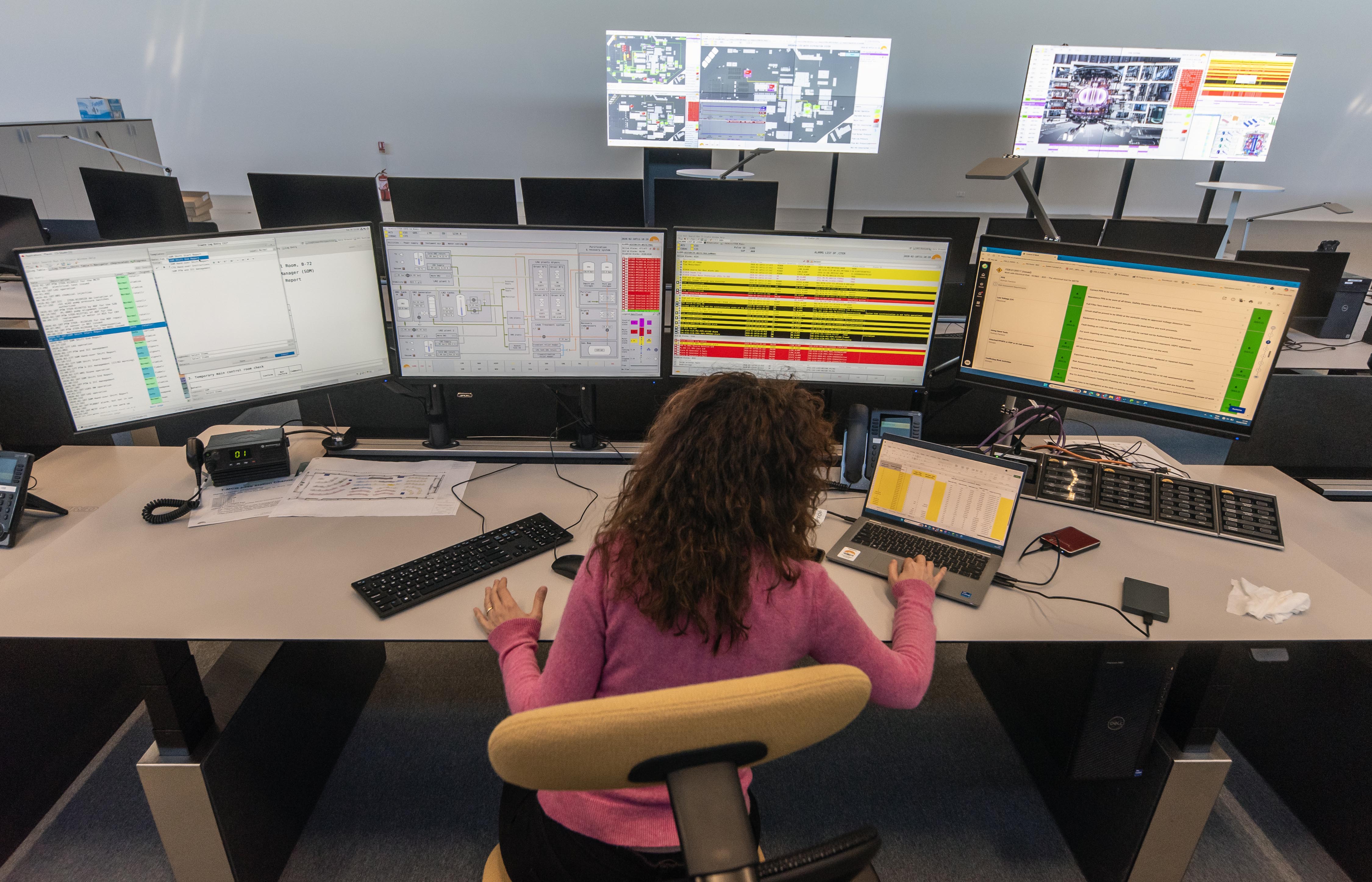
Progressively, as the temporary control rooms scattered throughout the installation are folded into one single “nerve centre,” more and more operators will be sitting at desks in the control room. At the peak of ITER's scientific activity they will be close to 80, monitoring millions of plasma, tokamak and plant system parameters.
Rossella’s mission, as shift operation manager, is twofold. One is to monitor the beat and pulse of the installation’s systems and, in case of a warning or an alarm flashing on one of the screens, authorize the shift operator sitting at the nearby desk to intervene. Depending on circumstances this can mean remotely starting or stopping a system, or adjusting its parameters to respond to a client’s need.
The other is to ensure that the works being conducted on the ITER site—sometimes in or close to “operational areas”—do not present safety risks and do not interfere or generate issues with the systems in operation. “There is a coordination meeting every morning with the responsible officers or their representatives to consolidate the site configuration and discuss the expected activities that will impact it,” explains Rossella. “But there are also unplanned activities. In that case, the system responsible officer must inform the shift operation manager, who takes the appropriate decision, like issuing the ‘permit to work,’ or delaying or refusing it.”
Communication between the “nerve centre” and the field relies on a series of redundant tools: the dashboards on the computer screens, telephone and email, talkie-walkies. and even—in case of emergency—a public address system with loudspeakers located in different areas of the installation.
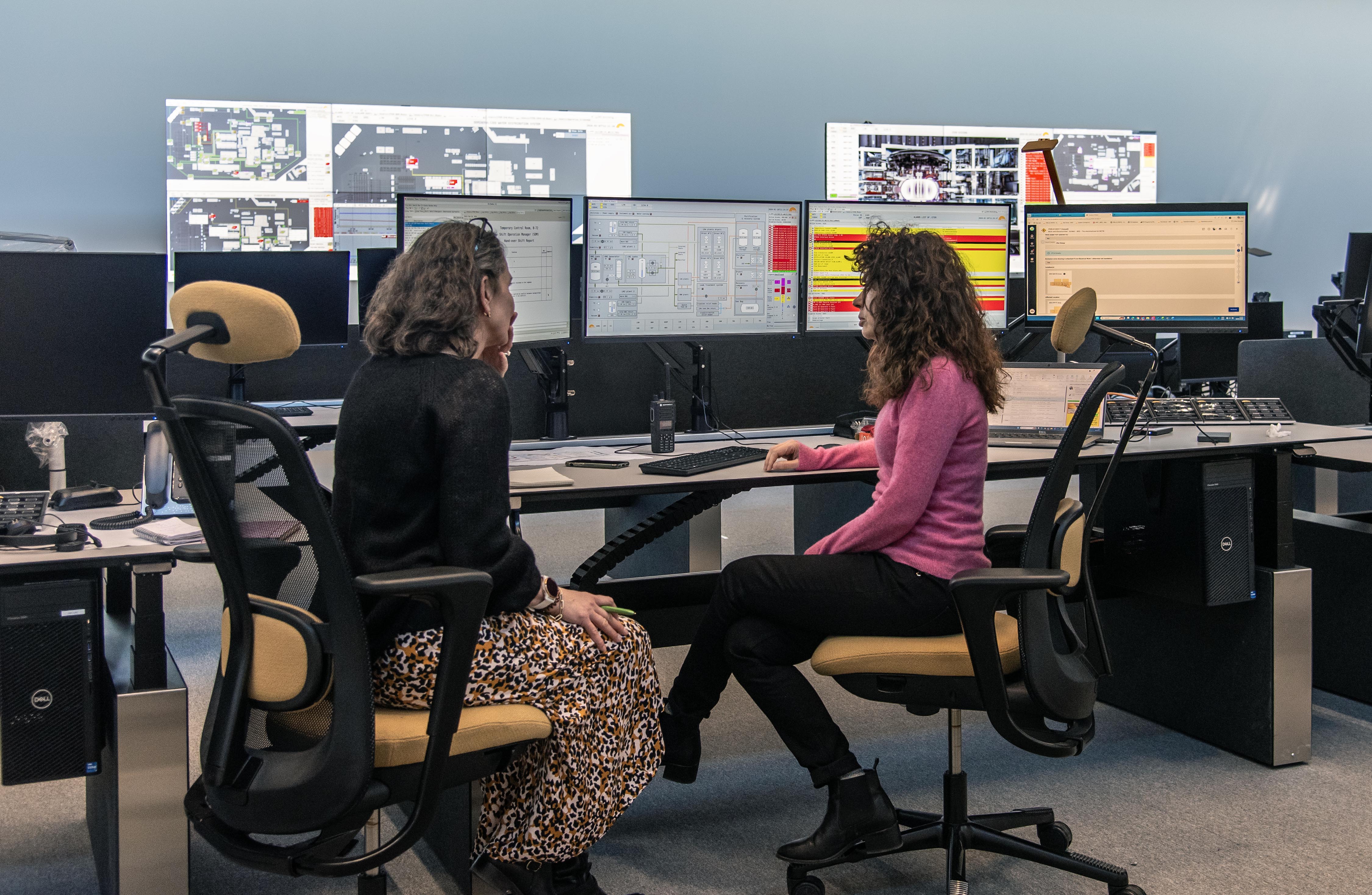
It is nearing 1:00 p.m. and Rossella’s five-hour shift will soon end. After a short briefing Fabienne Kazarian, a radiofrequency engineer, takes over. Both women are specialists in their respective fields, have accumulated deep experience in systems integration, and have an intimate knowledge of the workings of the ITER installation—precious background when it comes to “balancing priorities while giving absolute priority to the safety of personnel” at a time when ITER is in the last phases of construction while already operating dozens of industrial systems.