
A tool for tracking millions of parts
17 Apr 2014
-
Krista Dulon
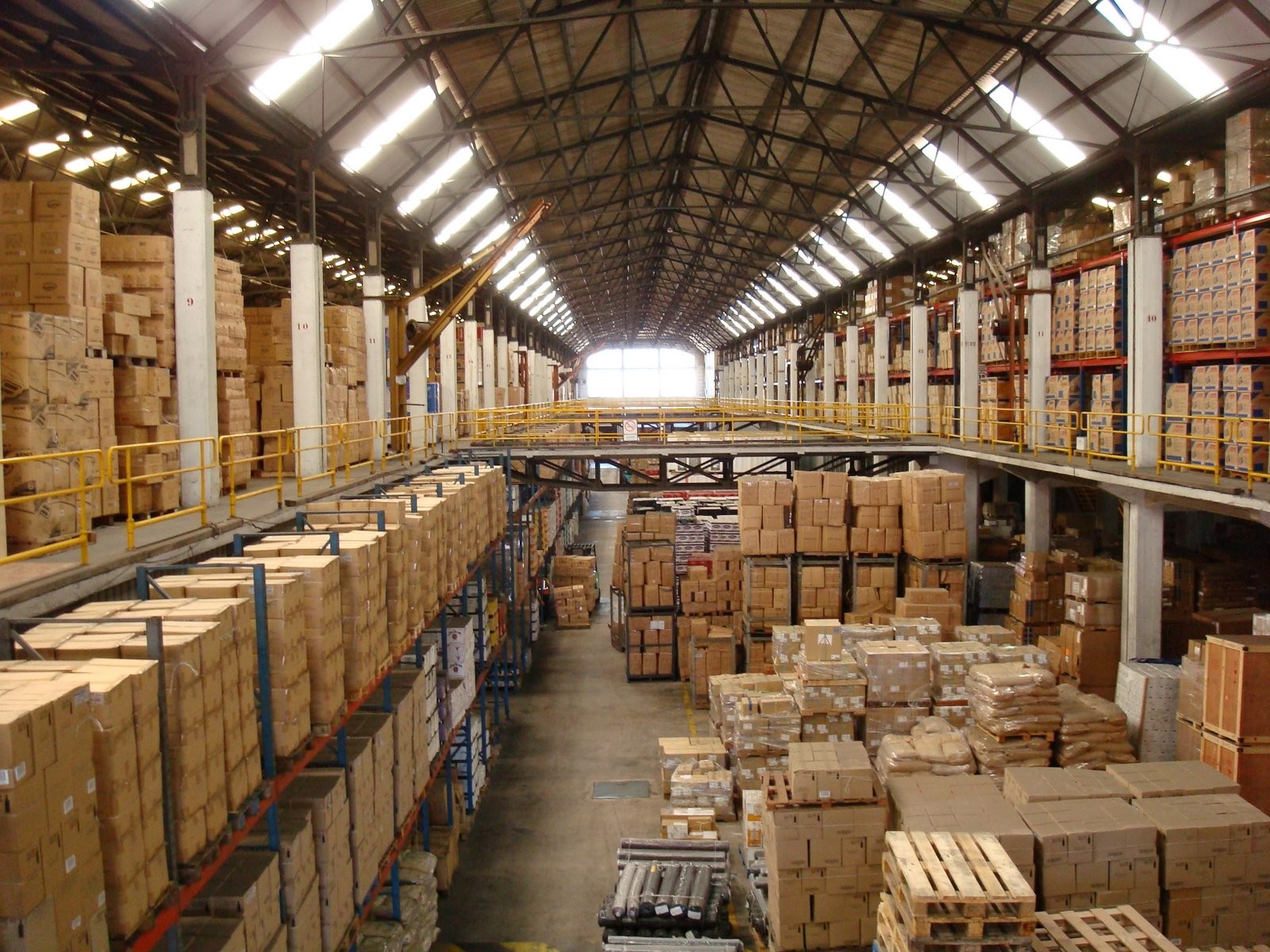
One million components, as many as ten million individual parts ... the ITER Organization is now equipped with a Material Management System that will provide a high level of traceability throughout assembly and installation. (The warehouse pictured is a stock image.)
In May a truck charged with high-voltage electrical equipment sent by the US Domestic Agency will arrive at the ITER site—a seemingly unassuming event, but one that will mark the debut of a new ITER phase.
As the first* in-kind delivery of plant system components, the event starts off ITER assembly and installation which, from that moment, will proceed in parallel with building construction until the ITER Tokamak is sealed and First Plasma achieved. During this time the Domestic Agencies will ship an estimated one million components (as many as ten million individual parts) to the ITER Organization.
The delivery will also be the first occasion to test the new ITER Material Management System that is charged with managing how these millions of items will be labelled for shipment, tracked, registered as they arrive on site, stored and then readied for assembly and installation.
The sheer volume of data to be tracked is staggering. For every individual part, large or small, the material management system will be asked to store all the information relating to the supplier, the shipment, the product (ITER part numbers, supplier references, dimensions, technical characteristics, serial numbers) as well as its location, history, maintenance plan and on-site status.
ITER is built up of many sub-assemblies—groups of individual parts pre-assembled into a module in order to fulfil a specific function within the machine, often in a faraway factory. The system will need to record the details of each individual piece and then assign a unique reference number to the completed assembly.
This high-level of traceability is absolutely necessary to comply with safety regulations applicable to every nuclear facility; these require strict control of materials, components, maintenance and all changes. The material management system is intended to also generate important efficiencies and cost savings, avoiding time lost in looking for stored components and helping to manage material surpluses or shortages.
"The scale of the assembly project we are undertaking is absolutely without precedent," says Ken Blackler, head of Assembly & Operations Division. "In terms of the amount of work, complexity, and the number of different plants systems within our installation, the construction industry has compared the ITER Project to building two nuclear power plants at the same time. We need experienced teams and the tools to do the job."
The ITER Organization now has an industry-standard solution to accompany this assembly and installation work, including material management. SmartPlant® Materials, by Intergraph, is already installed on ITER servers and work is underway to configure the system to match ITER-specific needs. Hervé Voilquin works as an external contractor in the Assembly & Operations Division to help ITER divisions define their needs and to interface with the software publisher.
"The ITER Organization has chosen a flexible system, with a high degree of adaptability to the needs of different technical divisions," explains Hervé. "That's important for a project like ITER, where some of our processes are still under development. The system will only be as good as the data it contains, so we'll make sure to do a lot of in-house training." In the coming months a number of initiatives will be launched to familiarize users at ITER with the SmartPlant® Materials tool, which will be gradually rolled out this year in collaboration with the Project Information System Section, IT. At the same time, a web based portal will be developed to allow Domestic Agencies and suppliers around the world to send the necessary input data before parts are shipped. In addition, a live data feed will be provided into the system by ITER's Global Logistics Service Provider DAHER, who will manage the transport of all goods to the ITER site.
Each different type of hardware to be delivered will be assigned a part number. Ultimately, by entering its reference from any workstation connected to the ITER network, operators will know the live status of the part, where it is in the world, whether it has been delayed and why and, once arrived, precisely where it is stored on site. Such accurate information will allow the construction work to be dynamically planned based upon availability—the more efficiently operators can reply to such requests, the less delay will be incurred during the installation work.
The delivery in May will be the first real test of the material management system, to be followed within a few months by the delivery of many large cooling water pipes from India. "These early deliveries will help us to get material management up and running, test the accurate recording of data, and initiate close collaboration with procurement teams here and abroad," says Hervé. "Given the amount of work we have ahead of us, the sooner we start, the better."
* Two shipments from China reported in Newsline on 4 June 2013 and 13 January 2014 contained dummy conductor for the purpose of commissioning the poloidal field winding line (not completed components for assembly).