
Pneumatic shutter for nuclear fusion
1 Oct 2012
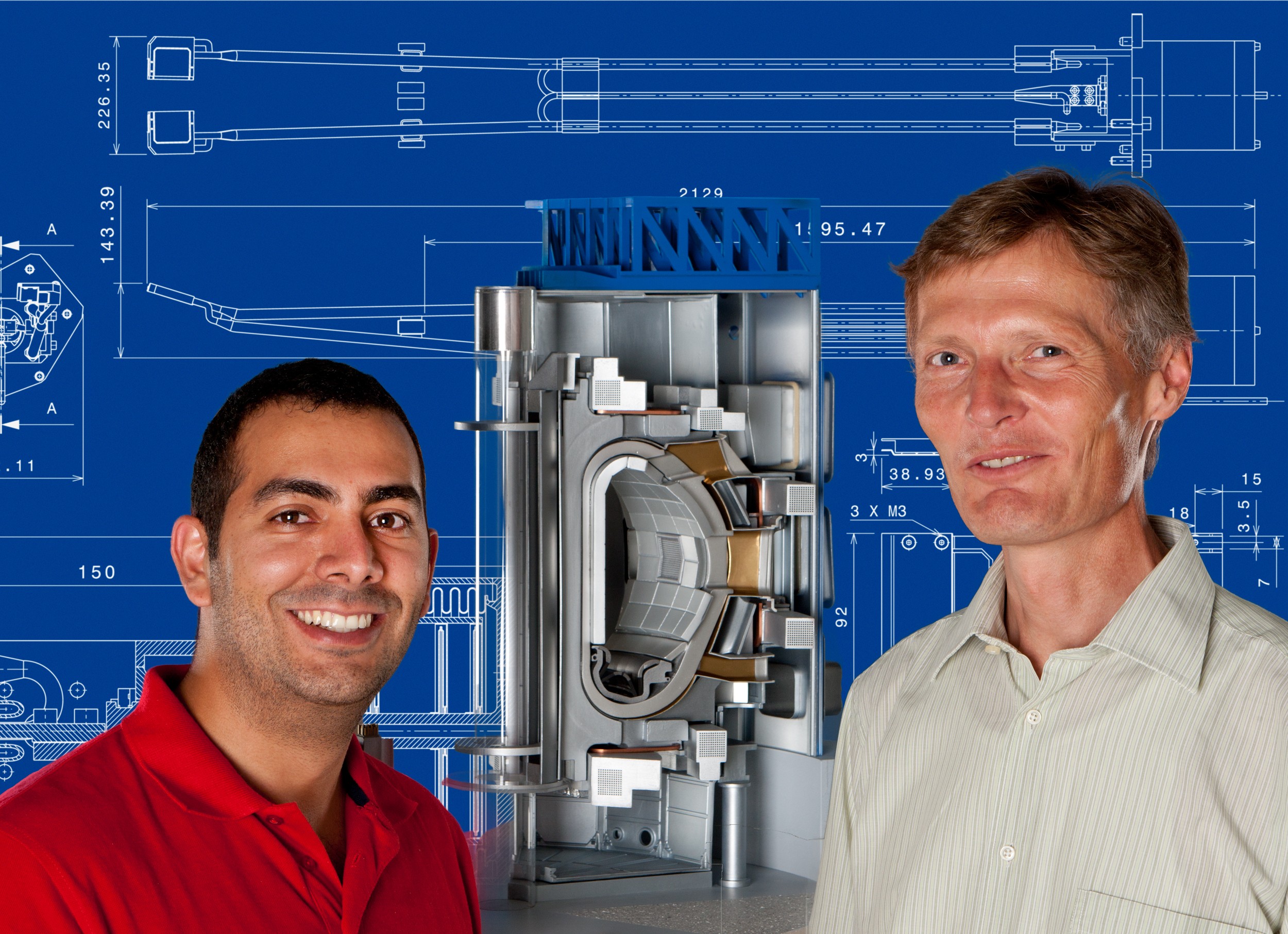
Dr. Olaf Neubauer (right) and David Castaño Bardawil (left) in front of a cross-section model of the ITER fusion reactor. Source: Forschungszentrum Jülich
From 2020 onwards, the ITER fusion reactor will demonstrate how nuclear fusion can be used as an energy source. However, inside the reactor, the plasma at a temperature of 100 million degrees presents scientists with huge challenges. Direct contact would destroy important optical instruments within a short period of time.
At the 27th Symposium on Fusion Technology (SOFT), from 24-28 September 2012 in Liège (Belgium), Jülich researchers are showing how the delicate instruments can be protected by means of new shutter and cooling systems. Among other options, they will present a patented shutter controlled by a pneumatic cylinder which was developed specifically for ultra-high vacuum.
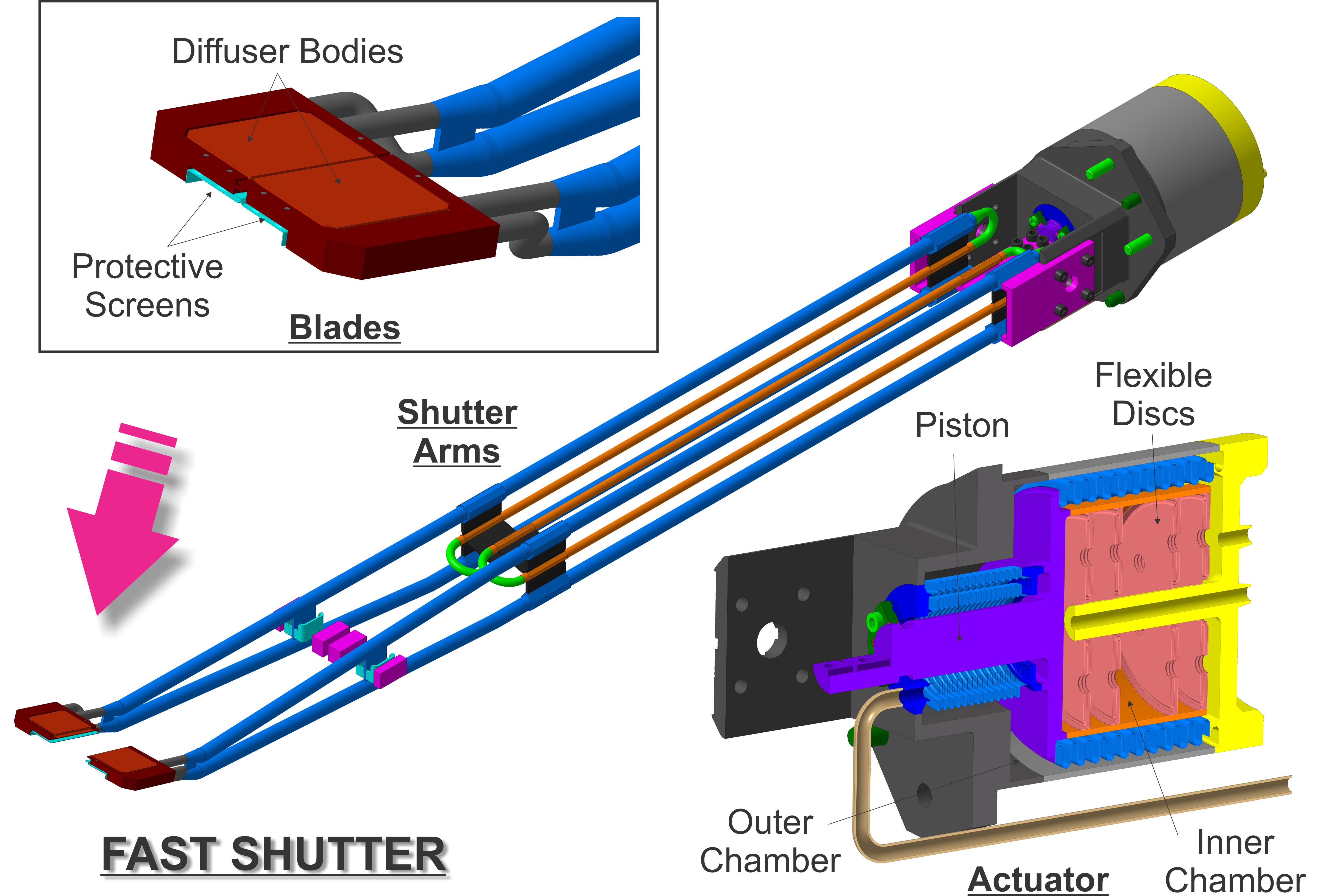
Patented actuator. The actuator is opened by pumping helium under pressure into the inner chamber and operating the shutter via the two arms. Source: Forschungszentrum Jülich
For the first time, ITER will generate excess energy of 500 million watts for a duration of about ten minutes in order to provide us with experience for the construction of subsequent fusion power plants. Not only the burn chamber but the entire measuring technology has to be developed from scratch for this fusion experiment, which is being monitored by scientists all over the world.
Optical monitoring methods are indispensable for assessing the plasma properties and composition. However, optical elements in the vicinity of the plasma are exposed to extremely high loads. The plasma, largely composed of hydrogen and helium nuclei, erodes part of the surface material but also deposits contaminants. Thermal energy must be continuously removed in order to keep the temperature constant.
"The greatest technological challenge is to find suitable materials and designs to protect and cool the optical elements that can also be cleaned when they are installed in the machine," explains Dr. Olaf Neubauer from the Jülich Institute of Energy and Climate Research, Plasma Physics (IEK-4). Together with colleagues from Forschungszentrum Jülich and partner institutions, Neubauer organized the SOFT conference with more than 800 participants this year.
All the components in ITER's burn chamber can essentially only be serviced by remote-controlled tools or robots. At the conference, Jülich plasma researchers are presenting a new fast shutter for a spectrometer that protects the optical instruments when they are not in use for measurements, in particular during ignition when most of the contaminating particles are mobile.
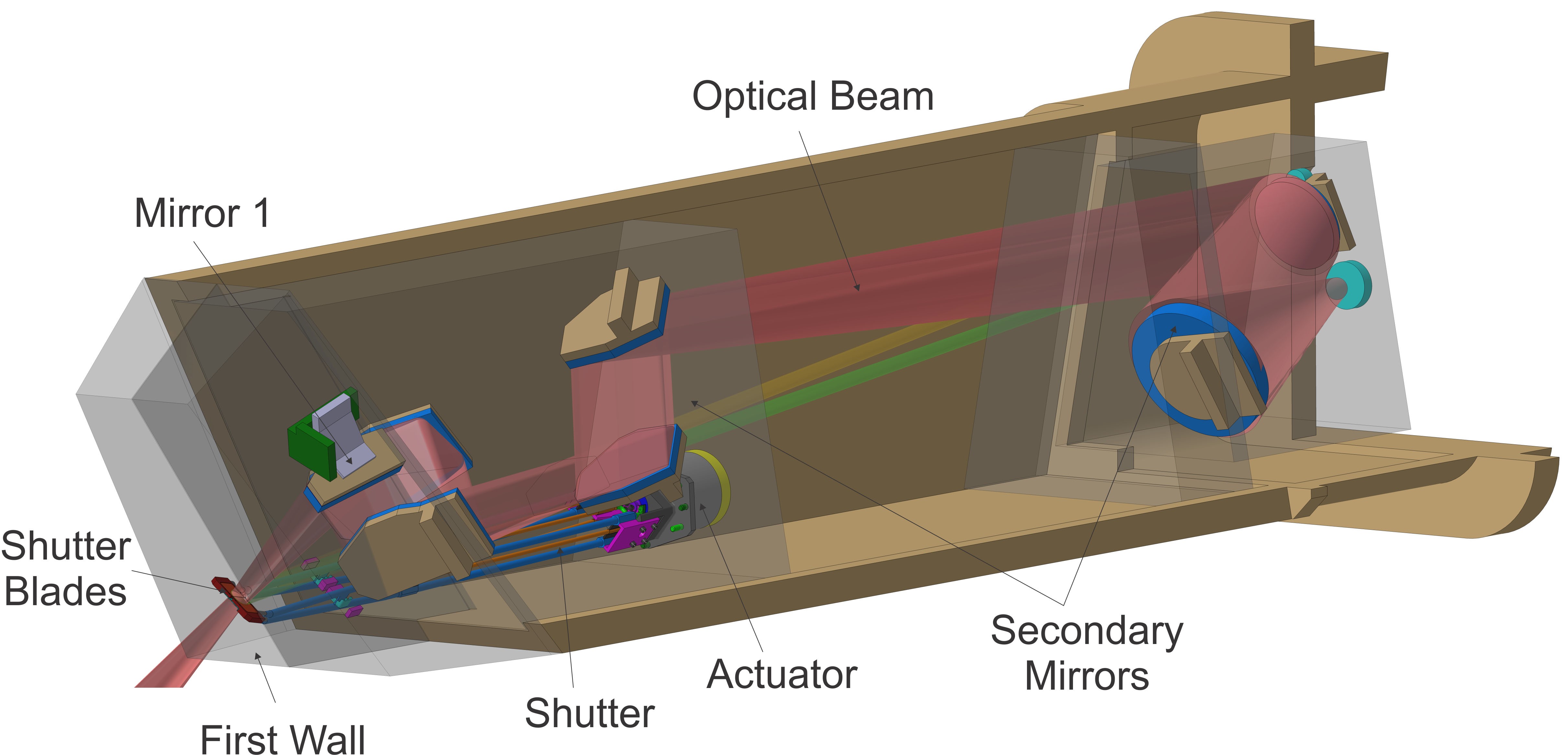
The fast shutter is part of a charge-exchange spectrometer used to determine a wide range of important measurements from ITER's central plasma. Source: Forschungszentrum Jülich
"In designing the structure, the main problem was that the shutter is exposed to even higher loads than the optical instruments themselves. Furthermore, a movement mechanism had to be invented that could cope with the extreme plasma conditions and the ultra-high vacuum," says David Castaño Bardawil, an engineer in Neubauer's working group. Conventional bearings cannot be used because of their abrasion and the Jülich solution therefore makes use of flexible arms. They are operated by an actuator that was specially developed and patented, into which helium is fed under pressure.
Source: Forschungszentrum Jülich
Electric drives cannot be used in the burn chamber due to the strong, disturbing magnetic fields. "The shutter is additionally protected by a molybdenum screen, which reflects the thermal radiation. Together with a sophisticated combination of thermally conducting and insulating materials this maintains an acceptable temperature," says Bardawil.
At SOFT 2012, other Jülich scientists are presenting new concepts for uniformly cooling the instrument mirrors under extreme conditions. "Large temperature differences arise on the mirror surface close to the cooling channels. With the aid of simulations, we optimized the cooling channels in order to minimize divergences," explains Andreas Krimmer, who also works in the field of fusion technology. The temperature-related high pressure of the coolant causes other deformations. At the moment, researchers are testing various elastic materials in order to even out the deformations thus ensuring that in 2020 the fusion plasma can be ignited in Cadarache.
Source: Forschungszentrum Jülich
Click here to read the Press Release.