
Where do all the neutrons go?
27 Jul 2012
-
Robert Arnoux
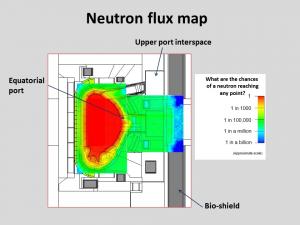
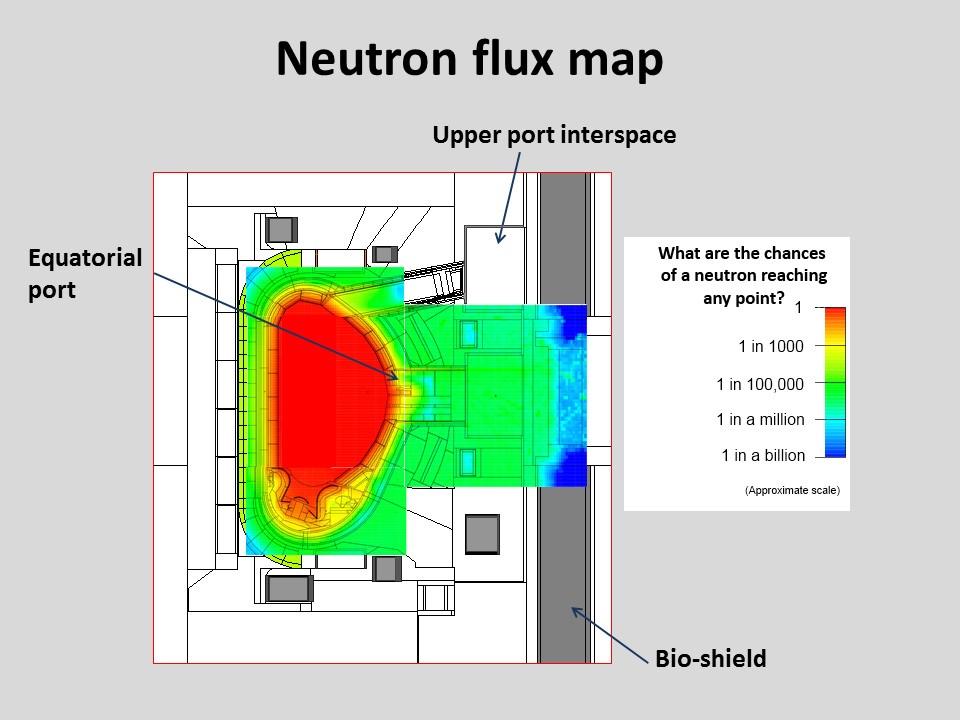
Computer codes, data bases and statistical methods enable neutronics experts to determine the chances of a neutron reaching any point in the ITER Tokamak.
Earlier this month at the Culham Center for Fusion Energy (CCFE) in the UK, more than 40 scientists representing numerous institutes across Europe, China, India and the US attended the 7th ITER Neutronics Meeting. Although the word "neutronics"—used by scientists for the past 60 years—is still not listed in the Oxford English Dictionary, the field of research it refers to is essential to both fission and fusion development.
"I wrote to the editors of the dictionary and they promised they would soon remedy this situation," smiles ITER Nuclear Shielding Analysis Coordinator Michael Loughlin.
The field of neutronics covers the theoretical and experimental behaviour of the neutron, the electrically neutral sub-atomic particle that is present in every atom with the exception of hydrogen. In a fusion reaction, an extremely energetic (14 MeV) neutron is produced, providing energy that—in future fusion power plants—will generate electricity.
Shooting out of the plasma with tremendous speed, most neutrons will impact whatever stands in their way (some will just traverse the interatomic void as if matter didn't exist). The positive side of this process is that neutrons will heat the water circulating in the vacuum vessel wall; the not-so-positive side is that they will progressively alter and activate any materials they come into contact with.
Neutronics are at the heart of ITER design, and ITER "is driving the field of neutronics worldwide." The challenges faced by the field in ITER are completely new. "First, because ITER will be the first fusion device to have a significant production of neutrons," explains Michael, "and also because the device is very large and its structure extremely complex."
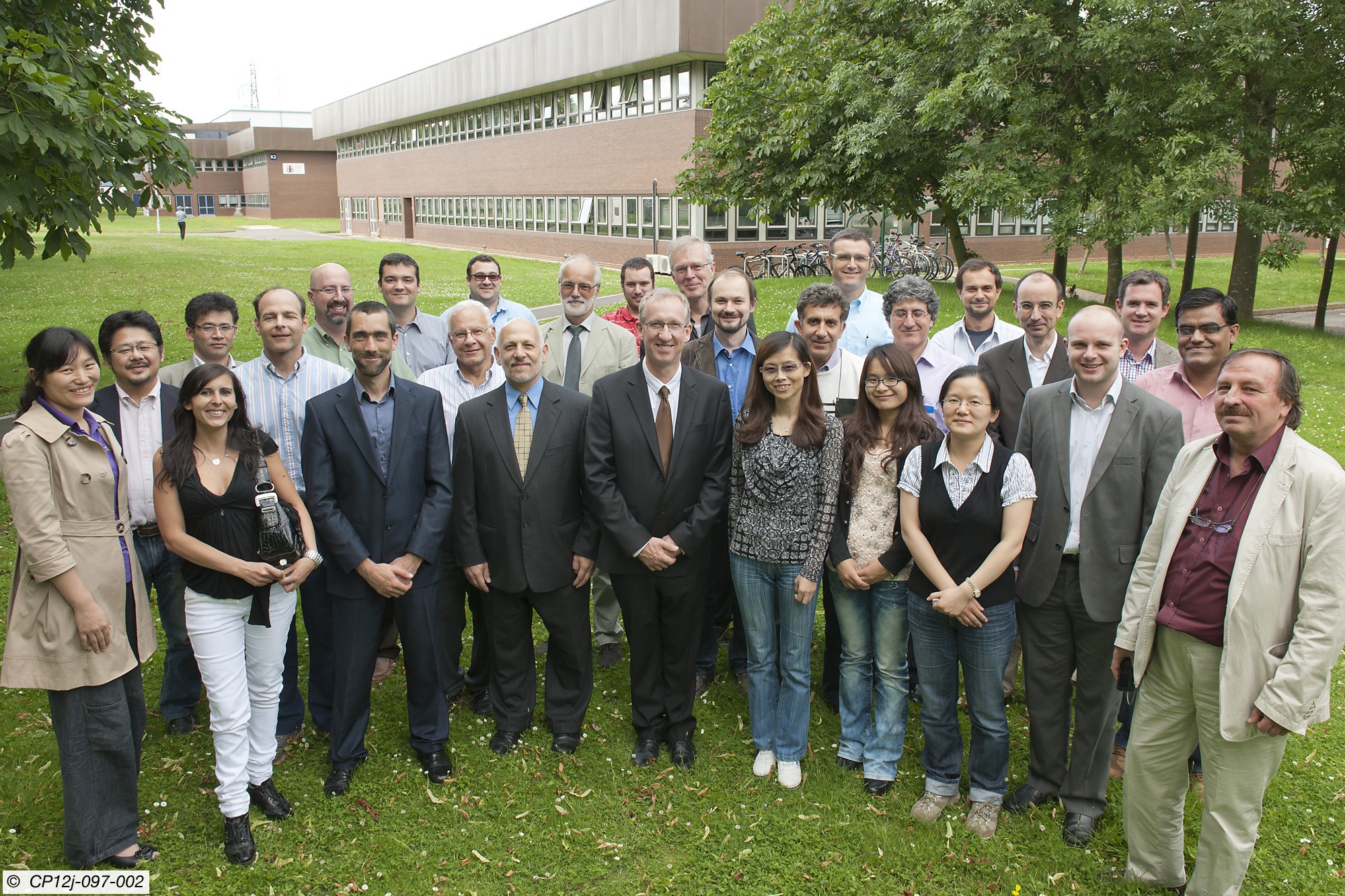
More than 40 scientists attended the 7th ITER Neutronics Meeting on 4-6 July. The group's job is to coordinate ITER neutronics activities across the Member states. Numerous institutes across Europe, Japan, China, India and the US were represented at the Culham meeting.
It is the neutronics experts' job to understand and model the behaviour of neutrons in order to shield both equipment and people from their impact. But individual neutrons can behave in many different ways. "They can hit different objects at different angles: some will bounce off; some will be absorbed; some will transmute; some will traverse matter unaffected ..."
Computer codes, data bases and statistical methods (the famous "Monte-Carlo method") enable neutronics experts to extrapolate the behaviour of the neutron flux from that of a couple billion individually tracked neutrons. "This way, we can know how many neutrons will reach the coils, how much they will heat them, etc. And this goes for every system in ITER, for they will all be affected by the impact of neutrons," says Michael.
Meetings like the one that was held in Culham provide neutronics experts from all over the world with an opportunity to discuss results, to define what analyses ITER is going to need and how they will be performed.
In terms of neutronics, "ITER is illuminating everything; it forces us to find solutions and the payback is already here in terms of applications for nuclear technology and safety, high-quality radiation maps, and calculation and training," says Michael.
Yes, definitely, "neutronics" deserves to enter the dictionary.