
All eyes on the neutral beam source
3 Jul 2017
-
François Geli, Neutral Beam Source Mechanical Engineer
Millions of watts of heating power can be delivered to the plasma using neutral beam injection—the work horse of ITER's external heating methods. A research and development program is underway to test the critical heating neutral beam components before the manufacturing phase is launched.
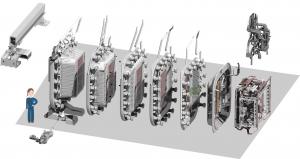
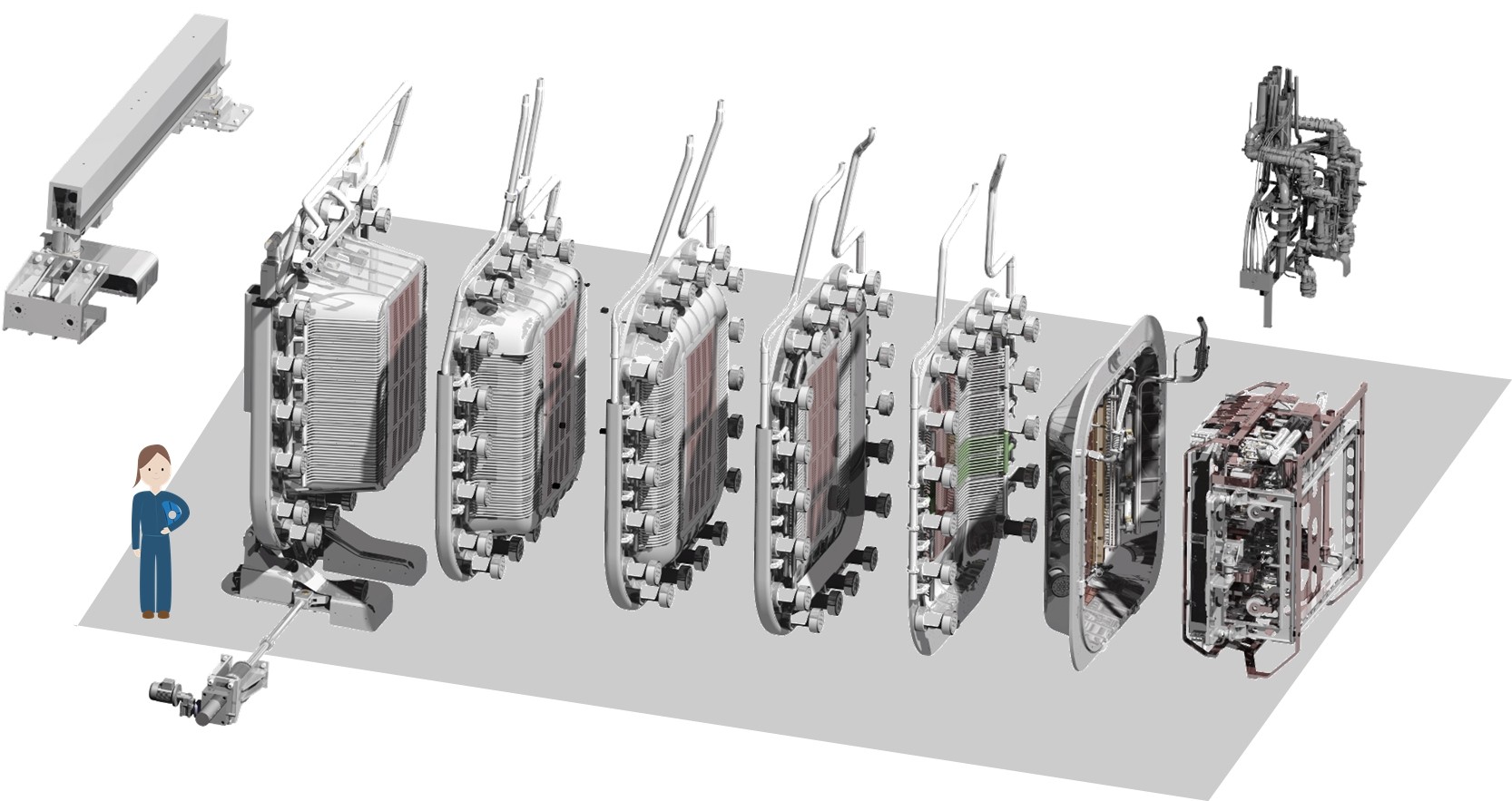
An exploded isometric view of the ITER/MITICA beam source, composed of a radio frequency ion source and a seven-grid extractor and accelerator.
Neutral beam injection consists of shooting high-energy particles into the plasma. Outside of the ITER Tokamak, charged deuterium particles are accelerated to the required energy level and then passed through an "ion beam neutralizer" where their electrical charge is removed to allow them to penetrate the magnetic cage. At that stage, the high-velocity neutral particles can be injected into the heart of the plasma where, by way of rapid collision, they transfer their energy to the plasma particles.
One of the most critical components of the heating neutral beam injector is the beam source—composed of the radio frequency ion source and a seven-grid extractor and accelerator.
The source generates 40 A of negative hydrogen or deuterium ions, which are then extracted and accelerated to 1MeV. These ions are converted further downstream in the injector to a "neutral" beam by neutralizing the ions in the gas cell neutralizer. After filtering out the remaining ions in the residual ion dump, neutrals are injected into the ITER plasma.
The heating neutral beam source—situated inside the neutral beam injector—is 3 metres wide, 3 metres deep and 4.5 metres high with a total weight of 15 tonnes. ITER will host two neutral beam injectors and space is reserved for a third in order to maintain an important potential for flexibility in the operation of the ITER facility should an upgrade be decided.
Over the last nine months, under the terms of a first-stage framework contract with the European Domestic Agency, three suppliers have been in competition to finalize the MITICA beam source (see box) build-to-print design and to initiate manufacturing documentation. This first stage has served to mitigate fabrication issues before the start of the manufacturing phase (stage two). One supplier will now be chosen for the manufacturing of the MITICA beam source, which is a prototype of the ITER heating neutral beam source.
The interim period between the two stages of the framework contract has offered a good opportunity to review the findings and share experience with various experts on beam sources. On 1 June, the ITER Neutral Beam Section reunited more than 25 experts—from the European, Japanese and Indian Domestic Agencies, Consorzio RFX, and laboratories—in Padua for a collaborative exchange based on the respective experience of each supplier with manufacturing, experimentation and prototyping.
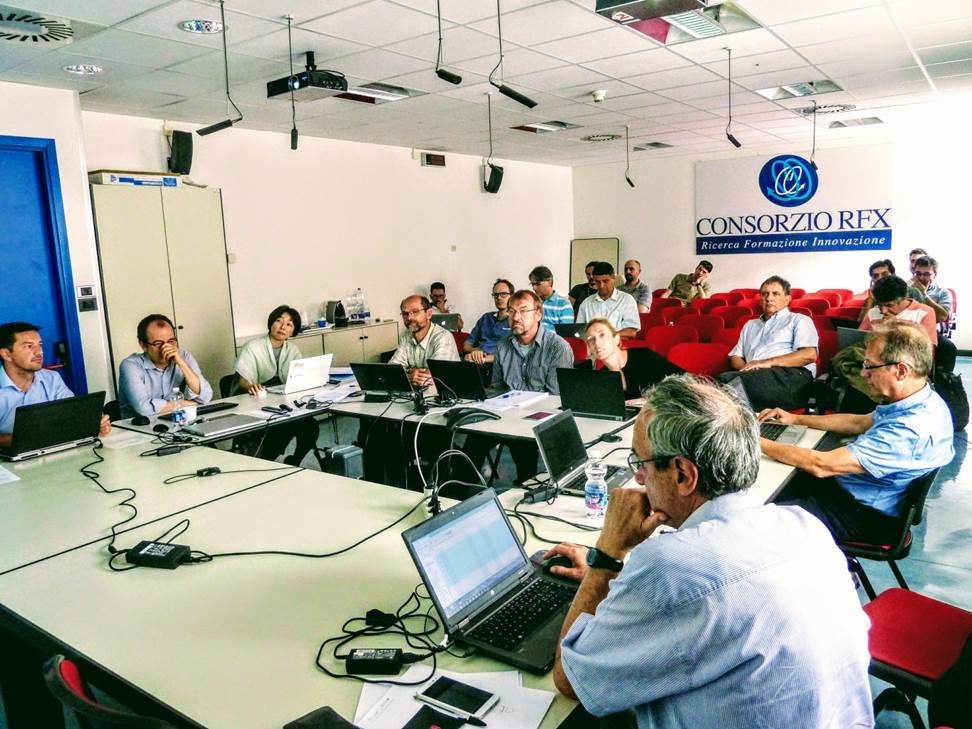
The technical collaboration meeting on 1 June in Padua brought together ion source experts before the launch of the second-phase of beam source framework contract—manufacturing—which is planned to start at the end of the year.
The objective was to ensure that all available expertise and knowledge for this critical component can be retrofitted into the manufacturing technical specifications. RFX Consorzio and the European Domestic Agency provided a detailed status of the technical improvements and feedback gained from suppliers during stage one and also highlighted the remaining open issues on which the ITER Organization is seeking advice from the ion source community.
India provided valuable feedback from the manufacturing of the diagnostic beam source (for example, achieving manufacturing tolerances of the beam source grids and positive results on the concept radio frequency coils). Experts from IPP Garching provided technical feedback on the type of radio frequency driver to use to prevent electrical breakdowns and the use of molybdenum coating based on the results from its experimental test beds BATMAN and ELISE.
From this fruitful discussion, held in a very collaborative atmosphere, several identified actions will now be tracked to directly benefit the ITER/MITICA beam source project, leading to higher confidence for the launch of the manufacturing phase of the MITICA heating neutral beam source.