
Auditing is both monitoring and assisting
17 Sep 2012
-
Robert Arnoux
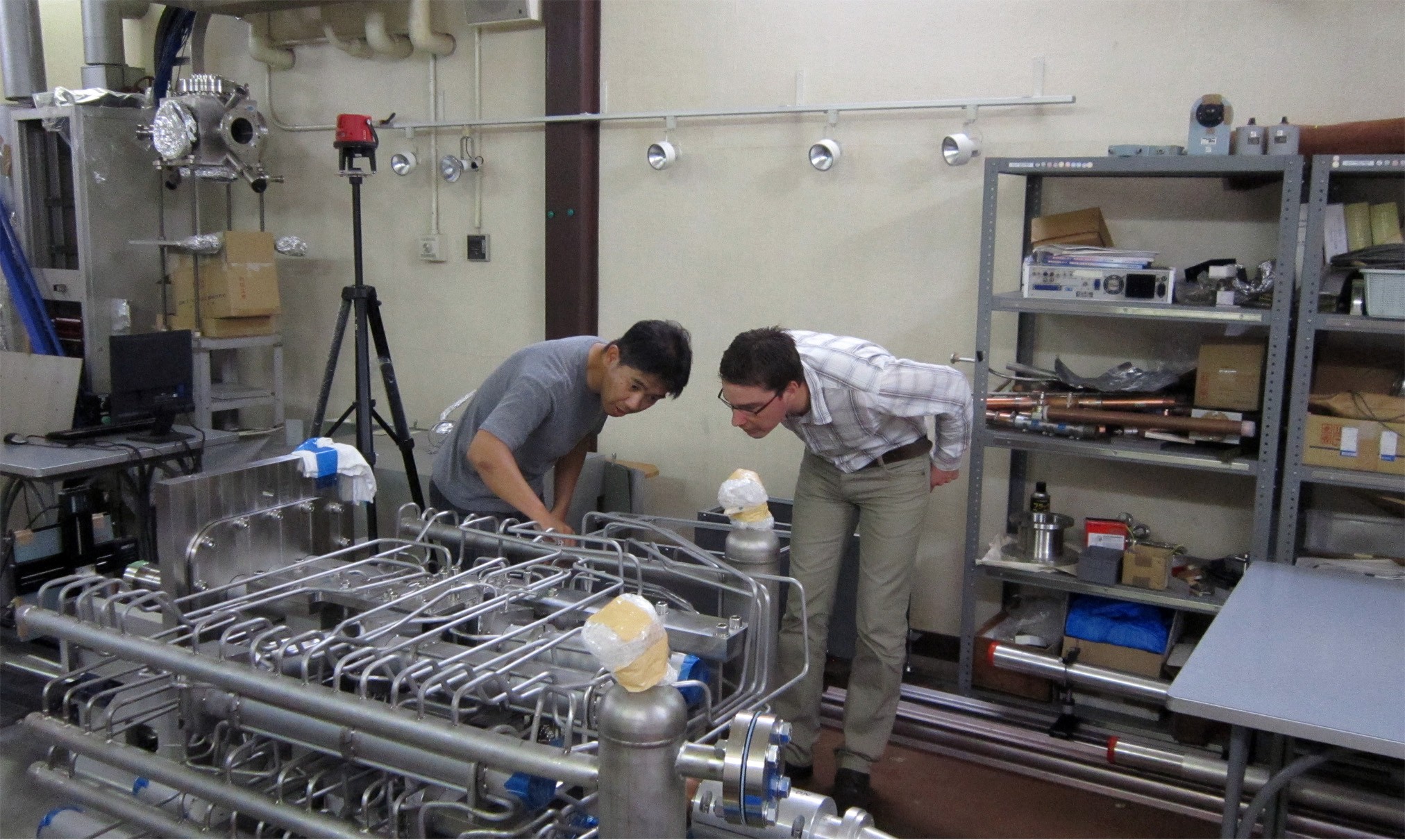
ITER auditor Thomas Sobrier and Takahashi-san, JADA Technical Responsible Officer, at the Hitachi plant in Tsukuba where the electron-cyclotron port plug model has been manufactured.
Not only is the ITER tokamak one of the most sophisticated devices ever conceived, it is also an unprecedented exercise in international cooperation. The inherent complexity of the machine combined with its nuclear status and the unique organization of its components' production and manufacturing generates challenges of exceptional magnitude.
Most industries deal directly with their suppliers. It is not the case in the ITER project, where components are procured by the Domestic Agencies that each ITER Member has established. However, it is the ITER Organization that holds the "ultimate responsibility" for the safety of the machine. Quality Assurance, which is standard practice in the industry, takes on a new dimension in this context.
"We need to both monitor and assist the Domestic Agencies in measuring their level of compliance with the ITER project requirements," explains ITER Quality Audit Manager Andrew Denyer. "We also need to have a clear view of everything that is being done throughout the whole chain of suppliers," adds Lead Auditor Thierry Jourdan. "This is an absolute requirement from the French Nuclear Safety Authority (Autorité de Sûreté Nucléaire, ASN) whose regulations the ITER Organization, as nuclear operator of the future installation, must observe."
Quality requirements are an integral part of every Procurement Arrangement that is signed between the ITER Organization and the Domestic Agencies. Each Procurement Arrangement specifies a number of "control points," "notification points," "hold points," "witness points," etc., which punctuate the manufacturing process of every component. A system as delicate and as complex as magnets, for instance, has more than one hundred such "points"...
In order to implement this stringent Quality Assurance policy, ITER auditors (a five-person team on average) have been dispatched at least once to the different Domestic Agencies since 2009. Now that manufacturing has begun in earnest, Andrew hopes that audit missions can be organized on an annual basis.
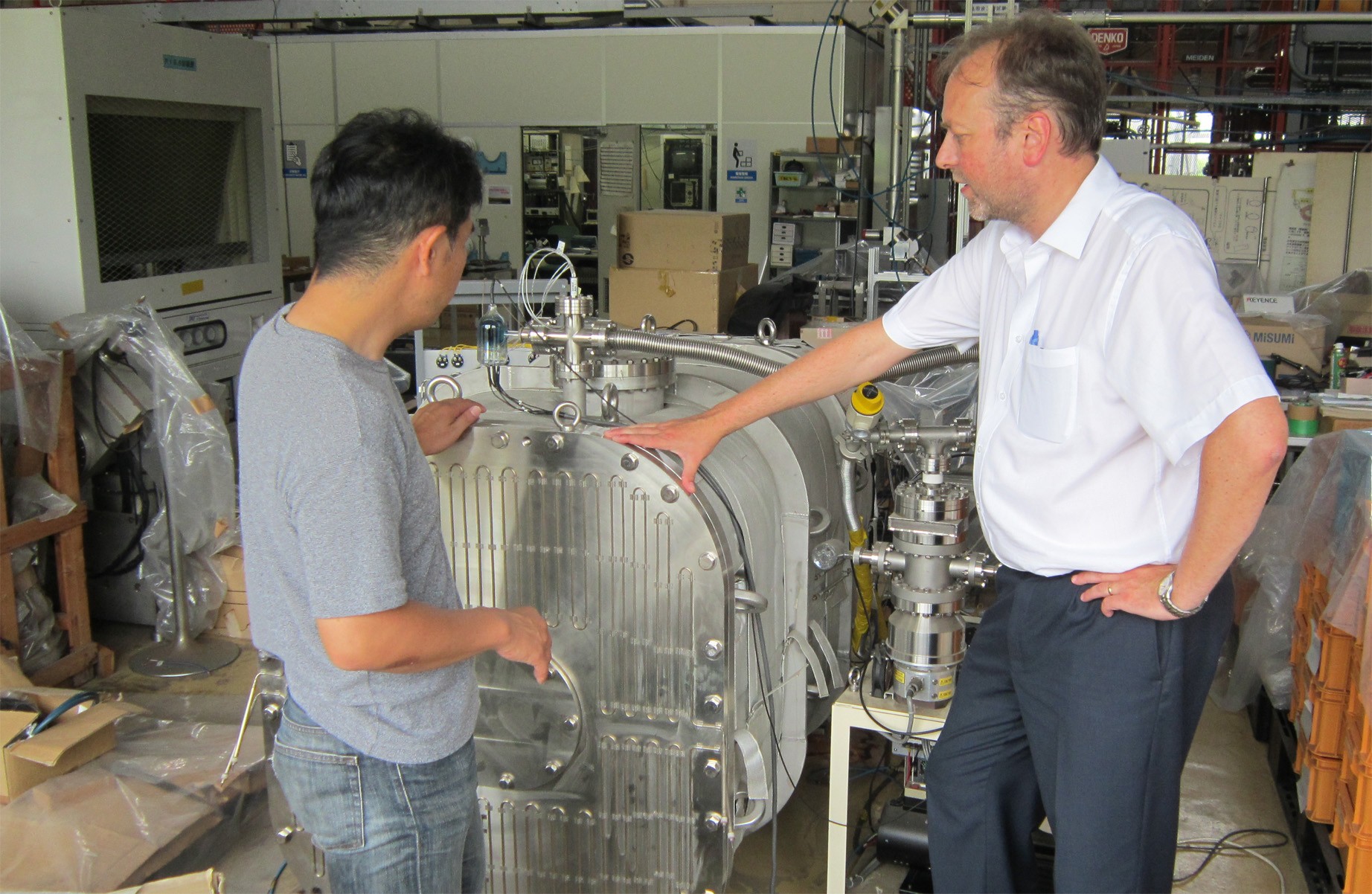
Takahashi-san shows the heating oven that will be used for further testing of the mockup to ITER Akko Maas.
"The first visits we did to all Domestic Agencies aimed at making them aware of our requirements," explains the ITER Quality Audit Manager. Now that we're returning, we're seeing real understanding, and real enthusiasm to comply with the requirements the ITER Organization has set." Thierry confirms: "The general feeling is that our requirements are duly taken into consideration and that they are communicated down the chain of suppliers."
Lead Auditor Akko Maas, who was part of the recent audit mission to the Japanese Domestic Agency, insists that "auditing is not about telling the Domestic Agencies what to do. It is not about finding non-conformities or pointing fingers; it's about trying to help their staff optimize the way they work, in conformity with the requirements included in the Procurement Arrangements and Task Agreements."
A typical audit consists first in checking that every required action has been taken and is documented. "At one point in the process, the Domestic Agency has to do this or that," explains Thierry, who headed the recent mission to Japan. "Our job is to check that 'this or that" has been done ... So we check the documents and we can also check how the required action has been implemented by the supplier, like we did at Hitachi during our July mission to Japan."
Audits of course generate some level of stress, both in the Domestic Agencies and at the suppliers. "No one likes to be audited," says Akko, "and this is something we have to take into consideration. We must be careful not to be intrusive and guarantee confidentiality. Again: auditing is not inspecting ..."
An audit results in a report that usually includes a certain number of "corrective actions," "corrective action requirements," or "improvement action requests" that both auditor and audited agree upon. "What happens quite systematically," says Thierry, "is that auditing a Domestic Agency also results in corrective action requirements or improvement action requests for the ITER Organization. And we have to implement ours exactly like the Domestic Agencies have to implement theirs." According to Andrew Denyer, "some 15 percent of all the actions requested after a Domestic Agency audit are on the ITER Organization ..."
With a reinforcement of two new graduates, Andrew can now count on a team of eight lead auditors who will devote some 15 percent of their time to auditing Domestic Agencies and also the different departments within the ITER Organization.
After the Japanese Domestic Agency in July, Europe, China and the US are on their agenda, and will be audited before the end of the year.