
The little coupler that could
16 Jan 2017
-
R.A.
Concrete and steel met at the end of the 19th century, never to part again. From their encounter a new material was born that revolutionized construction techniques.
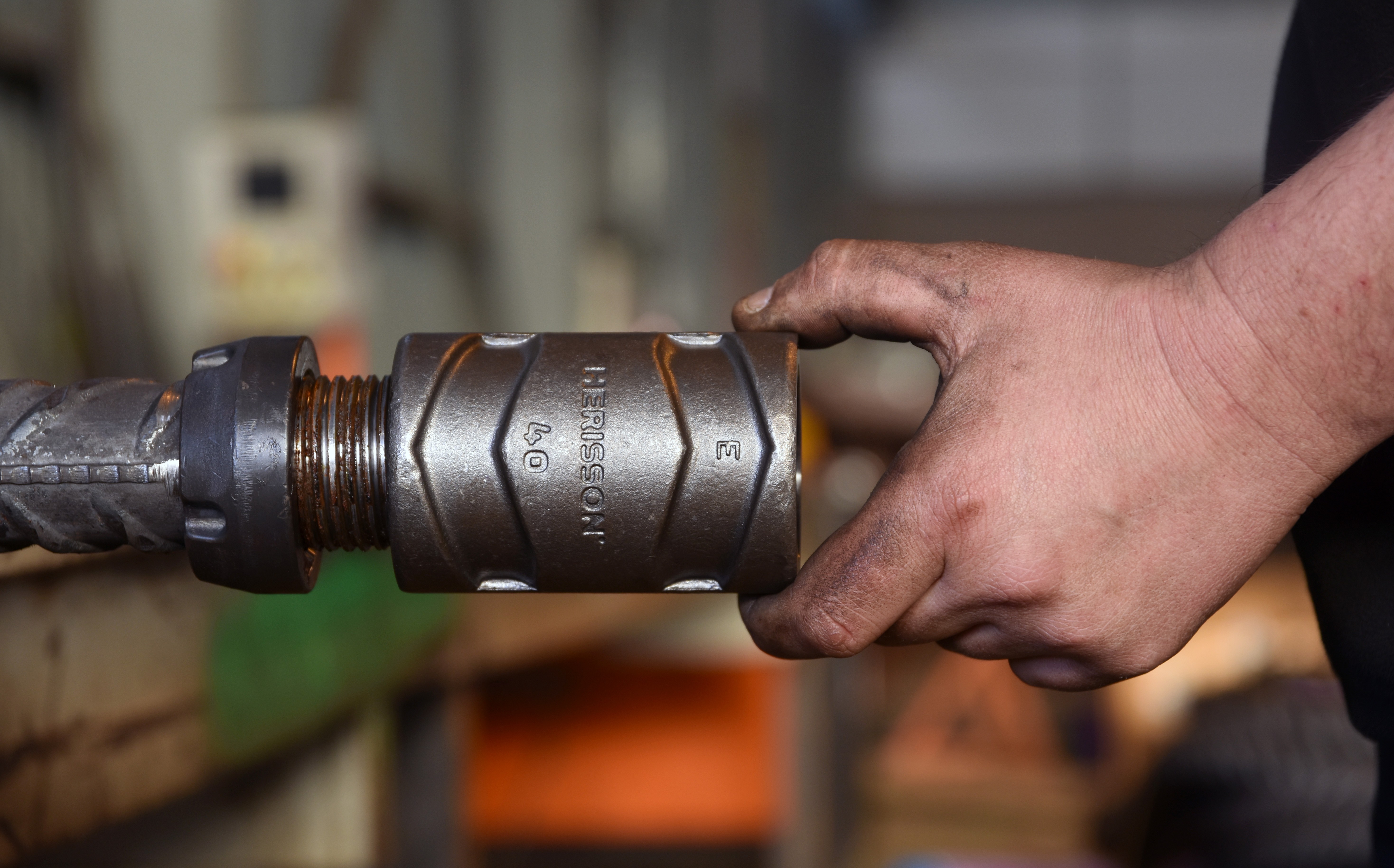
This small piece of forged steel has become a key element in any large-size reinforced construction project. In the ITER Tokamak Complex alone, more than 250,000 couplers will be necessary.
"Reinforced concrete" brought the best of two worlds to building projects: concrete's resistance to compression and steel's resistance to both compression and tension.
Embedding steel rebar into concrete made it possible to erect 300-metre-high skyscrapers and build viaducts tens of kilometres long. Without it, the construction of a nuclear installation, which requires exceptionally high structural resistance, would not be conceivable.
At worksites throughout the world, more than 6 billion tonnes of concrete are poured every year. Depending on the nature of the construction, the density of steel reinforcement per cubic metre of concrete varies greatly: from an average of 100 kilos per cubic metre in standard civil engineering works, it can reach 600 to 700 kilos in the most strongly reinforced sections of a nuclear installation.
At the heart of ITER, the Tokamak Complex will be built with 30,000 tonnes of steel (more than four times the weight of the Eiffel Tower) for a total of 100,000 cubic metres of concrete ─ an average of 300 kilos per cubic metre.

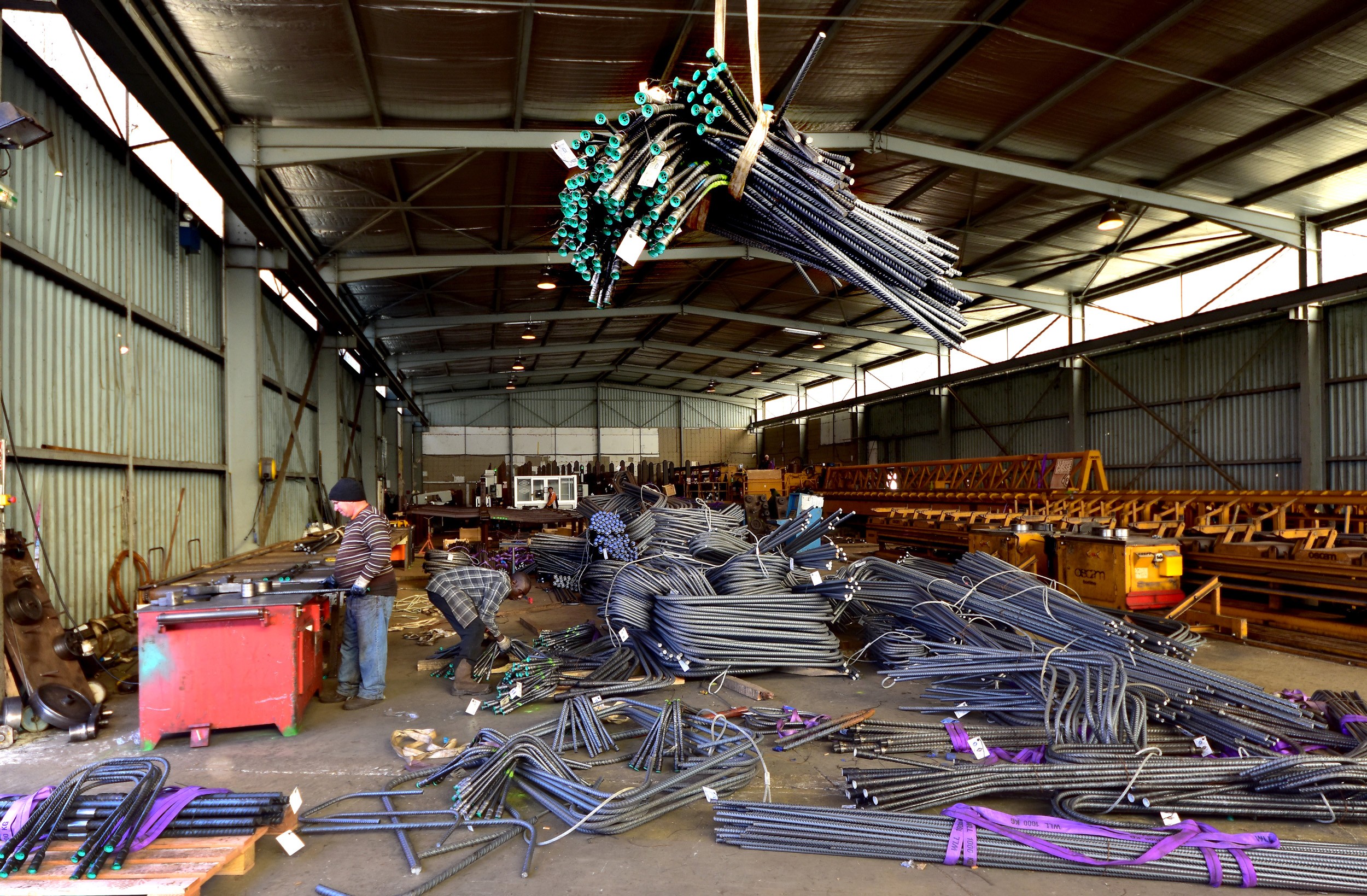
In the SAMT workshops, on the edge of the inland sea Étang de Berre, activity is buzzing. Steel rebar from Italy is cut to size and formed according to ITER's detailed execution drawings.
The density and the geometry of the reinforcement is determined by complex computations that take into account loads, stress and—in the case of a nuclear installation—safety requirements. Construction design reinforcement drawings, which rebar installers must follow, are elaborated on this basis.
As thick as 40 mm in the most heavily reinforced areas of the ITER Tokamak Complex, the steel reinforcement bars are arranged in complex patterns and layers—imagine dozens of superimposed spider webs made of steel "thread" as thick as a maiden's wrist.
Steel bars are typically 12 metres long and cannot be butt-welded to form larger continuous structures. In order to preserve structural resistance, bars must overlap by as much as 2.5 metres for the largest among them.
This overlapping not only exacerbates the density challenge, but also results in a costly increase in steel consumption.
Fortunately some thirty years ago, rebar installers came up with a smarter solution: they developed the "coupler," a small, threaded steel connector that can join two bars.
Perfected about 15 years ago by a small rebar company just an hour's drive from ITER (SAMT in Saint-Chamas, France), this small piece of forged steel has become a key element in any large-size reinforced construction project. In the ITER Tokamak Complex alone, more than 250,000 couplers will be necessary.
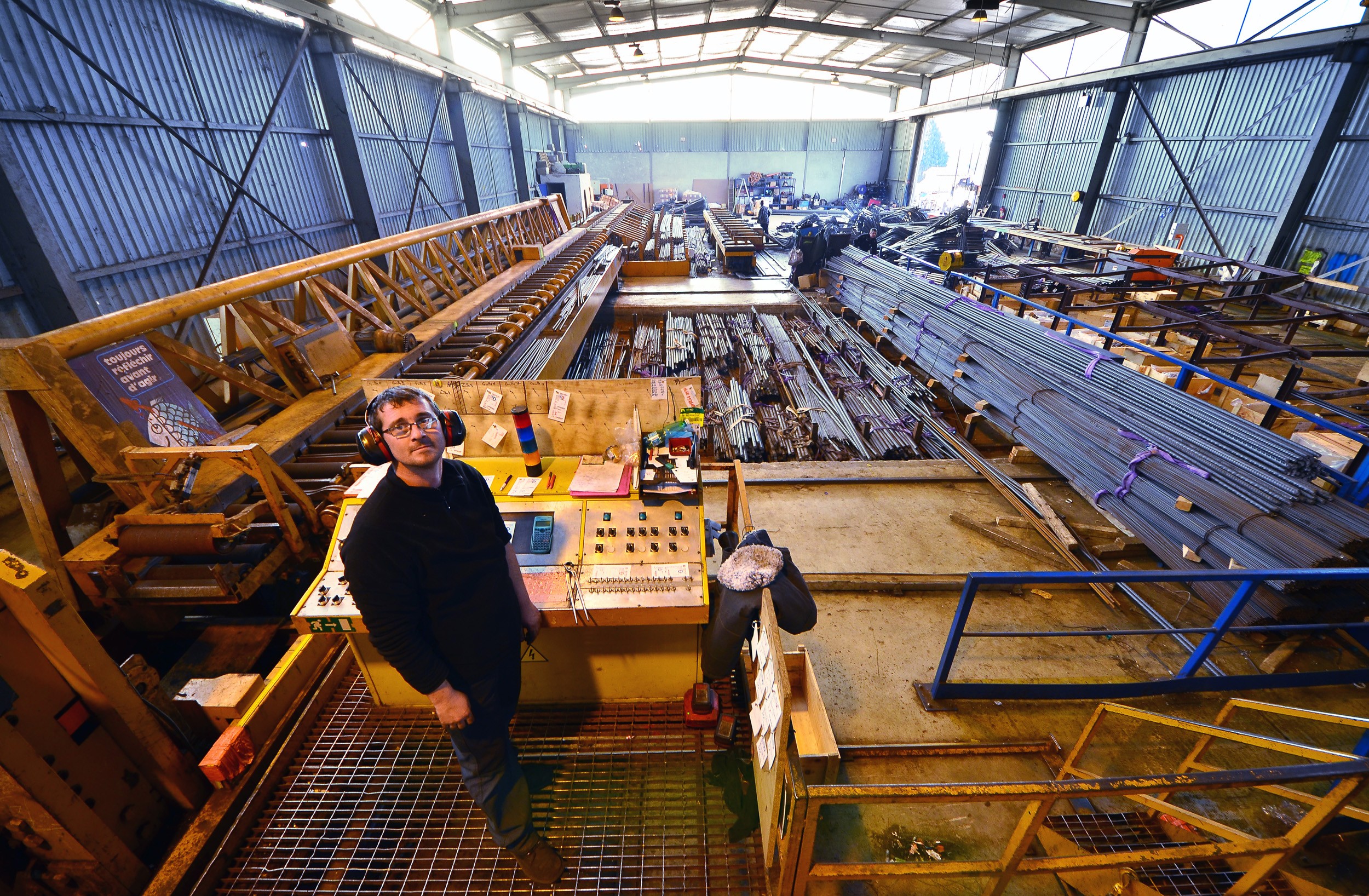
Carefully traced and tagged, steel bars and couplers are delivered two to three times a week at the foot of the ITER worksite cranes.
In the SAMT workshops, on the edge of the inland sea Étang de Berre, activity is buzzing. Steel bars of all calibres, manufactured in Italy, are fed into machines to be either cut to size and formed according to ITER's detailed execution drawings or threaded to accommodate couplers. Everything is carefully traced and tagged to be delivered two to three times a week at the foot of the ITER worksite cranes.
Currently, 300 to 500 tonnes of steel bars and more than 4,000 couplers are integrated into the construction of the Tokamak Complex every month.
Compared to the size and complexity of a project such as ITER, a small piece of steel such as a coupler could appear insignificant. But by limiting the amount of steel in the structure without altering its resistance and by reducing the costs attached to steel consumption, it has proved essential and indispensable.