
Not a soft issue: designing the ITER blanket
20 Dec 2011
-
Sabina Griffith
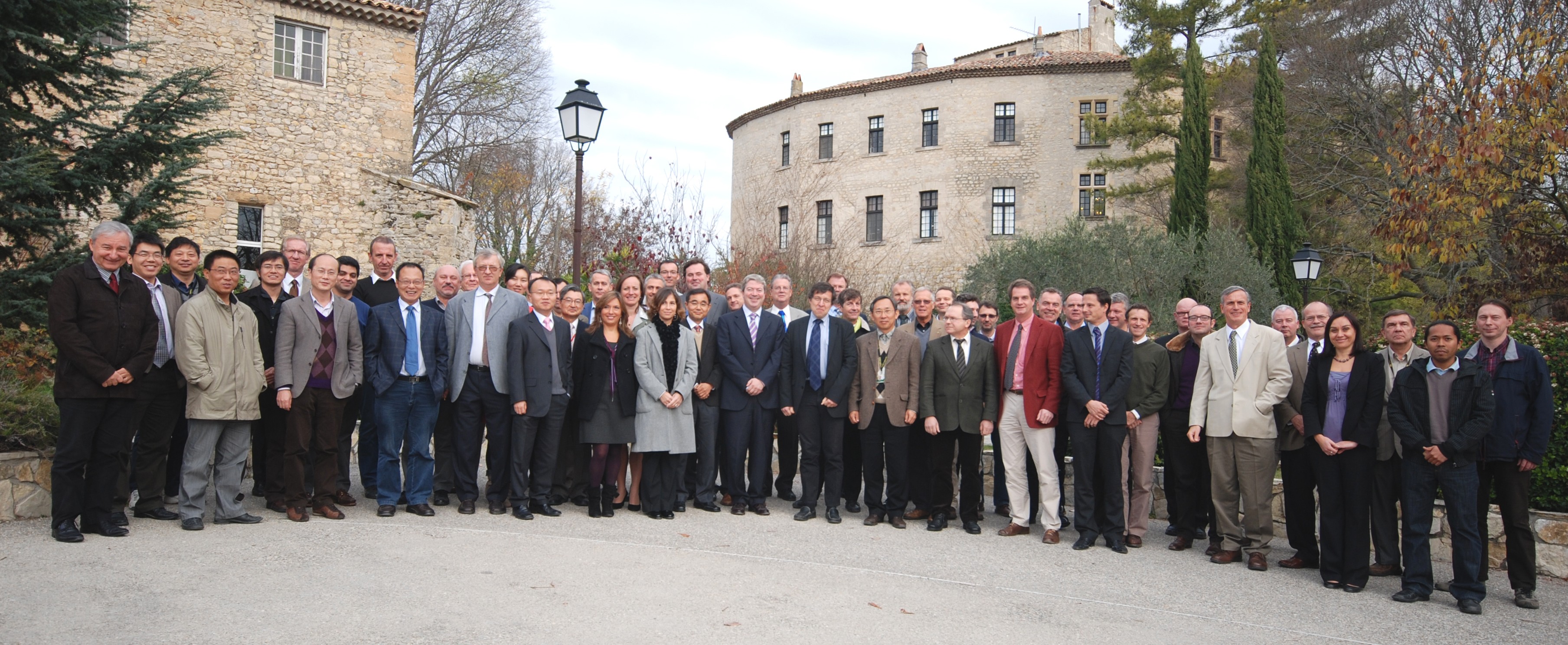
Joint Venture: More than 70 people were engaged in the recent Blanket Design Review held in Cadarache.
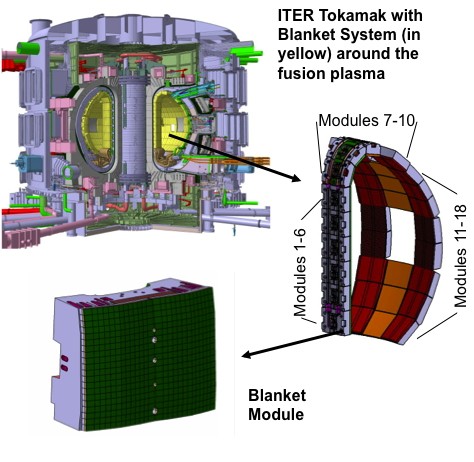
In fusion lingo, a blanket certainly has very little to do with that soft cover we use to keep away the winter chill. On the contrary, in a fusion power reactor it is a "thick, massive, complex structure that serves three major purposes," as physicist Francis F. Chen describes in his book An Indispensable Truth. First, it captures the neutrons generated by fusion and converts their energy into heat. Second, it produces tritium to fuel the deuterium-tritium reaction. And third, it shields the superconducting magnets and vacuum vessel from the neutrons.
In short, the blanket is the "power horse" of a fusion reactor. As ITER is an experimental reactor, the blanket will not need to breed tritium but its design is still of utmost importance for the success of ITER. The blanket is the component that shields the vacuum vessel and coils while accommodating high heat fluxes from the plasma as well as large electromagnetic loads during off-normal events; as such, it attracts a lot of attention from scientists and engineers.
A strong basis exists to proceed to the final detailed design but a consolidation of the design is needed to address the remaining issues.
The list of attendees to the Preliminary Design Review for ITER's wall-mounted blanket modules held in Cadarache during the last week of November reached 70 people. The review panel was chaired by André Grosman, deputy head of department at the IRFM (Magnetic Fusion Research Institute) at CEA Cadarache.
René Raffray, ITER's Blanket Section leader with responsibility for the blanket design, commented: "The Preliminary Design Review was conducted to monitor the progress of the design, and assure that the requirements are properly defined and that a firm basis exists to proceed to the final design phase. Many components interfacing with the blanket, such as the vacuum vessel, are already in procurement; the design of the blanket is thus particularly challenging because requirements have to be met without affecting the interfaces."
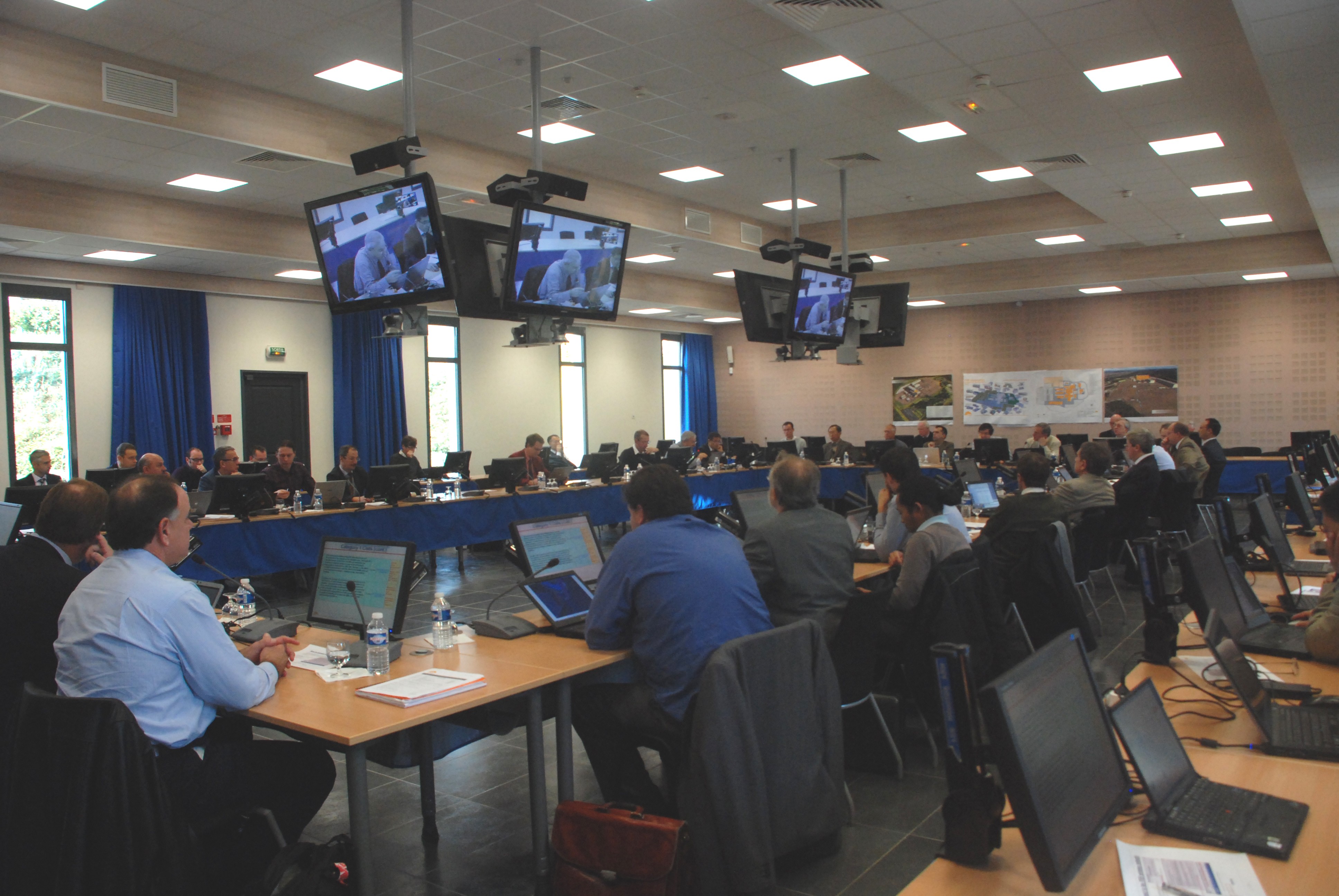
The Blanket Design Review held during the last week of November 2011.
The blanket design effort is coordinated through the Blanket Integrated Product Team (BIPT) established in 2009, which includes the participation of the ITER Organization as well as five Domestic Agencies. "Coordination is challenging because the design work is being done in many distant geographical locations," René, who also leads the BIPT, explains. "However, this should facilitate the procurement process in the end as the procuring Domestic Agencies will feel a sense of ownership of the design."
The panel provided a summary of its initial findings during a debriefing session at the end of the Preliminary Design Review, which was very encouraging. As stated by the panel chair: "The panel recognizes the impressive improvement made since the Conceptual Design Review and the extensive amount of work that has been performed. A strong basis exists to proceed to the final detailed design but a consolidation of the design is needed to address the remaining issues."