
A three-day immersion in vacuum
15 Jun 2015
-
R.A.
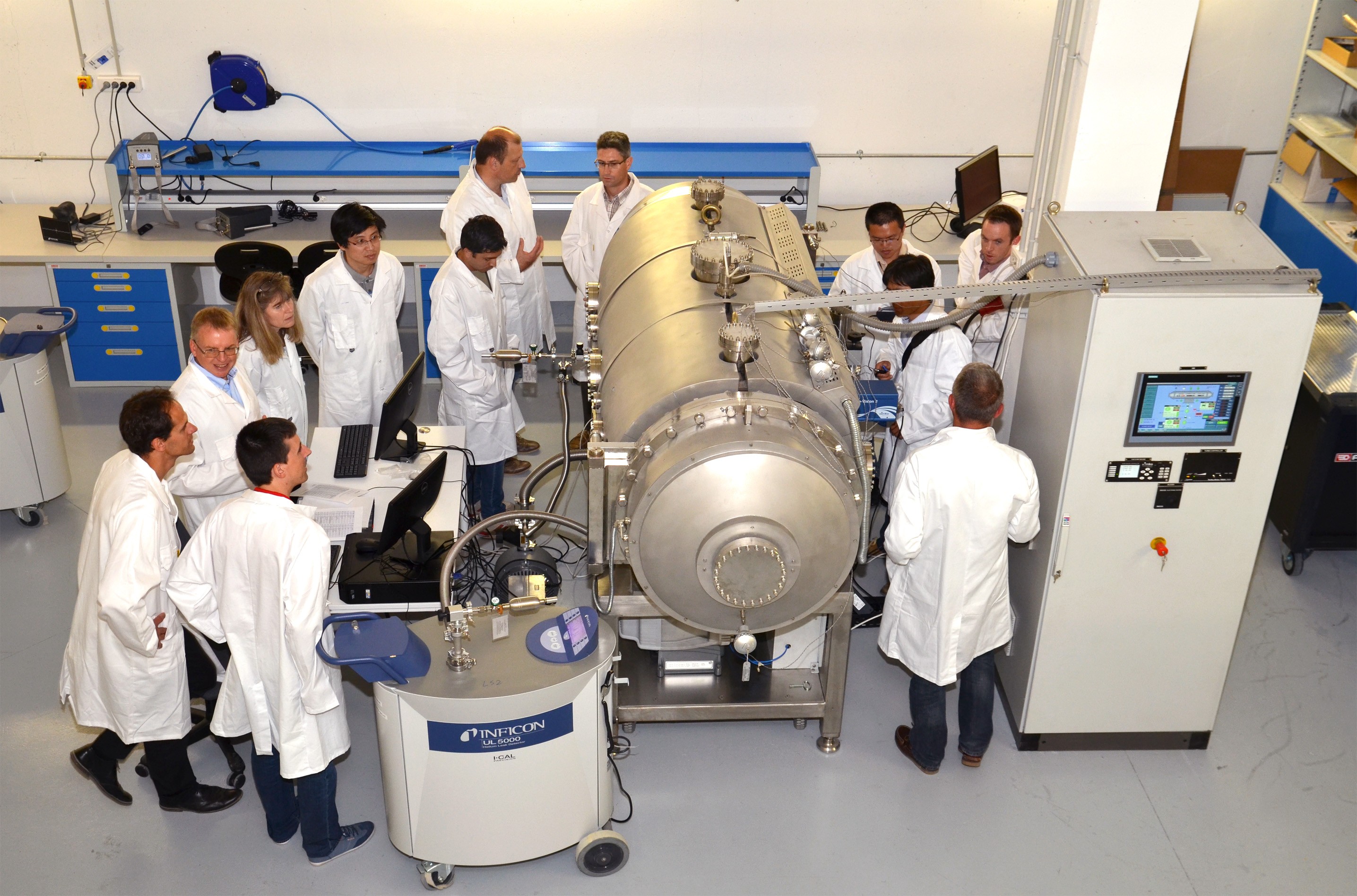
The three-day training session made it clear why vacuum, in Robert Pearce's own words, "is absolutely key to ITER success."
In the ITER Tokamak, the challenges of vacuum can be found everywhere: in the 1,400 m³ vacuum vessel where fusion reactions will be produced; in the 8,500 m³ cryostat that will act as a giant thermos to keep the intense cold inside the superconducting coils; and in penetration flanges, filters, valves, gauges, diagnostic equipment, materials...
Vacuum is so important to a fusion device that it takes more than just technical competence to apprehend it—one needs a broad "vacuum culture" and an understanding of what vacuum is about.
The first three-day "Vacuum for Fusion" training session that was organized at ITER on 9-11 June aimed precisely at that. "We developed this course to provide an overview of the complete science and engineering of vacuum technology," explains Robert Pearce, head of the ITER Vacuum Section. "Through lectures, presentations and practical sessions in the vacuum lab, we went from the fundamentals to the nitty-gritty of the engineering techniques."
Twenty-four participants from the European and US Domestic Agencies and from different departments of the ITER Organization learned how, when it comes to the ITER Tokamak, vacuum touches "almost everything—from plasma to magnets." Over the course of three days, they explored vacuum fundamentals and material properties, and experimented with leak detection, metal sealing, and gas analysis.
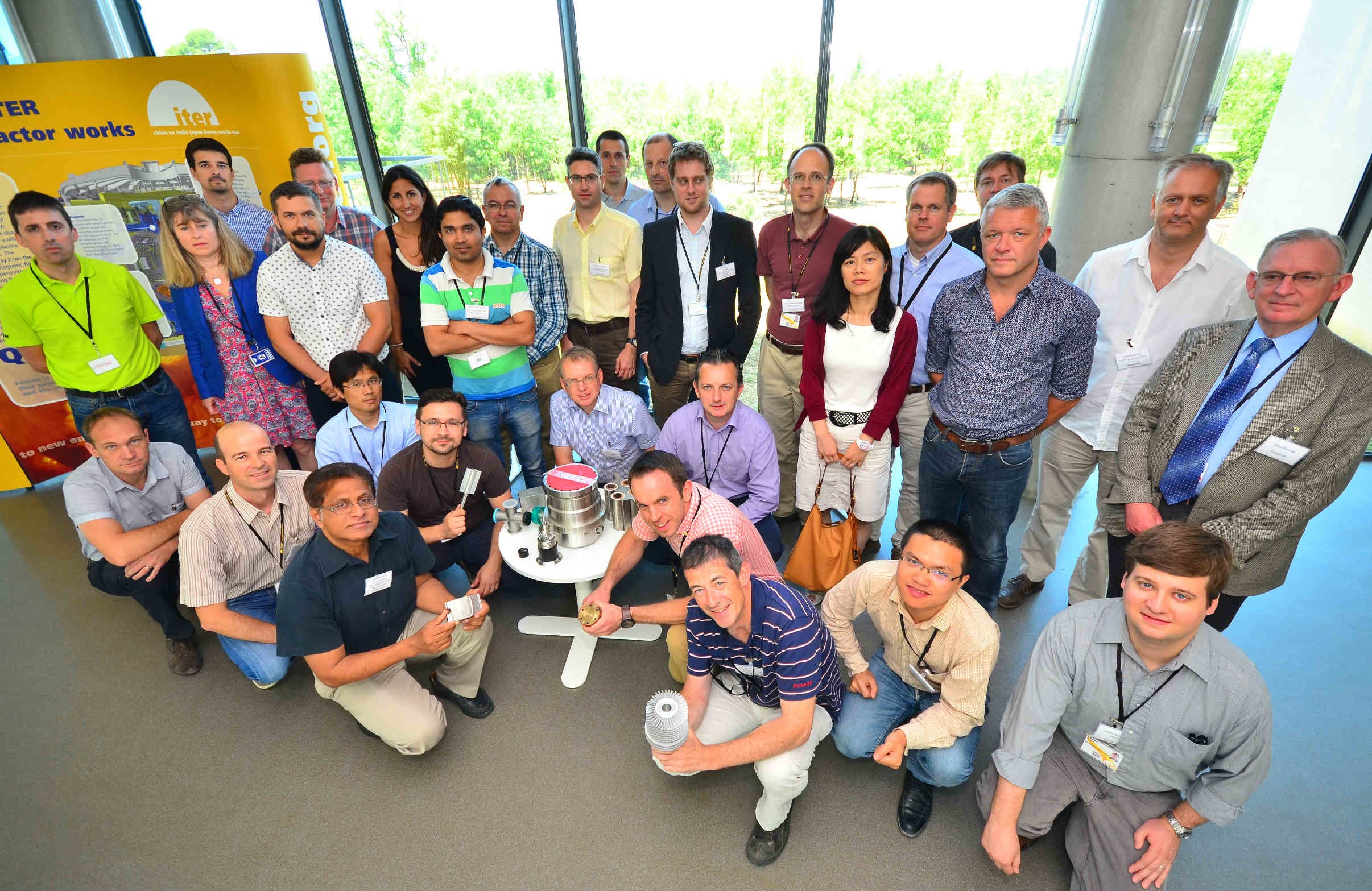
Twenty-four participants from the European and US Domestic Agencies and from different departments of the ITER Organization learned how, when it comes to the ITER Tokamak, vacuum touches almost everything...
"The lecturers have a lot of experience," explains Francina Canadell, a young engineer with the Vacuum Pumping Group at the European Domestic Agency. "They have helped us to put the concepts into context. Take outgassing¹ for instance — we deal with outgassing on a daily basis with the suppliers that are manufacturing components for ITER. But what is the essence of outgassing? What are the physics underlying the process? This is the kind of thing that we learned during the session."
For the young engineers at an early stage of their career in vacuum, or for the more seasoned experts working on the design, procurement and assembly of vacuum components, all enjoyed the overall approach of the session designed by Robert Pearce and his team. And—most important of all—the training session made it clear why vacuum, in Pearce's own words, "is absolutely key to ITER success."
Given the level of interest in the first training session the program will be offered again in the future, open to all ITER Domestic Agencies.
¹ Outgassing is the process by which materials release the gas particles that are trapped on their surface or within their structure.