
A soft landing for a giant component
With the delicate touch of a butterfly settling on a branch, engineers have successfully transferred the 440-tonne load of vacuum vessel sector #6 from its overhead radial beam to its gravity support below.
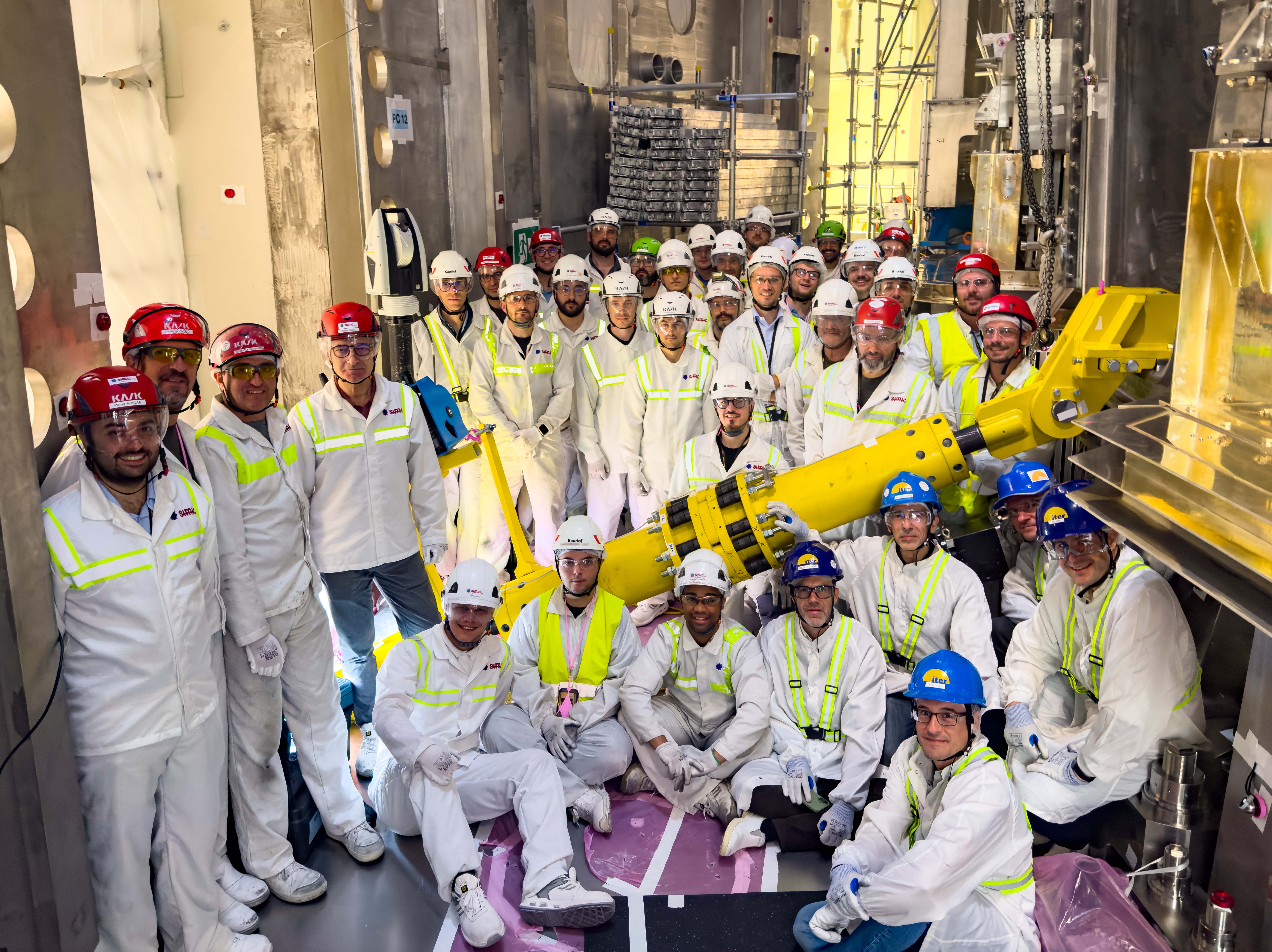
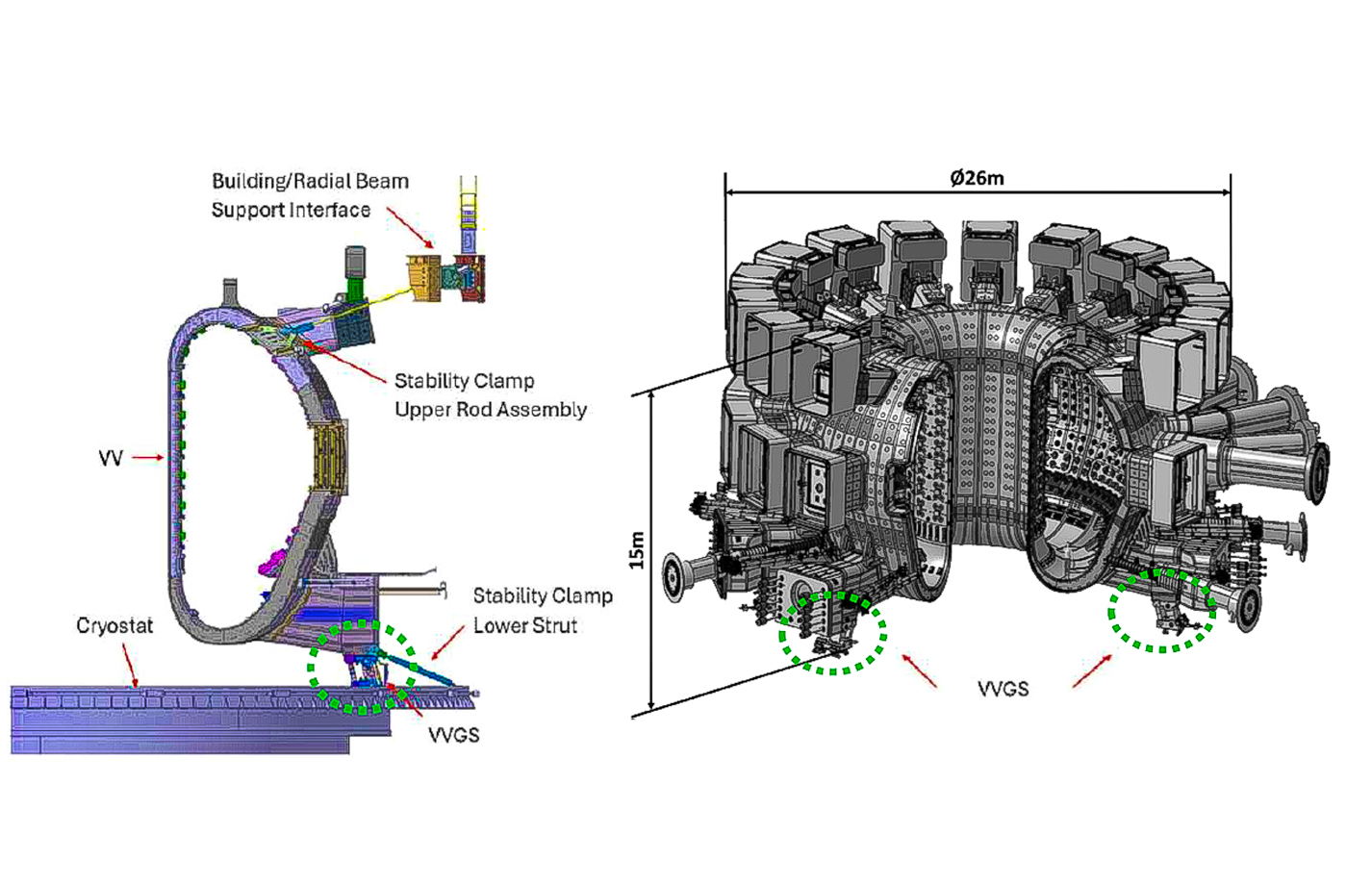
The first-of-its-kind operation—an essential benchmark in vacuum vessel assembly—means the vacuum vessel sector has been decoupled from the central column and bioshield wall that had previously shouldered its weight. It is now fully supported from underneath by the vacuum vessel gravity support that sits on the cryostat base and is buttressed from below by the tokamak’s crown support structure. Stability clamps are also holding the sector steady until all nine vacuum vessel sector modules are installed in the tokamak pit and torus welding has progressed sufficiently.
The load transfer process required manoeuvring the enormous vacuum vessel sector into position over the gravity support with only three millimetres of margin. Then, the hinge mechanism of the support was used to raise it into contact with the lower port stub extension of the sector, and shims were inserted to ensure a perfectly secure interface between the components. Finally, the sector was bolted to the gravity support and its weight was released from the overhead radial beam on Tuesday 5 May.
“The preparations and alignment had been executed perfectly so there was no movement during the load transfer,” says Vincent Hanser, the contract manager for the project. “The real achievement is reaching this stage, as the ITER teams and contractors had to invest a huge amount of effort over two years to obtain this result.”
Originally, the vacuum vessel sectors were to be lowered onto their dedicated supports only after being welded into “triplets.” However, when the assembly strategy evolved toward simultaneously welding all nine sectors after they had landed on their gravity supports, the landing process had to be moved forward.
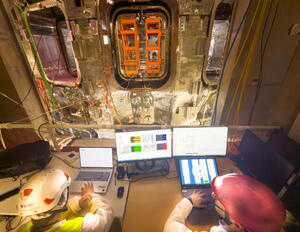
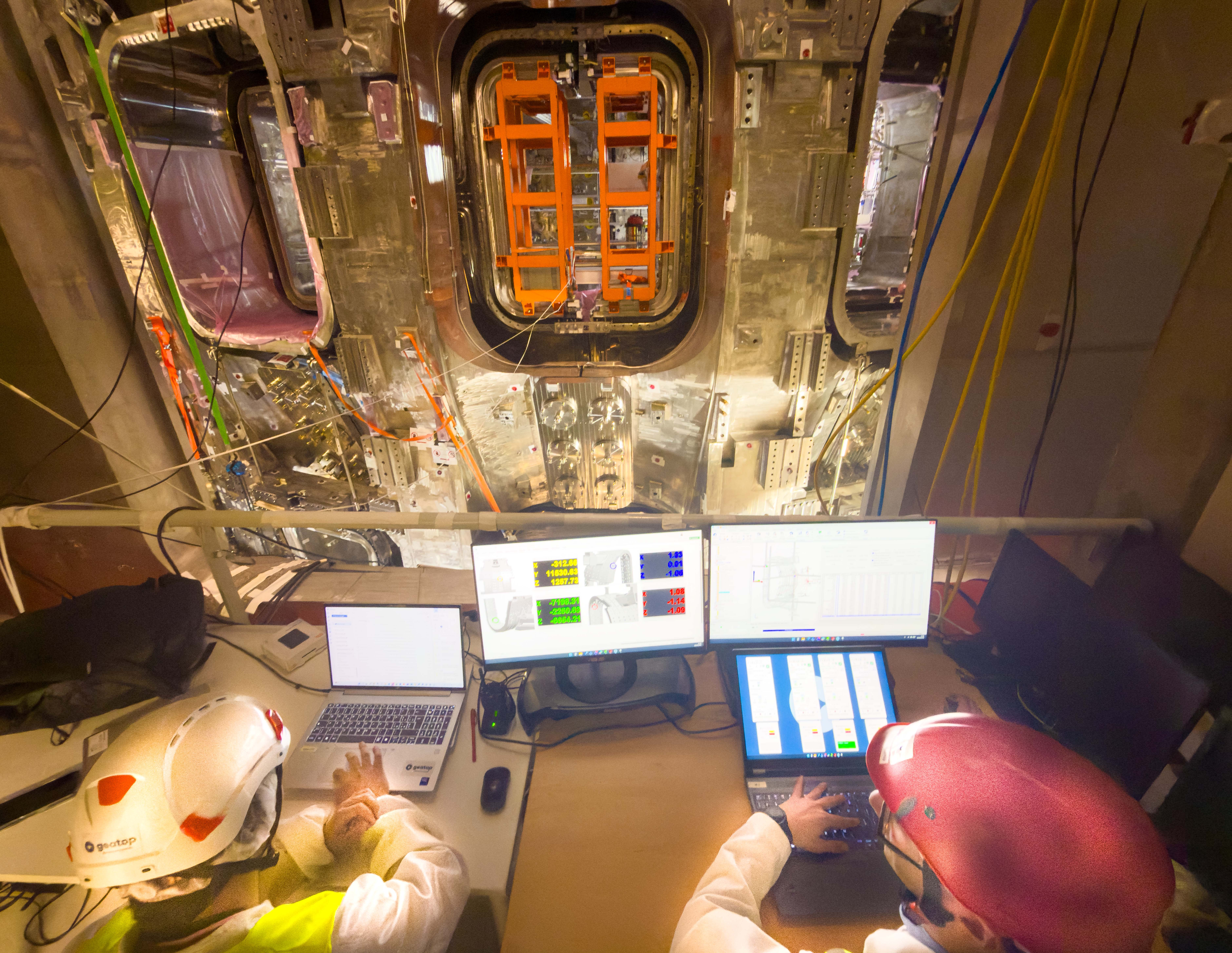
“The change in welding strategy was important for achieving homogenous shrinkage across the nine sector joints and mitigating deformation, but it did require a significant adaptation to the assembly schedule,” says Sébastien Koczorowski, ITER’s Deputy Program Manager for the Machine Assembly Program. “The successful landing highlights the agility, resilience, and collective problem-solving capacity of the teams.”
The installation of the vacuum vessel gravity support and the stability clamps, as well as the landing itself, were executed by ITER contractor SIMIC. With the successful touchdown of the first sector, teams can now turn their sights to landing vacuum vessel sector #7 in July.