Pour les actualités en français, voir la page News in French.

Test Blanket Module Program

Turning tritium breeding into reality

While ITER will benefit from the tritium available worldwide, fusion energy fuelled by deuterium-tritium reactions will require efficient and reliable tritium breeding technologies. Testing them and validating the design basis for industrial manufacturing are essential steps that ITER is completing through its Test Blanket Module (TBM) Program. ITER will be testing four concepts during its first deuterium-tritium (DT-1) operation phase; this summer, all four passed preliminary design reviews. 
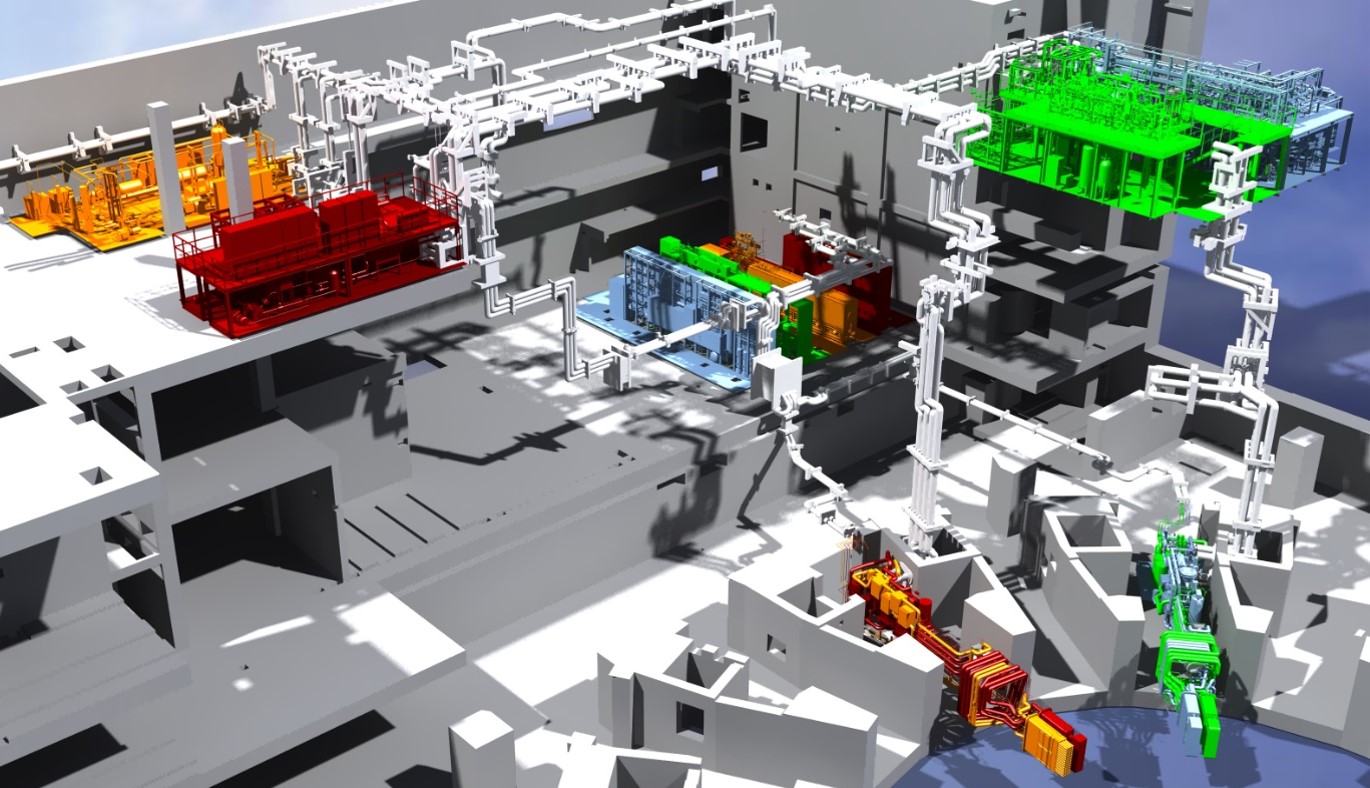
Each test blanket system is designed to be independently integrated and operated on ITER, equipped with dedicated coolant, tritium extraction, purification, and instrumentation and control systems. The test blanket modules are hosted near the plasma in two equatorial ports (bottom right).

Testing tritium breeding has been a major ITER mission since the start, as captured in the “Final Report of the ITER Engineering Design Activities” (IAEA/ITEREDA/DS/21), the technical foundation of the ITER Agreement. After the signature of the ITER Agreement, the TBM Program was established by the ITER Council in 2008 (IC-3) with specific governance and resources.

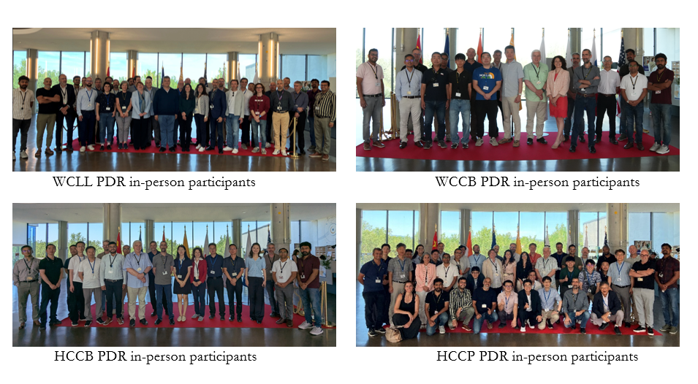
Each of the design review events at ITER gathered more than fifty scientists and engineers, in-person or remote, to present or review the different test blanket system configurations and the extensive engineering assessments that have been performed to demonstrate the preliminary readiness for integration, safety and operation on ITER and—beyond ITER—the suitability of the solutions for tritium breeding in the next-phase DEMO devices.

“The awesome challenge of the ITER Members is to develop the test blanket system technologies that can be tested in ITER then incorporated as breeding blanket solution for the DEMO reactor, or other future fusion reactors after ITER,” says Rossella Rotella, Project Leader of the Tritium Blanket Breeding Section.

To prepare the ground for use in DEMO reactors, each test blanket system is designed to be independently integrated and operated on ITER, equipped with dedicated coolant, tritium extraction, purification, and instrumentation and control systems. 

During the first deuterium-tritium operation phase (DT-1), ITER will be testing four tritium breeding concepts:

  • Water-Cooled Lead-Lithium (WCLL) technology, developed by Europe
  • Water Cooled Ceramic Breeder (WCCB) technology, developed by Japan
  • Helium Cooled Ceramic Breeder (HCCB) technology, developed by China
  • Helium-Cooled Ceramic Pebble (HCCP) technology, developed jointly by Korea and Europe

Each test blanket system is made up of a test blanket module (TBM) placed near the plasma containing the tritium breeder and the neutron multiplier together with its primary coolant for power-production-facility-grade heat removal; a shield placed behind the TBM to limit nuclear heating on the superconducting magnets and radiological exposure on personnel; a frame hosting two TBM and their shields; a neutron activation system for characterization of the TBM neutron behaviour and modelling; and ancillary systems to maintain each test blanket system in operation and to monitor its performance. 
Following the success of preliminary design reviews this summer, the four tritium breeding concepts that will be tested on ITER are progressing to the final engineering phase.

Decades of technological and engineering development through the ITER Test Blanket Module (TBM) Program have led to the important milestones reached this summer. The ITER Members and the ITER Organization worked together to prepare the detailed engineering analyses and technical documents that underpin each of the test blanket system technologies. That included about 1,000 deliverables—models, electromagnetic analyses, thermal-hydraulic and mechanical verifications, nuclear and safety assessments, diagrams, drawings, equipment lists and classifications, manufacturing feasibility plans, and finally plans for installation, commissioning, operations, maintenance and decommissioning. This demonstrates the maturity of the four test blanket system technologies and marks their readiness for the final engineering phase. The documentation also importantly provides the evidence of solution compliance with the TBM Program Research Plan, which establishes the detailed testing objectives of the test blanket program at ITER. 

They said:

The DEMO-relevance of ITER's test blanket systems was highlighted by the leaders of each program in the ITER Members. 

For Q. Sheng, leader of China’s HCCB test blanket system: “The successful completion of the preliminary design review marks a significant milestone. The measured data and operational experience accumulated during the implementation of TBM Program activities at ITER will provide critical support for the research and development of future fusion reactors.”

For F. Fantini, leader of Europe’s WCLL test blanket system and breeding blanket technologies at Fusion for Energy, the European Domestic Agency: “The ITER TBM Program offers a unique opportunity to advance breeding blanket technologies in an integrated fusion environment. It will build essential capability in nuclear licensing, manufacturing qualification, and industrial supply chains. It will also provide practical experience in installation, commissioning, operation, and maintenance. These capabilities remain valuable despite schedule changes and the lower neutron fluence expected during the initial deuterium-tritium phase at ITER. The program will therefore strengthen industrial, regulatory and operational readiness for DEMO or any future machine after ITER.” 

For T. Hirose, leading the development of WCCB technology in Japan: “Beyond technology validation, the ITER TBM Program is an essential step toward establishing the engineering, manufacturing, and operational capabilities required for DEMO and future fusion power plants. Through the fabrication of representative TBM sub-modules using reduced activation ferritic/martensitic steel, F82H, and extensive high heat flux testing of full-scale mockups, the Japanese WCCB program has demonstrated key design, qualification, and manufacturing approaches for water-cooled breeding blankets. The experience and data generated through these activities help reduce technical risks, strengthen confidence in DEMO-relevant blanket designs, and contribute to the realization of DEMO and future fusion energy systems.”

For M. Ahn, who heads the development of TBM and breeding blanket technologies at the Korea Institute of Fusion Energy: “The HCCP test blanket system we are developing together with Europe is closely linked to the development of the breeding blankets for Korea’s Compact Pilot Device (CPD), the country’s next-step fusion device. The experience accumulated through the design, fabrication, safety and licensing, and system integration of the HCCP test blanket system will provide an important foundation for developing the breeding blanket of the Compact Pilot Device. This return on experience from ITER will serve as a practical bridge to our new device, while helping us address the remaining challenges in tritium management, materials, and integrated blanket engineering.”

For ITER’s R. Rotella, leader of the TBM Project Team: “Passing the preliminary design reviews represents a breakthrough landmark for the TBM Program and for fusion technology development. It also testifies to the outstanding multi-disciplinary and international cooperation among the ITER Members and the ITER Organization. We are committed to succeeding with one of the most critical challenges of fusion power plants: producing tritium to turn fusion energy into a sustainable source of power for the future generations.”