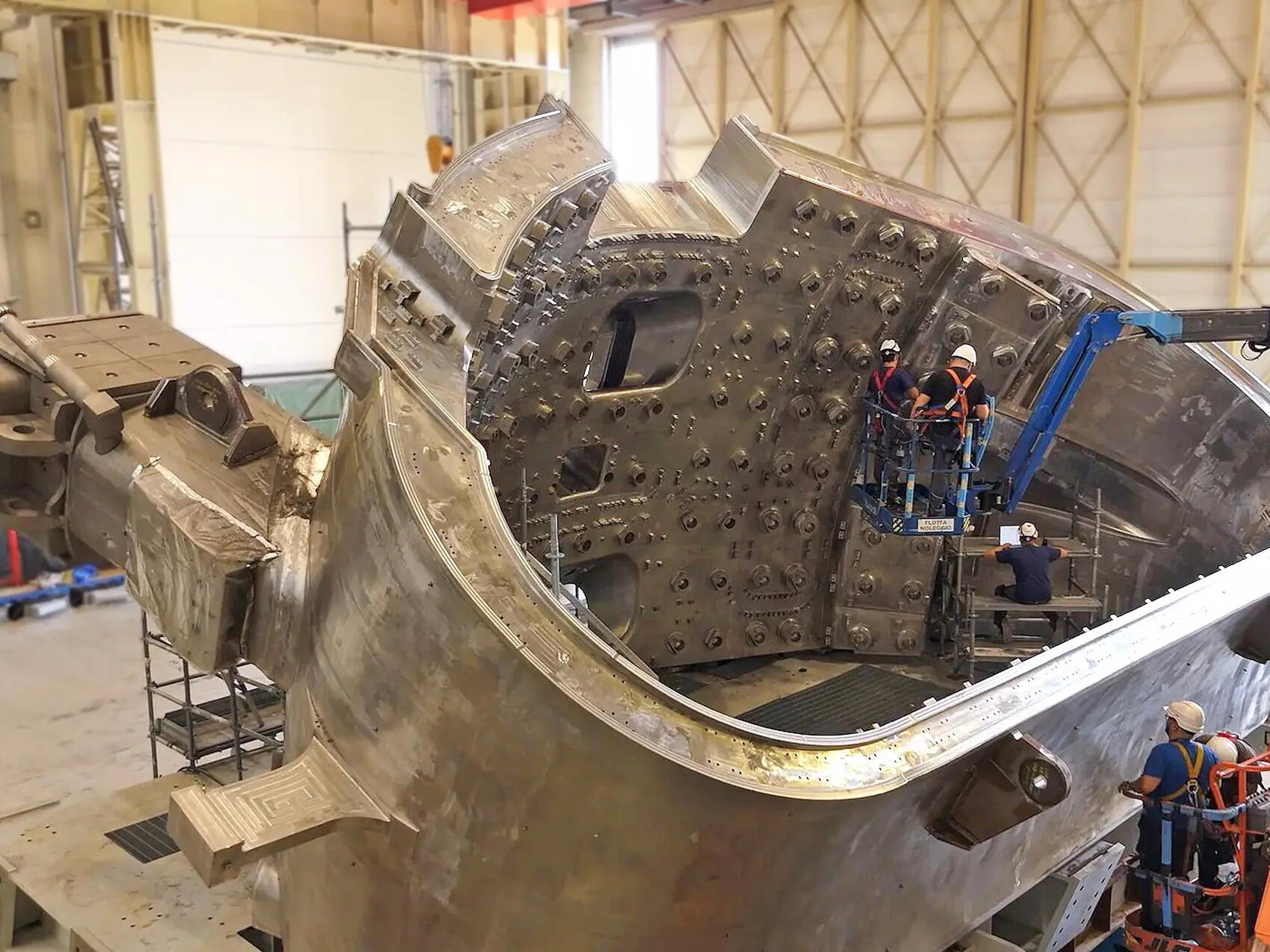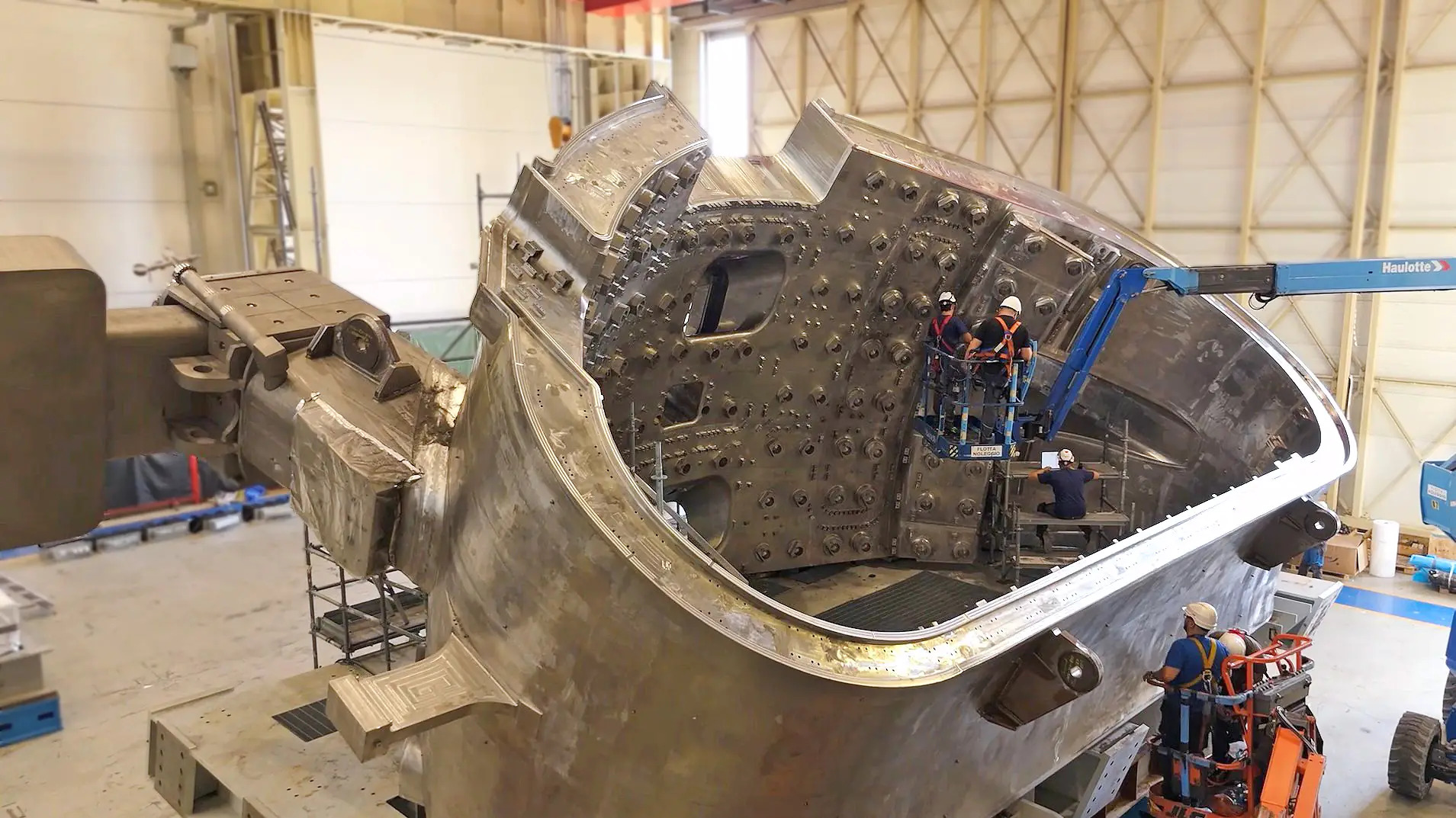
A remarkable chapter draws to a close
In July 2020, in the middle of the exceptionally challenging Covid-19 pandemic, the ITER Organization marked the start of ITER machine assembly with a small ceremony on site. The cryostat base had been successfully lowered into place—the first in a succession of extraordinary lifting operations that would see the empty volume of the tokamak pit gradually transform into the ITER machine. Six years later, the ITER community gathered to celebrate another milestone in the making of ITER. With the arrival of the ninth and final vacuum vessel sector from Europe, all the components needed to complete the core* ITER machine are now on site.
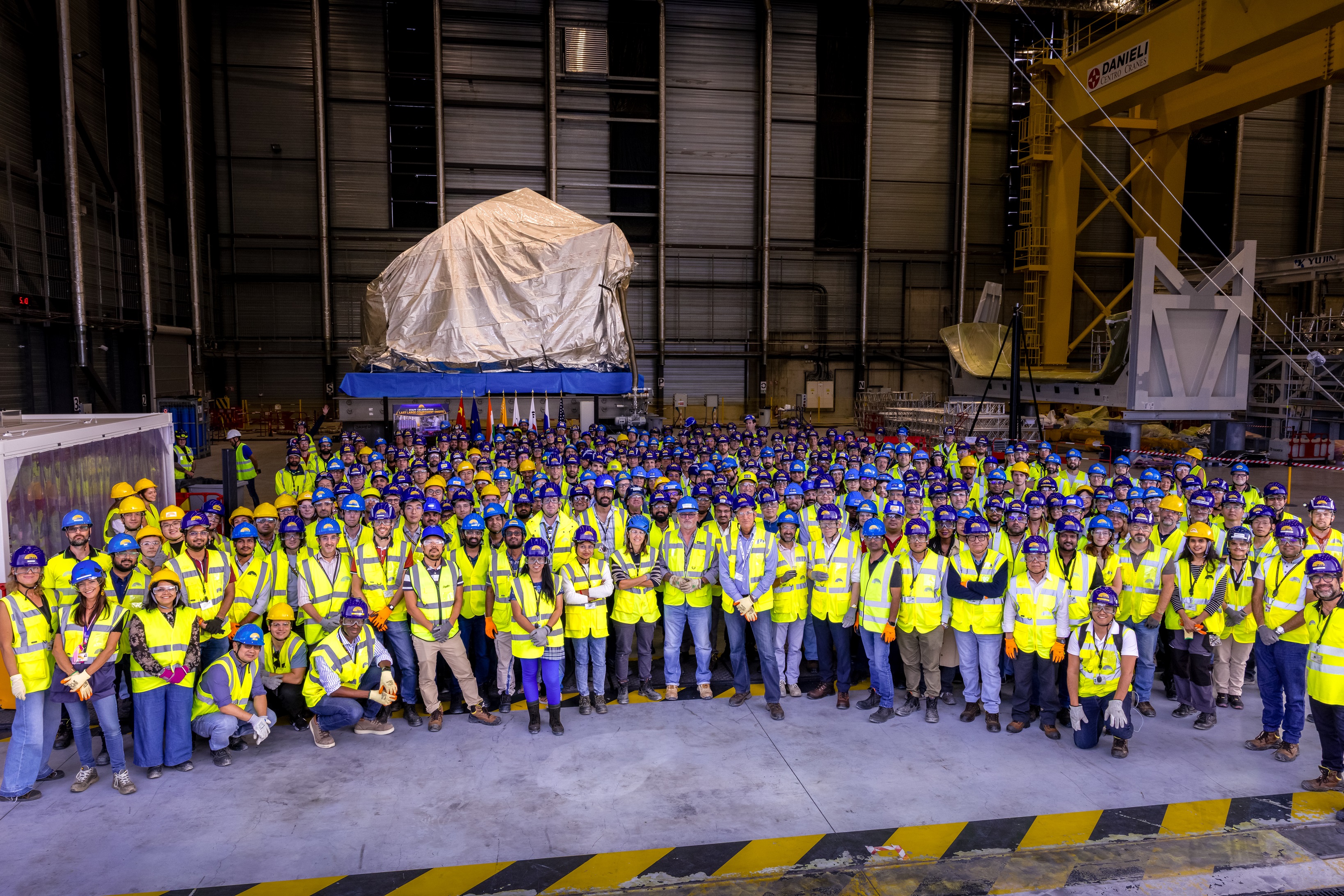
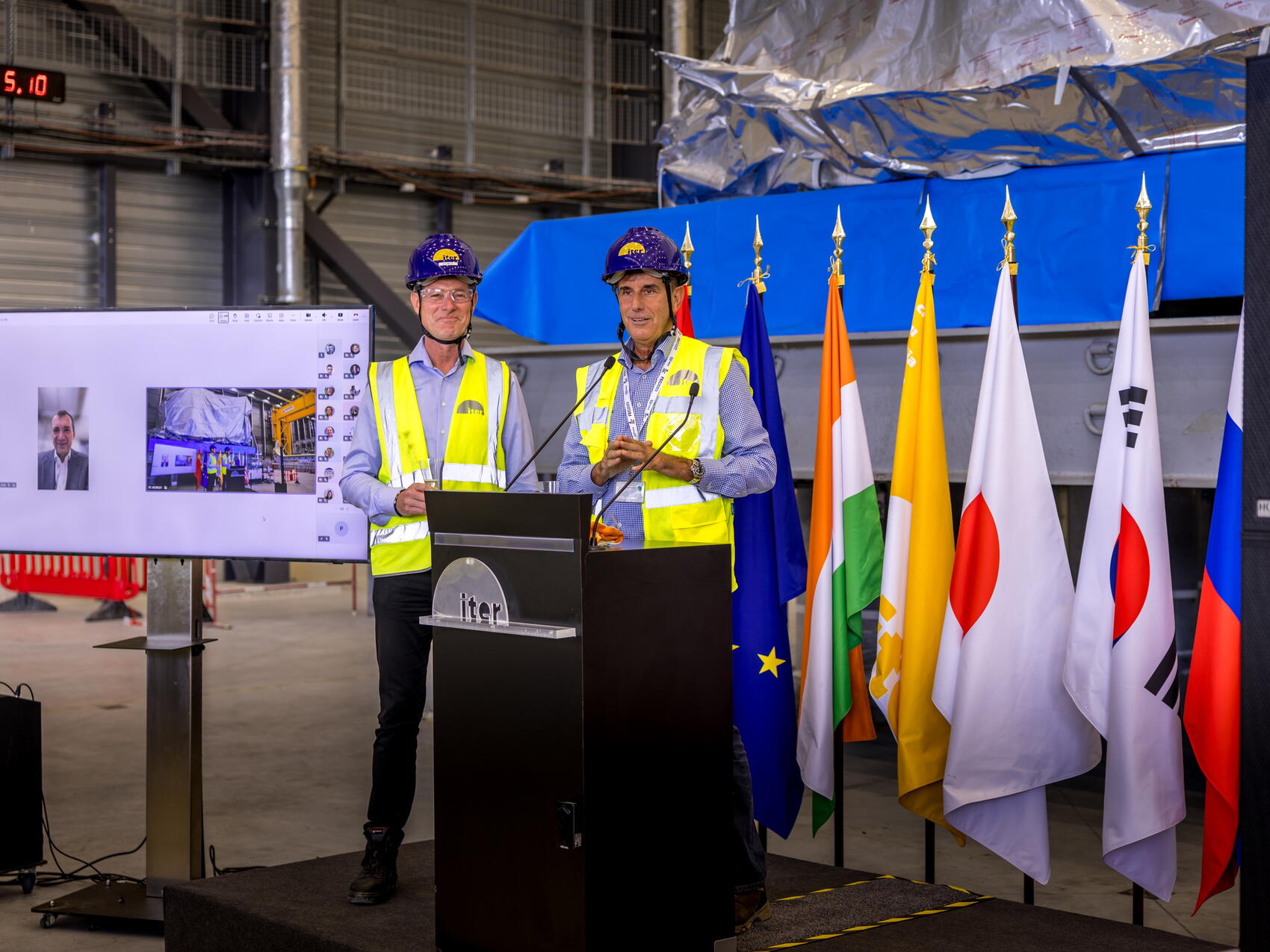
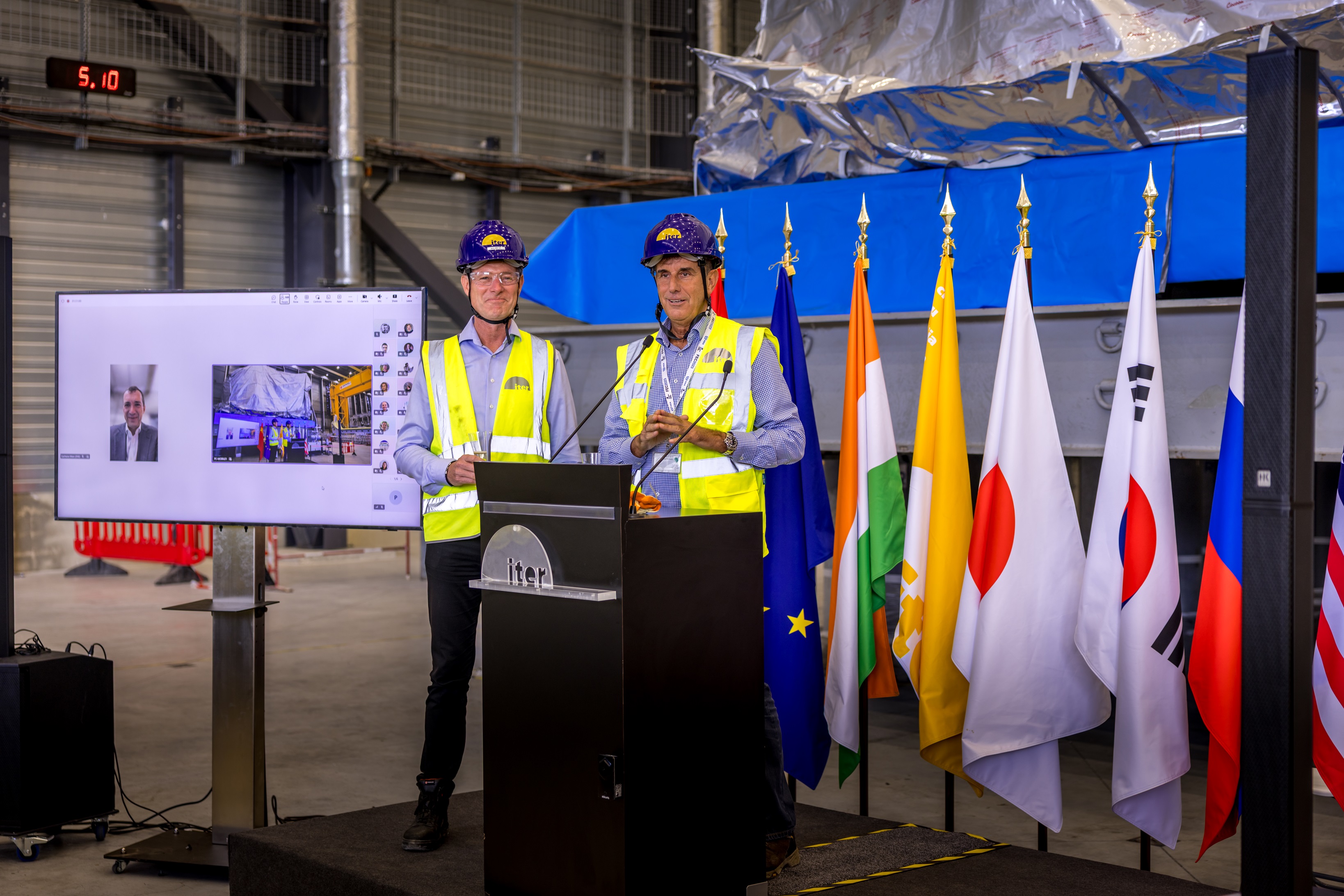
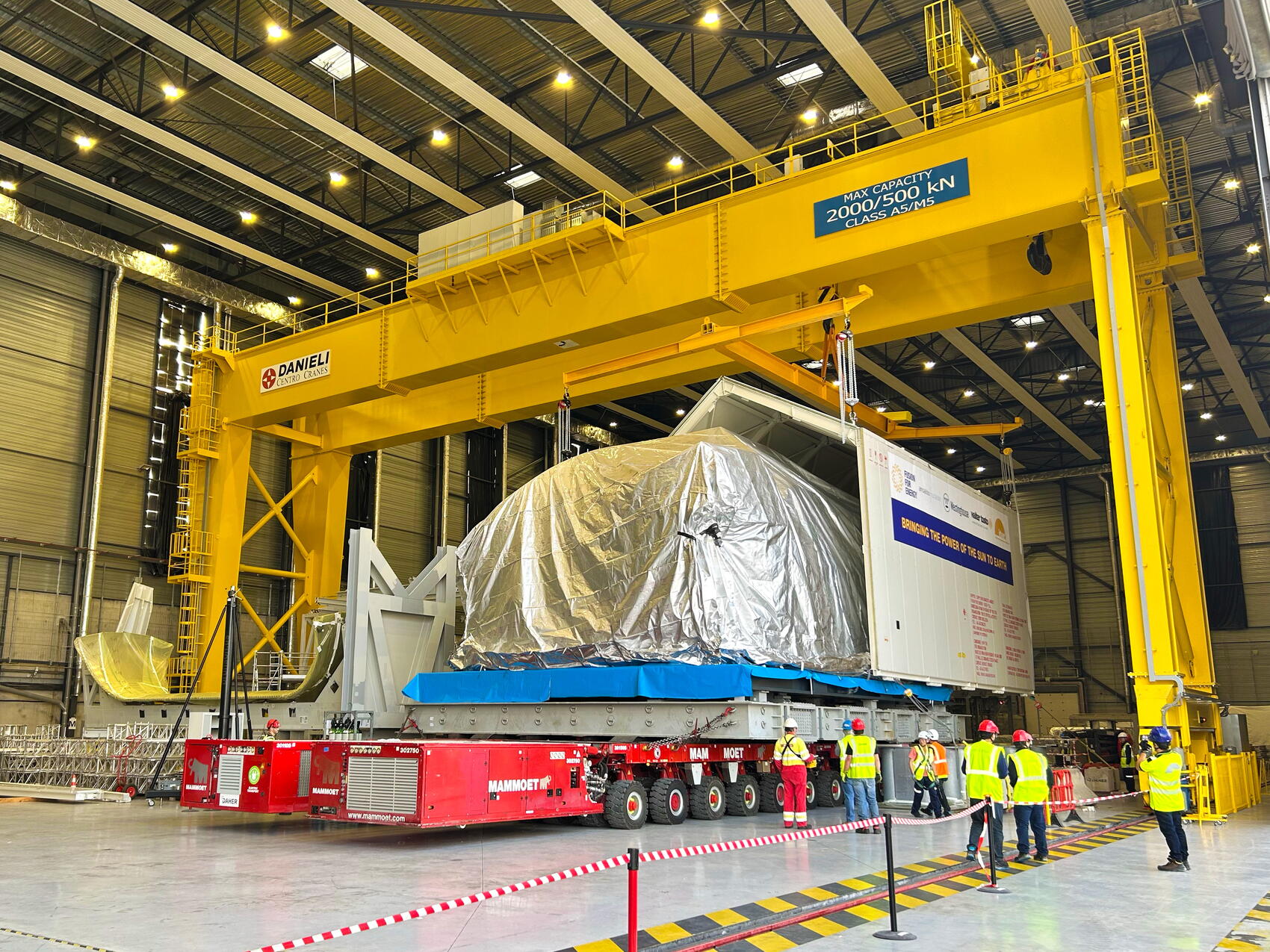
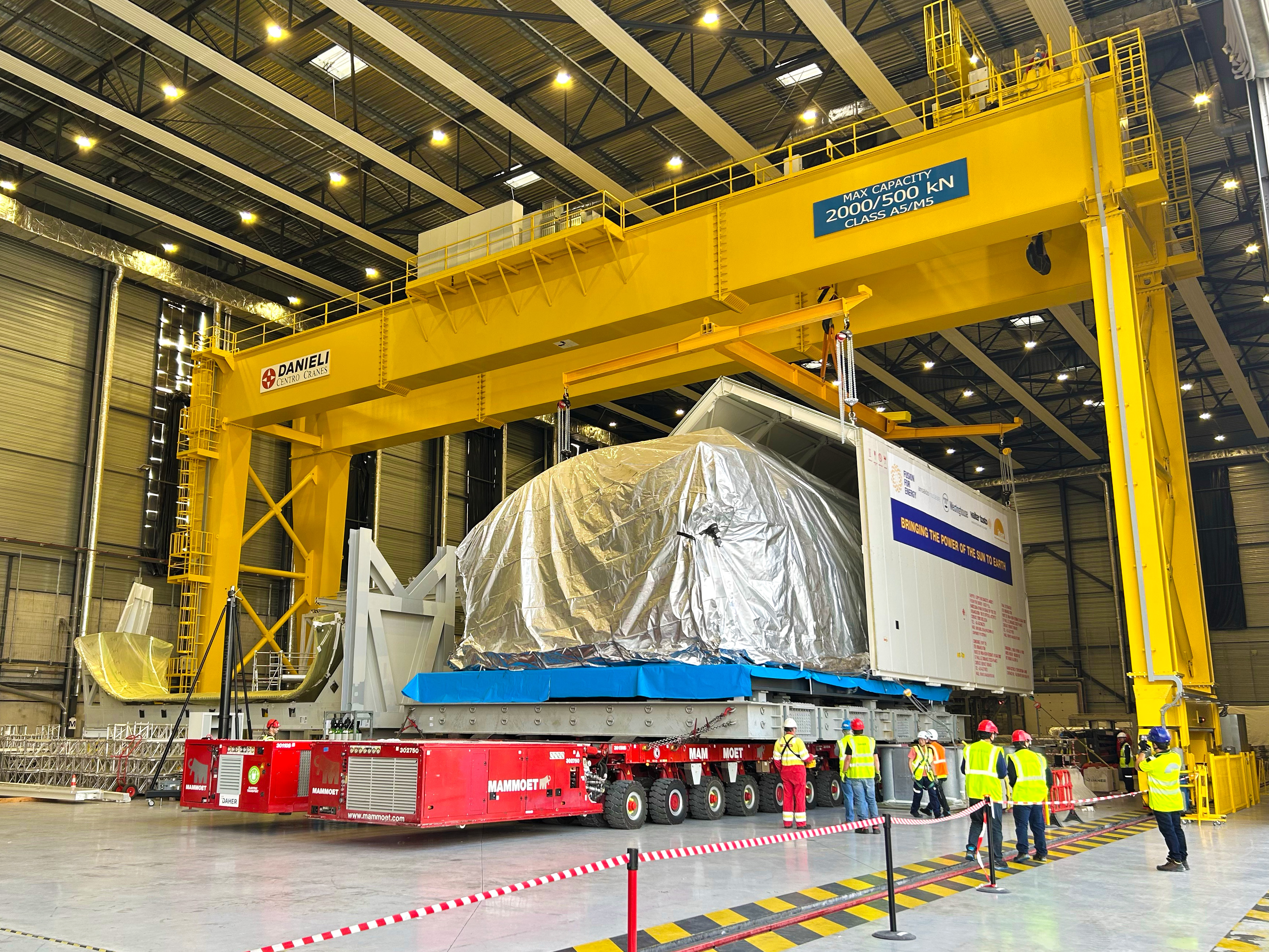
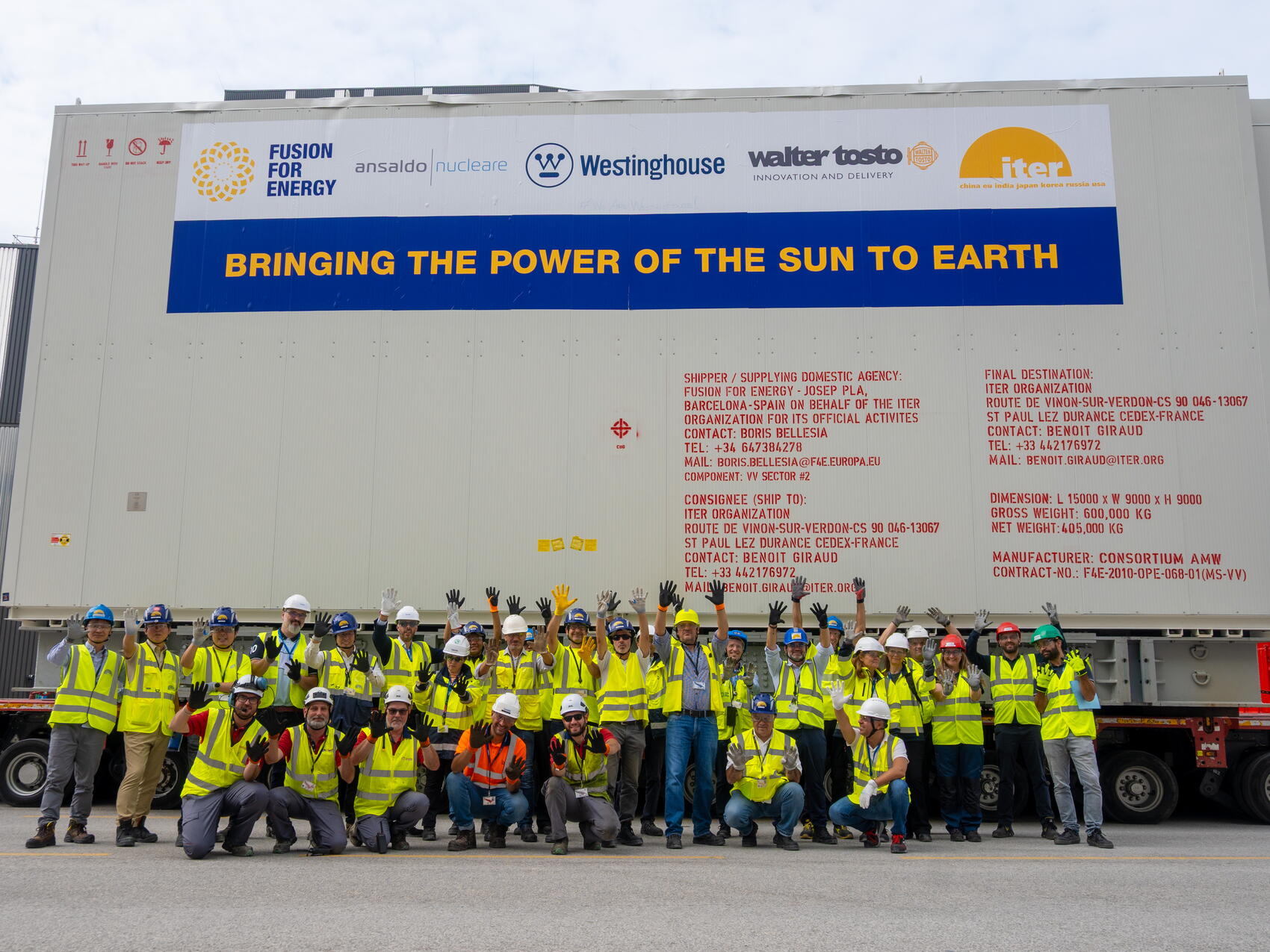
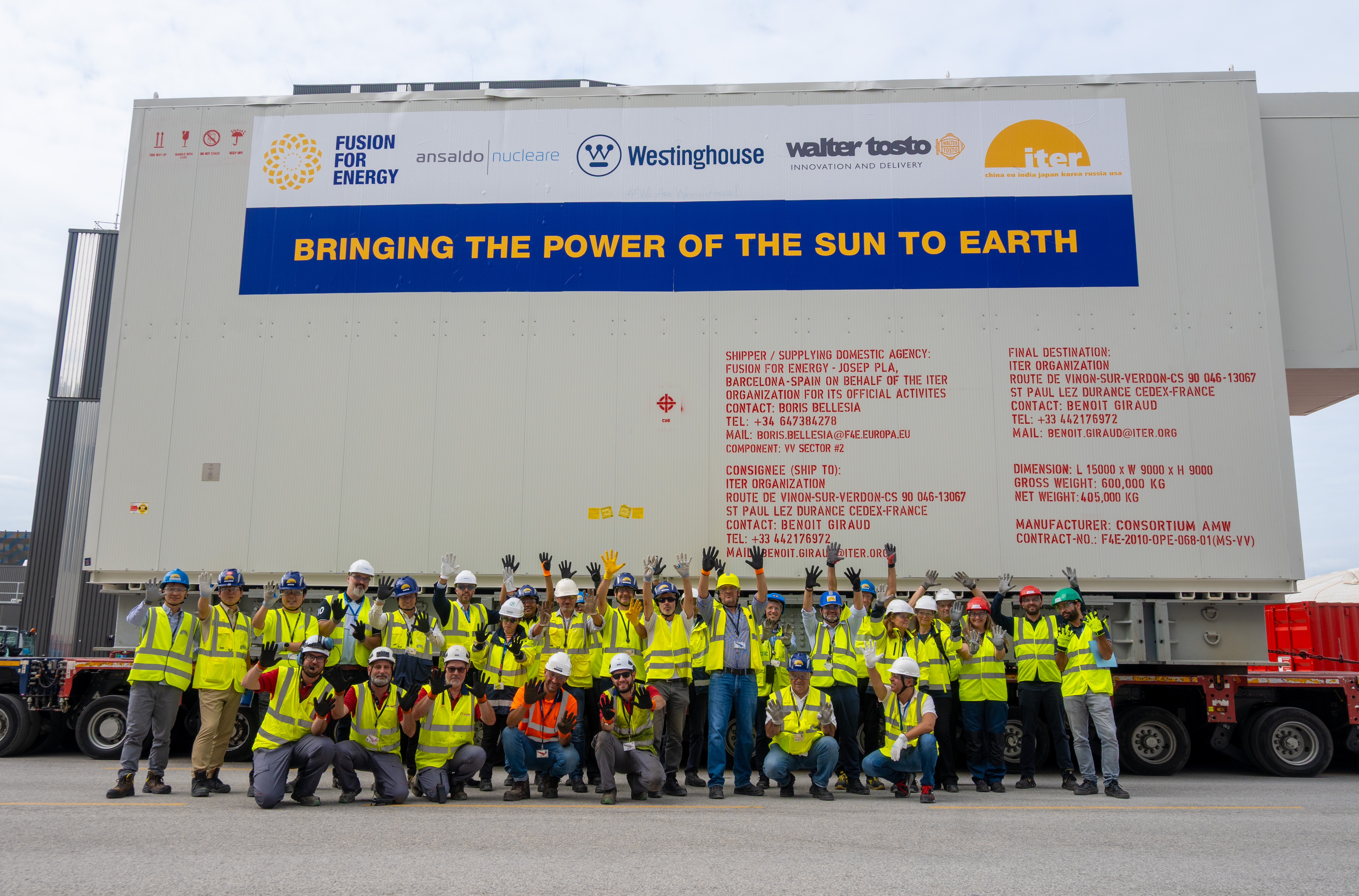
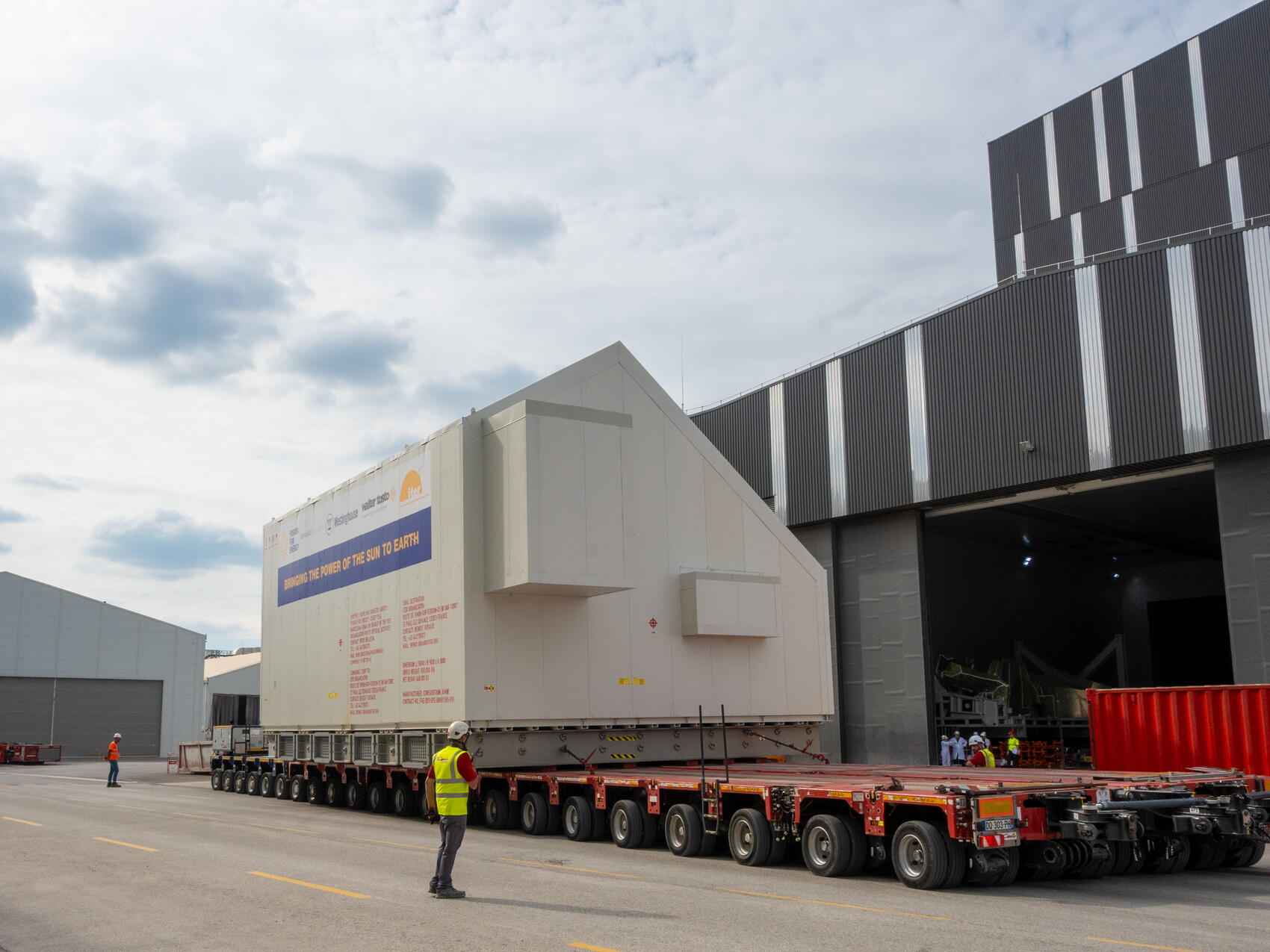
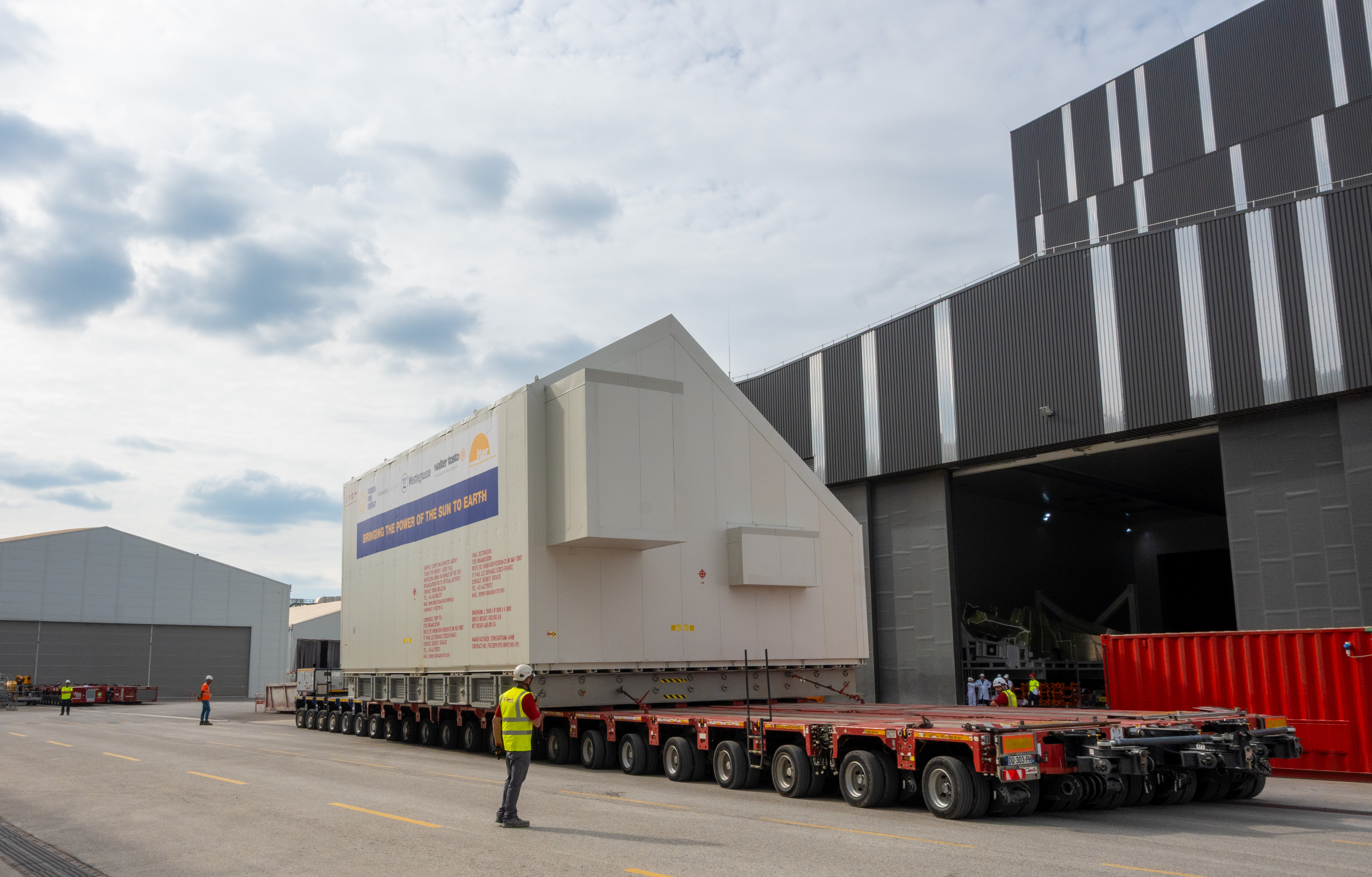
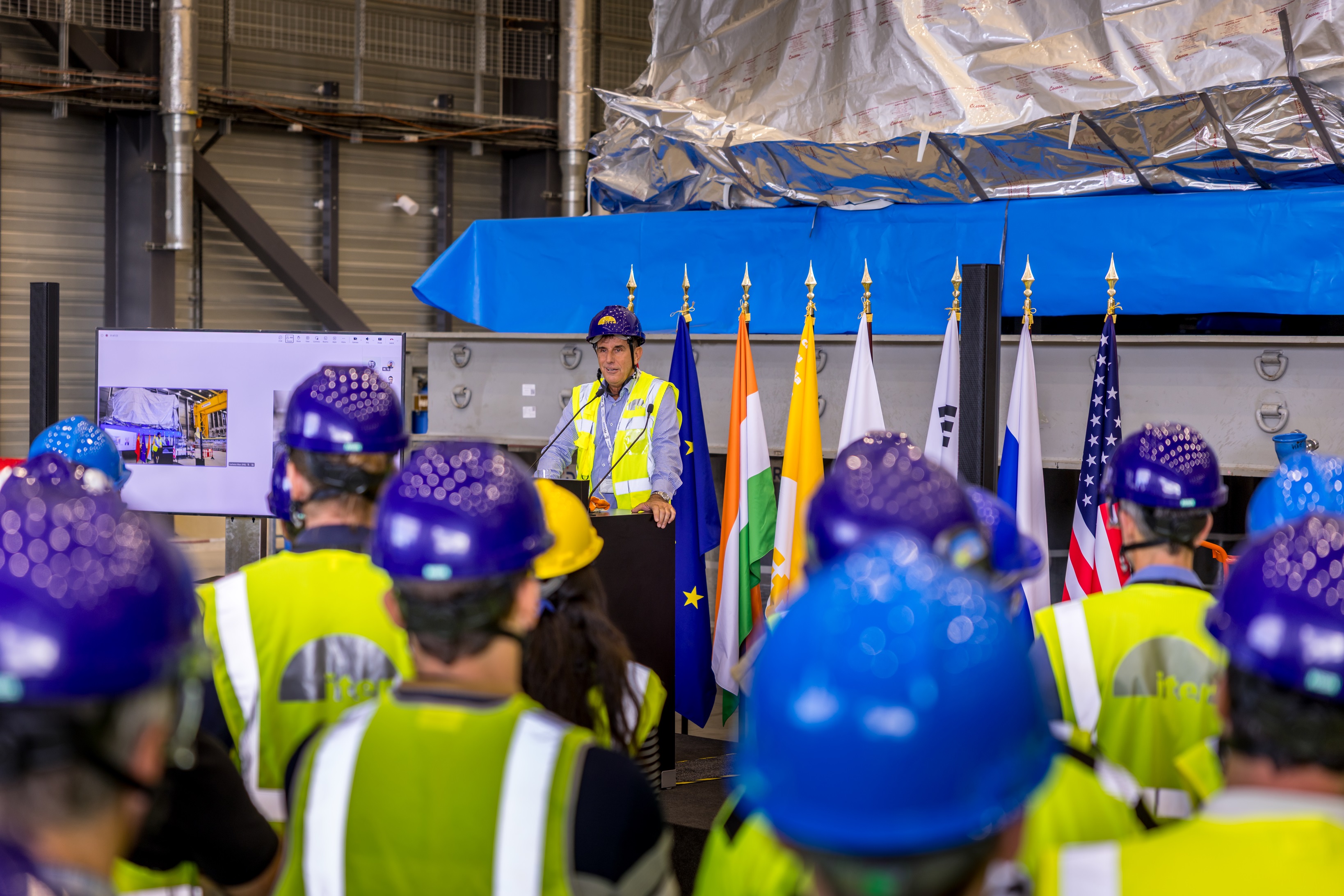
Standing in front of the massive component, delivered on Friday 2 October and still in its protective wrapping, ITER Director-General Pietro Barabaschi called it “a monument.”
“Thanks to the effort that was made by our colleagues in the European Domestic Agency, Fusion for Energy, to complete this procurement program, the delivery of the last vacuum vessel sector will allow us to pursue machine assembly activities according to schedule,” he said. “Vacuum vessel sector #2 represents the last of our core tokamak components—now all toroidal field coils, poloidal field coils, correction coils, central solenoid magnets, vacuum vessel sectors and thermal shield sets are on site.”
Fusion for Energy Director Marc Lachaise, who was able to connect remotely, said that the European vacuum vessel procurement program could only have been completed through close integration with the ITER Organization and other Domestic Agency partners. “This is an emotional moment for me and for others,” he said. “We can be proud of what we achieved.”
Europe worked for more than 16 years with the AMW consortium—Ansaldo Nucleare, Westinghouse and Walter Tosto—and a broader supply chain of at least 15 companies. Lachaise thanked Europe’s industrial partners and acknowledged the contribution of the Korean Domestic Agency, whose experience and lessons learned from manufacturing four of the nine sectors were shared with the European teams. All five European sectors were delivered to ITER over the past two years.
The road to an assembled ITER machine is not over. In-vessel components, plant systems and other equipment are still to come, and much assembly work lies ahead. But one remarkable chapter has now closed. With all nine vacuum vessel sectors now on site, the major components needed to complete the core machine have converged at ITER after decades of development in ITER Member factories around the world. Piece by extraordinary piece, the ITER machine is coming together.
*The core machine includes the cryostat, all superconducting magnets, and the vacuum vessel with its thermal shield. Not included in this description are in-vessel components like the divertor and the blanket.
See this article on the Fusion for Energy website to learn more about the fabrication of five vacuum vessel sectors in Europe.