JOREK magneto-hydro-dynamic simulation code now available open source
The open licence will allow a broader group of scientists to contribute to and validate the JOREK code against experiments.
As recently announced by the European Consortium for the Development of Fusion Energy (EUROfusion), the JOREK code is now openly accessible to the worldwide fusion scientific community at the ITER IMAS repository. JOREK is a reference code for the simulation of magneto-hydrodynamic plasma instabilities, which members of the ITER Organization have contributed to with developments.
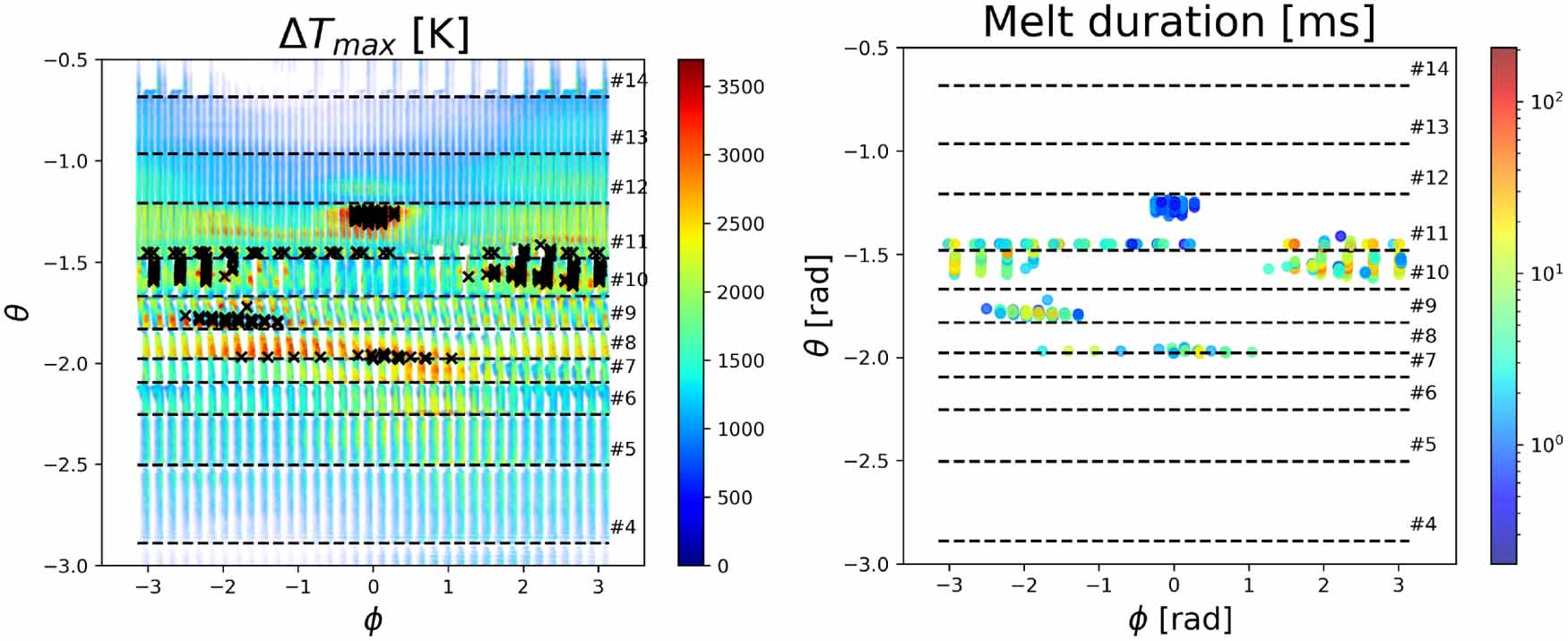
JOREK is extensively used for modelling of plasma disruptions, which are the most intense plasma instabilities in tokamaks, and the associated thermal and electromagnetic loads on components installed inside ITER’s vacuum vessel to protect it from plasma and neutron impact (see Fig. 2). However, its most important application for ITER is the study and improvement of the efficiency of disruption mitigation. JOREK can accurately simulate the physics of the injection of shattered pellets and the resulting 3-dimensional evolution of the magnetic field, which determines the deposition of energy and particles (including runaway electrons) in the large-scale plasma disturbances that take place during disruptions.
For more details on JOREK please consult the EUROfusion announcement.
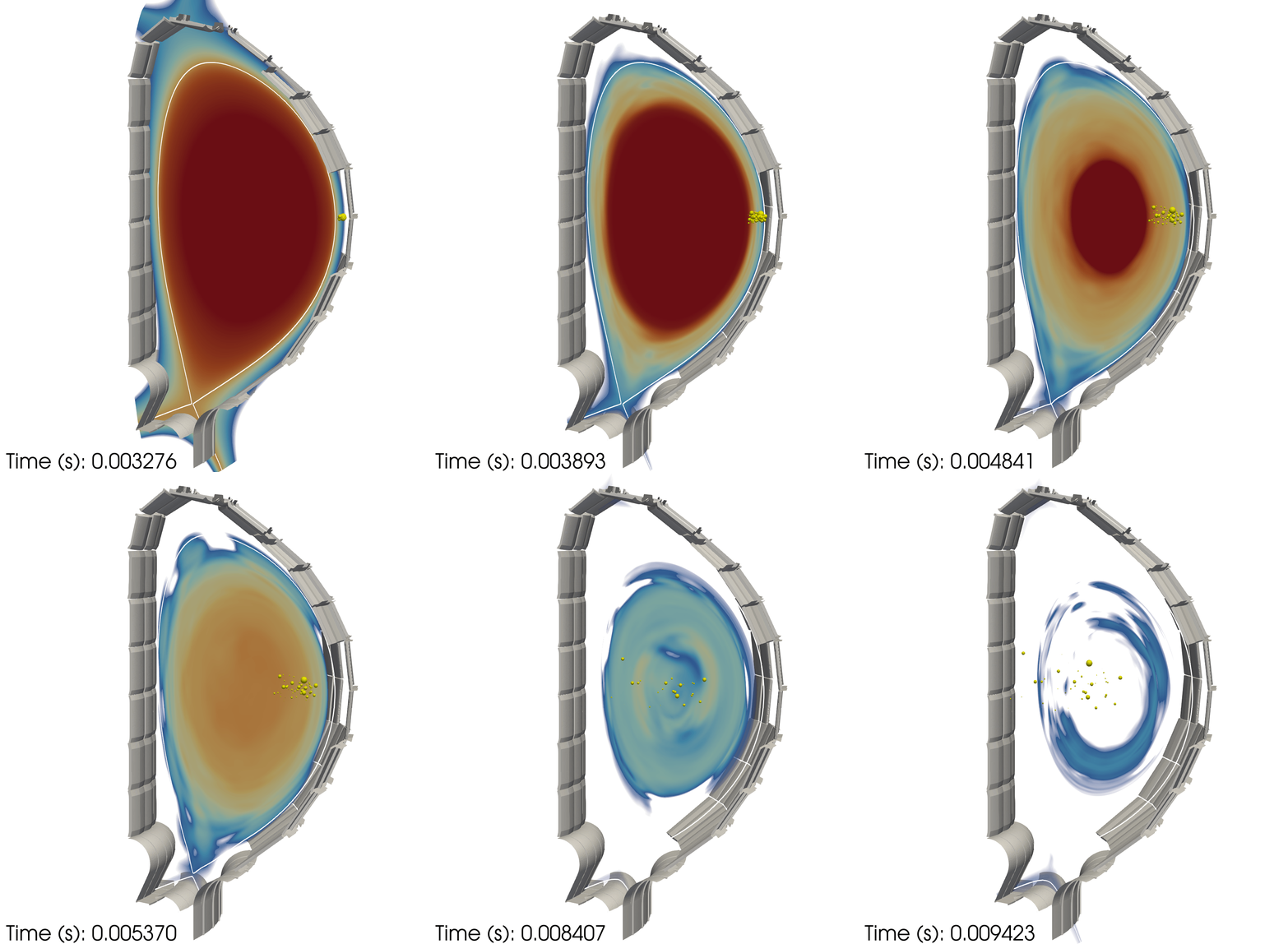
--Figure 1 (right). JOREK simulation of the temperature profile evolution following the injection of a shattered pellet for disruption mitigation [D. Hu et al 2024 Nucl. Fusion 64 086005]